
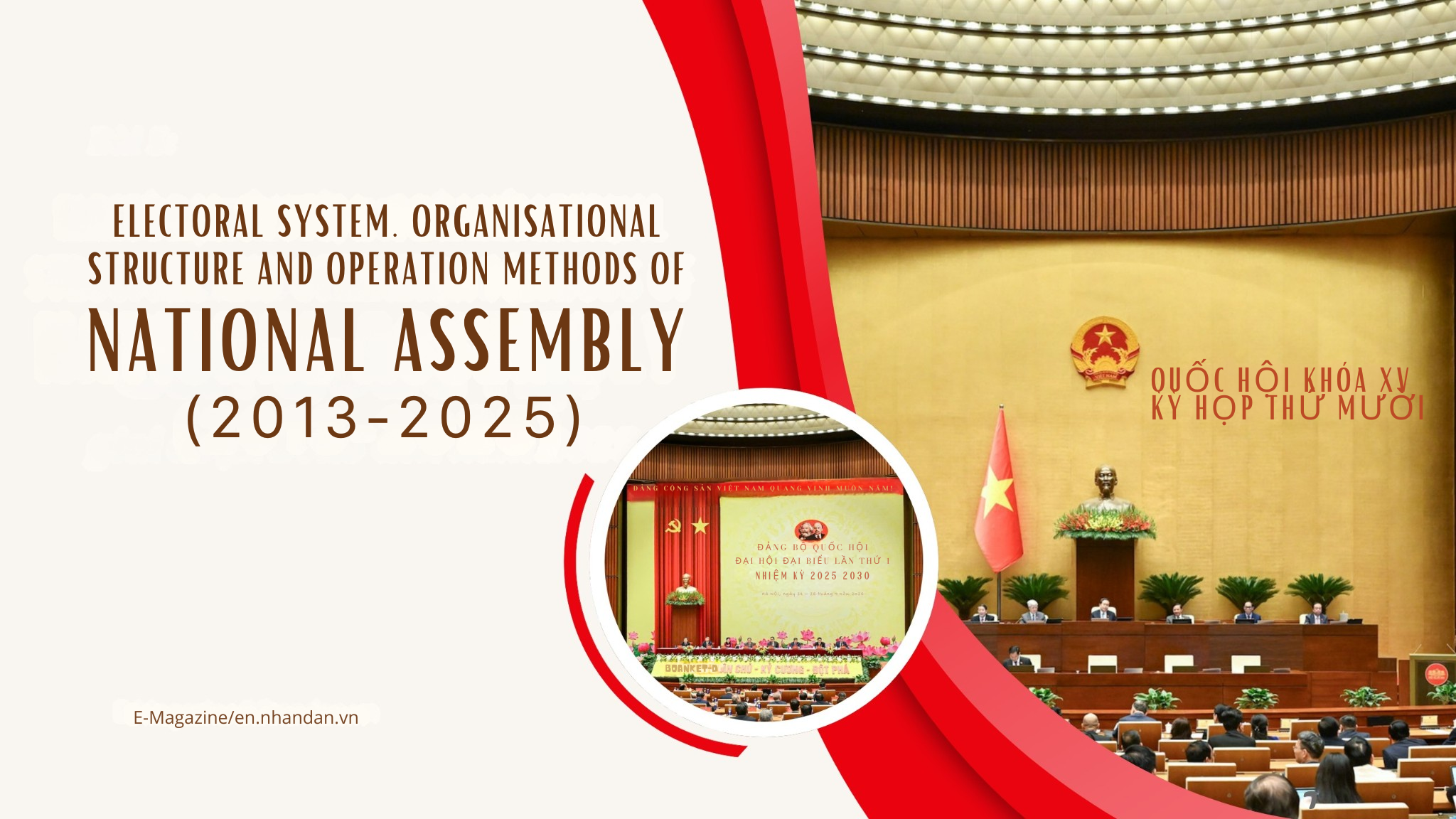

Over the past eighty years, under the leadership of the Communist Party of Viet Nam, the Vietnamese National Assembly has continued to grow and mature, increasingly fulfilling its role as the highest representative body of the people and the supreme organ of state power of the Socialist Republic of Viet Nam. This series reviews the main features of the electoral system, organisational structure and operational methods of the National Assembly from its inception to the present day.
The period from 2013 to 2025 marked a strong phase of development for the National Assembly in the context of the promulgation of the 2013 Constitution, the acceleration of comprehensive national renewal, growing demands for building a socialist law-governed state, and increasingly deep international integration. During this period, particularly the 15th National Assembly term, legislative work underwent strong reforms, shifting decisively from a management mindset to one of development facilitation.
The electoral system for National Assembly deputies during the 2013-2025 period


Legislation on the election of National Assembly deputies
In response to the country’s development requirements, the 13th National Assembly adopted the revised Constitution in 2013. This was the fifth constitution, the constitution of the period of promoting comprehensive renewal, industrialisation and modernisation, and building a market economy and a socialist law-governed state. To institutionalise the 2013 Constitution, the National Assembly passed the 2015 Law on the Election of Deputies to the National Assembly and People’s Councils. Accordingly, regulations on the electoral system continued to inherit progressive provisions, specifically as follows:
Electoral principles: The 2013 Constitution and the 2015 Law on the Election of Deputies to the National Assembly and People’s Councils reaffirm that elections of National Assembly deputies are conducted in accordance with the principles of universal, equal and direct suffrage, by secret ballot. These are the core principles of a democratic electoral mechanism.

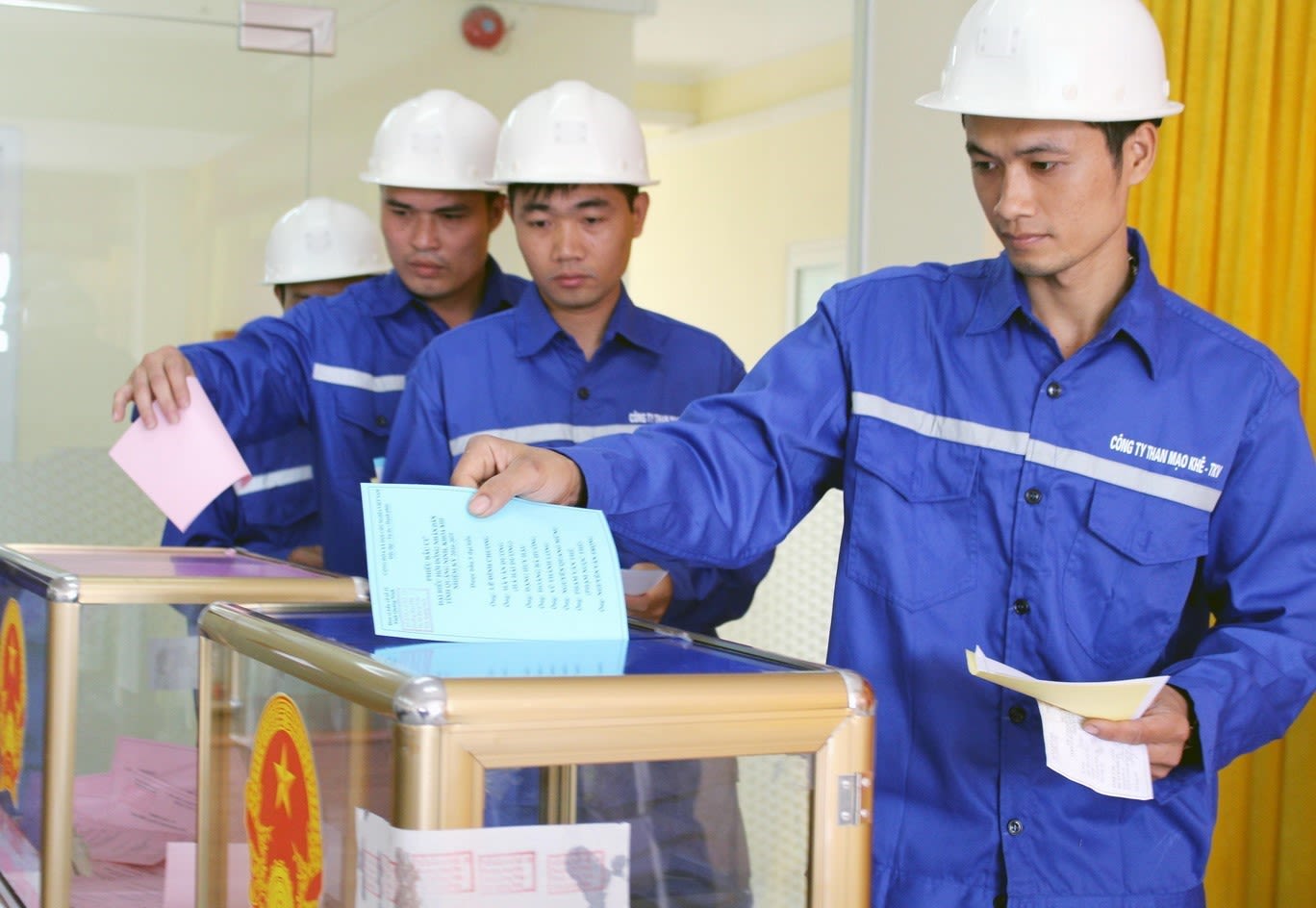
Workers of Mao Khe Coal Company cast their votes in the election of the 14th National Assembly at a polling station in Mao Khe Ward, Dong Trieu Town, Quang Ninh Province.
Workers of Mao Khe Coal Company cast their votes in the election of the 14th National Assembly at a polling station in Mao Khe Ward, Dong Trieu Town, Quang Ninh Province.
Voting rights, candidacy and dismissal of National Assembly deputies: The determination of citizens’ voting and candidacy rights largely remains as before: citizens aged 18 and above have the right to vote, and those aged 21 and above have the right to stand for election to the National Assembly. In addition to requirements concerning citizenship status and age, candidates must meet the standards for National Assembly deputies as prescribed in the Law on the Organisation of the National Assembly.
Electoral legislation during this period also explicitly specifies cases in which individuals are not eligible to stand as candidates for the National Assembly, including: persons deprived of the right to stand for election under legally effective court judgments or decisions; persons serving prison sentences; persons with restricted or lost civil act capacity; persons under criminal prosecution; persons serving criminal judgments or decisions of the courts; persons who have completed criminal sentences but have not yet had their criminal records expunged; and persons subject to administrative measures such as compulsory education institutions, compulsory rehabilitation centres, or education at the commune, ward or township level. These constitute new provisions regarding eligibility conditions for candidates for elected representative bodies in general, and National Assembly deputies in particular.

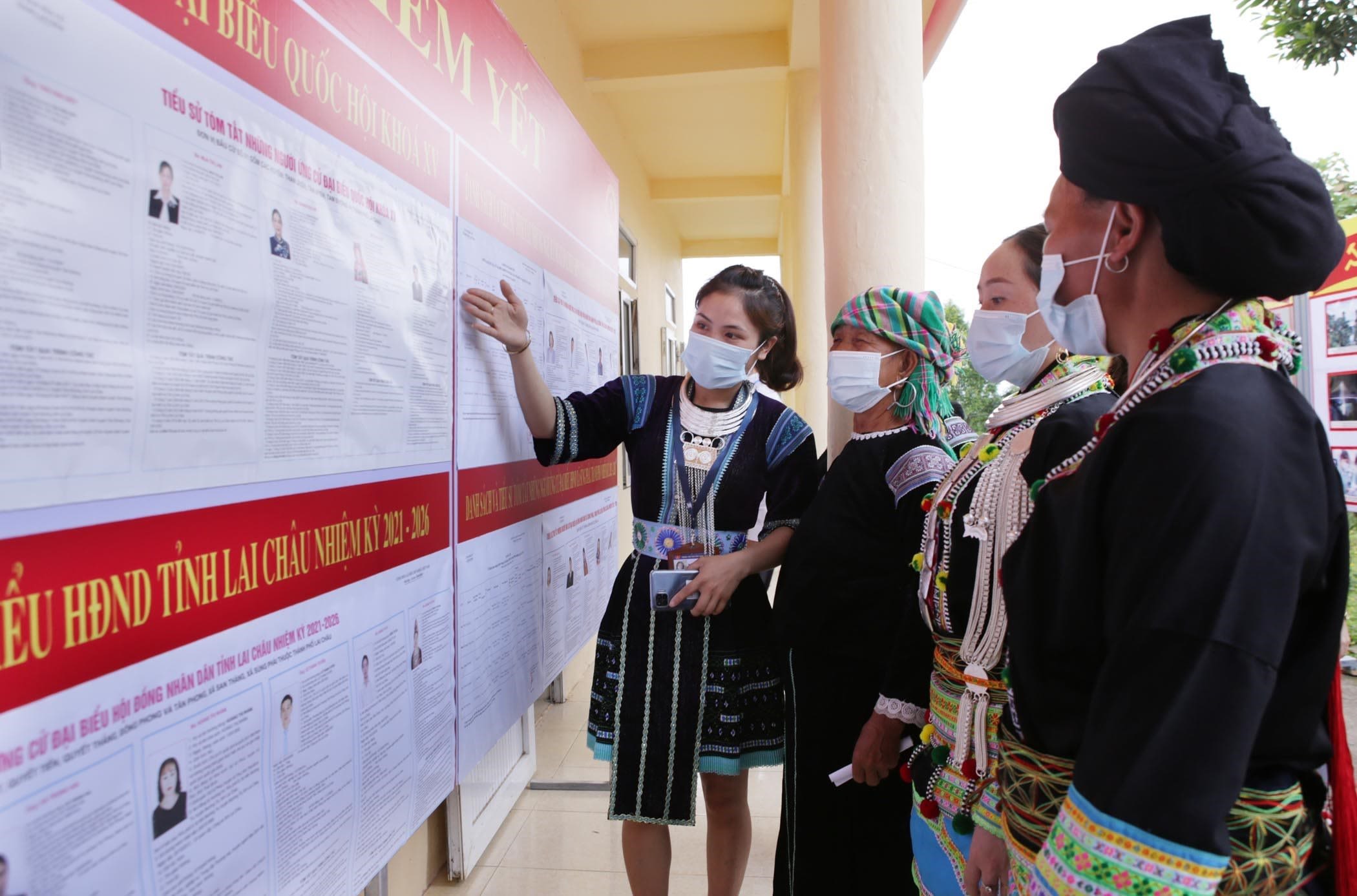
Voters in Lai Chau Province read personal information of candidates for the National Assembly and People’s Councils before casting their ballots.
Voters in Lai Chau Province read personal information of candidates for the National Assembly and People’s Councils before casting their ballots.
Determination of representation ratios: During this period, electoral legislation increased the maximum number of National Assembly deputies to no more than 500. The ratio of voters per deputy is not specified in detail. The number of deputies elected is determined based on population size as well as the specific characteristics of each locality. However, it must be ensured that the projected total number of deputies of the National Assembly is 500, and that each centrally-governed city and province has at least three deputies residing and working in the locality.
Regulations on election organisation and on complaints and denunciations related to elections have, in general, not changed significantly compared with previous periods.
At its ninth session, the 15th National Assembly adopted the Law amending and supplementing a number of articles of the Law on the Election of Deputies to the National Assembly and People’s Councils. This amendment aimed to institutionalise the Party’s guidelines and policies, incorporate new constitutional provisions on restructuring and streamlining the organisational apparatus of the political system (particularly the implementation of the two-tier local government model), conduct early elections on March 15, 2026, and promptly address certain difficulties encountered in electoral work. The amended and supplemented provisions ensure consistency with the revised Constitution, the Law on the Organisation of Local Government, and other related laws on organisational structures.

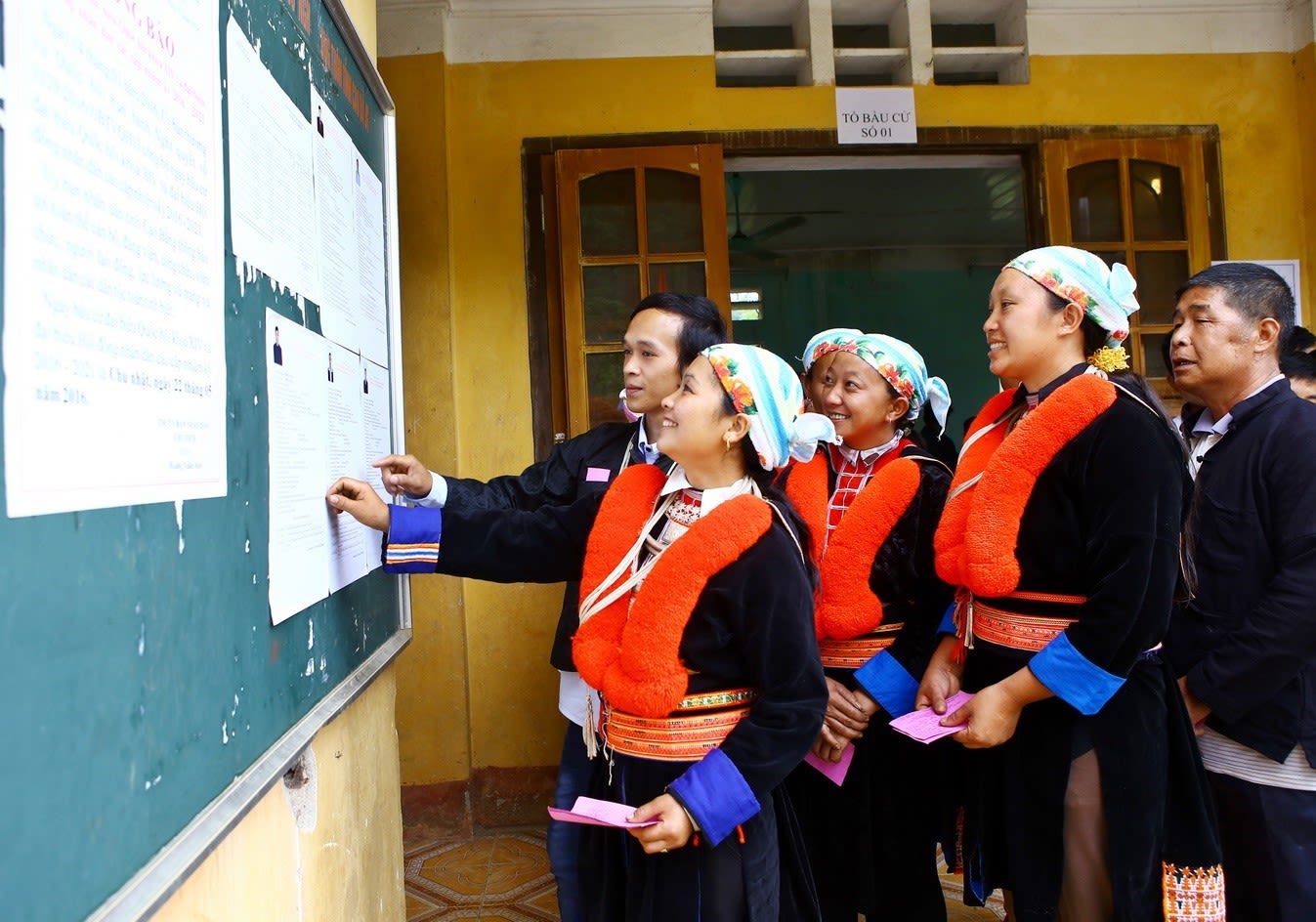


Practical organisation of National Assembly elections from the 14th to the 15th terms
The 14th National Assembly (2016-2021): On November 25, 2015, the National Assembly issued Resolution No. 105/2015/QH13 on the election day for the 14th National Assembly and People’s Councils at all levels for the 2016-2021 term, and established the National Election Council.

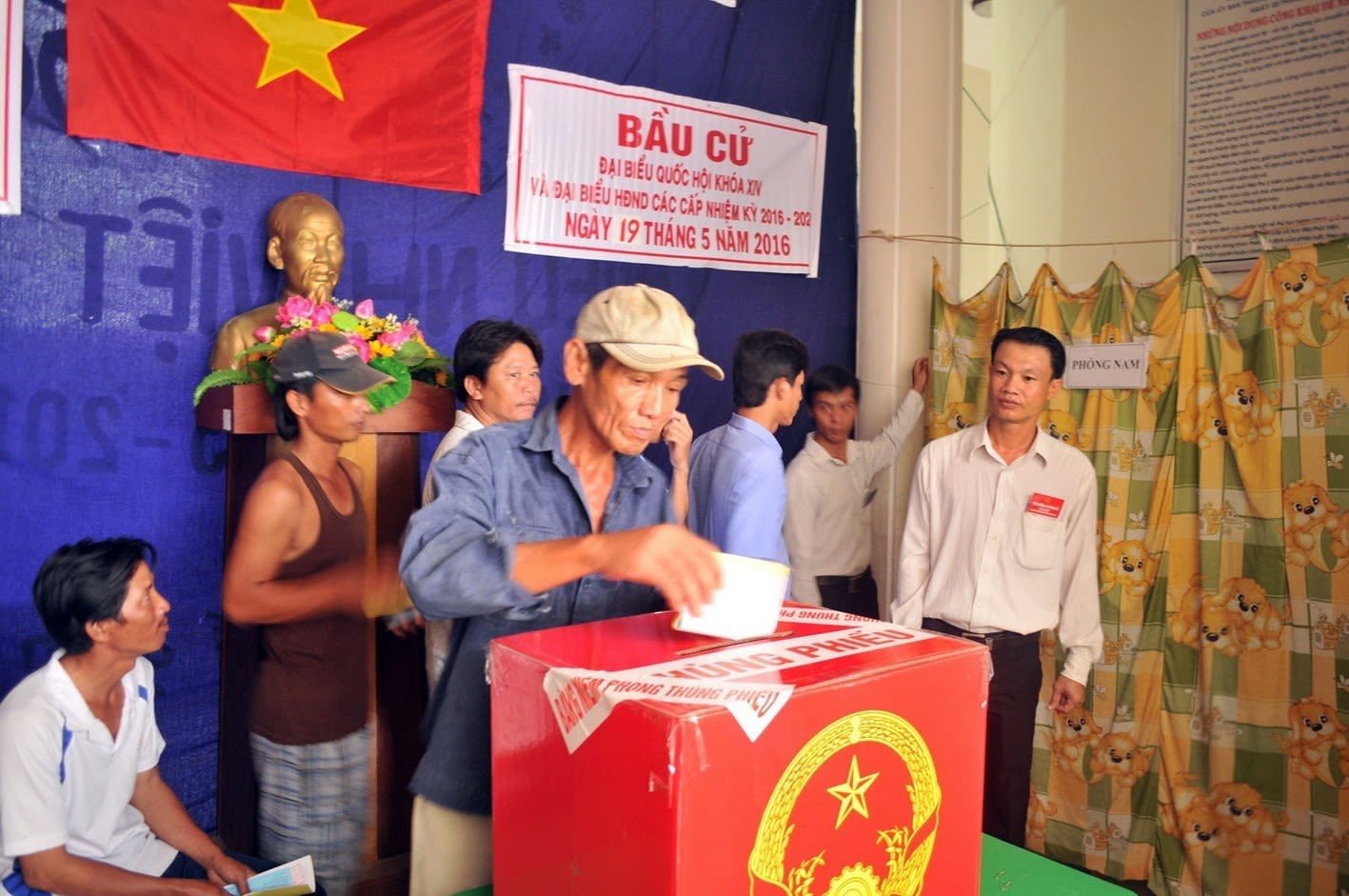
Fishermen on Tho Chu Island (Kien Giang Province) cast their votes in the election of the 14th National Assembly.
Fishermen on Tho Chu Island (Kien Giang Province) cast their votes in the election of the 14th National Assembly.
On January 14, 2016, the National Assembly Standing Committee issued Resolution No. 1129/2016/UBTVQH13 announcing the election day for the National Assembly and People’s Councils at all levels for the 2016-2021 term. Accordingly, election day was set for Sunday, May 22, 2016. The election of the 14th National Assembly and People’s Councils at all levels for the 2016-2021 term was a great success.

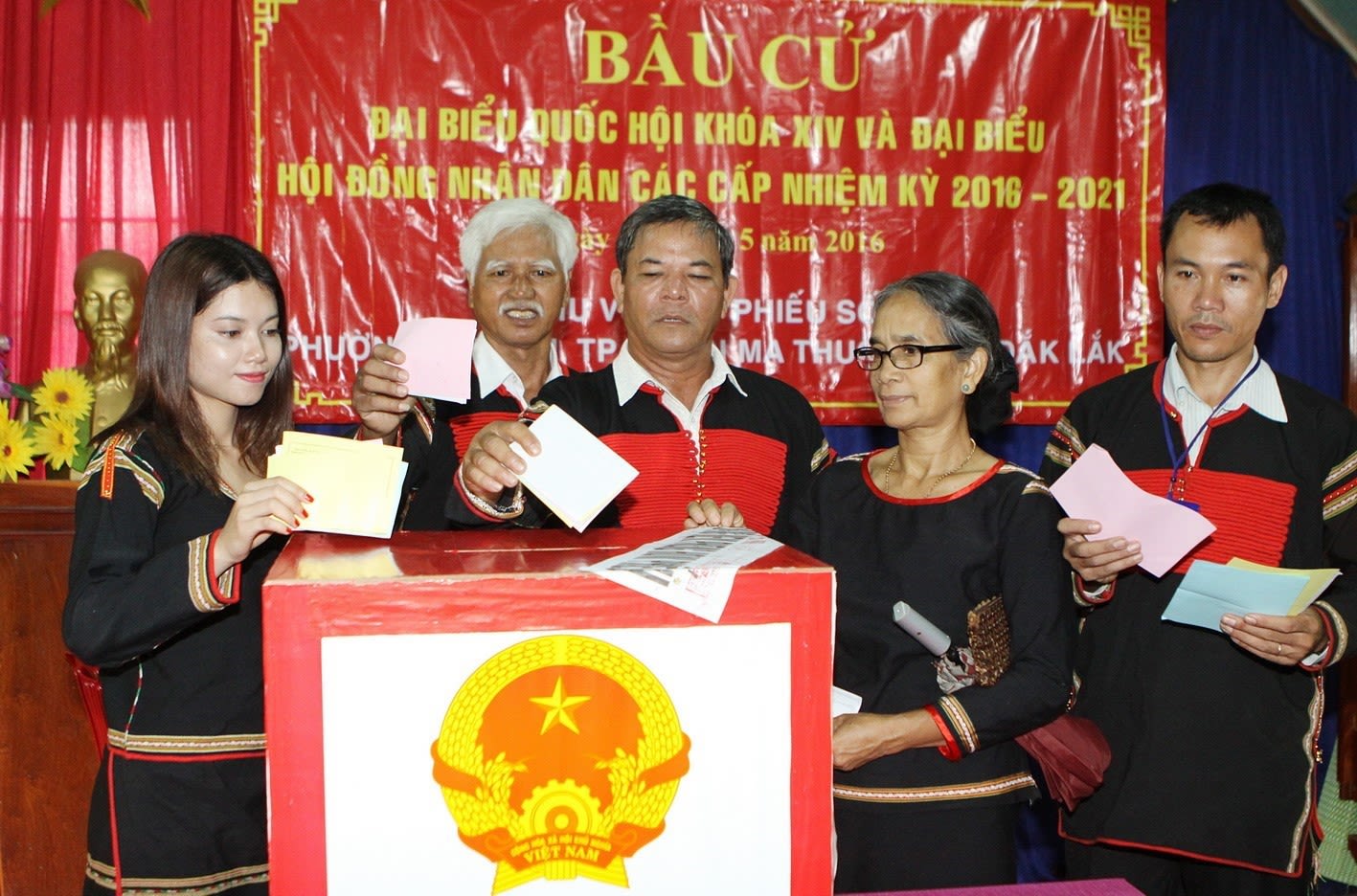
E De voters in Ako Dhong Village (Dak Lak Province) cast their ballots in the election of the 14th National Assembly.
E De voters in Ako Dhong Village (Dak Lak Province) cast their ballots in the election of the 14th National Assembly.
On May 29, 2016, two constituencies in Can Tho organised by-elections to elect an additional two National Assembly deputies. In this election, 67,049,091 voters participated out of a total of 67,485,482 voters nationwide, representing a turnout of 99.35%.
The election results saw 496 National Assembly deputies elected from a total of 827 candidates (four fewer than the total number of deputies to be elected, and the eligibility of two deputies was not recognised).
The 15th National Assembly (20212026): On June 19, 2020, the National Election Council was established under Resolution No. 118/2020/QH14 of the 14th National Assembly to organise the election of the 15th National Assembly and to direct and guide the election of People’s Councils at all levels for the 2021-2026 term.
On November 17, 2020, at its tenth session, the 14th National Assembly adopted Resolution No. 133/2020/QH14 on the election day for the 15th National Assembly and People’s Councils at all levels for the 2021-2026 term, setting the election day as Sunday, May 23, 2021.

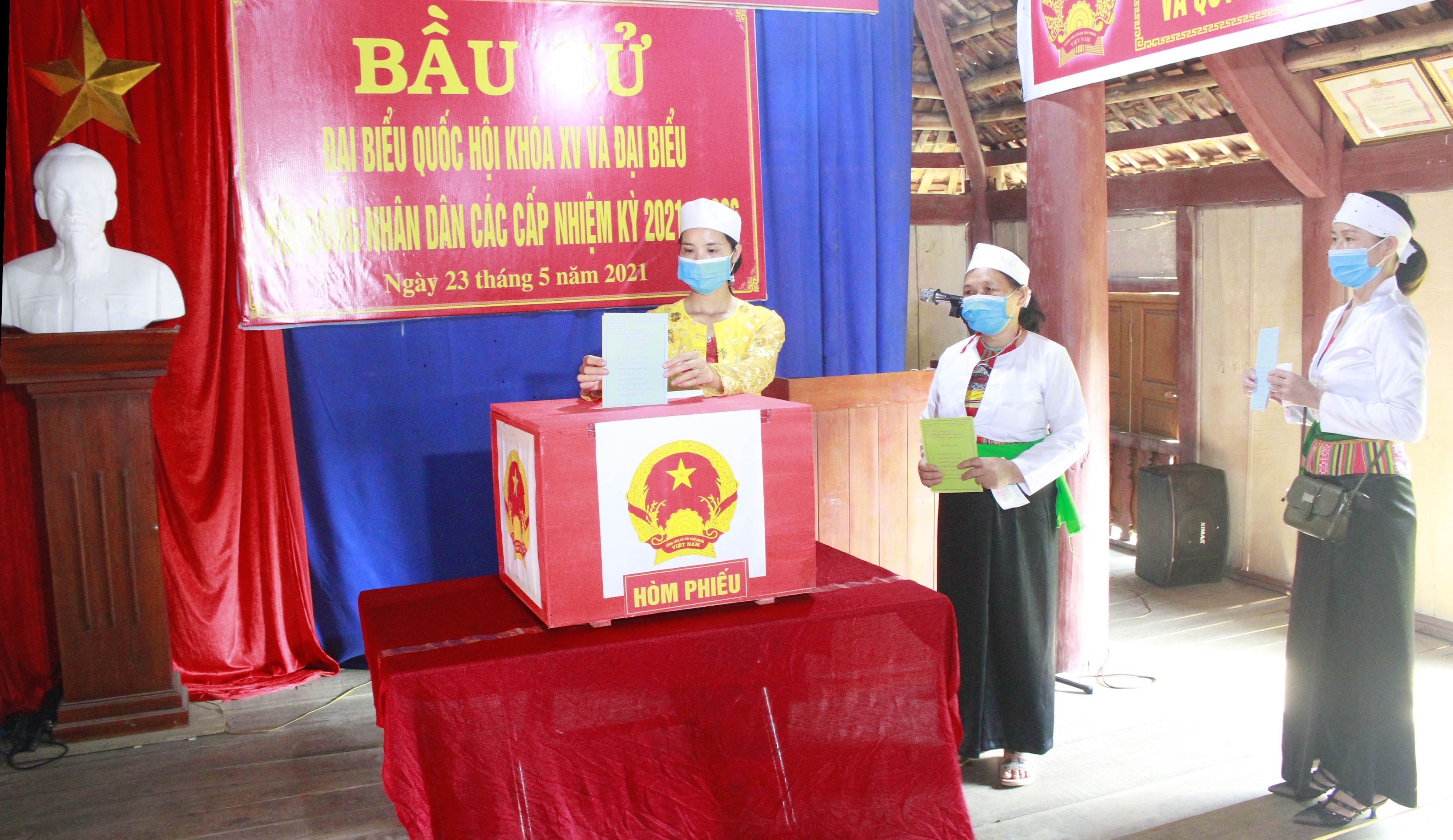
Voters in Cuc Phuong Commune, Nho Quan District, Ninh Binh Province, go to the polls to elect deputies to the 15th National Assembly and People’s Councils at all levels for the 2021-2026 term.
Voters in Cuc Phuong Commune, Nho Quan District, Ninh Binh Province, go to the polls to elect deputies to the 15th National Assembly and People’s Councils at all levels for the 2021-2026 term.
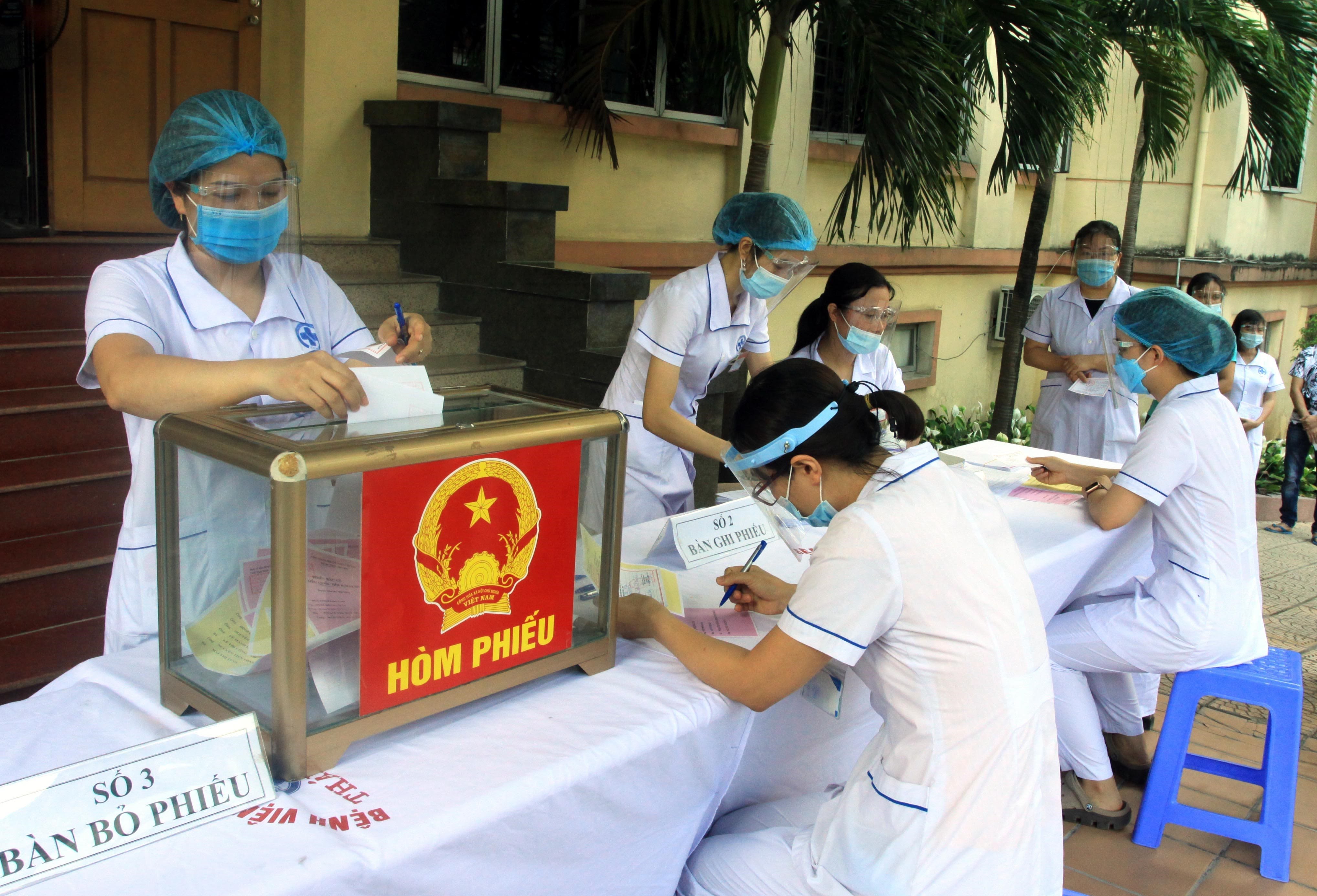
The election took place amid significant difficulties and challenges, as it was required to ensure a successful and lawful election while safeguarding safety amid the COVID-19 pandemic, as well as restoring and developing the economy, and ensuring social security and public safety. In the lead-up to the election day, the pandemic resurged in its fourth wave, with faster transmission and more dangerous new variants.

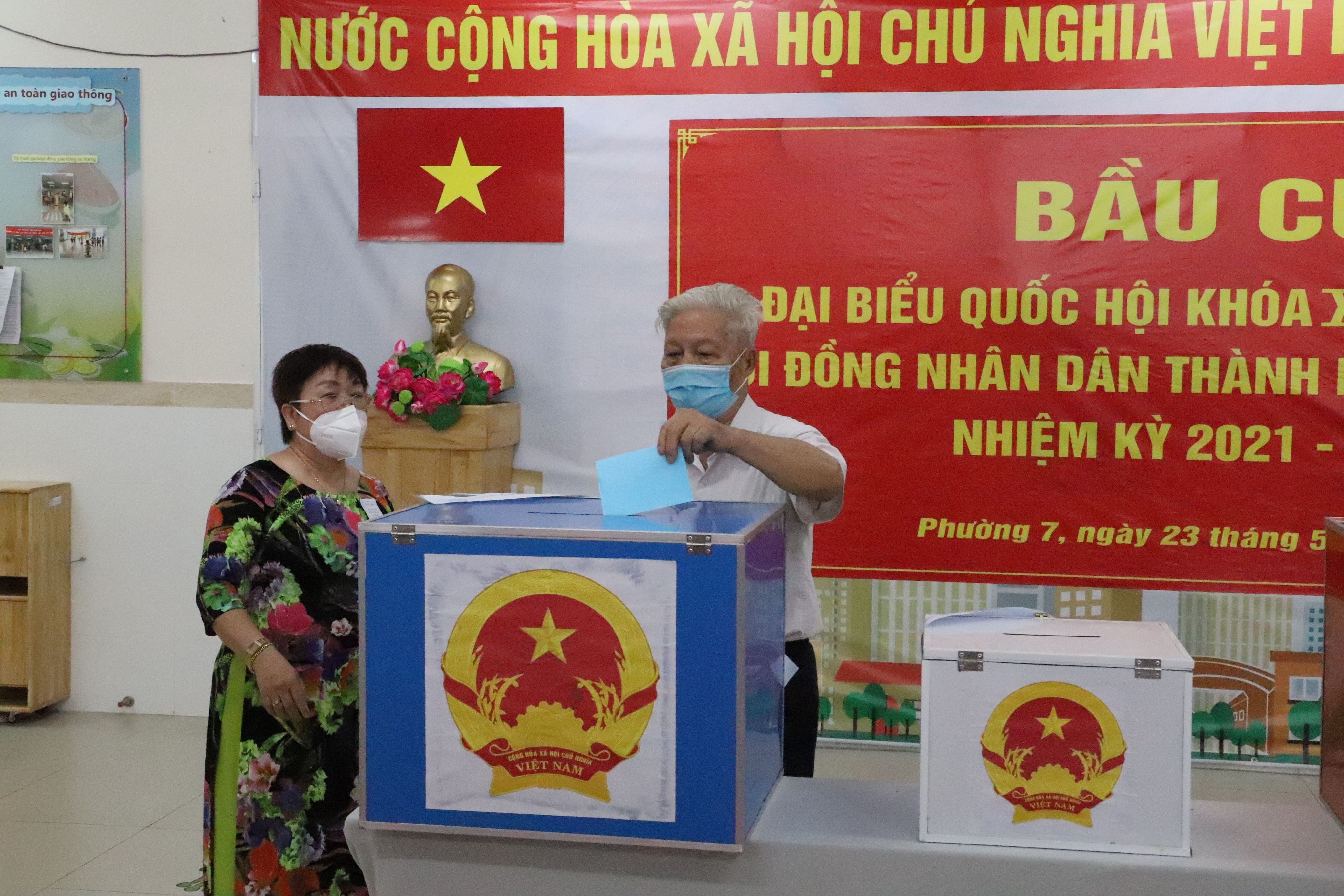
Voters cast their ballots at a polling station in Tan Binh District, Ho Chi Minh City, in the election of the 15th National Assembly and People’s Councils at all levels for the 2021-2026 term.
Voters cast their ballots at a polling station in Tan Binh District, Ho Chi Minh City, in the election of the 15th National Assembly and People’s Councils at all levels for the 2021-2026 term.
By election day, COVID-19 had spread rapidly across 30 provinces and cities, causing severe impacts on all aspects of socio-economic life, with many localities required to implement strict social distancing, quarantine and lockdown measures. Nevertheless, thanks to the efforts of competent authorities and the strong sense of responsibility of voters nationwide, 69,243,939 voters participated out of a total of 69,523,277 voters, achieving a turnout of 99.60%. The results saw 499 National Assembly deputies elected.
To ensure thorough preparation for the election of the 16th National Assembly and People’s Councils at all levels for the 2026-2031 term on March 15, 2026, at its ninth session in June 2025, the National Assembly issued Resolution No. 199/2025/QH15 on shortening the term of the 15th National Assembly and People’s Councils at all levels for the 2021-2026 term; setting the election day for the 16th National Assembly and People’s Councils at all levels for the 2026-2031 term; issuing resolutions on the establishment of the National Election Council; electing the Chairperson of the National Election Council; and approving the list of Vice Chairpersons and members of the National Election Council.
Immediately thereafter, the National Election Council convened its first session on July 9, 2025, assigned tasks to its members, issued its working regulations, and established four sub-committees: the Personnel Sub-committee; the Legal Documents and Complaints Sub-committee; the Information and Communication Sub-committee; and the Security, Order and Social Safety Sub-committee, as well as its assisting apparatus.
Organisational structure of the National Assembly during the 2013-2025 period

Establishment of the National Assembly Party Organisation
From 2013 to 2024, the organisational model of the Party Delegation of the National Assembly and Party cells within the Ethnic Council and the Committees of the National Assembly remained largely unchanged from previous periods. However, from early 2025, in implementing the revolution to streamline the state apparatus in particular, and the organisational machinery of the political system in general, the organisational model of Party bodies within the National Assembly underwent strong reforms. The 15th National Assembly term marked a significant milestone with the establishment of the National Assembly Party Organisation directly under the Party Central Committee, replacing the National Assembly Party Delegation of previous terms.
The 15th National Assembly term marked a significant milestone with the establishment of the National Assembly Party Organisation directly under the Party Central Committee, replacing the National Assembly Party Delegation of previous terms.
In implementing the Politburo’s conclusion on the review of Resolution No. 18-NQ/TW dated October 25, 2017 of the 12th Party Central Committee on several issues regarding the continued renewal and reorganisation of the political system’s organisational apparatus to be streamlined, effective and efficient, the National Assembly Party Delegation actively and proactively disseminated and organised the implementation of the Resolution among subordinate Party organisations and all Party members. In implementing Conclusion No. 121-KL/TW dated January 24, 2025 of the 13th Party Central Committee, the National Assembly Party Delegation directed the National Assembly, the National Assembly Standing Committee and its agencies to promptly develop the proposal on the organisational model of the National Assembly Party Organisation (No. 3183-ĐA/ĐĐQH15 dated December 25, 2024) for submission to the Politburo.

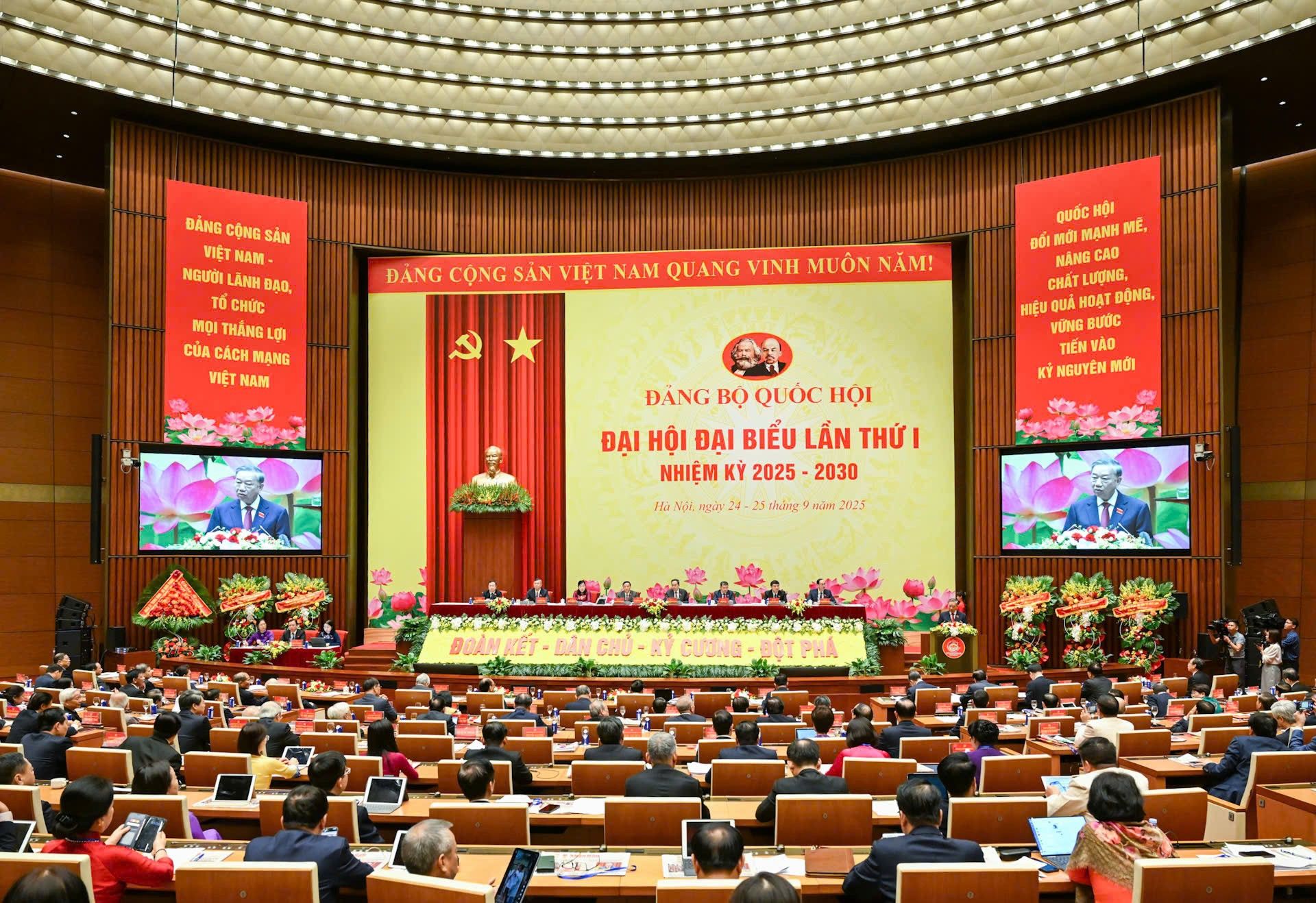
The official session of the 1st Congress of the NA Party Committee, term 2025–2030, opens.
The official session of the 1st Congress of the NA Party Committee, term 2025–2030, opens.
The Party Central Committee and the Politburo issued documents on the functions, tasks, organisation, and apparatus of the NA Party Committee, and appointed members of its Executive Board and Standing Board as well as its Secretary and Deputy Secretary for the 2020–2025 term . Accordingly, the Executive Board of the NA Party Committee comprises 41 members, while its Standing Board has 23 members. Tran Thanh Man, Politburo Member and Chairman of the NA, serves as Secretary of the NA Party Committee for the 2020–2025 term; Nguyen Khac Dinh, Party Central Committee Member and Vice Chairman of the NA, serves as Standing Deputy Secretary of the NA Party Committee for the 2020–2025 term. The NA Party Committee has 11 subordinate party committees (including two party committees above the grassroots level and nine grassroots-level party committees) with 2,852 party members, as well as four advisory and assisting bodies under the Party Committee.
Immediately after its establishment, the Executive Board and Standing Board of the NA Party Committee promptly issued working regulations, stabilised organisational arrangements, and decided personnel for subordinate party committees; proactively led and directed the NA, the NA Standing Committee, agencies of the NA, and the State Audit Office in carrying out political tasks, achieving results across all areas of constitutional work, law-making, oversight, decisions on major national issues, and state auditing; and led, directed, and organised the comprehensive and effective implementation of Party-building work, including:
(i) Leading the successful organisation of NA sessions, meetings of the NA Standing Committee, and conferences of full-time NA deputies, with a spirit of strong innovation in legislative thinking, and effective delivery of constitutional and legislative work. Notably, the NA completed a very large legislative workload at the 9th session, passing 34 laws (accounting for 52.3% of all laws promulgated since the beginning of the term) and 34 resolutions, and giving opinions on six draft laws.
The laws and resolutions covered most key areas of socio-economic life, including the organisation of the state apparatus, digital transformation, technology, economy–finance–public investment, justice, and the protection of human rights. With a breakthrough, enabling approach to law-making that fosters innovation, the National Assembly’s work has been pivotal in refining the legal framework —translating the Party’s viewpoints into institutions, giving effect to the 2013 Constitution, removing bottlenecks, streamlining the state apparatus, establishing a two-tier local government model, unlocking resources, renewing the growth model, and strengthening national competitiveness to support the country’s rapid and sustainable development.

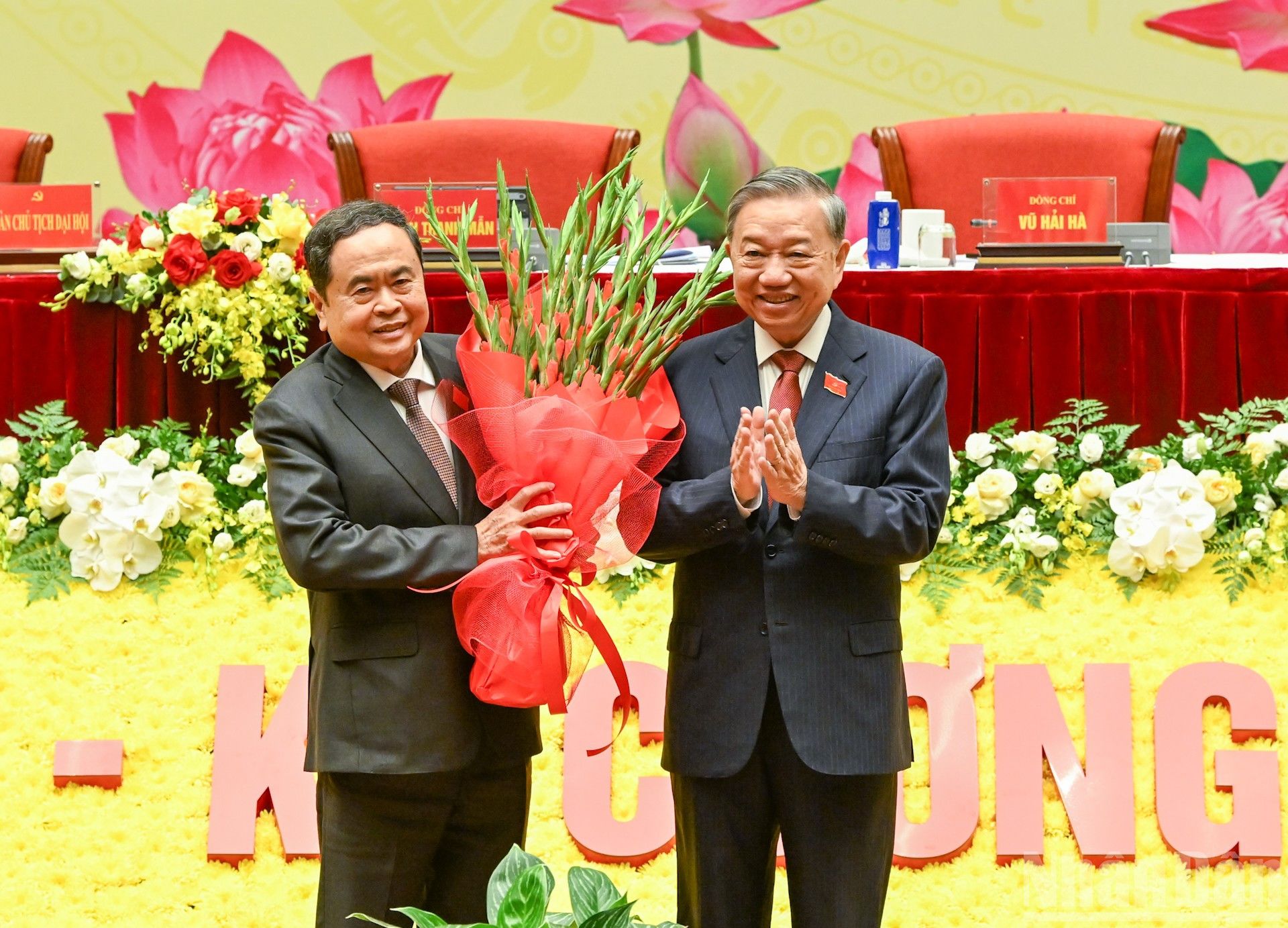
General Secretary To Lam presents flowers in congratulations to Tran Thanh Man, Secretary of the National Assembly Party Committee and Chairman of the National Assembly.
General Secretary To Lam presents flowers in congratulations to Tran Thanh Man, Secretary of the National Assembly Party Committee and Chairman of the National Assembly.
In particular, the National Assembly adopted Resolution No. 203/2025/QH15 on amending and supplementing a number of articles of the Constitution of the Socialist Republic of Viet Nam; and approved Resolution No. 202/2025/QH15 on the reorganisation of provincial-level administrative units (reducing from 64 provinces and centrally governed cities to 34 provinces and centrally governed cities). The National Assembly Standing Committee adopted 34 resolutions on the reorganisation of commune-level administrative units, promptly and fully institutionalising the Party’s policy on continued reform and reorganisation of the political system’s apparatus, to constitutionally enshrine the two-tier local government model; to restructure the Viet Nam Fatherland Front; and to more precisely define the role of the Viet Nam General Confederation of Labour.
The process of amending and supplementing a number of articles of the 2013 Constitution was carried out in accordance with prescribed procedures, ensuring progress requirements and promoting substantive democracy. Resolution No. 203/2025/QH15 on amending and supplementing a number of articles of the 2013 Constitution represents the crystallisation of the intellect of the entire Party, people, and armed forces, profoundly reflecting the will and aspirations of the people, and meeting the requirements of building, defending, and developing the country in a new era.
(ii) Leading oversight activities: The Standing Board of the Party Committee led and directed the effective implementation of oversight activities. At the 9th session of the 15th National Assembly:
(1) It successfully organised a question-and-answer session and adopted a resolution on questioning activities at the 9th session of the 15th National Assembly, covering two groups of issues in two sectors: finance and education–training;
(2) It submitted to the National Assembly for adoption the National Assembly’s 2026 oversight programme and the establishment of thematic oversight delegations for 2026.
(3) It heard and discussed the report on oversight results regarding the resolution of voters’ petitions submitted to the 8th session of the 15th National Assembly.
It led National Assembly agencies and the National Assembly Office in advising and supporting the National Assembly and the National Assembly Standing Committee in implementing two thematic oversight programmes under the 2025 oversight plan; and led and directed the preparation and successful organisation of the National Assembly Forum on oversight activities (on August 6, 2025) under the theme “National Assembly Oversight for Creation and Development.”

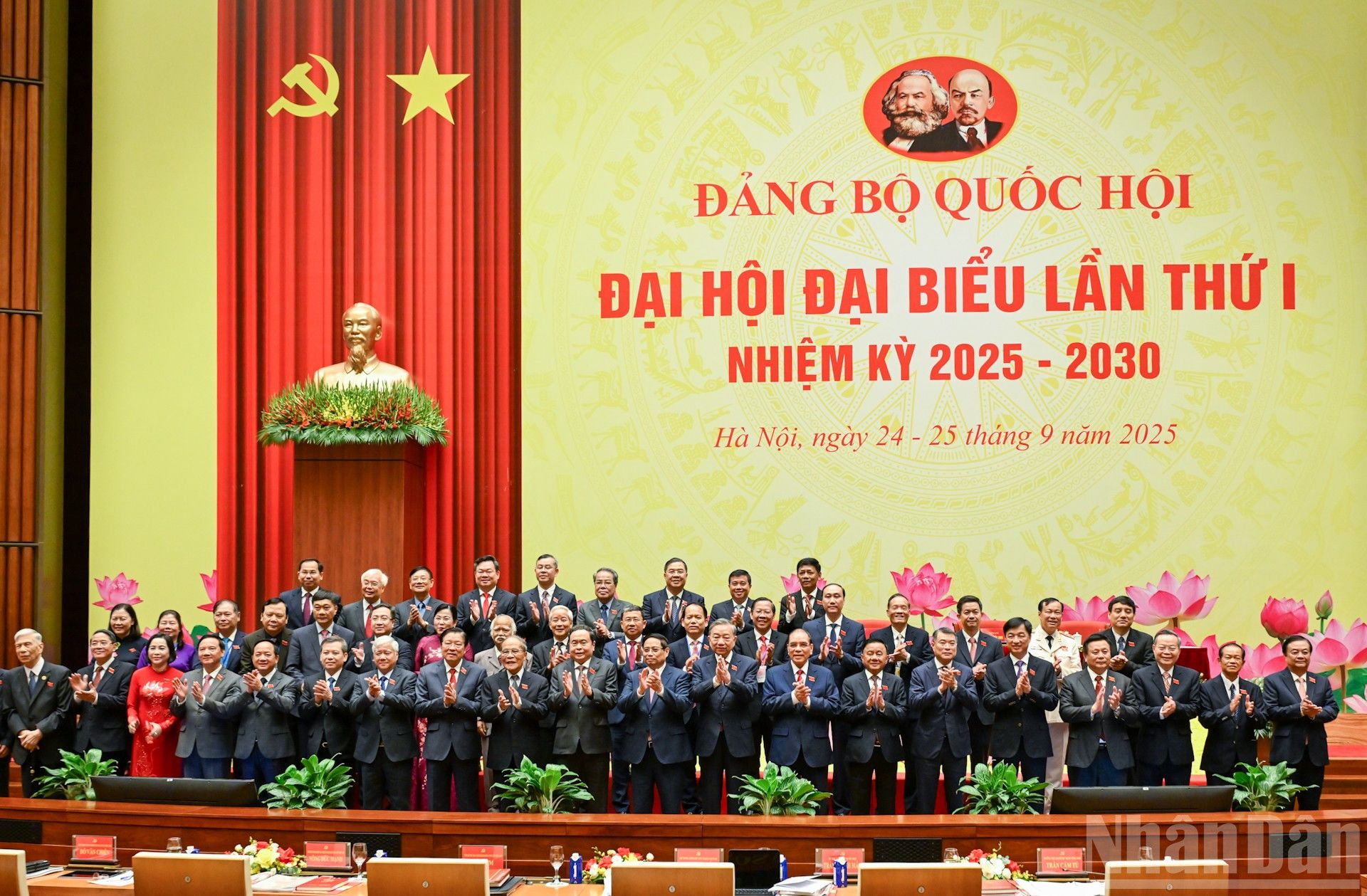
General Secretary To Lam, together with incumbent and former leaders of the Party and the state, attends the 1st Congress of the National Assembly Party Committee.
General Secretary To Lam, together with incumbent and former leaders of the Party and the state, attends the 1st Congress of the National Assembly Party Committee.
(4) Leading the review and decision-making on major issues: The Executive Board and Standing Board of the National Assembly Party Committee led and directed the National Assembly and the National Assembly Standing Committee to implement in a timely and coordinated manner, achieving high unity and consensus in exercising the function of deciding major national issues relating to organisational arrangements, personnel, socio-economic matters, and the state budget. Many items carried strategic significance, creating mechanisms and policies to implement the guidelines of the Politburo and the Party Central Committee, including: leading the implementation of resolutions and conclusions of the Party Central Committee on reorganising the political system’s apparatus, reorganising administrative units, and establishing a two-tier local government model; deciding on organisational structure and personnel matters within competence; leading and directing the timely and coordinated adoption of special mechanisms and policies to implement Conclusion No. 123-KL/TW on the scheme to supplement socio-economic development in 2025 with a growth target of 8% or higher; implementing Resolution No. 57-NQ/TW (dated December 22, 2024) on breakthroughs in developing science and technology, innovation, and national digital transformation; actively preparing for elections of deputies to the 15th National Assembly and deputies to People’s Councils for the 2026–2031 term; and organising congresses of subordinate party committees under the National Assembly Party Committee.
It can be affirmed that the results achieved since the establishment of the National Assembly Party Committee across all areas of work have been comprehensive and of special importance, with historic decisions that promptly institutionalised resolutions, directives, and conclusions of the Party Central Committee, the Politburo, and the Secretariat. In particular, the leadership and direction in amending and supplementing the 2013 Constitution, as well as in reviewing and improving institutions to create a legal framework for implementing the Party’s major guidelines on reorganising the apparatus, establishing a two-tier local government model, removing institutional bottlenecks, unlocking resources, seizing opportunities, and maximising potential advantages and development space, have contributed to the country’s rapid and sustainable development.

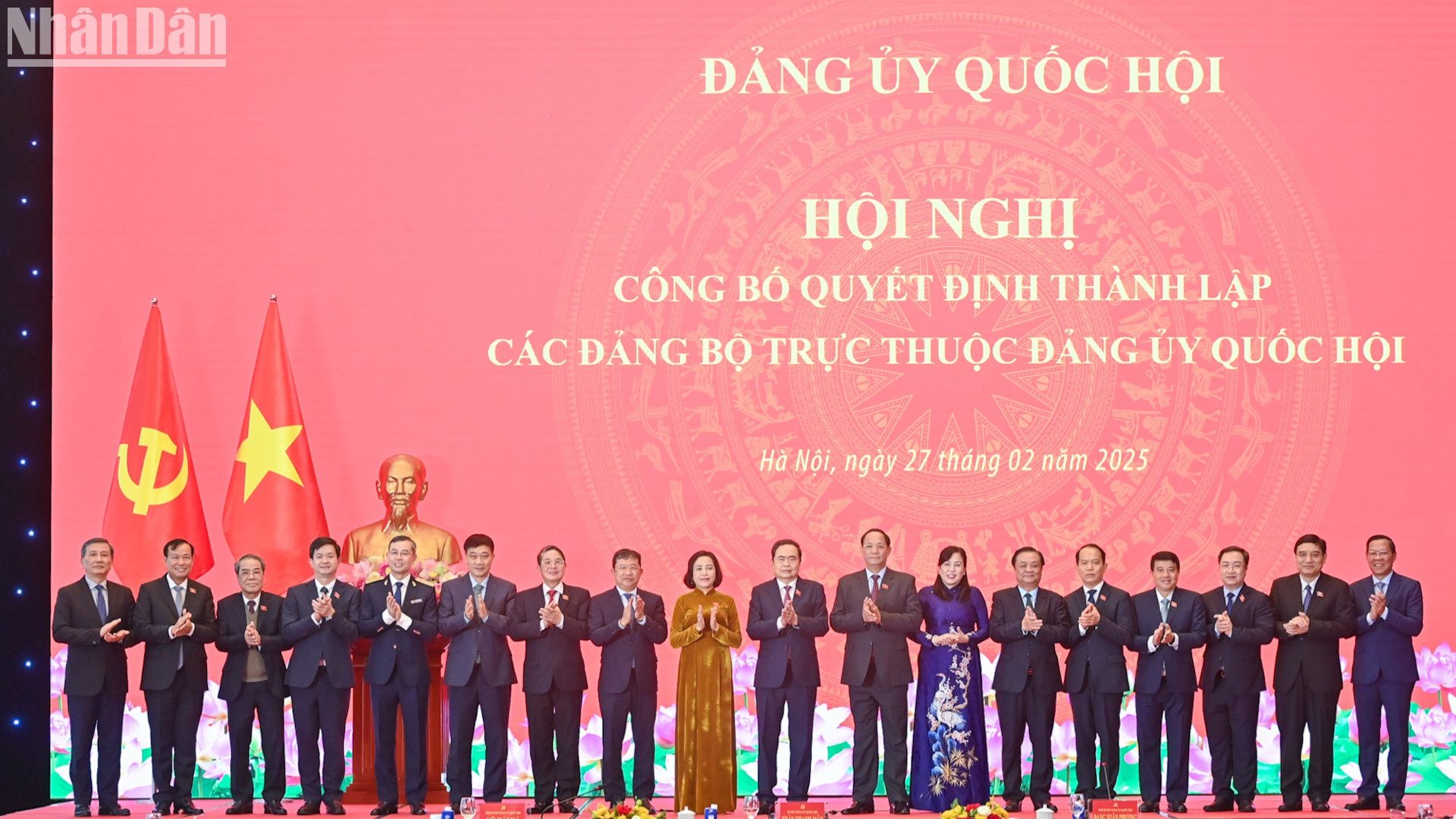
It can be affirmed that the results achieved since the establishment of the National Assembly Party Committee across all areas of work have been comprehensive and of special importance, with historic decisions that promptly institutionalised resolutions, directives and conclusions of the Party Central Committee, the Politburo, and the Secretariat.
On National Assembly deputies
The 14th National Assembly: The term planned to elect 500 deputies, but the total number of elected deputies on May 22, 2016, and in the additional election on May 29, 2016, (in Can Tho City) was 496 — four fewer than the total number to be elected; the status of two deputies was not recognised.
Ethnic minority deputies numbered 86 (17.41%); women deputies 132 (26.72%); non-Party deputies 20 (4.05%); young deputies (under 40) 71 (14.37%); deputies re-elected from the 13th to the 14th National Assembly 159 (32.19%); and first-time deputies 316 (63.97%). The share of re-elected deputies was maintained at around one-third of total deputies to ensure continuity and renewal. Self-nominated deputies: two (0.4%).
15th National Assembly (2021–2026): There were 499 elected deputies (99.8%). Specifically, by composition: women deputies 151 (30.26%); ethnic minority deputies 89 (17.84%); young deputies (under 40) 47 (9.42%); non-Party deputies 14 (2.81%); deputies re-elected from the 14th National Assembly or who had served in previous terms 203 (40.68%); and first-time deputies 296 (59.32%).
By professional qualifications: postgraduates numbered 392 (78.56%), including 144 doctors and 248 master’s degrees; university degree 106 (21.24%); below university one (0.2%). By academic titles: professors accounted for 12 (2.4%) and associate professors 20 (4%).

On the National Assembly Standing Committee
The National Assembly Standing Committee is the standing body of the National Assembly. Its legal status, organisational structure, functions, tasks, powers, and working modalities in the 14th and 15th terms have continued to be consolidated and improved on the basis of inheritance and development of the values and achievements of previous terms, while also introducing important innovations to further enhance the quality and effectiveness of its activities.
The structure of the National Assembly Standing Committee in the 14th and 15th terms remained stable as in previous terms, comprising 18 members: the chairman, four vice chairpersons, one Chairperson of the Council for Ethnic Affairs, nine chairpersons of National Assembly Committees, the Secretary General of the National Assembly–Head of the National Assembly Office, and two heads of boards under the National Assembly Standing Committee.
At the 9th extraordinary session (February 2025) of the 15th National Assembly, the National Assembly adopted Resolution No. 179/2025/QH15, under which the number of members of the National Assembly Standing Committee in the 15th term was 19, including the Chairman of the National Assembly, six vice chairpersons of the National Assembly, and 12 members of the National Assembly Standing Committee.
At the 9th session (June 2025) of the 15th National Assembly, the National Assembly adopted Resolution No. 213/2025/QH15 on the election of members of the National Assembly Standing Committee for the 15th term. As of 2025, the National Assembly Standing Committee in the 15th term comprises 21 comrades. Among them, Tran Thanh Man, Politburo Member and Chairman of the National Assembly. There are six Party Central Committee members who are vice chairpersons of the National Assembly: Nguyen Khac Dinh, Tran Quang Phuong, Nguyen Duc Hai, Nguyen Thi Thanh, Vu Hong Thanh, and Le Minh Hoan, along with 14 members of the National Assembly Standing Committee.


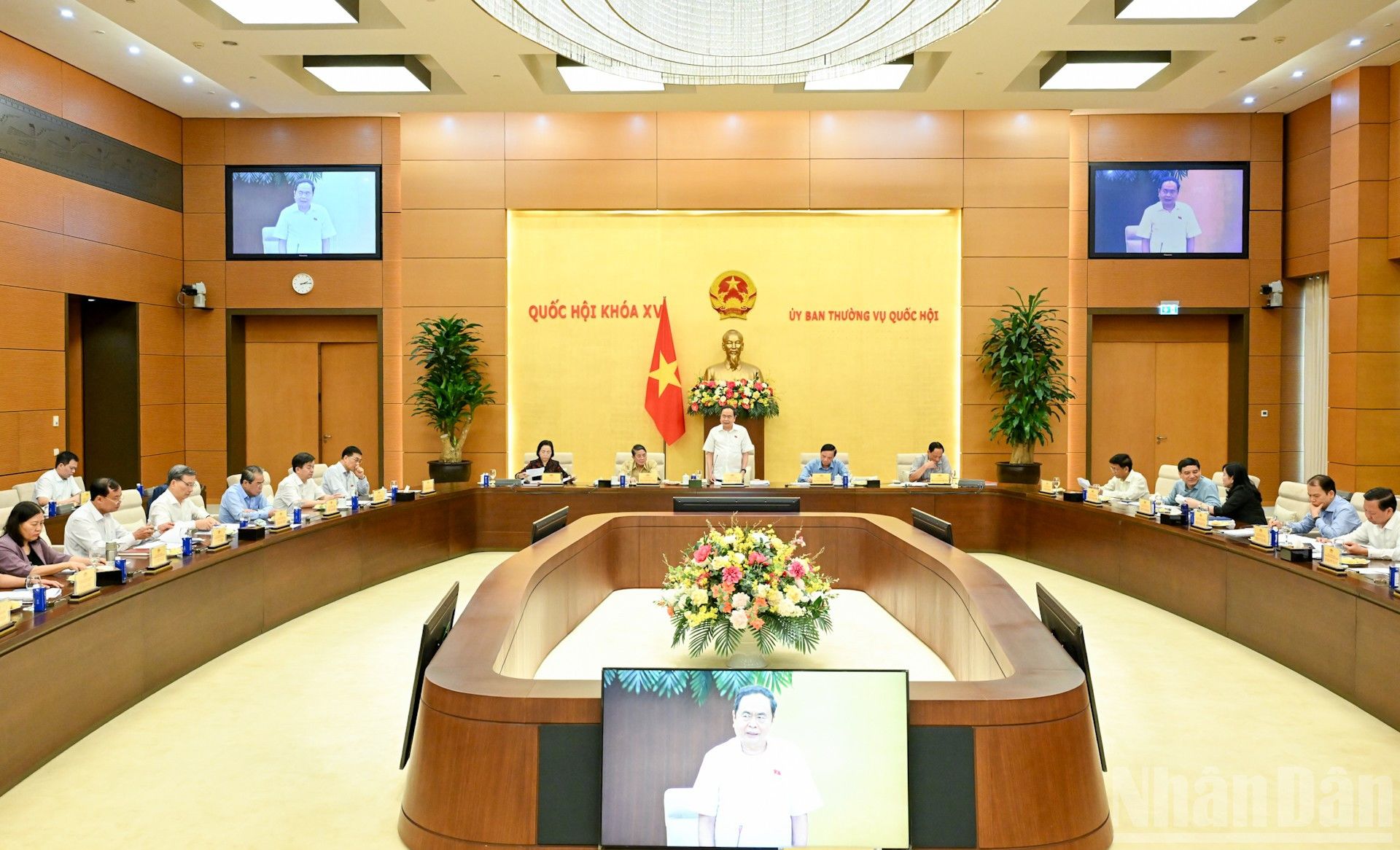

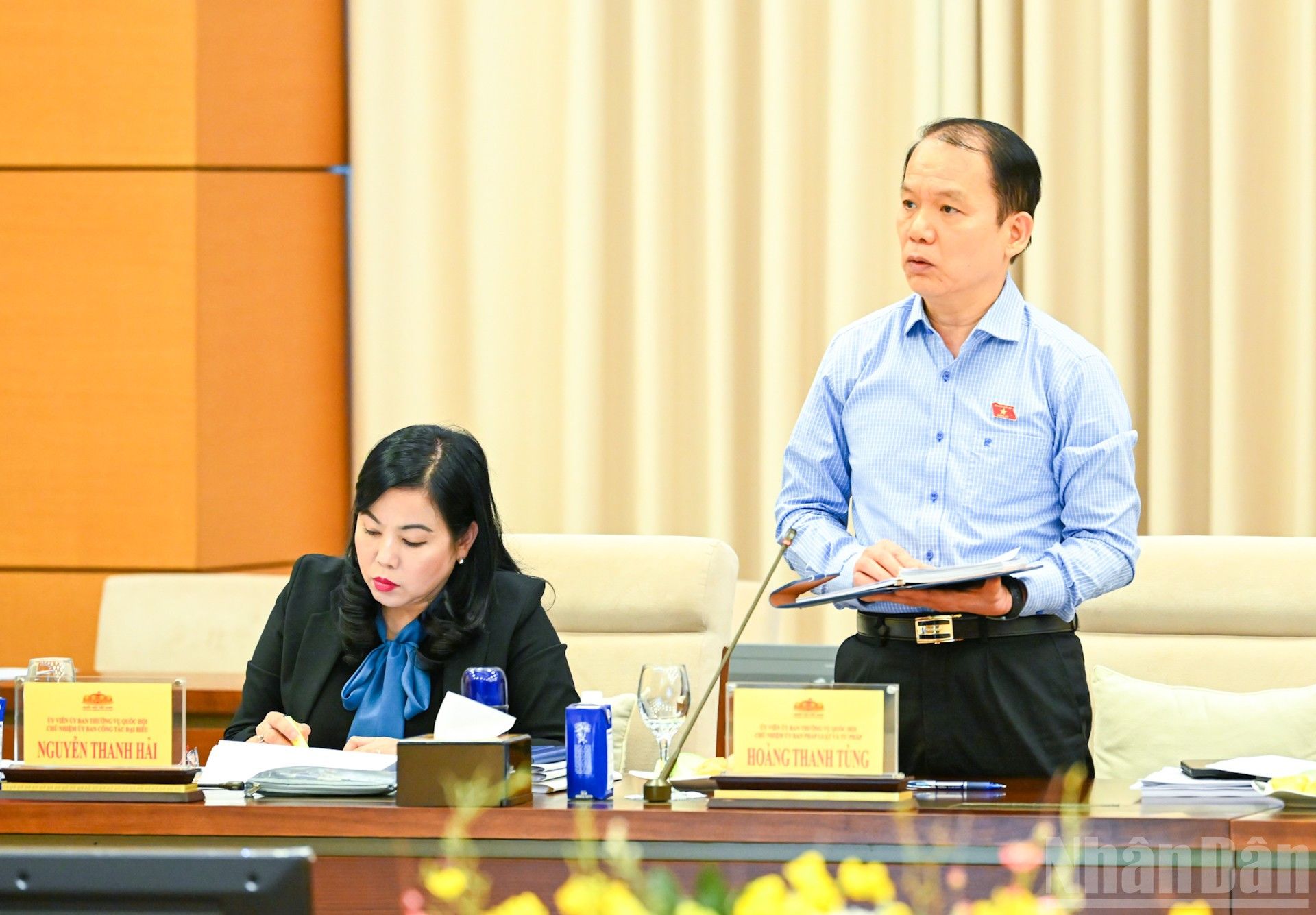

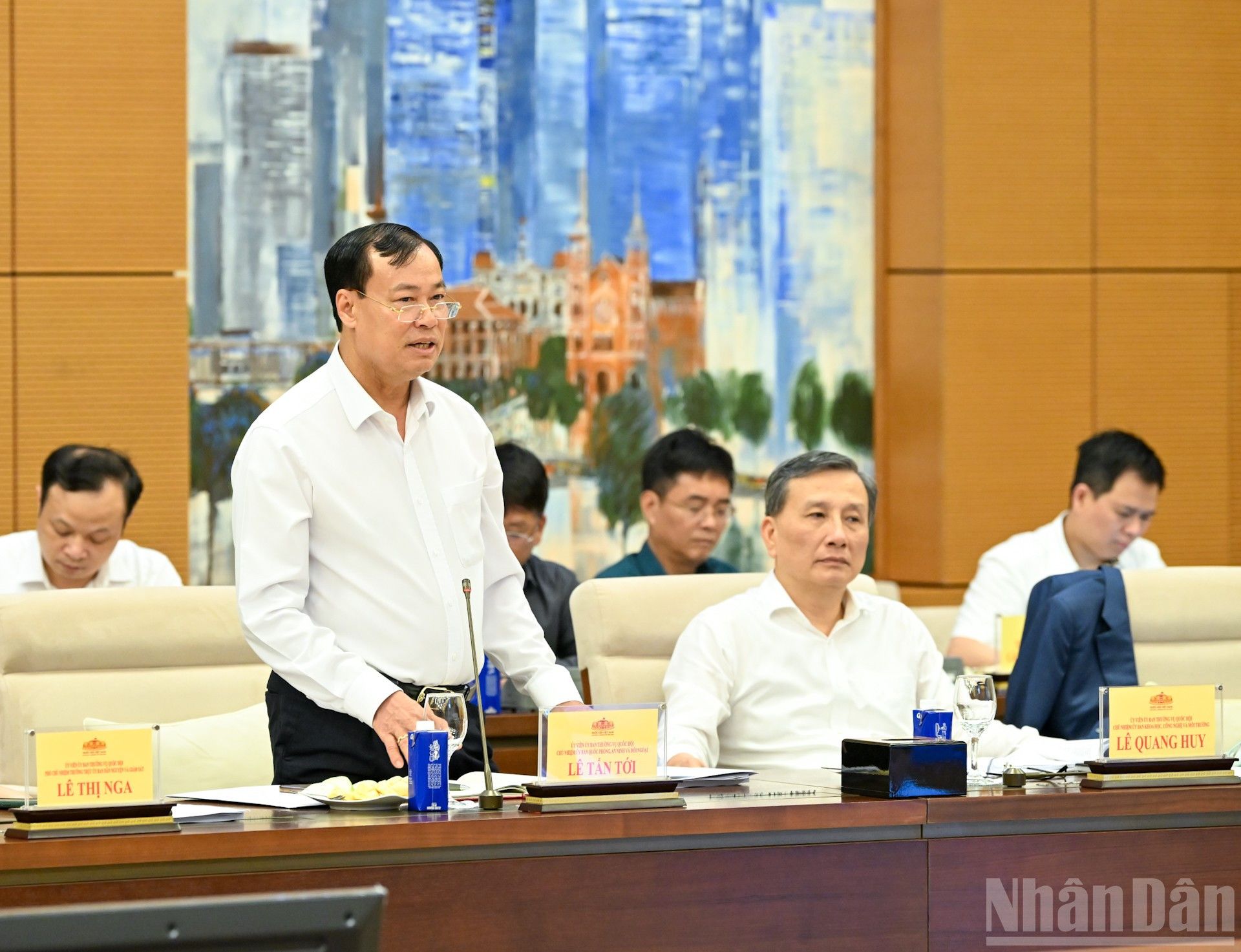
Since the beginning of the 14th National Assembly term, the Council for Ethnic Affairs and nine National Assembly Committees were established with a statutory organisational structure. The 14th National Assembly had nine Committees, including the Law Committee; Judicial Committee; Economic Committee; Finance-Budget Committee; Committee for External Relations; Committee for Culture, Education, Youth, Adolescents and Children; Committee for Social Issues; Committee for National Defence and Security; and Committee for Science, Technology and Environment.
From the start of the 15th term until February 2025, the National Assembly maintained the structure of the Council for Ethnic Affairs and nine Committees. The 2014 Law on Organisation of the National Assembly, amended and supplemented in 2020, changed the names of some Committees, including the Committee for Social Issues, renamed the Social Committee; and the Committee for Culture, Education, Youth, Adolescents and Children, renamed the Culture and Education Committee.
In February 2025, at the 9th extraordinary session, the 15th National Assembly passed the Law amending and supplementing certain articles of the Law on Organisation of the National Assembly (Law No. 62/2025/QH15). Accordingly, the Law removed the listing provisions of National Assembly agencies (Article 66), removed articles stipulating the duties and powers of the Council for Ethnic Affairs and National Assembly Committees, added one article (Article 68a) providing general regulations on the functions, duties, and powers of the Council for Ethnic Affairs and National Assembly Committees, and assigned the National Assembly Standing Committee to regulate the specific duties and powers of these agencies.
To specify the above regulations, the National Assembly passed Resolution 178/2025/QH15 on the organisation of National Assembly agencies. Accordingly, the 15th National Assembly has eight agencies: Council for Ethnic Affairs; Law and Justice Committee; Economic and Finance Committee; Committee for National Defence, Security and Foreign Affairs; Committee for Culture and Social Affairs; Committee for Science, Technology and Environment; Committee for Deputies’ Affairs; and Committee for People’s Aspirations and Supervision.
Membership of the Council for Ethnic Affairs and National Assembly Committees: At the beginning of the 14th National Assembly term, based on the aspirations of National Assembly deputies and proposals from the Chairman of the Council for Ethnic Affairs and Chairpersons of National Assembly Committees, the National Assembly Standing Committee approved 435 deputies to serve as members of the Council for Ethnic Affairs and National Assembly Committees, accounting for 88.01% of the total number of National Assembly deputies.
Thus, except for some National Assembly deputies working in Government agencies and serving as senior leaders in Party agencies or National Assembly leadership, most National Assembly deputies participated as members of the Council for Ethnic Affairs and National Assembly Committees. Among them, the Committee for Social Issues had the largest number of deputies (52), the Committee for Foreign Affairs had the fewest (33), while the Council for Ethnic Affairs and other Committees had member counts ranging from 41–46 deputies.
Compared to the 13th National Assembly term, the number of members of the Council for Ethnic Affairs and National Assembly Committees in the 14th term increased. Additionally, the structure of members of the Council for Ethnic Affairs and National Assembly Committees always ensured a ratio of Standing Board members at about 20–25%; 67 full-time National Assembly deputies at localities were allocated to the Council for Ethnic Affairs and National Assembly Committees. This contributed to enhancing quality and improving the effectiveness of operations of the Council for Ethnic Affairs and National Assembly Committees of the 14th term.
The Standing Boards of the Council for Ethnic Affairs and National Assembly Committees had 92 full-time deputies, comprising: 10 deputies as Chairpersons and 37 deputies as Vice Chairpersons of the Council for Ethnic Affairs and National Assembly Committees; and 45 deputies as members of the Standing Board of the Council for Ethnic Affairs and National Assembly Committees. Among them, 52 full-time deputies from the 13th term were re-elected, accounting for 56.52%; three deputies held concurrent roles from the 13th term, at 3.26%; and 35 new 14th-term National Assembly deputies, at 38.04%. This structure reflected continuity and renewal in the organisation of the Standing Council for Ethnic Affairs and Standing Committees of the National Assembly across terms.
During the 14th National Assembly term, despite staff transfers, rotations, and new appointments, the structure of the Standing Council for Ethnic Affairs and National Assembly Committees remained relatively stable overall. By the end of the term, the total number of full-time deputies at the Council for Ethnic Affairs and National Assembly Committees was 89, comprising: 10 deputies as Chairpersons, 42 deputies as Vice Chairpersons, and 37 deputies as members of the Standing Boards.
At the beginning of the 15th National Assembly term, the number of Committee members remained largely stable as in the 14th term. Accordingly, the number of deputy levels in the Committees showed little variation: the Committee for Science, Technology and Environment had three deputies; the Law Committee, Social Committee, Judicial Committee, and Council for Ethnic Affairs had five deputies each. The Committee for Foreign Affairs; Committee for Culture and Education; Committee for National Defence and Security; Finance-Budget Committee; and Economic Committee had four deputies each.
By February 2025, following the 2025 Law amending and supplementing several articles of the Law on the Organisation of the National Assembly, the number of members of the Council for Ethnic Affairs and National Assembly Committees changed due to mergers. Accordingly, the 15th-term Law and Justice Committee had 10 Deputy Chairpersons; nine Members who are full-time National Assembly deputies; and 54 Members who are part-time National Assembly deputies. The 15th-term Economic and Finance Committee had nine Deputy Chairpersons; 11 Members who are full-time National Assembly deputies; and 53 Members who are part-time National Assembly deputies.
The 15th-term Committee for People’s Aspirations and Supervision had four Deputy Chairpersons; one Member who is a full-time National Assembly deputy; and 18 Members who are part-time National Assembly deputies. The 15th-term Committee for Deputies’ Affairs had three Deputy Chairpersons; two Members who are full-time National Assembly deputies; and 12 Members who are part-time National Assembly deputies.
The 15th-term Committee for Culture and Social Affairs had 10 Deputy Chairpersons; 11 Members who are full-time National Assembly deputies; and 69 Members who are part-time National Assembly deputies.
The 15th-term Committee for National Defence, Security and Foreign Affairs had five Deputy Chairpersons; nine Members who are full-time National Assembly deputies; and 43 Members who are part-time National Assembly deputies.
The establishment of specialised Sub-committees under the Ethnic Council and the Committees of the National Assembly has been prescribed by law and consistently carried forward through successive amendments and supplements to the Law on the Organisation of the National Assembly.
Clause 4, Article 67 of the 2014 Law on the Organisation of the National Assembly stipulates: the Ethnic Council and the Committees of the National Assembly shall establish Sub-committees to study and prepare matters falling within the areas of activity of the Council and the Committees. The Head of a Sub-committee must be a member of the Council or Committee; other members may not be members of the Council or Committee or may not be deputies of the National Assembly.
Accordingly, during the term of the XIV National Assembly, the Ethnic Council and the Committees established Sub-committees with a structure comprising Vice Chairpersons of the Ethnic Council, Vice Chairs of Committees, Standing Members who are full-time members, and members of the Ethnic Council and the Committees. The Heads and Deputy Heads of Sub-committees were leaders of the Ethnic Council and the Committees of the National Assembly. Although the 2014 Law on the Organisation of the National Assembly provides that members of Sub-committees may not be National Assembly deputies, during the term of the XIV National Assembly all members of the Sub-committees of the Ethnic Council and the Committees were National Assembly deputies.
During the term of the 14th National Assembly, the Ethnic Council and seven Committees established Sub-committees by specific areas of work; two Committees divided their work by groups of areas, which was two Committees more than in the term of the 13th National Assembly.
Regarding the number of Sub-committees: the Ethnic Council established three Sub-committees; the Finance and Budget Committee, the Economic Committee, and the National Defence and Security Committee each established four Sub-committees; the Culture, Education, Youth, Adolescents and Children Committee, the Committee for Social Affairs, and the Committee for Science, Technology and Environment each established five Sub-committees. The bodies that did not establish Sub-committees but instead divided their work into areas were: the Law Committee; the Justice Committee, which was divided into five groups of areas, similar to the term of the 13th National Assembly; and the Foreign Affairs Committee, which was organised by areas of work and regions.
In the term of the 15th National Assembly, the Ethnic Council and the Committees also established Sub-committees similar to those in the term of the 14th National Assembly.
Delegations of National Assembly Deputies
In the terms of the 14th and 15th National Assemblies, the arrangement whereby each Delegation of National Assembly Deputies was assigned a Head or Deputy Head working on a full-time basis created favourable conditions for directing and implementing the activities of the Delegation at the local level, focusing on effectively carrying out activities and properly handling the volume of work of the Delegation of National Assembly Deputies. Heads and Deputy Heads of Delegations were elected from among National Assembly deputies attached to the Delegation and were approved by the Standing Committee of the National Assembly. Nationwide, there are 63 Delegations of National Assembly Deputies corresponding to provinces and centrally governed cities.

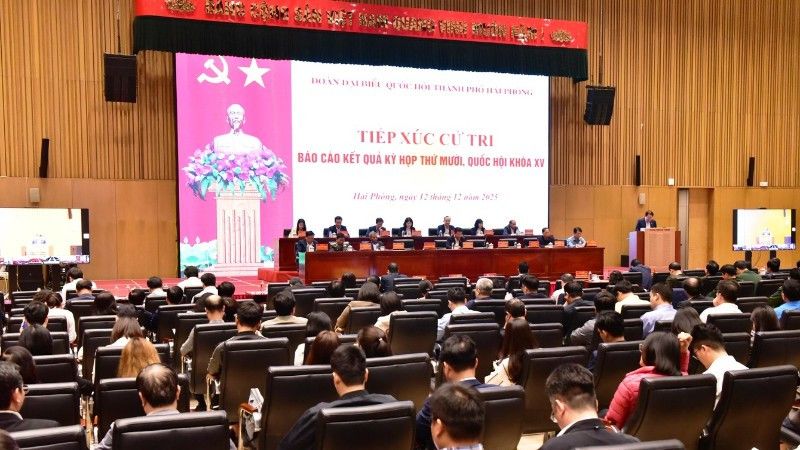
Scene of a voter contact conference of the Delegation of National Assembly Deputies of Hai Phong City.
Scene of a voter contact conference of the Delegation of National Assembly Deputies of Hai Phong City.
The Secretary General of the National Assembly and the Secretariat
The position of Secretary General of the National Assembly is prescribed by law in the 2014 Law on the Organisation of the National Assembly (the Law took effect on January 1, 2016): “The Secretary General of the National Assembly is elected, relieved of duty, or removed by the National Assembly. The Secretary General of the National Assembly is responsible for advising and serving the activities of the National Assembly, the Standing Committee of the National Assembly, and National Assembly deputies.” The Secretary General of the National Assembly concurrently serves as Head of the Office of the National Assembly and is responsible before the National Assembly and the Standing Committee of the National Assembly for the activities of the Office of the National Assembly. Assisting the Secretary General of the National Assembly is the Secretariat.
According to the Resolution of the Standing Committee of the National Assembly on the organisational structure, tasks, and powers of the Secretariat, the Secretariat comprises two Deputy Secretaries General of the National Assembly, of whom one concurrently serves as Deputy Head of the Office of the National Assembly, and one concurrently serves as Deputy Chair of the Law Committee of the National Assembly, and 15 members, including 10 members who are Directors-General of Departments serving the Ethnic Council and the Committees of the National Assembly, and five members who are Directors-General of the Department serving supervisory activities and the Director-General of the General Affairs Department, the Director-General of the Information Department, the Director of the National Assembly Library, and the Director of the Information Technology Centre.

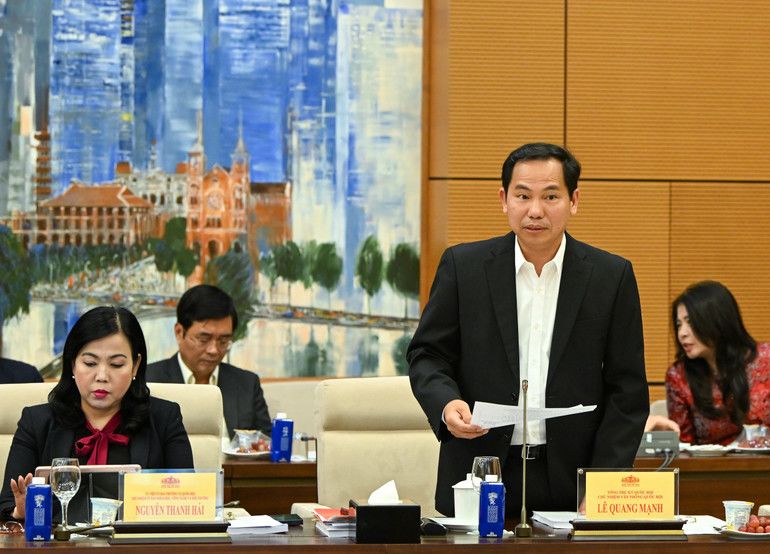
Secretary General of the National Assembly and Head of the Office of the National Assembly Le Quang Manh presents a report at the briefing meeting between National Assembly Chairman Tran Thanh Man and the agencies of the National Assembly, on December 16, 2025.
Secretary General of the National Assembly and Head of the Office of the National Assembly Le Quang Manh presents a report at the briefing meeting between National Assembly Chairman Tran Thanh Man and the agencies of the National Assembly, on December 16, 2025.
From the beginning of the term of the 14th National Assembly, the National Assembly elected the Secretary General of the National Assembly, and the Standing Committee of the National Assembly approved two Deputy Secretaries General of the National Assembly and 13 members of the Secretariat at the proposal of the Secretary General of the National Assembly. However, during the term, the number and titles of Deputy Secretaries General of the National Assembly and the number of members of the Secretariat fluctuated. By April 2020, the Secretariat had been fully consolidated with two Deputy Secretaries General of the National Assembly and 15 members.
In the term of the 15th National Assembly, the National Assembly elected the Secretary General of the National Assembly, and the Standing Committee of the National Assembly approved two Deputy Secretaries General of the National Assembly, one Standing Member of the Secretariat, and 19 members of the Secretariat.
At the beginning of 2025, implementing the policy of reorganising and streamlining the organisational apparatus, on January 7, 2025, the Politburo issued Conclusion No. 111-KL/TW on the merger, termination of operations, and transfer of functions and tasks of a number of bodies of the National Assembly, bodies under the Standing Committee of the National Assembly, and the Office of the National Assembly. According to Conclusion No. 111-KL/TW, the Secretary General of the National Assembly concurrently serves as Head of the Office of the National Assembly. Therefore, the Law amending and supplementing a number of articles of the Law on the Organisation of the National Assembly (Law No. 62/2025/QH15) continued to use the title “Secretary General of the National Assembly–Head of the Office of the National Assembly” and clearly defined this position as the head of the Office of the National Assembly, responsible before the National Assembly and the Standing Committee of the National Assembly for the activities of the Office of the National Assembly. The Secretary General of the National Assembly–Head of the Office of the National Assembly is the spokesperson of the National Assembly and the Standing Committee of the National Assembly. In addition, the Law does not provide for the positions of Deputy Secretary General or the Secretariat.
Operational methods of the National Assembly from 2013 to 2025

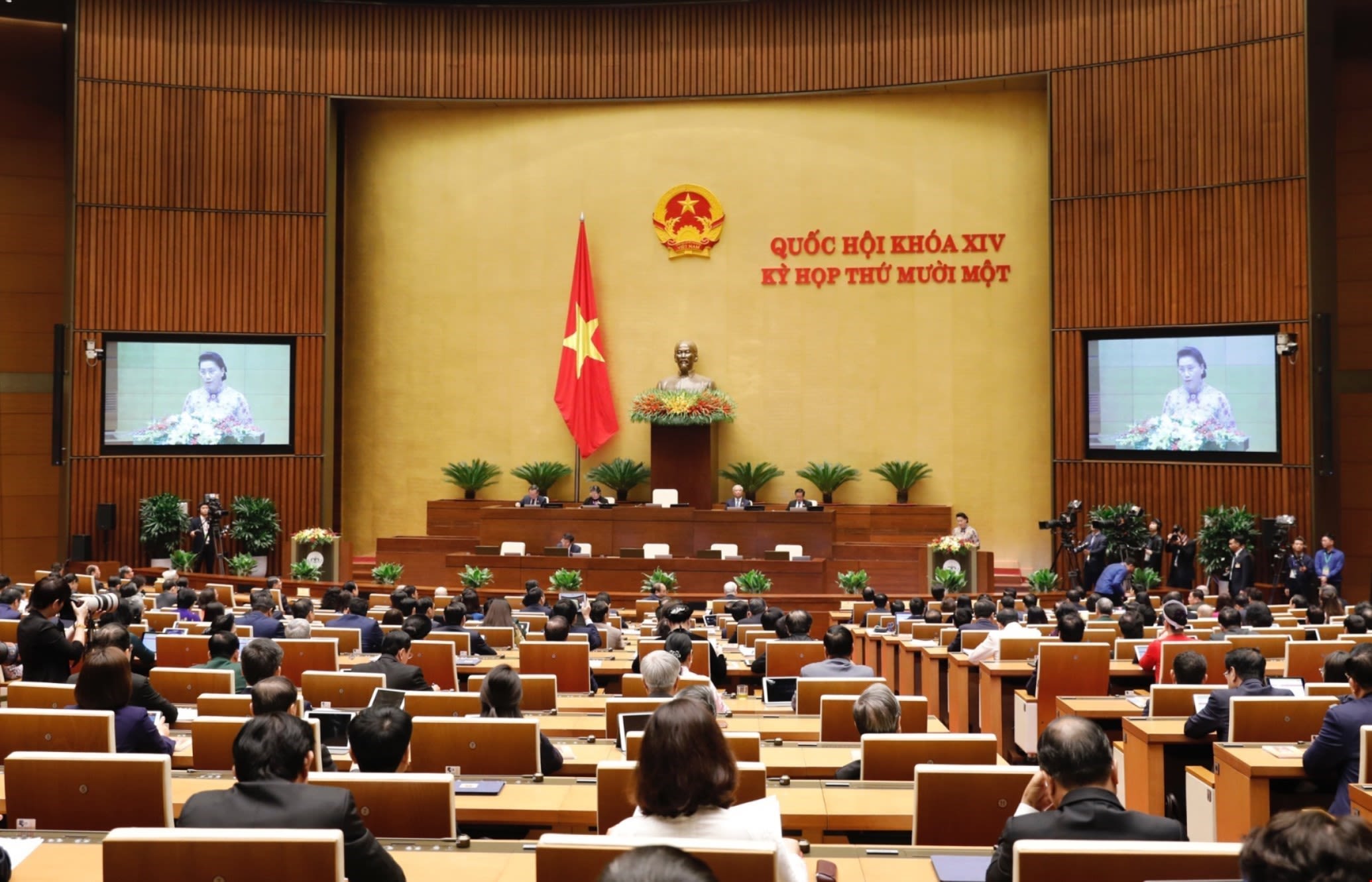

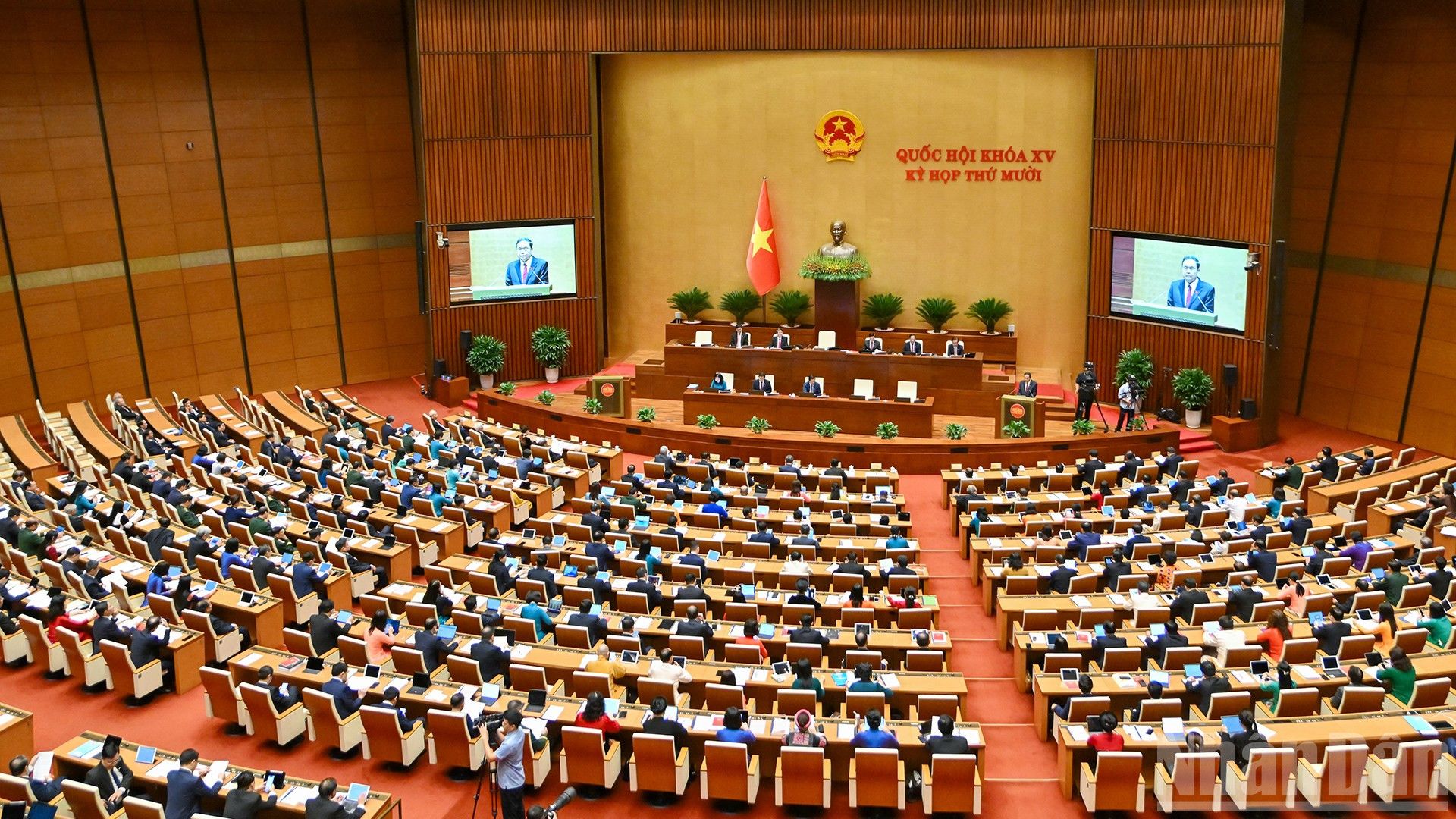
Sessions of the National Assembly
During this period, the National Assembly has operated in accordance with the 2013 Constitution and the 2014 Law on the Organisation of the National Assembly (as amended and supplemented in 2020 and 2025). The provisions governing sessions of the National Assembly have undergone many strong innovations, thereby significantly improving the effectiveness and quality of National Assembly sessions.
Specifically, the preparation for National Assembly sessions has seen numerous innovations. In this regard, the roles of the Standing Committee of the National Assembly, the agencies of the National Assembly, and full-time National Assembly deputies have been enhanced. The preparation and conduct of sessions have involved the active participation of the relevant stakeholders, with a spirit of dedication, urgency, and responsibility.
The work of formulating and adjusting the agenda of National Assembly sessions has continued to be renewed and improved in the direction of arranging the timing and content of sessions in a more reasonable and scientific manner, so that National Assembly deputies and National Assembly agencies have more time to perform their tasks during the course of the sessions. The time allocated for presenting proposals and reports has been gradually reduced; speaking time has been arranged more reasonably; and the time for plenary discussions has been increased, especially for important draft laws with a broad scope of regulation and complex, difficult content that attract the attention of many deputies.
At the end of the term of the 14th National Assembly and during the term of the 15th National Assembly, sessions were divided into two phases, combining online sessions with in-person meetings, contributing to the resolution of difficulties faced by National Assembly deputies and appraisal, reception, and revision bodies in previous terms, and responding to the new situation (the Covid-19 pandemic).
In particular, at the 6th Session of the 14th National Assembly, for the first time the National Assembly issued a session resolution (Resolution No. 74/2018/QH14 dated November 20, 2018 on the 6th Session of the 14th National Assembly). The issuance of a session resolution is of great significance: the resolution not only assesses and summarises the entire working process of the National Assembly session, but also serves as a legal document determining decisions and tasks that are not provided for in other laws or resolutions already adopted by the National Assembly, and requires agencies and organisations to take responsibility for implementing the guidelines and decisions approved by vote of the National Assembly.
The organisation and conduct of plenary sessions and discussion sessions within Delegations of National Assembly Deputies and Groups of National Assembly Deputies have continued to be improved and renewed in a more scientific, proactive, flexible, creative, and decisive manner, creating conditions for more National Assembly deputies to participate in giving opinions and enhancing critical and debating capacity. With the method of “quick questions–concise answers”, and depending on circumstances, reducing the speaking time of National Assembly deputies from seven minutes per turn to five minutes per turn, the 14th National Assembly created better conditions for increasing the number of deputies speaking directly at the parliamentary chamber.
The organisation and conduct of plenary sittings and discussion sessions within Delegations of National Assembly Deputies and Groups of National Assembly Deputies have continued to be improved and renewed in a more scientific, proactive, flexible, creative and decisive manner, creating conditions for more National Assembly deputies to participate in giving opinions and strengthening debate and critical scrutiny.
Working processes and procedures of the National Assembly at its meetings have been improved and renewed in an increasingly substantive direction, helping to gradually shift from a “speech-oriented National Assembly” to a “debate-oriented National Assembly”. Information and support work for National Assembly sessions have also been upgraded and renovated with stronger application of science and technology.
At the 7th Session of the 14th National Assembly, for the first time, software supporting the activities of National Assembly deputies was installed and used on smart electronic devices; online National Assembly meetings (phase 1) were organised from the 9th Session of the 14th National Assembly. Information and communications on National Assembly activities have been renovated dramatically in both content and form, contributing to raising awareness and public support for the National Assembly’s decisions, bringing laws and policies into life more quickly, and strengthening the close relationship between voters, the people, and the National Assembly.
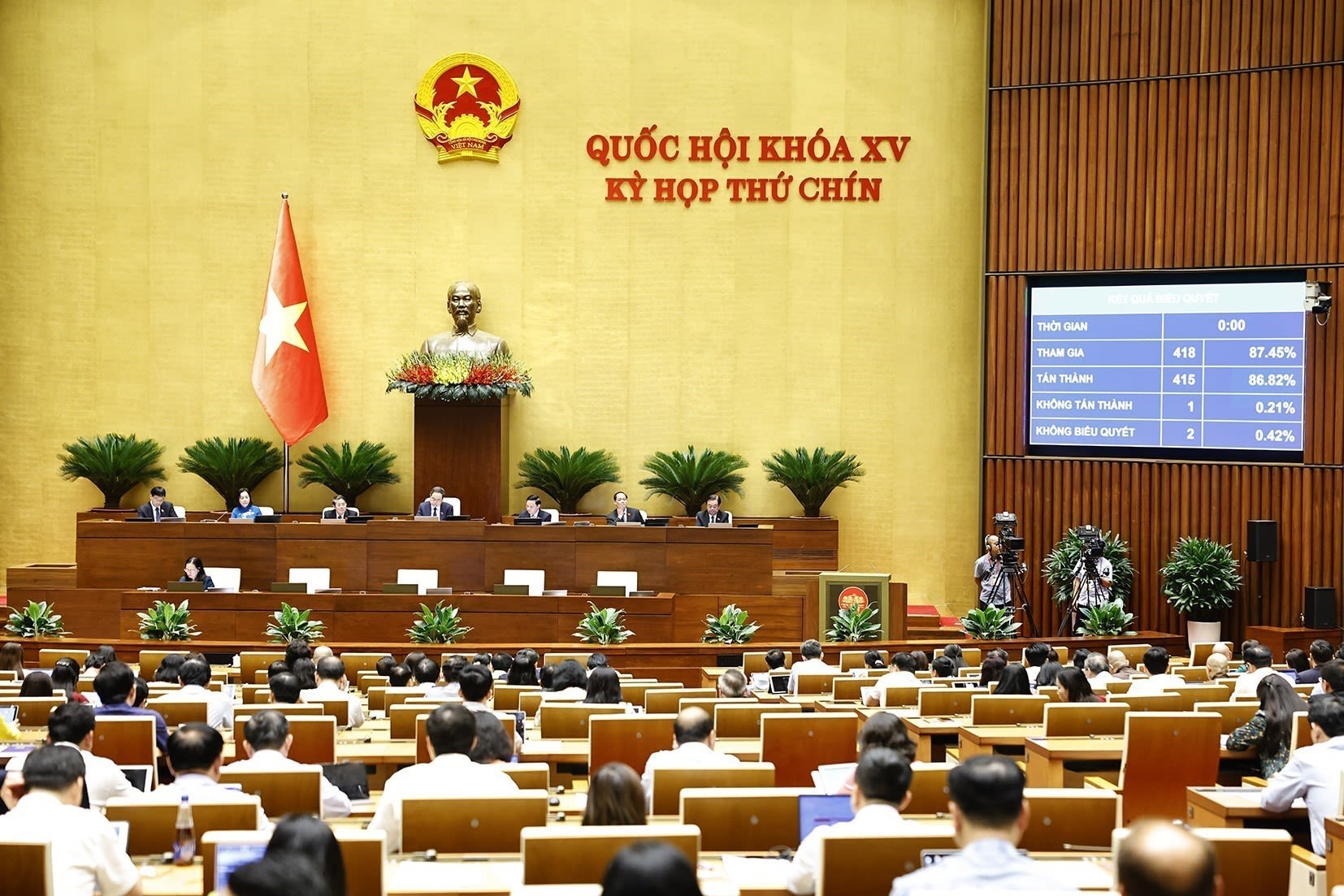
In particular, the National Assembly adopted Resolution No. 71/2022/QH15 promulgating the Rules of Procedure of National Assembly Sessions (amended and supplemented in 2025) for the 15th term, with many innovations suited to practical requirements. Specifically, methods of discussion, debate, and questioning have been renewed in a more open and democratic manner, with increased debate to address issues more effectively.
At National Assembly sessions, the atmosphere of discussion among deputies has truly been lively, attracting wide public attention.
Issues which are discussed, considered and decided have been selected in the agenda; some sessions have been organised online to adapt to practical situations; information technology has been strongly applied in organising sessions such as electronic documents, digital libraries, mobile-device voting, electronic opinion polling, and software supporting meeting management, debate registration, and speaking; and transparency of National Assembly activities has been enhanced through an increasing number of sessions broadcast live on radio and television, with more information on National Assembly activities made public on mass media.
Sessions of National Assembly Standing Committee
During this period, sessions of the National Assembly Standing Committee were organised mainly in accordance with the Law on Organisation of the National Assembly in 2014, as amended and supplemented in 2020 and 2025 (from Articles 60 to 63), which provide detailed regulations on session contents, participants, quorum, time, draft agendas, decisions to convene sessions, and documentation.
Under these provisions, the National Assembly Standing Committee held regular and monthly sessions to give opinions on preparations for National Assembly sessions, proposed agenda items, and to conduct supervision activities (questioning, give opinions on supervision reports).
The issuance of the notice of conclusion by the National Assembly Standing Committee at sessions was conducted systematically, in accordance with regulations, promptly, fully, and accurately on the issues concluded by the chairman at the session, serving as a basis for relevant agencies to promptly implement. The conferences of full-time National Assembly deputies are organised in accordance with regulations and have yielded positive results, with many in-depth opinions that helped receive and revise draft projects and reports to ensure quality.

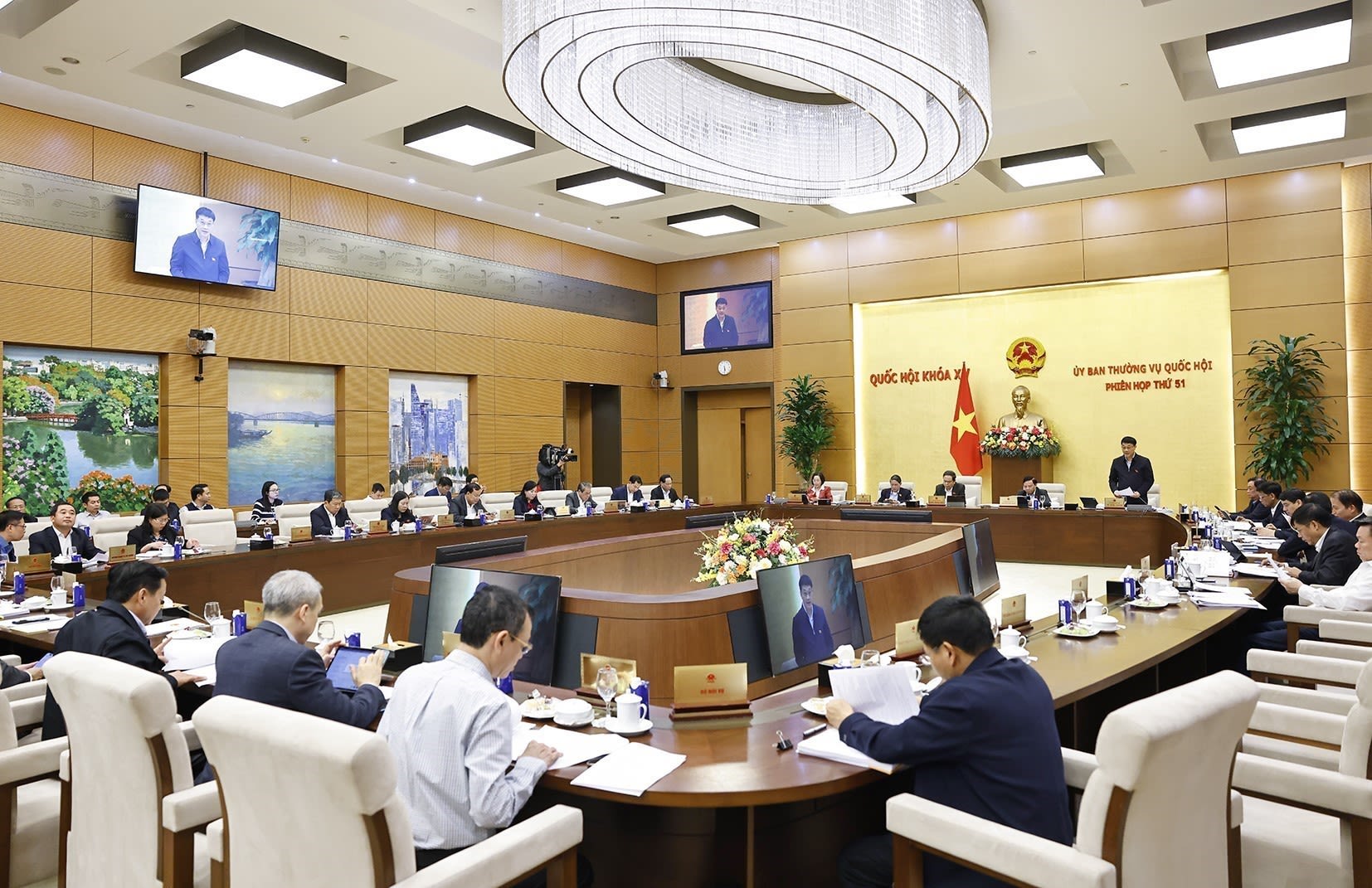
The 51st session of the National Assembly Standing Committee.
The 51st session of the National Assembly Standing Committee.

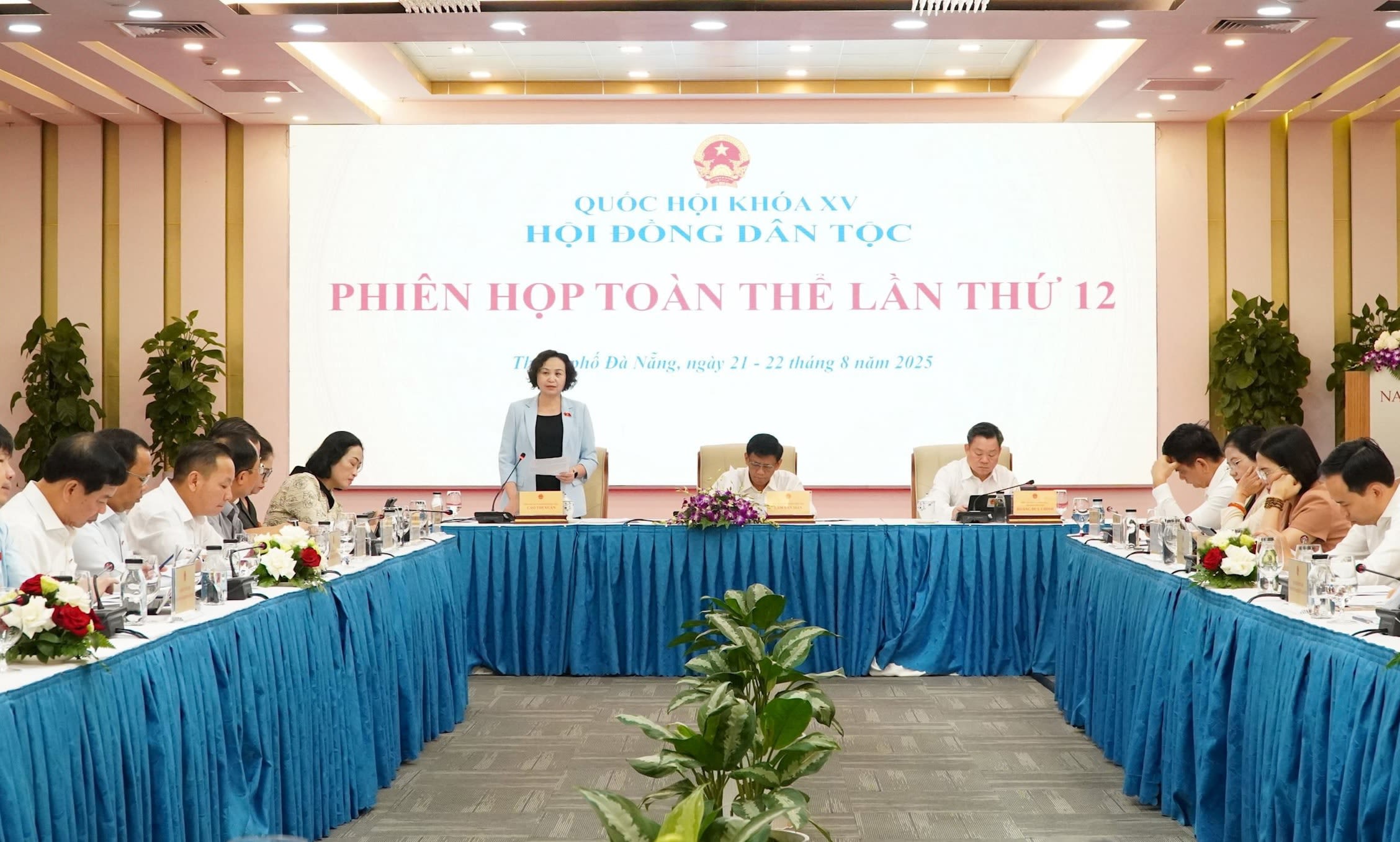
Overview of the 12th plenary session of the National Assembly’s Ethnic Council on August 21, 2025.
Overview of the 12th plenary session of the National Assembly’s Ethnic Council on August 21, 2025.

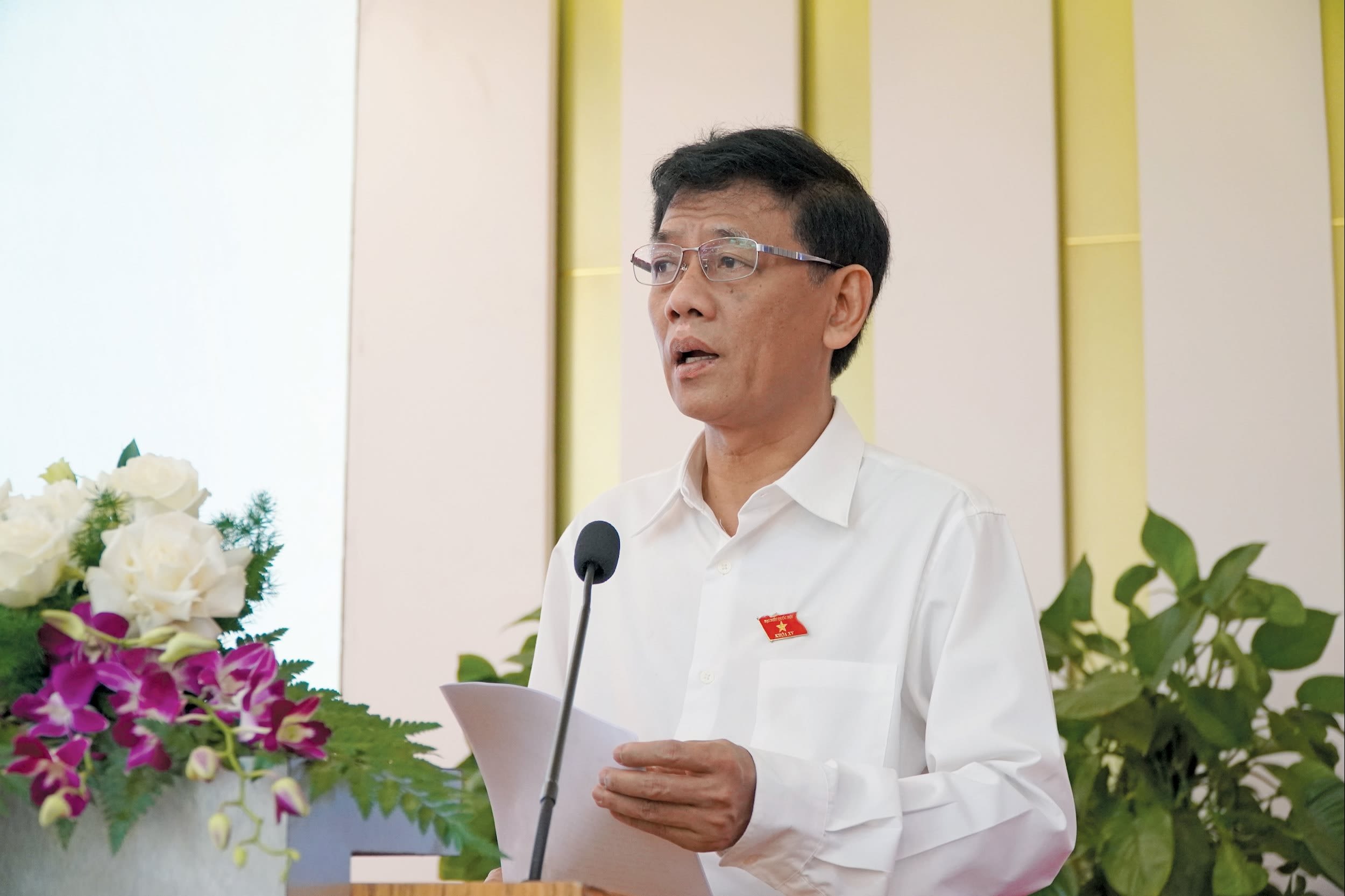
Lam Van Man, Chairman of the Ethnic Council, chaired the 12th plenary session of the Ethnic Council on August 21, 2025.
Lam Van Man, Chairman of the Ethnic Council, chaired the 12th plenary session of the Ethnic Council on August 21, 2025.
Meetings of the Ethnic Council and Committees of the National Assembly
Since 2013, regulations on meetings of the Ethnic Council and Committees of the National Assembly have been paid attention to issue, forming a basis for improving quality and effectiveness of meetings. These Ethnic Council and Committees of the National Assembly hold regular sessions in the year, and the contents were aligned with their appraisal tasks assigned at National Assembly sessions, implementing the supervision functions and other activities.
Preparation of documents for meetings has been improved increasingly. Members of the Ethnic Council and committees of the National Assembly have participated actively, contributing many in-depth and multi-dimensional opinions on both theory and practical experience in state agencies at central and local levels. As a result, the meetings of the Ethnic Council and committees of the National Assembly have increasingly promoted the collective intelligence of their members, and their reports are highly appreciated by National Assembly deputies, the National Assembly, and the National Assembly Standing Committee for their professional quality, objectivity, and comprehensiveness.
At the 15th National Assembly, right from the beginning of the term, the National Assembly Standing Committee issued a model working regulation for the Ethnic Council and committees of the National Assembly, affirming collective working principles and decision-making by majority vote. Plenary sessions of the Ethnic Council and committees of the National Assembly must have more than half of members to attend, and their decisions must be approved by more than half of the total number of members.
Plenary sessions may be held in person or online when necessary. In cases of unforeseen or urgent issues, or force majeure (due to natural disasters or pandemics) that prevent the convening of a plenary session to address matters within their jurisdiction, the standing boards of the Ethnic Council and the committees of the National Assembly hold a collective meeting of the standing boards and decide on obtaining the opinions of members of the Ethnic Council and the committees of the National Assembly in writing or through voting by other appropriate forms.
In addition, the Rules of Procedure also clearly stipulate the contents of plenary sessions of the Ethnic Council and the committees of the National Assembly; the basis for deciding on the convening of sessions; the chairperson; participants; dossiers and documentation; and the minutes of plenary meetings. These are a basis to ensure that the organisation of meetings of the Ethnic Council and the committees of the National Assembly is conducted in a strict, scientific process, ensuring the quality.
Activities of Delegations of National Assembly Deputies and National Assembly Deputies
The Law on Organisation of the National Assembly 2014 (as amended and supplemented in 2020 and 2025) stipulates Delegations of National Assembly Deputies as following: A Delegation of National Assembly Deputies is an organisation of National Assembly deputies elected in a province or centrally governed city, or transferred to work in a province or centrally governed city. Each Delegation of National Assembly Deputies has a head or a deputy head who is a full-time National Assembly Deputy. The head and deputy head of the delegation are elected by the delegation from among its deputies and are approved by the National Assembly Standing Committee.
The Office of the Delegation of National Assembly Deputies and the provincial-level People’s Council are an advisory and support body, serving activities of National Assembly deputies and the Delegation of National Assembly Deputies in the locality.
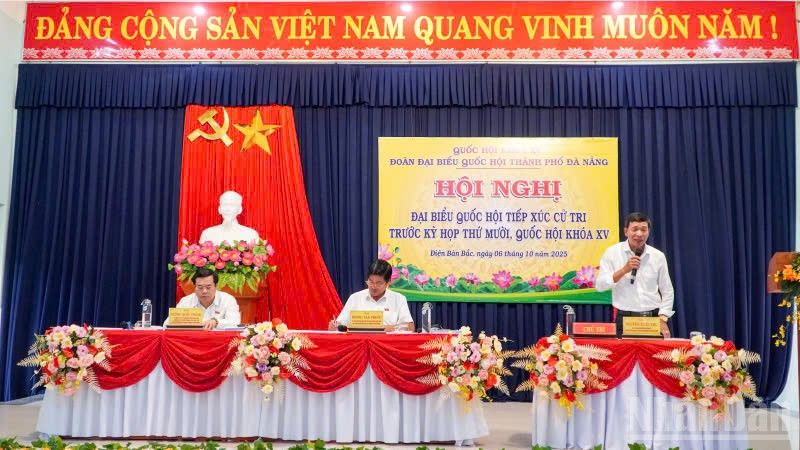
Members of the Delegation of National Assembly Deputies of Da Nang City record voters’ petitions in Dien Ban Bac Ward on October 6, 2025.
Members of the Delegation of National Assembly Deputies of Da Nang City record voters’ petitions in Dien Ban Bac Ward on October 6, 2025.
The Law on Organisation of the National Assembly also clearly stipulates the tasks and powers of National Assembly Delegations in organising for National Assembly deputies to carry out their duties and powers, such as receiving citizens; meeting voters; discussing draft laws, ordinances, and other items under the proposed agenda of National Assembly sessions; and conducting supervisory activities.
Thanks to clearer and more specific regulations on the roles, responsibilities, and appropriate support staff structure, the activities of National Assembly Deputy Delegations during this period have become more diverse in content and higher in quality. National Assembly Deputy Delegations have brought into play their role in assisting National Assembly deputies in performing their duties (receiving citizens, meeting voters, supervision, and organising deputies’ discussions on draft laws, ordinances, and other projects). In many localities, National Assembly Deputy Delegations have also closely coordinated with the Ethnic Council and committees of the National Assembly in supervision, helping to provide additional information and data for the supervision work of National Assembly bodies.

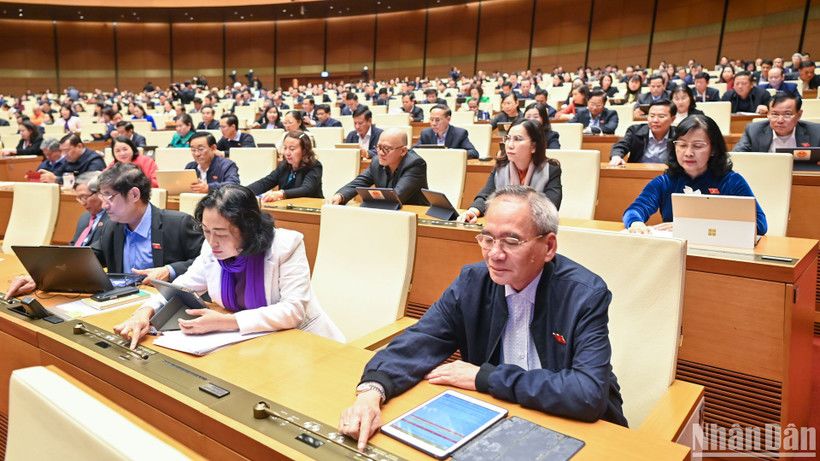
National Assembly deputies vote to pass the law amending and supplementing a number of articles of the Law on Organisation of the National Assembly on February 17, 2025.
National Assembly deputies vote to pass the law amending and supplementing a number of articles of the Law on Organisation of the National Assembly on February 17, 2025.
With regard to National Assembly deputies, the Law on Organisation of the National Assembly 2014 (amended and supplemented in 2020 and 2025) also provides more specific regulations on position, role and standards of National Assembly deputies. In addition, the law clearly stipulates deputies’ responsibilities in performing their duties, the amount of time to be devoted to their activities, their responsibility to attend National Assembly sessions and meetings, to participate in the activities of National Assembly Deputy Delegations, and to take part in the Ethnic Council and committees of the National Assembly when they are members of those bodies.
During this period, the National Assembly has placed emphasis on increasing the number of full-time deputies. While the Law on Organisation of the National Assembly 2014 stipulates that “the number of full-time National Assembly deputies shall account for at least 35% of the total number of National Assembly deputies,” the amended and supplemented Law in 2020 raises this proportion to “at least 40%.” As a result, National Assembly deputies have become increasingly aware of their position, role and responsibility before voters, engaged more closely with voters, received and reflected voters’ opinions and recommendations, and actively participated in discussions at National Assembly sessions with many high-quality ideas and debates.

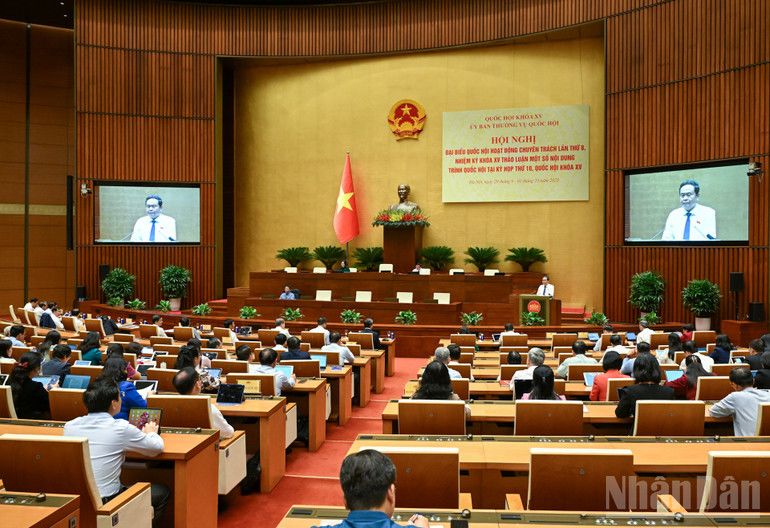
The 8th Conference of full-time National Assembly deputies discusses a range of issues to be submitted to the National Assembly at its 10th session of the 15th National Assembly.
The 8th Conference of full-time National Assembly deputies discusses a range of issues to be submitted to the National Assembly at its 10th session of the 15th National Assembly.
Working methods
Working methods have increasingly helped clarify deputies’ position, role and responsibility before voters, with more activities closely connected to voters. At the same time, working methods are being implemented in a more comprehensive manner, bringing notable effectiveness in the operations of the National Assembly in general, and of the National Assembly Standing Committee, the Ethnic Council, committees of the National Assembly, and individual deputies.
In this period, discussions at National Assembly sessions and meetings became increasingly in-depth, substantive, and more debate-oriented; and the opinions of National Assembly deputies more profoundly reflect the aspirations of voters and the people. Information and communication work, as well as public disclosure of National Assembly sessions and meetings, have been carried out in an appropriate manner. Working methods have increasingly been implemented in a comprehensive manner, bringing notable effectiveness in the operations of the National Assembly in general, and of the National Assembly Standing Committee, the Ethnic Council, and committees of the National Assembly in particular.
Published: January 31, 2026
Production Managers: TRUONG SON
Content: HAO THI – VAN TOAN
Translation: NDO
Design: LY LE
Photos: Nhan Dan Newspaper, VNA, National Assembly Portal