


RESOLUTION NO.79-NQ/TW:
A complete “unlocking” of restraints to allow the state-owned economy to truly “pave the way”
E-Magazine | en.nhandan.vn


Alongside the 80th anniversary of the nation’s founding, and through nearly 40 years of Doi Moi (Renewal), the state-owned economy has developed strongly, making a significant contribution to promoting economic growth, while also contributing to building and protecting the country.
A COMMAND FOR NATIONAL DEVELOPMENT
Published data shows that, in the energy sector, state-owned enterprises – a key component of the state economy – have supplied approximately 87% of electricity production, over 84% of the retail gasoline market share, 100% of the crude gas market share, and 70% of the liquefied petroleum gas market share, meeting 70% of gasoline demand and 70-75% of nitrogen fertiliser demand. At the same time, state-owned enterprises also play a decisive role in many important infrastructure sectors such as telecommunications, information technology, transportation, finance and banking... (At the conference “The Current State of State Economic Development in Viet Nam After Nearly 40 Years of Renewal” organised by the Viet Nam Institute of Economics, Viet Nam Academy of Social Sciences).
Throughout the Party Congresses, the state economy has always been identified as “a particularly important component of the socialist-oriented market economy”.
In Resolution No. 79-NQ/TW (hereinafter referred to as Resolution No. 79), the role of the state-owned economy continues to be consistently affirmed through the Resolution's guiding principles: The state-owned economy plays a leading role in the socialist-oriented market economy, ensuring macroeconomic stability, major economic balances, strategic development orientation, and maintaining national defence and security; contributing to promoting cultural values and equitable progress and social welfare; and is an important resource for the State to control and intervene promptly to meet sudden and urgent needs.


Five Guiding Principles for National Economic Development
1. The state-owned economy plays a leading role in the socialist-oriented market economy, ensuring macroeconomic stability, major economic balances, strategic development orientation, and national defence and security; contributing to the promotion of cultural values and equitable progress and social welfare; and serving as an important resource for the state to control and intervene promptly to meet unexpected and urgent needs.
2. The state-owned economy is equal before the law with other economic sectors, developing together in the long term, cooperating and competing fairly; having fair, open, and transparent access to resources, markets, and development opportunities; and working with domestic economic sectors to build a self-reliant, self-sufficient, and strong economy, ensuring economic security and promoting deep, substantive, and effective international integration.
3. State economic resources must be fully reviewed, statistically analszed, evaluated, and accounted for according to market principles, linked to socio-economic development goals, ensuring national defence and security; removing bottlenecks, freeing up resources, managing, exploiting, and using them effectively, and preventing loss and waste.
4. The state economy must be a pioneer in creating development, leading, paving the way, promoting industrialisation and modernisation, restructuring the economy, and establishing a new growth model, with science, technology, innovation, and digital transformation as the main driving forces, enhancing national competitiveness.
5. Strengthen the leadership role of the Party, improve the capacity, effectiveness, and efficiency of state management of the state economy, especially in guiding the use of resources and organising implementation; accelerate administrative procedure reform, decentralisation, and delegation of power coupled with inspection and supervision; enhance openness, transparency, autonomy, self-accountability, and promote accountability.
Professor, Dr. Mac Quoc Anh, Member of the Central Committee of the Viet Nam Fatherland Front, Secretary of the Party Central Committee, Vice President and General Secretary of the Association of Small and Medium Enterprises, pointed out: “Placing Resolution No.79 in relation to Resolutions 57, 66, and 68, it can be seen that a new, unified, and mutually supportive series of policy thinking: Resolution No. 57 establishes science and technology, innovation, and digital transformation as the main growth drivers in the new period. Resolution No. 66 focuses on perfecting institutions and laws, considering this a prerequisite for liberating and effectively allocating resources. Resolution No. 68 affirms that the private economy is an important driving force of the economy, needing to be protected, encouraged, and given an equal development environment. And Resolution No. 79 plays a strategic pillar role, ensuring the entire system operates stably and with direction” and has a ripple effect.
The professor emphasised that Resolution No. 79 reaffirms the leading role of the state-owned economy to ensure a stable foundation, driving force, and the ability to respond to major shocks.
“From practice, we see that in the most difficult periods, from the global financial crisis, the COVID-19 pandemic, to the current geopolitical fluctuations, the state-owned economic sector has always been the force that ‘anchors stability,’ ensuring the supply of essential services, maintaining major balances, and creating room for the State to implement policies to support the economy,” Professor Mac Quoc Anh cited as an example.
The state-owned economy plays a leading role in the socialist-oriented market economy, ensuring macroeconomic stability, major economic balances, strategic development orientation, and maintaining national defence and security; contributing to promoting cultural values and equitable progress and social welfare; It is an important resource for the State to control and intervene promptly to meet unexpected and urgent needs.
- Guiding Principles of Resolution No. 79-NQ/TW -

Prof. Dr. Mac Quoc Anh, a member of the Central Committee of the Viet Nam Fatherland Front, Party Secretary, and Vice Chairman and Secretary-General of the Viet Nam Association of Small and Medium Enterprises, pointed out: “Placing Resolution 79 in relation to Resolutions 57, 66 and 68, it is possible to clearly see a new chain of policy thinking that is unified and mutually reinforcing. Resolution 57 establishes science and technology, innovation, and digital transformation as the main growth drivers in the new period. Resolution 66 focuses on improving institutions and laws, regarding this as a prerequisite for unlocking and efficiently allocating resources. Resolution 68 affirms the private sector as an important driver of the economy that needs to be protected, encouraged, and provided with an equal development environment. And Resolution 79 plays the role of a strategic pillar, ensuring that the entire system operates in a stable, well-oriented manner with strong spillover effects.”
The professor emphasised that, in Resolution 79, the reaffirmation of the leading role of the state economic sector aims to ensure that the economy has a stable pillar, a guiding force, and the capacity to respond to major shocks.
"From practice, it can be seen that in the most difficult periods, from the global financial crisis and the Covid-19 pandemic to the current geopolitical fluctuations, the state economic sector has always played the role of an “anchor of stability”, ensuring the provision of essential services, maintaining major macroeconomic balances, and creating room for the State to implement policies to support the economy."
Prof. Dr. Mac Quoc Anh


A modern power generator of the Viet Nam Electricity Group. Photo: EVN
A modern power generator of the Viet Nam Electricity Group. Photo: EVN


Oil and gas exploitation. Photo: PVN
Oil and gas exploitation. Photo: PVN

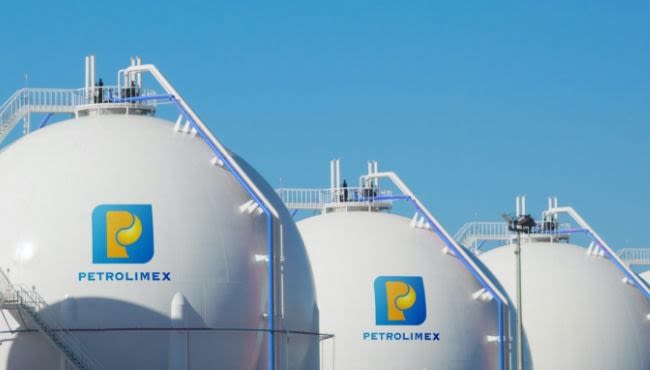
Dinh Vu gas depot. Photo: Petrolimex
Dinh Vu gas depot. Photo: Petrolimex

As a beneficiary of Resolution No.79, Khuong Ba Luan, General Director of Song Chu One Member Limited Liability Company, expressed his confidence that reaffirming the leading role of the state economic sector in the socialist-oriented market economy not only has theoretical significance but also creates a solid political and legal foundation for state-owned enterprises to confidently invest, innovate, and pursue long-term development.
In addition to “maintaining the leading role”, Dr. Mac Quoc Anh raised the issue that Resolution 79 has answered the question of “who plays the guiding role, ensuring safety and balance for the entire system.”
Resolution 79 has established a strategic vision for the state economic sector in the country’s new stage of development, namely to “establish a new growth model” and to “take the lead in shaping development, guiding, and opening the way, and promoting industrialisation, modernisation and economic restructuring.”
“This is a command for national development creation,” affirmed Nguyen Quang Huy, Executive Director of the Faculty of Finance and Banking at Nguyen Trai University.
In addition to “maintaining the leading role”, Dr. Mac Quoc Anh raised the issue that Resolution 79 has answered the question of “who plays the guiding role, ensuring safety and balance for the entire system.”
Resolution 79 has established a strategic vision for the state economic sector in the country’s new stage of development, namely to “establish a new growth model” and to “take the lead in shaping development, guiding, and opening the way, and promoting industrialisation, modernisation and economic restructuring.”
“This is a command for national development creation,” affirmed Nguyen Quang Huy, Executive Director of the Faculty of Finance and Banking at Nguyen Trai University.
Reaffirming the leading role of the state economic sector in the socialist-oriented market economy not only has theoretical significance but also creates a solid political and legal foundation for state-owned enterprises to confidently invest, innovate, and pursue long-term development.
- Khuong Ba Luan, General Director of Song Chu One Member Limited Liability Company -
“State-owned enterprises are expected to take the lead in foundational sectors such as energy security, digital infrastructure, innovation, green transition, and new development spaces of the knowledge-based economy. In these areas, the proactive involvement of the state sector plays a pioneering role in opening pathways, shaping markets and thereby fostering the synchronised development of the entire economic ecosystem,” Quang Huy explained.
A “BOOST” TO PROPEL VIETNAMESE BUSINESSES INTO THE GLOBAL TOP 500
In the 2025 ranking of Southeast Asia’s 500 largest companies compiled by Forbes, Viet Nam contributed 76 names, including state-owned enterprises such as the Viet Nam Oil and Gas Group (Petrovietnam) and the Joint Stock Commercial Bank for Foreign Trade of Viet Nam (Vietcombank). Although Vietnamese enterprises have recorded strong growth in recent years, when viewed regionally and compared with countries such as Singapore, Indonesia, and Thailand, Viet Nam still lags behind.
It is against this backdrop that Resolution 79 was introduced, not only reaffirming the pillar and guiding role of the state economic sector but more importantly setting out breakthrough objectives for this sector to reach global stature. As of early 2026, no Vietnamese state-owned enterprise has officially entered the Fortune Global 500 list of the world’s largest companies by revenue.
By 2030, Viet Nam is determined to have 50 state-owned enterprises among Southeast Asia’s top 500 companies, and between one and three state-owned enterprises in the Fortune Global 500. By 2045, these figures are expected to rise to 60 and five, respectively. Mac Quoc Anh stressed that “this is an ambitious goal, but it is the right and necessary ambition, because without big aspirations, there can be no major breakthroughs.”
Several leading “candidates” within the state economic sector are making concerted efforts to realise this objective. Notably, the Viet Nam Oil and Gas Group (Petrovietnam) has set its sights on entering the Fortune Global 500 before 2030, becoming a leading national industrial–energy conglomerate in the region and worldwide, while spearheading Viet Nam’s green energy transition.
The Viet Nam National Petroleum Group (Petrolimex) has likewise demonstrated its determination to develop into a strong state-owned economic group of large scale, advanced technology and high competitiveness, not only nationally but also regionally and globally.
The Military Industry and Telecommunications Group (Viettel) is currently the only Vietnamese enterprise featured in the Brand Finance Global 500 ranking of global brand value, and has several subsidiaries listed among Southeast Asia’s top 500 companies.
Viettel’s consolidated revenue in 2025 reached 220.4 trillion VND, up 13.8 per cent, contributing to Viet Nam’s high GDP growth target. This represents an impressive growth rate for a conglomerate of Viettel’s considerable size, underscoring its leading role as well as a strong transition driven by multiple new growth engines.
In overseas markets, Viettel’s revenue grew by 23.9 per cent, the highest rate recorded in the past nine years. To date, in seven out of the ten countries where it has foreign investments, Viettel holds the position of the largest telecommunications operator (in Laos, Cambodia, Myanmar, Timor-Leste, Burundi, Haiti, and Mozambique).
Lieutenant General Tao Duc Thang, Chairman and Chief Executive Officer of Viettel Group, stressed: “2026 is regarded as a year that opens a new era of national advancement, marking the transition from shaping thinking, institutions and orientations to concrete implementation. Therefore, for Viettel, with a clear strategy to become a global technology group by 2030, we have chosen 2026 as a year focused on action, specifically: more proactive – faster – bolder – more effective. Effectiveness must be visible to customers, to society and to the country – these are the driving forces for Viettel to continue developing in a sustainable manner.”



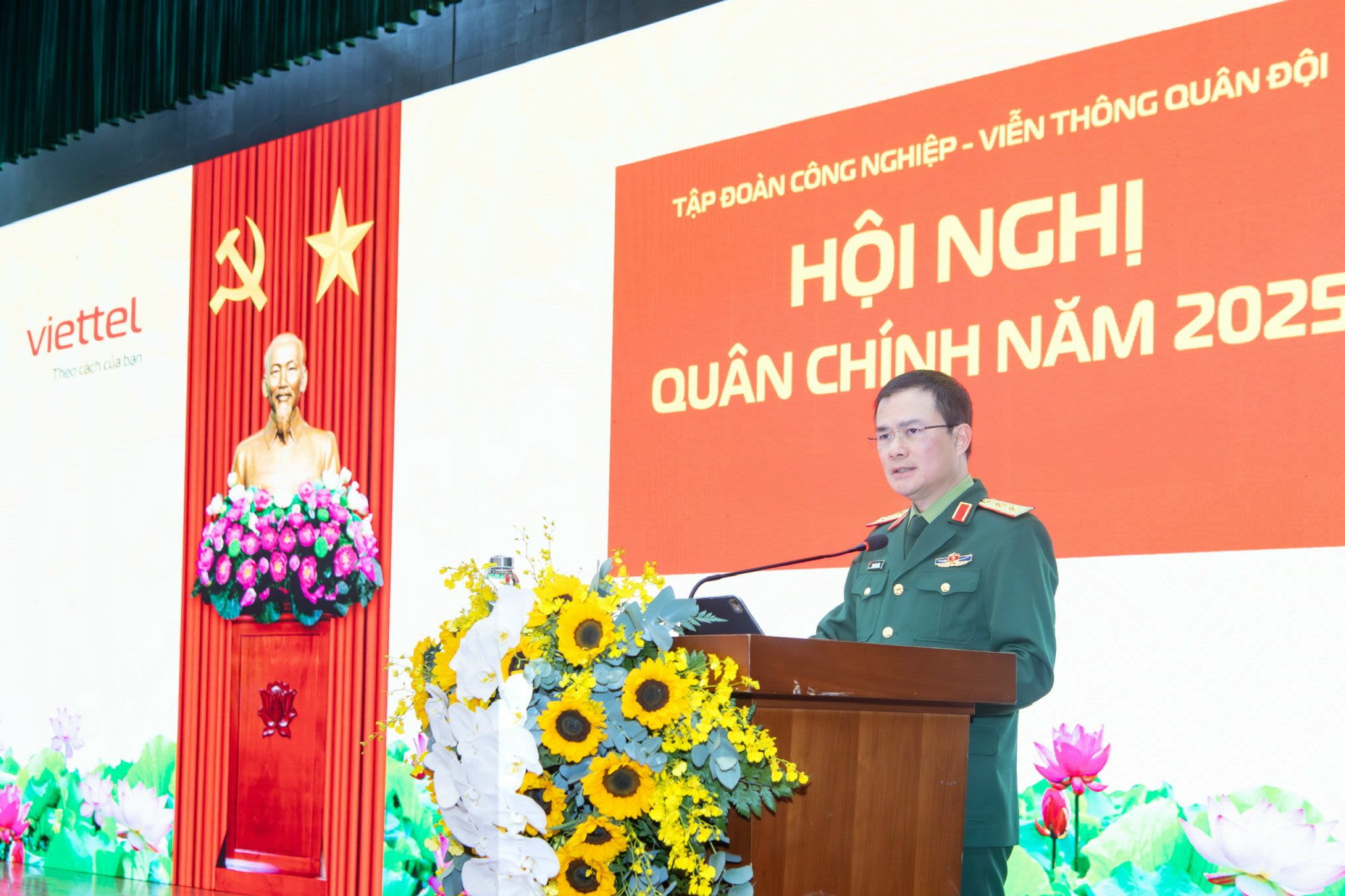
Lieutenant General Tao Duc Thang, Chairman and Chief Executive Officer of Viettel Group
Lieutenant General Tao Duc Thang, Chairman and Chief Executive Officer of Viettel Group
The Politburo has frankly acknowledged that, to date, state-owned enterprises have not been operating effectively; their performance has not been commensurate with the position and resources they hold; and their international competitiveness remains limited…
At the same time, Resolution 79 points out existing problems that hinder the development of the state economic sector, notably an incomplete and inconsistent legal and institutional framework with lingering obstacles and shortcomings; and an inadequately resolved relationship between the State, the market and society… leading to the sector’s continued failure to manage, exploit and use many state resources and assets effectively, insufficient linkage to full economic accounting requirements, and ongoing waste and losses… To address these challenges, Resolution 79 introduces a more flexible approach to managing state resources. For resources such as land, natural assets or the state budget, the overarching objective is to establish a robust legal corridor to ensure the most efficient allocation and exploitation.
Resolution 79 introduces a more flexible approach to managing state resources. With regard to other resources, Dr Nguyen Minh Thao from the Institute of Strategy and Financial–Economic Policy under the Ministry of Finance further explained: “This mechanism allows the State to use resources to intervene promptly at times when the market experiences surpluses or shortages of goods, thereby ensuring overall stability.”
Thao cited the example of national reserves which, instead of serving solely as contingency reserves for emergencies as in the past, are now entrusted with an additional function of participating in market regulation based on real-world signals. The establishment of a National Investment Fund with clearly defined performance indicators is also a new step towards professionalising public investment activities.
In addition, the Resolution underlines the need to transform the growth model towards one based on innovation, technology and the quality of human resources, closely aligned with the spirit of Resolution 57-NQ/TW. In the current context, the development space for state-owned enterprises is no longer confined by geography or traditional resources, but has expanded into the digital space, data, knowledge, technology and new business models.
Nguyen Quang Huy of Nguyen Trai University affirmed that, with new growth drivers, “State-owned enterprises, when empowered, will take the lead in areas such as energy security, digital infrastructure, foundational industries, innovation, green transition and new development spaces of the knowledge-based economy… In these fields, the proactive participation of the state economic sector is crucial in paving the way, creating markets, reducing risks for the private sector and thus fostering the balanced development of the entire economic ecosystem.”
In the context of Viet Nam’s strong development and its deepening integration into global trade, key sectors remain in which the nation cannot afford to depend on foreign countries. These include national defence, telecommunications security, energy, oil and gas, electricity, and food security.
State-owned enterprises (SOEs) bear the responsibility of ensuring political stability, social security and economic safety. The dual role of engaging in production and business while fulfilling political tasks is a great honour for SOEs. Throughout the process of national recovery and development, this economic sector has fulfilled its mission with distinction.
As the country enters a new stage of development, economic and political tasks need to be clearly separated to maximise the role of each group of responsibilities. Resolution No.79 clearly defines these “boundaries”: distinguishing ownership functions, economic management functions, and the execution of political or non-profit tasks from business and commercial functions.
Professor Dr Hoang Van Cuong, Member of the National Assembly’s Economic and Financial Committee, noted that this approach enables state-owned groups to perform the correct role for each task and creates conditions for them to become dynamic and innovative economic actors capable of fair competition in the market.


From a governance perspective, the resolution focuses on removing long-standing “bottlenecks” by granting enterprises greater autonomy.
On this issue, Dr Nguyen Minh Thao of the Institute for Strategy and Financial–Economic Policy under the Ministry of Finance cited a typical example mentioned in the resolution: a mechanism allowing enterprises to proactively establish stock bonus funds in order to attract and retain highly qualified personnel with practical experience.
Alongside granting greater operational opportunities to the state-owned economy, Resolution No.79 emphasises the application of risk management principles and a strong shift from pre-approval to post-inspection. Accordingly, decentralisation and delegation of authority are further optimised for the operations of the state-owned economic sector, enhancing autonomy and accountability in economic–social, defence and security accounting, while ensuring the effective use of state material resources in conjunction with clear accountability.
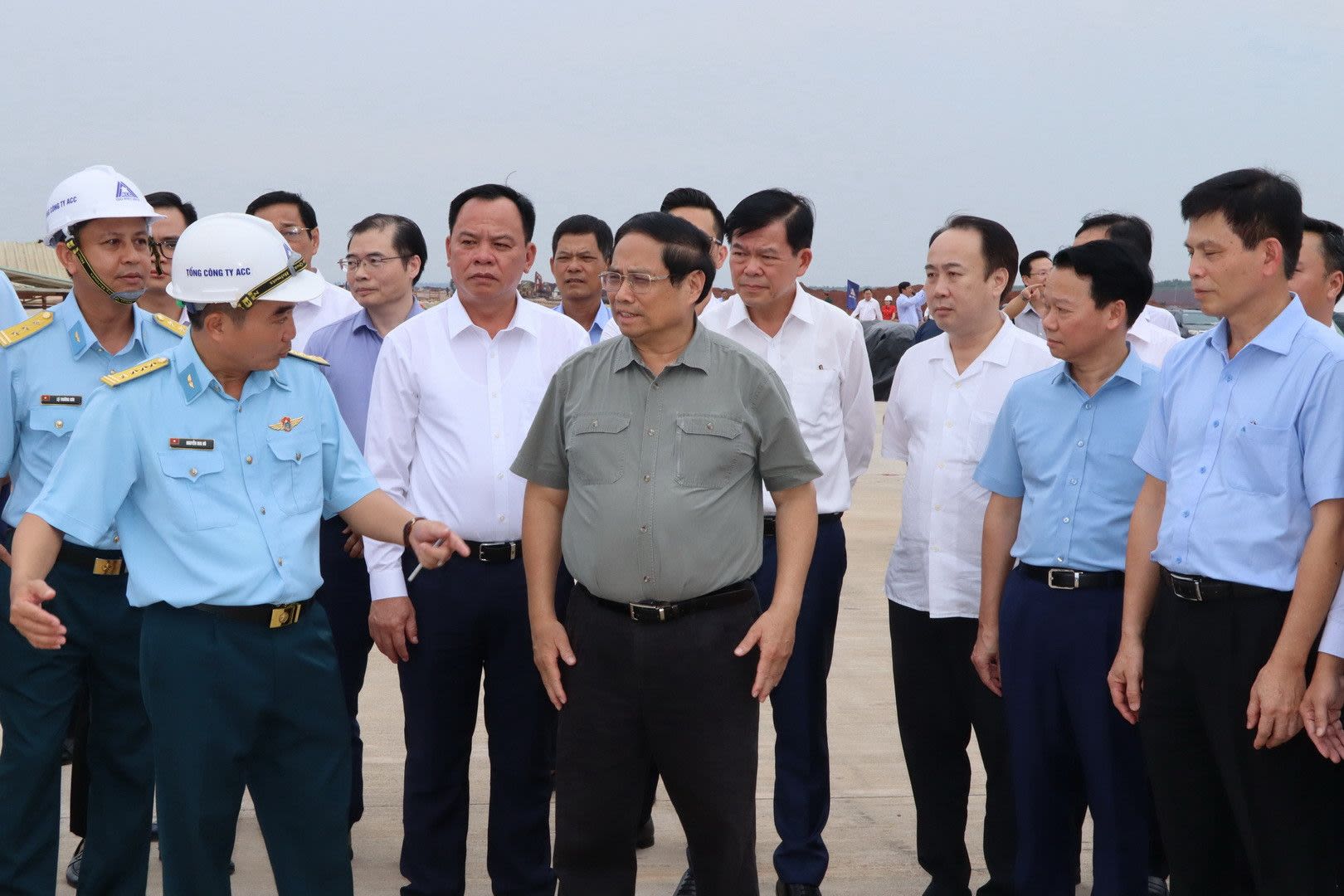
Prime Minister Pham Minh Chinh inspects the progress of Long Thanh Airport. (Photo: Thien Vuong)
Prime Minister Pham Minh Chinh inspects the progress of Long Thanh Airport. (Photo: Thien Vuong)
Measures such as “protecting officials who dare to think, dare to act and dare to take responsibility” and “ending overlapping, repetitive, prolonged, and unnecessary inspections, examinations, and audits” are seen as loosening the “pincer grip” on state-owned enterprises. These steps encourage creativity and innovation and build firm confidence among state-owned enterprises in the Party’s and government’s mechanisms and policies.
According to Thao, with the clear and rigorous provisions in the resolution regarding the delegation of authority to enterprises, “this represents a significant change compared with previous rigid constraints, creating room for state-owned enterprises to compete fairly in the high-quality labour market.”
With these more open regulations, Resolution 79-NQ/TW opens a new journey for the state-owned economic sector.


Construction site of the 500kV Transmission Line No.3. (Photo: Trung Hung)
Construction site of the 500kV Transmission Line No.3. (Photo: Trung Hung)
Khuong Ba Luan, General Director of Song Chu One Member Limited Liability Company, expressed his confidence: “The issuance of Resolution 79 will create specific mechanisms and policies to strengthen autonomy for state-owned enterprises, particularly in investment, finance, and organisational structure; at the same time, it will provide appropriate support policies for enterprises carrying out public service tasks and serving social welfare. We see Resolution No.79 not only as an opportunity but also as a responsibility for state-owned enterprises to make important contributions to sustainable agricultural development, stabilising people’s livelihoods, and promoting socio-economic development at both local and national levels.”
Published: January 2026
Production Manager: Ngoc Thanh
Director: Hong Van
Content: Thao Le – Quynh Trang – Thai Binh
Translation and Design: NDO
Photos: Nhan Dan Newspaper