
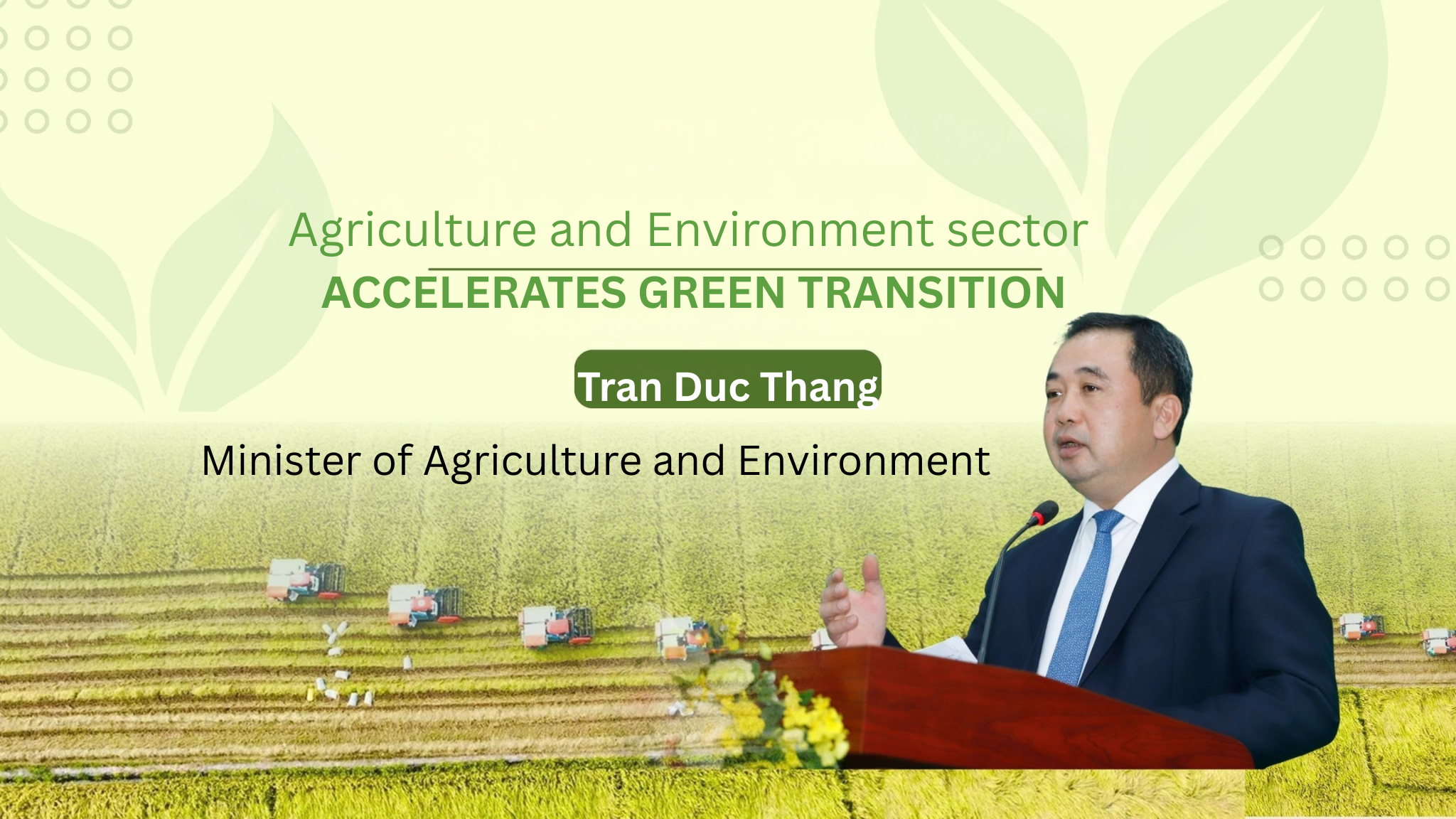

In 2025, the agriculture and environment sector marked an important turning point, stabilising the organisational structure after the merger and reforming institutions to make the apparatus leaner yet more effective. Streamlining 25 out of 55 units under Decree No. 35/2025/ND-CP is not merely a matter of rearrangement; it is a prerequisite for policies to move faster, stay closer to the grassroots, and cut costs and time for citizens and businesses.
On the occasion of welcoming 2026, Tran Duc Thang, Member of the Party Central Committee, Minister of Agriculture and Environment, spoke with Nhan Dan reporters reviewing the year’s standout results, identifying “bottlenecks”, and reaffirming the key governance message: putting citizens and businesses at the centre; Developing agriculture in combination with protecting natural resources and the environment, and adapting to climate change.
Q: Looking back at the overall picture of the agriculture and environment sector over the past year, especially environmental issues, what would you identify as the most notable achievements, the key “bottlenecks”, and the most important governance message the sector wishes to convey to the Government and the public?
A: Looking back on the past year, amid global economic volatility, rising trade barriers, and increasingly extreme disasters and climate change impacts, the agriculture and environment sector has continued to affirm its role as a vital “pillar” of the economy, making practical contributions to macroeconomic stability and ensuring social welfare.
The entire sector met and exceeded all nine key targets assigned by the Government. GDP growth reached 3.9–4%; total export turnover of agro-forestry-fishery products came to nearly 70 billion USD, far exceeding the Government’s target (65 billion USD), with a trade surplus of more than 20 billion USD. Many product groups maintained positive momentum, helping to enhance the position of Vietnamese agricultural products in international markets. The new-style rural development programme achieved its targets, with around 80% of communes meeting the standards; forest coverage reached 42.03%; and the rate of collection and treatment of municipal solid waste in urban areas reached 95%.
“In the context of global economic volatility, rising trade barriers, and increasingly extreme disasters and climate change impacts, the agriculture and environment sector has continued to affirm its role as a vital ‘pillar’ of the economy, making practical contributions to macroeconomic stability and ensuring social welfare”.


Another key highlight is the stabilisation of the organisational structure and institutional reform following the merger. Based on Decree No. 35/2025/ND-CP, the ministry has promptly streamlined operations, reducing 25 out of 55 units (a 45.45% reduction); simultaneously advancing decentralisation, delegation of authority, administrative procedure reform, and digital transformation, aiming to cut costs and time for citizens, businesses, and localities.
Alongside this, the sector has strongly promoted the shift from “agricultural production” to “agricultural economy”, with a focus on reorganising production along value chains. In a spirit of innovation and creativity, the ministry has also encouraged localities, businesses, and cooperatives to proactively propose and implement production organisational models that are integrated and multi-value, linking cropping-livestock-aquaculture/forestry with processing and services; utilising by-products in a circular economy to enhance efficiency, reduce costs, and boost resilience.
Besides the achievements, we candidly acknowledge the bottlenecks facing the sector. Risks from natural disasters, epidemics, and climate change are increasingly unpredictable, with many areas still having limited resilience; the green transition, circular economy, and low-emission practices are only in the initial stages, whilst demands for capital, technology, data, and high-quality human resources remain substantial; value chain linkages and production activities in some regions are still fragmented, affecting long-term competitiveness.
The message we wish to convey to the Government and the people is: The ministry will pursue bold innovations and more decisive actions, steadfastly adhering to the motto “Discipline and Accountability – Proactive and Timely – Lean and Effective – Accelerate and Break Through”. All institutional reforms, procedures, and digital transformations are oriented towards placing citizens and businesses at the centre. Agricultural development must go hand in hand with resource and environmental protection and climate change adaptation, enabling the sector to truly become a pillar of green, sustainable development in the coming period

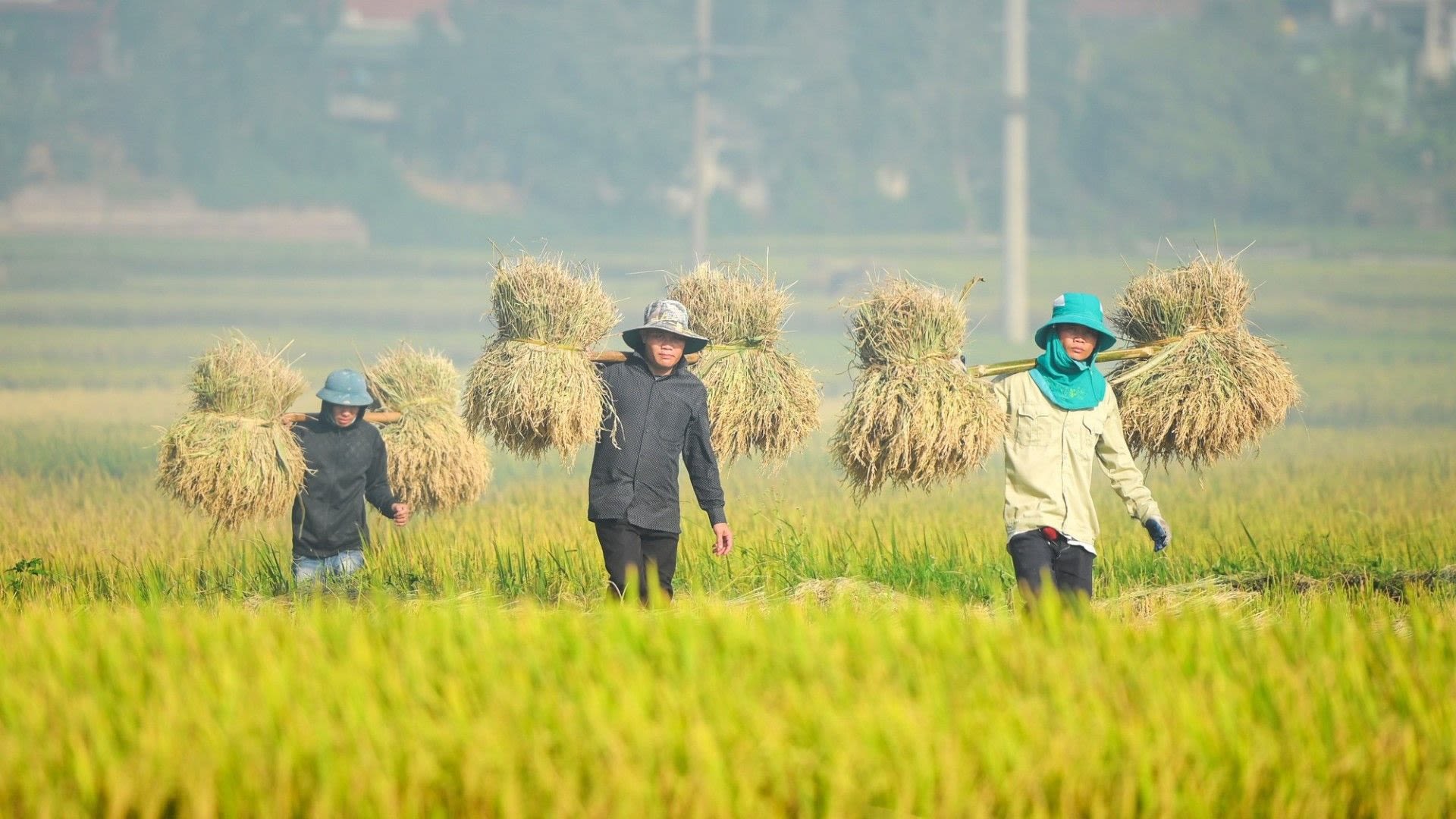
Q: In the context of climate change, extreme natural disasters, fluctuating agricultural markets, and growing pressure to protect the environment, what is the greatest challenge the sector is currently facing? Which key issues need priority handling to avoid hindering the goal of developing ecological, circular, low-emission agriculture?
A: From a management perspective, the greatest challenge today is the “dual equation”: maintaining food security and livelihoods while rapidly transitioning to an ecological, circular, low-emission agricultural model amid harsher climates and higher market demands.
To avoid getting stuck in meeting transformation targets, we prioritise four groups of solutions:
- First, strengthening climate resilience, resource governance and environmental protection from upstream areas. The focus is shifted from remedying consequences to risk management; priority is given to water security, prevention of drought, salinity intrusion and flooding, and control of erosion; ecosystems are restored and forests, soils and river basins protected; environmental discipline in production is tightened.
- Second, improving institutions, planning and coordination mechanisms so that policies can be translated directly into practice. Overlaps are reviewed and removed; guidance is standardised; procedures are simplified so that local authorities, cooperatives and farmers can implement them more easily; decentralisation goes hand in hand with inspection and supervision; and inter-sectoral management is synchronised.
- Third, unlocking resources for the green transition, including capital, technology, data and human resources. Public investment is focused on key priorities; green credit and incentives for emissions reduction are expanded; the transfer of science and technology is stepped up right down to the field and farm; and emissions measurement is standardised along the value chain.
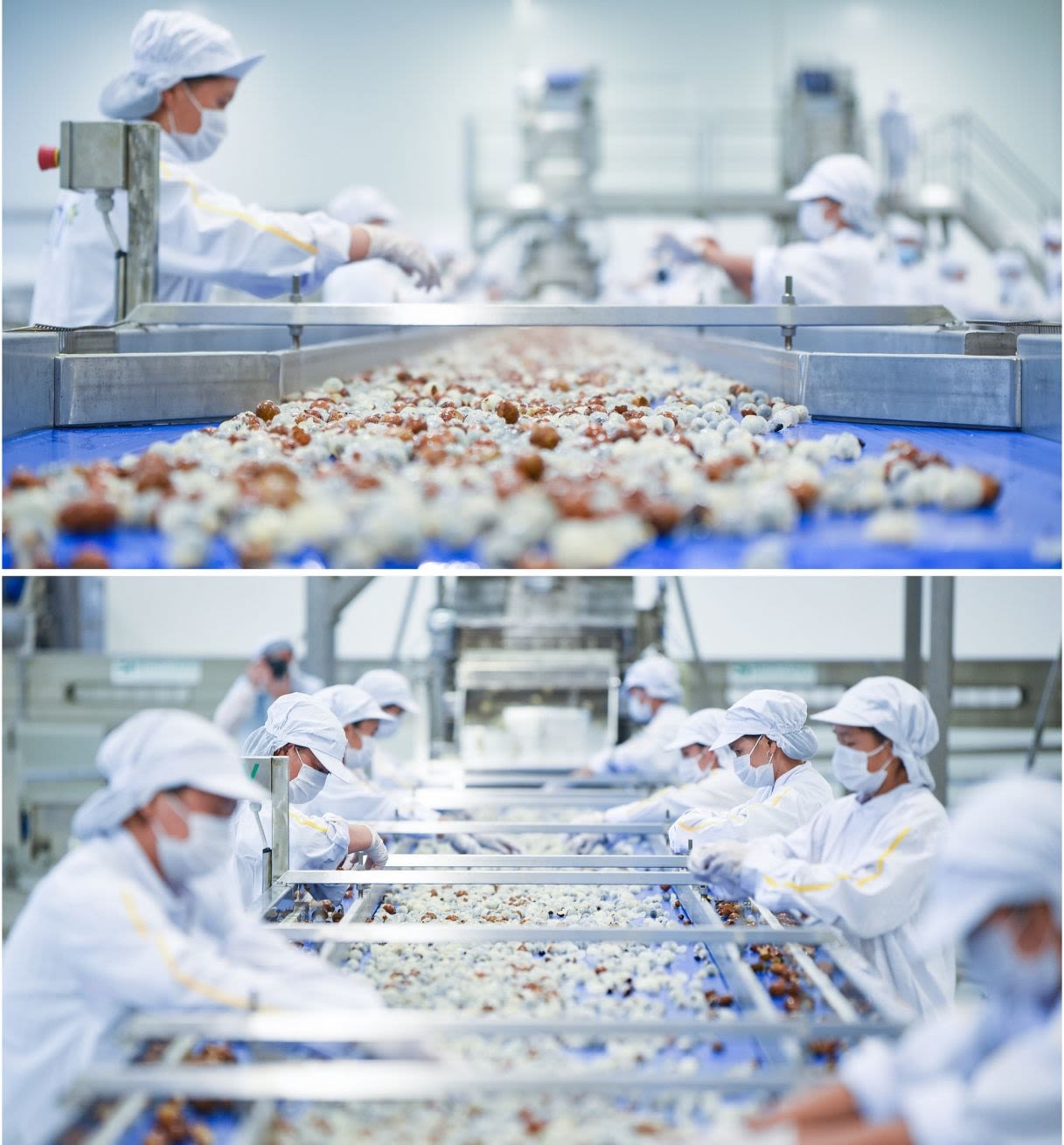
- Fourth, reorganising production and markets along green, transparent and competitive value chains. Standard-compliant raw material areas are developed; quality is enhanced and traceability strengthened; and codes for cultivation areas and packing facilities are standardised. The share of deep processing and cold-chain logistics is increased, while supply chains are digitised to reduce costs and post-harvest losses.
At the same time, localities and enterprises are encouraged to pilot integrated production models with closed input-output loops and the utilisation of by-products, thereby meeting the market’s green and low-emissions standards.

Q: Regarding institutions and resources, many localities, enterprises and farmers say they still face difficulties in accessing policies, finance, and science and technology for the green transition. What do you think are major bottlenecks, and what key solutions does the ministry have to unlock them in the time ahead?
A: I share the concerns raised by local authorities, enterprises and farmers. The bottleneck is not merely a lack of capital; more fundamentally, it lies in how policies, resources and technologies are connected to the right beneficiaries in a manner that is easy to understand, easy to implement and easy to access.
In terms of institutions and implementation, guidance in some places is not sufficiently clear, and procedures at the grassroots level remain complicated.
Financially, resources are still fragmented, while conditions for accessing green credit are not well suited to small enterprises, co-operatives and farming households.
In science and technology, the gap between the capacities of research institutes and universities and producers’ ability to access them persists; agricultural extension and technical advisory services at the grassroots level have yet to keep pace with the requirements of green growth and digitalisation.
In the coming period, the ministry will continue to review, simplify, and standardise implementation guidelines; restructure and integrate resources; promote green credit suited to the scale of farm households and cooperatives; bring science, technology, and digital transformation “right to the fields, farms, and craft villages”; and strengthen digital capacity at the grassroots level to ensure smooth public services. At the same time, we will promote support packages based on models (rather than only on separate stages), creating conditions for localities, businesses, and cooperatives to proactively propose and pilot integrated, multi-value production organisation models associated with value chains and the circular economy, ensuring they are easy to apply and disseminate once their effectiveness has been proven.

Q: Regarding rural environmental protection and waste treatment in agricultural production, craft villages, and livestock farming, how does the Minister evaluate the current situation, where is the gap between requirements and implementation, and which breakthrough solutions will the sector focus on to shift from “pollution fighting” to “prevention and sustainable management”?
A: Rural environmental protection is an integral part of the orientation towards ecological agriculture, the circular economy, and low emissions, associated with new rural construction and the implementation of the Law on Environmental Protection 2020; in recent years, there have been positive changes. However, localised pollution in some rural areas, craft villages, and concentrated livestock farming zones remains prominent; environmental infrastructure has not kept pace; and small-scale, fragmented production practices are still widespread.
To shift from “pollution fighting” to “prevention and sustainable management”, the ministry is focusing on improving institutions in a circular direction, considering by-products and waste as resources and input materials for other sectors; investing in treatment infrastructure on an inter-commune cluster basis; linking financial and science and technology support with compliance with environmental requirements; increasing decentralisation alongside inspection and supervision; and applying science and technology, and digital transformation for monitoring and early warning.
The practical experience at the grassroots level shows that integrated production organisation models with closed material loops can help address environmental challenges: crop by-products used as animal feed or compost; livestock waste treated to produce biogas and fertiliser; and production linked with on-site processing and services. Once organised well in this way, environmental protection is not only a cost but can become a source of added value.
The practical experience at the grassroots level shows that integrated production organisation models with closed material loops can help address environmental challenges.


Q: Looking ahead to a new phase with the requirement to ensure food security, raise farmers’ incomes, and fulfil international commitments on climate and the environment, which strategic tasks will the Minister prioritise in the coming year, and what message does the Minister wish to convey to officials in the sector, businesses, and farmers?
A: In the new phase, the agriculture and environment sector must simultaneously meet three major requirements: food security — farmers’ incomes — climate and environmental commitments.
Therefore, the Ministry’s strategic priorities for the coming year are as follows:
- First, to firmly safeguard food security while enhancing value and farmers’ incomes; restructure production towards quality and higher added value; promote deep processing, multi-value agricultural economy, and market expansion; at the same time, encourage localities to develop integrated, multi-value production organisation models suited to the conditions of each region in order to increase local employment and incomes.
- Second, to accelerate the green transition and the circular economy; raise environmental standards and traceability requirements; promote ecological and organic agriculture, resource efficiency, and emission reduction.
- Third, to enhance resilience and climate adaptation capacity; prioritise investment in irrigation, dyke systems, and disaster prevention and control infrastructure; modernise forecasting and early warning; give priority to heavily affected regions such as the Mekong Delta, the Central region, and mountainous areas.
- Fourth, to improve institutions, administrative reform, and digital transformation; create a transparent and stable investment environment so that enterprises, cooperatives, and farmers can confidently invest in green agriculture.
- Fifth, to comprehensively care for farmers’ livelihoods and promote sustainable rural development; effectively implement national target programmes; support vocational training and livelihood transition; and regard farmers as the core actors of the development process.

In the new phase, the agriculture and environment sector must simultaneously meet three major requirements: food security — farmers’ incomes — climate and environmental commitments.
The message I wish to convey to officials in the sector, businesses, and farmers is this: We need unity in innovation, discipline, and substantive action; agricultural development in the new phase must harmonise farmers’ interests, market requirements, and environmental responsibility; encourage integrated, multi-value, circular-economy production models so that the goals of “green – circular – low emissions” translate into visible and tangible results for each household, cooperative, and rural community; in this process, the role of officials in the agriculture and environment sector is particularly important in fostering the application of new science and technology and digital transformation, and in guiding and enabling enterprises, cooperatives, and people to implement these changes.
Reporter: Thank you very much, Minister!


Production Manager: DINH SONG LINH
Content: TRAN THUONG, DUC TUNG
Translation: NDO
Design: TRUNG HUNG
Photos: THANH DAT, KHUONG TRUNG