


Even the most accurate and well-targeted resolutions may remain merely on paper if they are not implemented with determination and vigour. President Ho Chi Minh once said: “If a plan accounts for ten parts, then specific measures must account for twenty parts, and close supervision in implementation must account for thirty parts.” This is the fastest path to bringing the resolutions of Party congresses at all levels, as well as the Resolution of the 14th National Party Congress, into real life, thereby realising the aspiration for a strong, prosperous, powerful, civilised, and happy nation.
Issuing resolutions and organising their implementation are two distinct stages, yet they are closely interconnected and mutually reinforcing. Issuing a resolution sets the direction and opens the path forward; organising its implementation turns policy into reality, transforming thinking into action and determination into concrete results. It is a process that requires Party committees at all levels to be dynamic, creative, and flexible while daring to think, daring to act, and daring to take responsibility in addressing emerging issues in order to fulfil the set objectives.
Finding ways to overcome delays
The preparation of documents for submission to the 14th National Party Congress has seen many innovations and breakthroughs compared with previous terms. Accompanying the draft political report is the draft action programme for implementing the resolution.
In the past, Party committees often issued resolutions first, while authorities at the same level later developed implementation plans. These two stages were largely separated, sometimes leading to inconsistencies between policy direction and action, and especially slowing the process of translating the Party committees’ directives into reality.
Preparing the political report and the action programme simultaneously not only shortens the time required for leadership and implementation but, more importantly, fundamentally renews the process of issuing and implementing resolutions, closely linking thinking with action.
In the article “Forward! Total victory will be ours!”, published immediately after the successful conclusion of the 14th National Party Congress, General Secretary To Lam stressed that every sound policy, once issued, must be implemented with tenfold determination and a hundredfold action in practice. Political resolve must reach the highest level, efforts must be maximised, and actions must be carried out with the greatest decisiveness, an imperative arising from the nation’s will and its aspiration for development.
For a long time, many opinions have held that the organisation of implementing resolutions has been weak and slow, with a considerable delay. This time, the approach has immediately addressed that delay. The action programme not only helps cadres, Party members and people from all walks of life gain a deeper and more concrete understanding of the viewpoints and guiding principles of the Central Committee, but also enables them to clearly visualise the path ahead.
Authorities at all levels, sectors and relevant agencies clearly understand their responsibilities, enabling them to take the initiative in advising and organising implementation. Inspection, supervision and the urging of implementation also become clearer in terms of responsibilities and tasks, making it easier to conduct checks, detect violations and limitations, and take timely corrective measures.
Thus, the simultaneous drafting of the two aforementioned documents clearly reflects a renewed and more scientific and practical approach to the Party’s leadership methods. It can be regarded as a model for Party committees at all levels in translating the resolutions of Party congresses for the 2025-2030 term and the Resolution of the 14th National Party Congress into specialised resolutions.
When the two-tier model of local government is implemented, with expanded development space and significant changes in the functions, duties and nature of the activities of Party organisations, especially at the commune and ward levels, such renewal becomes even more urgent and unavoidable.

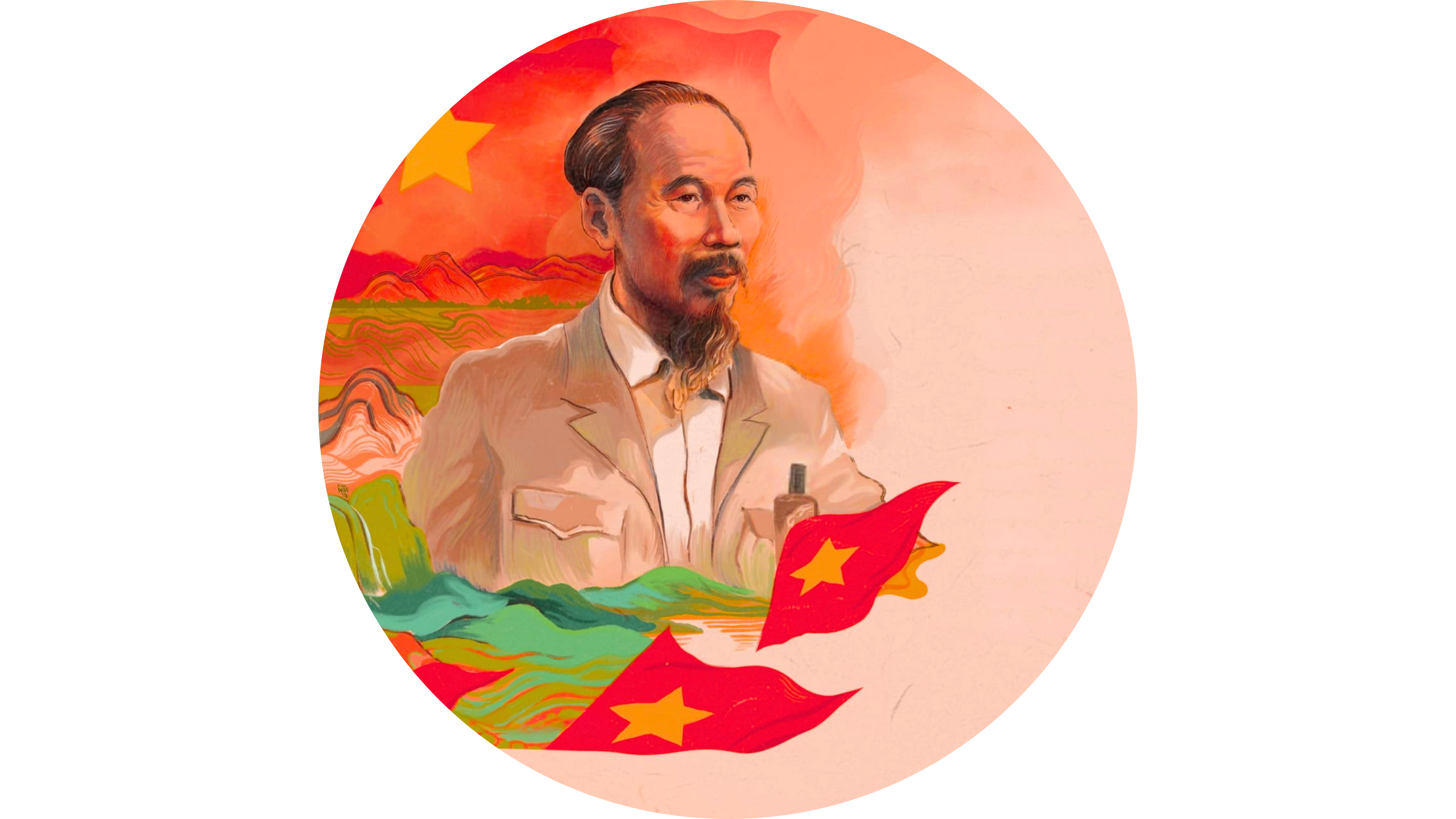
“Correct policy is the source of victory. Yet from that source to real victory there must be organisation and struggle. Once the policy is correct, the success or failure of that policy depends on how the work is organised, on the selection of cadres, and on inspection. If these three aspects are carried out superficially, even the most correct policy will be useless.”
--- President Ho Chi Minh ---
Right from the drafting stage, when a resolution is being formulated, feasible solutions must already be considered, and potential difficulties arising in the course of implementation must be anticipated.
In this way, Party committees must not only immerse themselves in the realities of life and clearly feel its every pulse, but must also remain clear-headed, standing above that reality to discern its direction and trends of movement in order to make accurate forecasts of the situation. They must clearly understand the impacts and relationships between the resolution and other issues so that related fields can be handled in a harmonious and coordinated manner. This will help ensure that the action programme for implementing the resolution contains solutions that are most closely aligned with reality.
Conversely, when forecasts closely match the situation and the real capacity of Party organisations, it will help ensure that the objectives and tasks set out in the resolution are more feasible, thereby overcoming the tendency towards subjectivism and voluntarism in setting future directions.
The closer a resolution is to the issues that concern the people, and the more accurately it addresses the pressing problems of daily life, the stronger the social momentum it will create for implementation. When people see that a resolution directly resolves their legitimate interests and removes the difficulties they face every day, they will actively participate, accompany and supervise its implementation. Party resolutions on the development of agriculture, farmers and rural areas that have been implemented decisively and effectively by localities are the clearest evidence. Conversely, if a resolution is issued but detached from reality, with general and vague goals and solutions, it will not only be difficult to implement but will also erode trust and create a sense of indifference in implementation.

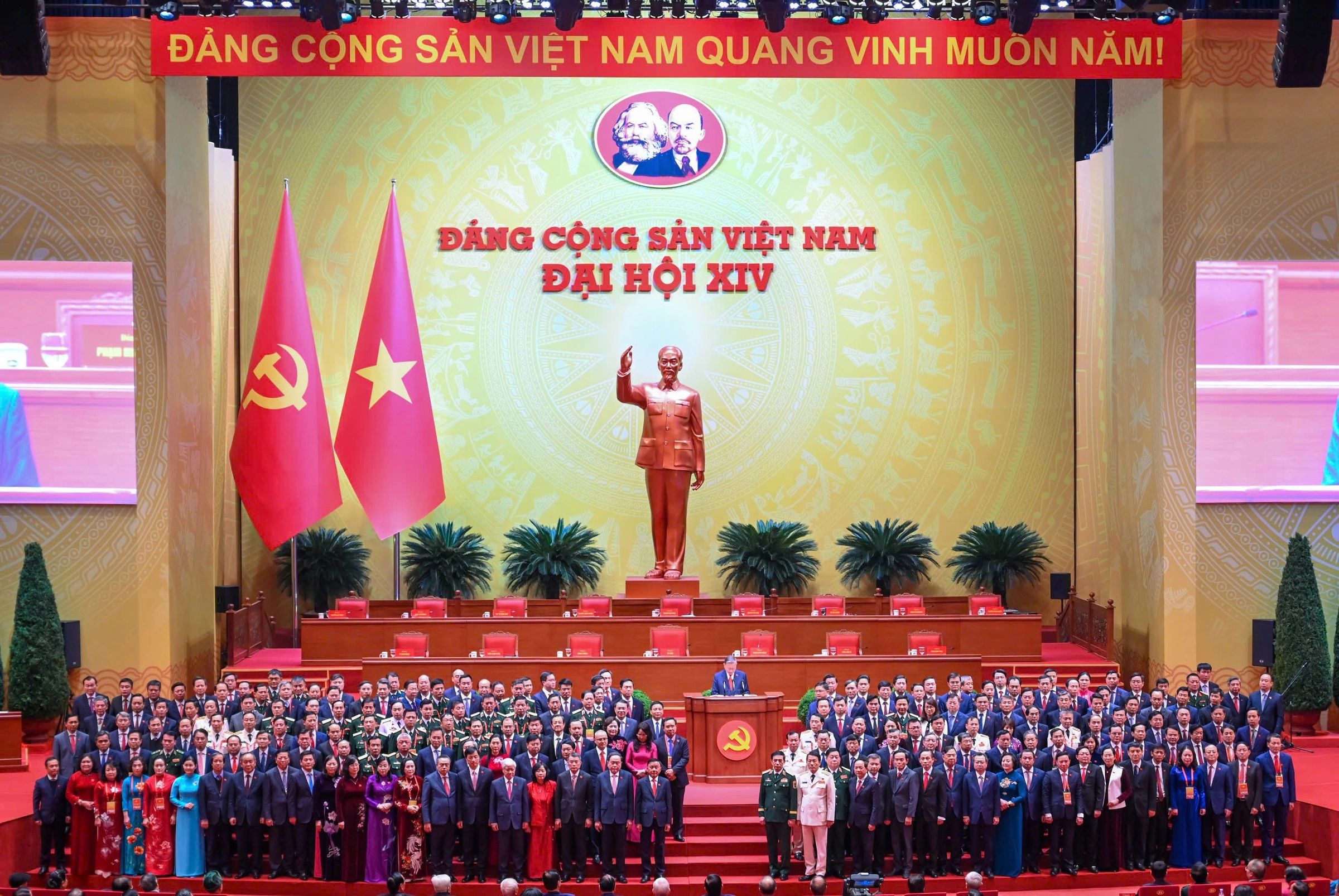
The 200 members of the 14th Party Central Committee make their debut at the Congress, January 2026.
The 200 members of the 14th Party Central Committee make their debut at the Congress, January 2026.
The approach that gives life to resolutions
The traditional approach has been that after a resolution is issued, Party committees organize study conferences where the content is mainly delivered by reporters. Recently, many innovations have been introduced. Study and dissemination now go hand in hand with practical connection and with the action programs for implementing the resolution, without segmentation between stages. The person delivering the content is often the Party committee secretary or a member of the standing committee assigned to directly monitor and direct the field addressed by the resolution. As a result, cadres and Party members do not only “listen” but move toward understanding and thoroughly grasping the ideas and content of the resolution, as well as the responsibilities of each organization and individual in implementation, thereby creating unity of will and action. This can be considered an important “momentum-building” step, both in spirit and in material preparation, for the journey of bringing resolutions into life.
Early action, immediate action once a resolution is issued ensures that the Party’s new policies do not lose “momentum,” do not waste time, but quickly integrate into real life. With the motto of emphasizing action, less than half a month after the 14th National Party Congress, the Politburo and the Secretariat organized a national conference to study, disseminate and implement the Congress Resolution, presenting ten thematic topics and broadcasting them online to 31,097 connection points across the country with the participation of nearly two million Party members. The spirit and determination of the Congress quickly spread to Party members and people from all walks of life, creating a high level of consensus in implementing the resolution.
Early action, immediate action once a resolution is issued ensures that the Party’s new policies do not lose “momentum,” do not waste time, but quickly integrate into real life.
A resolution provides orientation, guidelines and measures to resolve practical issues arising in a locality, a sector or a specific field. However, its implementation requires smooth coordination among relevant localities and units, with clear assignment of people, tasks, implementation timelines and expected results. Those with experience and deep understanding of the fields addressed by the resolution will be assigned to monitor, urge and inspect, and will bear direct responsibility for the implementation process and its outcomes, thereby overcoming the situation where, after issuing a resolution, the responsibility is simply “handed over” to lower levels and sectors.
Life is constantly changing and full of unpredictable events. For example, the armed conflict between Russia and Ukraine and tensions in other regions, the COVID-19 pandemic, as well as storms, floods, and natural disasters that occurred during the 13th term — events that could neither have been foreseen nor anticipated when drafting and adopting the resolution. Therefore, leading and organising the implementation of the resolution is a process that requires flexible and creative thinking and action, continuously adjusting goals and methods, when necessary, but without deviating from the "track", and must reach the finish line on time.
The issuance of resolutions and their implementation should not be divided into separate stages (drafting — issuance — dissemination — planning). Instead, they must be closely linked in both thinking and action as part of renewing the Party committees’ leadership methods. Each plan, task, and target set out in the resolution must be aligned with the overall socio-economic development programmes of localities. Likewise, in implementation, each task should be clearly positioned within the broader context: determining which tasks must be prioritised first, which targets may need adjustment, and which activities may temporarily “step back” in order to concentrate resources on urgent and unexpected tasks to minimise damage.
Implementation should proceed while continuously drawing lessons, replicating creative and effective approaches, and correcting any misguided or perfunctory thinking. At the same time, valuable lessons from practice should be accumulated to serve the review of the resolution. This serves as the most accurate measure of the capacity, intellect, and resolve of Party committees. The Party has applied this approach effectively during the 13th tenure in responding to the Covid-19 pandemic and several severe floods and natural disasters that caused serious losses of life and property in a number of northern mountainous provinces and in the Central and Central Highlands regions.
Clear people, clear tasks, clear responsibilities
The spirit of “clear people, clear tasks, clear responsibilities, clear authority, clear timelines, and clear results.”
The spirit of “clear people, clear tasks, clear responsibilities, clear authority, clear timelines, and clear results” repeatedly emphasised in the Political Report submitted to the 14th National Party Congress, demonstrates the Party’s determination to renew the issuance and the implementation of the resolution in the new period. The more specific the assignment of responsibilities, the more limited the possibilities for avoidance or shifting of responsibility. In other words, the more clearly defined the roles and tasks are, the more effective the implementation of resolutions will be. Ultimately, only action, especially decisive action, can give vitality to the resolution.
The results after one year of implementing Politburo Resolution No. 57 on the development of science, technology, innovation, creativity, and digital transformation attest to its effectiveness. By addressing urgent and essential issues, the resolution has galvanised all levels, sectors, and social groups to act in concert, and it is precisely this decisive action that has given the resolution its vitality. It is one of the resolutions that immediately permeated society upon its issuance.
In Ha Noi and many other localities, the new Digital Literacy Movement has spread widely to the grassroots level, engaging diverse groups ranging from cadres, civil servants, and public employees to the elderly. All levels and sectors, from central to local, have simultaneously invested in technical infrastructure, prioritised the building of national databases, reformed administrative procedures, and shifted decisively to online operations. This has significantly reduced the time required for receiving and processing dossiers for individuals and businesses. Many procedures now allow citizens simply to remain at home, conduct transactions via the Internet, and complete them with ease, avoiding wasted time travelling, queuing, or enduring the harassment that was once commonplace.
According to the Central Steering Committee for the Development of Science, Technology, Innovation and Digital Transformation, after one year of implementing Resolution No. 57, institutions and policies have largely been unblocked, with a substantial number of legal documents, decrees, and circulars issued in a coordinated manner, thereby creating a robust legal framework. Financial resources have been prioritised, allocated, and secured at 3% of total state budget expenditure. Digital transformation has registered positive progress across the political system. Science, technology, and innovation have identified systematic approaches and correct directions aligned with global development trends, with key focus areas including the tripartite cooperation model, high-tech zones, smart cities, innovation centres, and strategic technologies. The results after one year of implementation have contributed to science, technology, innovation, creativity, and digital transformation accounting for an estimated 16.4% of GDP. Party General Secretary To Lam emphasised that 2026 must be a year of breakthrough action in which these achievements are to be further disseminated.
Every resolution must identify and address a major, fundamental, or pressing issue in life. The path from will to reality is often uneven and fraught with challenges. A correct resolution is the catalyst for action by Party organisations, all levels, sectors, and social groups. Only decisive and coordinated action can swiftly bring a resolution to life, transforming the Party’s will into the people’s aspirations. Yet those who pave the way, mobilise forces, provide the “fuel”, and “steer” the resolution to its destination on schedule are, above all, the Party committees at every level.
Published: March 2026
Production Director: KIM PHUONG BINH
Production Manager: NAM DONG
Content: VAN BAC
Design: HOAI THU