


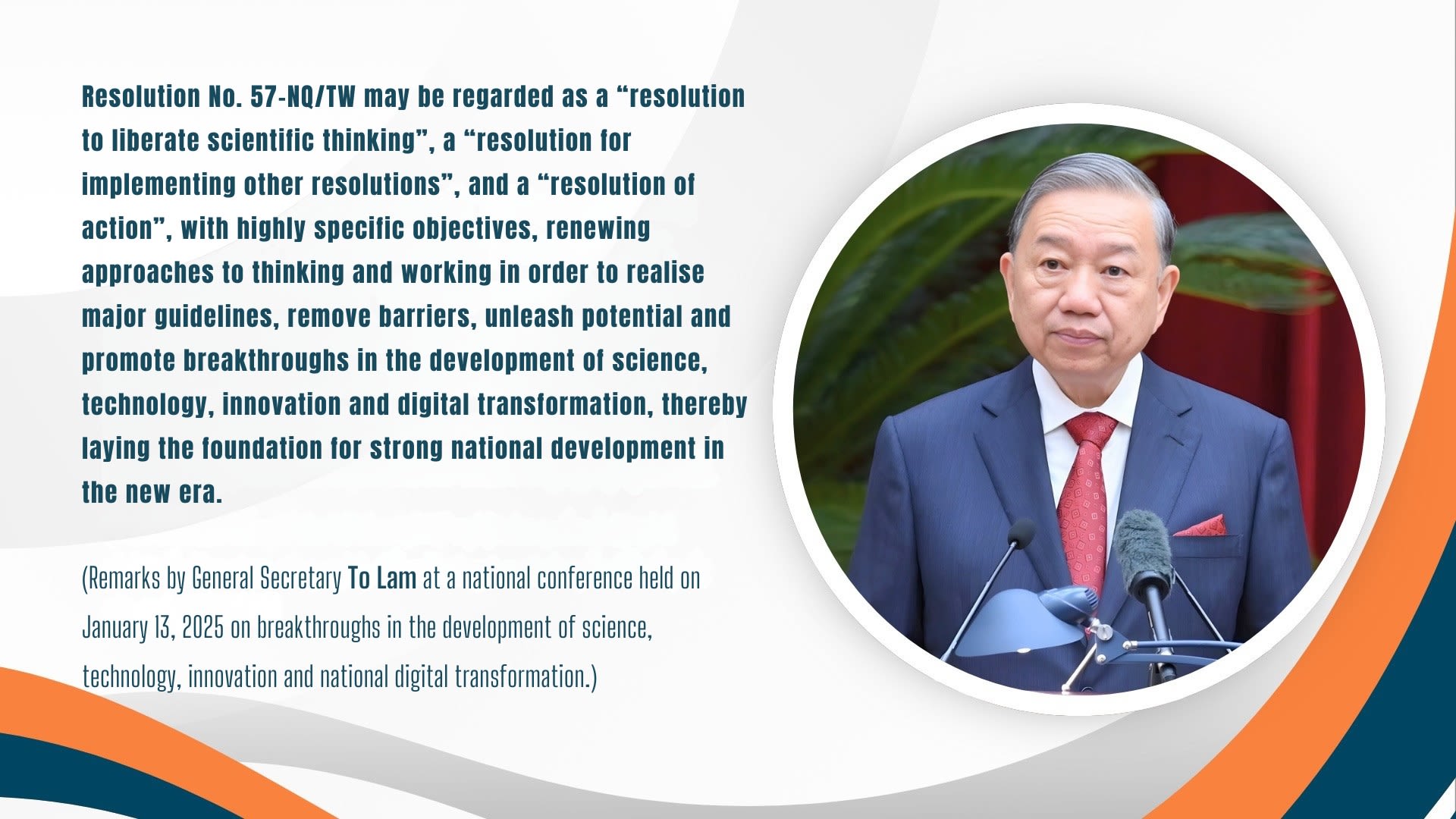
Resolution No. 57-NQ/TW embodies strong, strategic and revolutionary guidelines and decisions aimed at creating new momentum. The resolution affirms that breakthroughs in the development of science, technology, innovation and digital transformation are a prerequisite for driving the country’s robust development in the new era – the era of prosperity and strength – thereby contributing to the successful realisation of the goal that Viet Nam will become a developing country with modern industry and upper-middle income status by 2030, and a developed, high-income country with a socialist orientation by 2045.

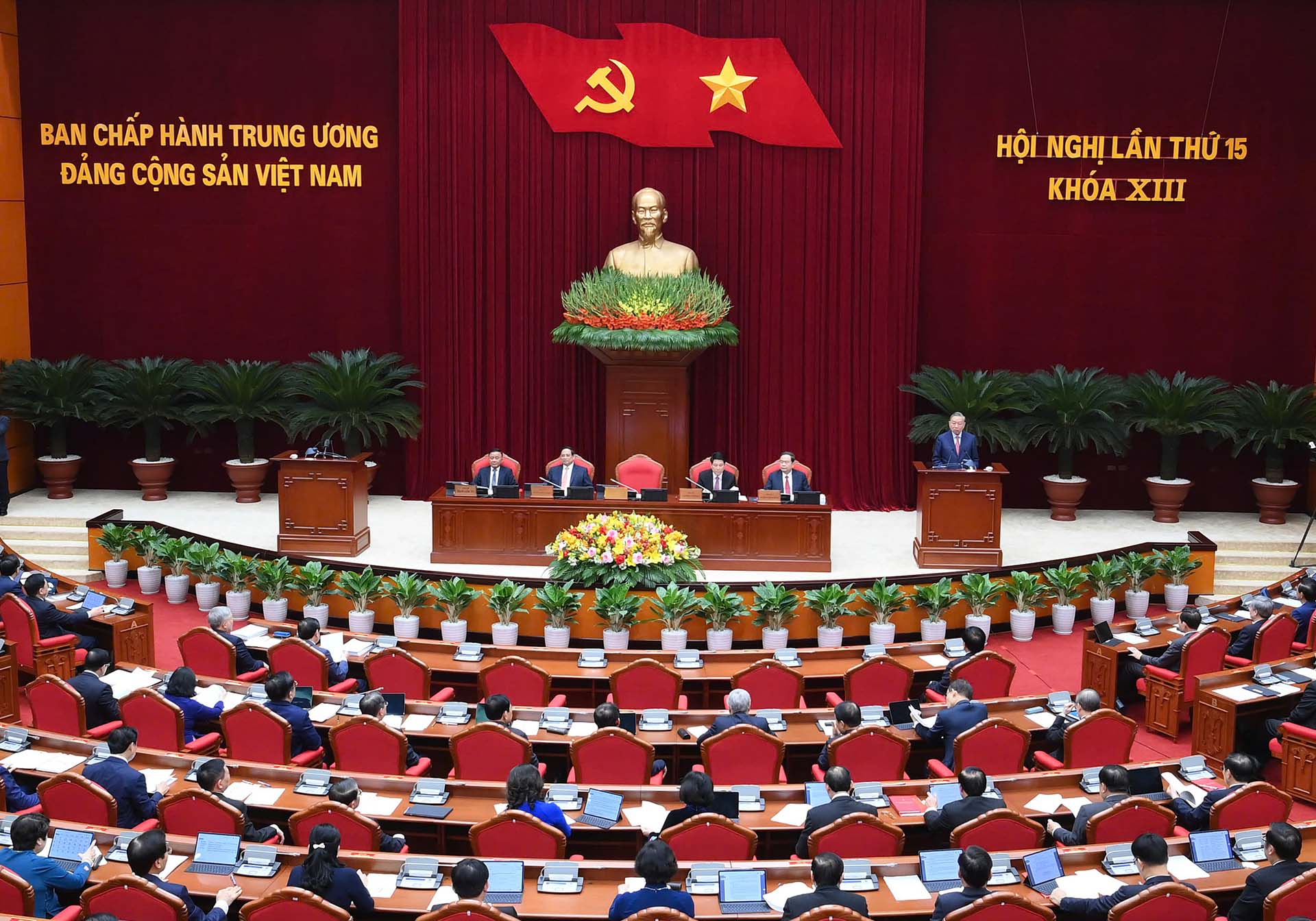
The resolution identifies breakthroughs in the development of science, technology, innovation and national digital transformation as a profound and comprehensive revolution across all fields, to be implemented decisively, persistently, synchronously, consistently and over the long term, through breakthrough and revolutionary solutions. It calls for strengthening the Party’s comprehensive leadership, promoting the combined strength of the entire political system, and encouraging the active participation of entrepreneurs, businesses and the people.
OBJECTIVES AND VISION
I. OBJECTIVES TO 2030
- Scientific, technological and innovation capacity and levels to reach advanced levels in many key fields, with some scientific and technological fields attaining international levels.
- The contribution of total factor productivity (TFP) to economic growth to exceed 55%. The digital economy to account for at least 30% of GDP. Science, technology and innovation to make a significant contribution to the building and development of Viet Nam’s cultural, social and human values, contributing to maintaining the Human Development Index (HDI) at above 0.7.
- Expenditure on research and development (R&D) to reach 2% of GDP. The workforce engaged in scientific research, technological development and innovation to reach 12 per 10,000 people. Between 40 and 50 science and technology organisations to be ranked at regional and global levels.
- Advanced and modern digital technology infrastructure with ultra-large capacity and ultra-broad bandwidth comparable to that of advanced countries. Complete smart city development in centrally governed cities and in selected provinces and cities with adequate conditions.
- Attract at least three additional leading global technology organisations or enterprises to establish headquarters and invest in research and production in Viet Nam.
- State management at both central and local levels to be conducted in a digital environment, with smooth connectivity and operation among agencies across the political system. Complete the development, connection and synchronised sharing of national databases and sectoral databases; establish data exchange platforms. Develop digital government, digital economy, digital society, digital citizens and digital cultural industries to reach a high international standard.
II. VISION TO 2045
- Science, technology, innovation, and digital transformation will develop in a solid and sustainable manner, contributing to Viet Nam’s goal of becoming a developed, high-income country.
- Viet Nam’s digital economy will account for at least 50% of GDP; the country will be one of the centres for the digital technology industry in the region and the world.
- Viet Nam will rank among the world’s top 30 countries in innovation and digital transformation.
- The proportion of digital technology enterprises will be comparable to that of developed countries; at least 10 Vietnamese digital technology enterprises will be on a par with those in advanced economies.
- Viet Nam will attract at least five additional leading global technology organisations and enterprises to establish headquarters and invest in research and production in Viet Nam.
TASKS AND SOLUTIONS
1. Raise awareness; achieve breakthroughs in mindset renewal; demonstrate strong political determination; provide resolute leadership and direction; and generate new momentum and a new national drive across society for the development of science, technology, innovation, and national digital transformation.


- Party committees, Party organisations, Party members, and cadres must fully recognise the importance of and thoroughly grasp the Party and state’s viewpoints, guidelines, and policies on digital transformation and the development of science, technology, and innovation; clearly define responsibilities; and proactively carry out implementation.
- Digital transformation tasks, as well as those related to the development of science, technology, and innovation, must be specified in the annual work programmes and plans of agencies, organisations, units, and localities.
- Appropriately allocate the number of officials with scientific and technical expertise within Party committees at all levels.
- Promote the development of science, technology, and innovation, and implement digital transformation across the entire political system, among citizens, and within the business community.
- Roll out the “digital learning” movement to widely disseminate and enhance science and technology knowledge and digital knowledge among cadres, civil servants, and the public.
- Expand and diversify ways to honour and commend, as well as provide timely and appropriate rewards to, scientists, inventors, enterprises, organisations, and individuals with excellent achievements in science, technology, innovation, and digital transformation.




2. Urgently and resolutely improve institutions, turning institutions into a competitive advantage in the development of science, technology, innovation, and digital transformation.


- Urgently revise, supplement, and comprehensively improve legal regulations on science, technology, investment, public investment, public procurement, the State budget, public assets, intellectual property, and taxation.
- Allow pilot implementation for newly emerging practical issues. Establish pilot mechanisms to help enterprises test new technologies under State supervision. Form venture capital funds for innovative start-ups, technology incubation, and digital transformation.
- Unify and enhance the effectiveness of State management of science, technology, innovation, and digital transformation. Develop research institutes and universities into strong research entities, closely combining research, application, and training.
- Establish mechanisms that permit and encourage research organisations and scientists to establish and participate in the management of enterprises based on research results.
- Attract and effectively utilise all investment resources for the development of science, technology, innovation, and national digital transformation. The State budget spending on research and development of science and technology will be prioritised for implementation under fund-based mechanisms, through science and technology development funds.
3. Increase investment and improve infrastructure for science, technology, innovation, and national digital transformation.

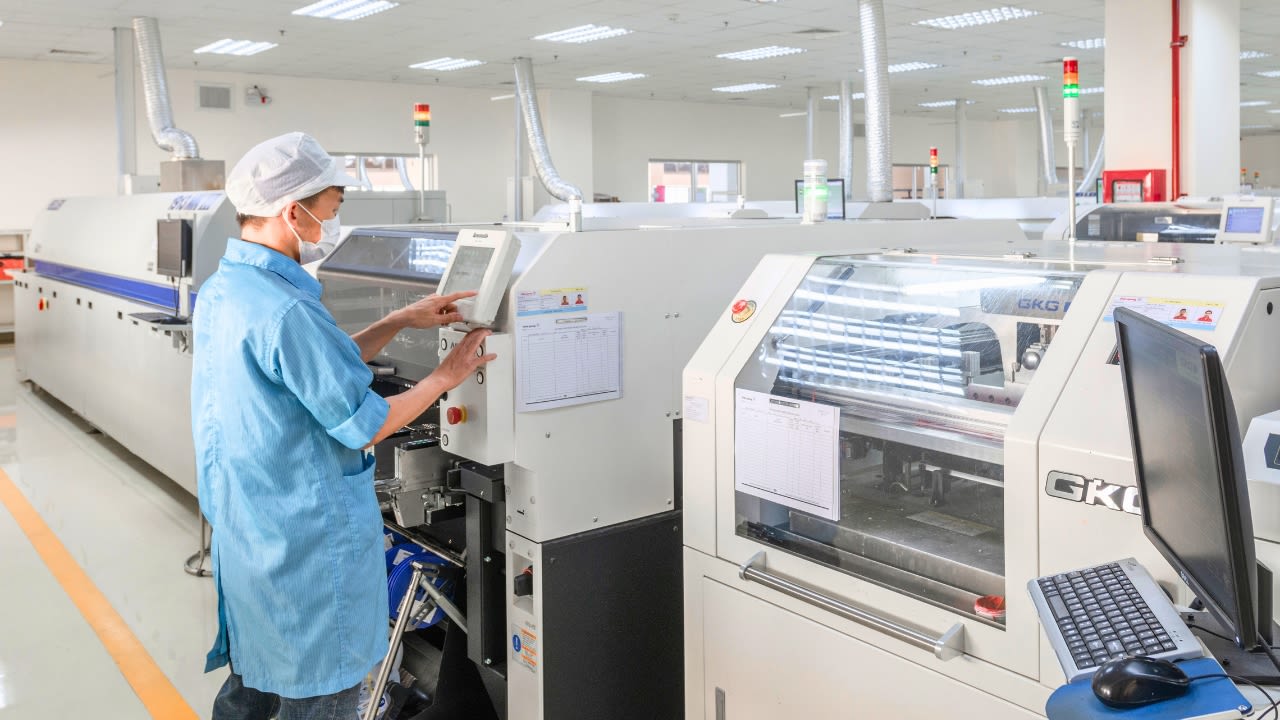
- Promulgate a programme for industry and strategic technology development; a strategic industry development investment fund; and introduce policy pilot mechanisms to promote research, development, application, and transfer of strategic technologies. Allocate at least 15% of the State budget for scientific career expenditures to serve strategic technology research.
- Promulgate strategies for research and application of science and technology in the exploitation and development of maritime space, underground space, and outer space. Focus on developing energy infrastructure, especially new energy and clean energy, and ensure energy security for the development of science, technology, and strategic industries.
- Develop a system of research and testing centres and key national laboratories, focusing on strategic technologies. Establish mechanisms and policies to support and encourage organisations, individuals, and enterprises to invest in and build laboratories and research and development centres for science and technology.
- Promote the application and development of digital technologies. Encourage investment in, purchase and leasing of digital products and services. Build and share national and regional digital platforms. Promote the digital economy ecosystem across sectors and fields.
- Establish public–private partnership mechanisms to develop modern digital infrastructure.
- Put in place mechanisms and policies to support domestic enterprises in investing in and building data centres and cloud computing facilities; attract foreign enterprises to locate data centres and cloud computing facilities in Viet Nam. Establish ownership and business rights over data and the distribution of value generated from data. Form Viet Nam’s big data industry. Strongly develop applications of artificial intelligence based on big data for key industries and sectors.
4. Develop and make effective use of high-quality human resources and talents to meet the requirements of scientific and technological development, innovation and national digital transformation.
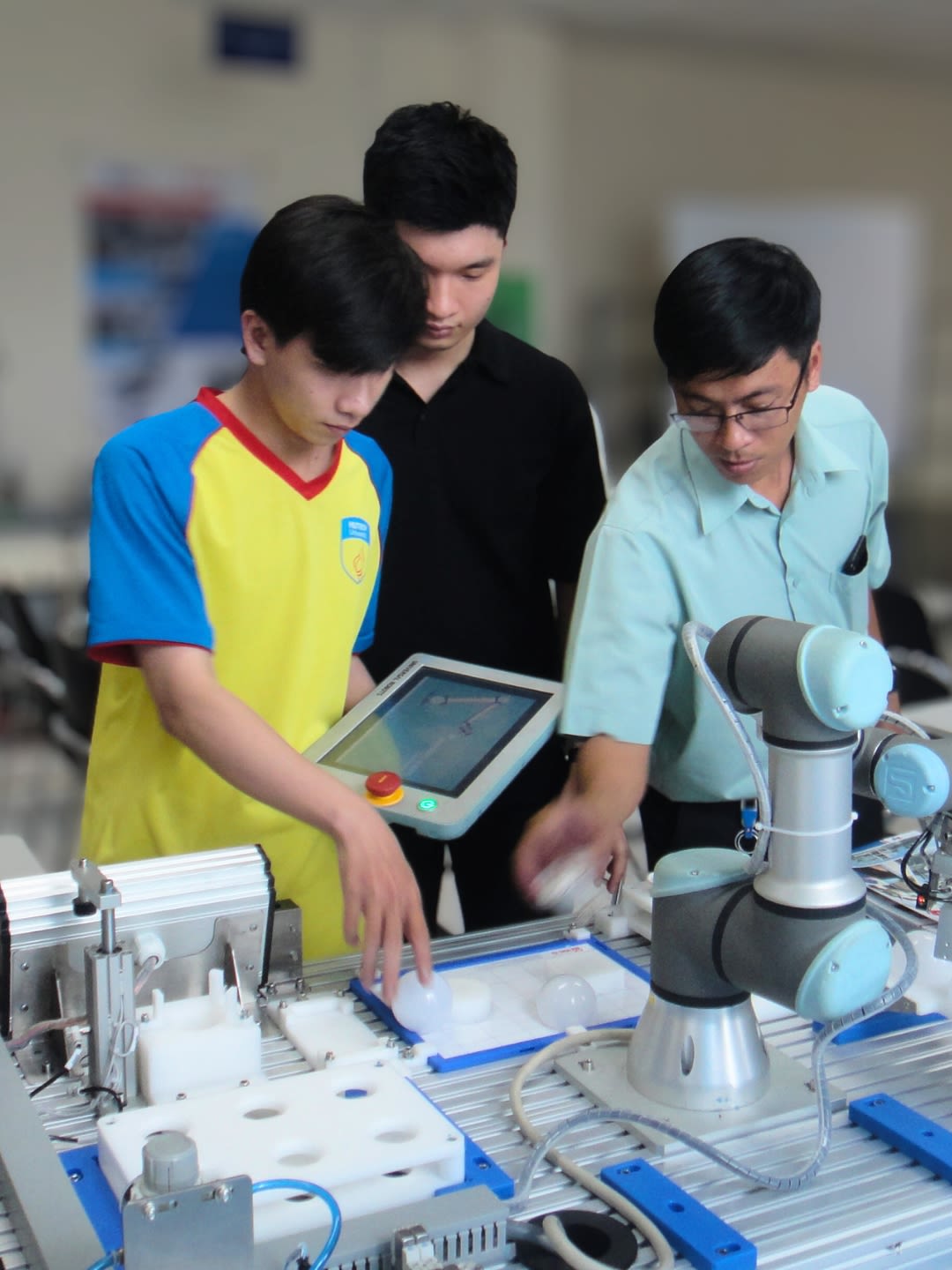
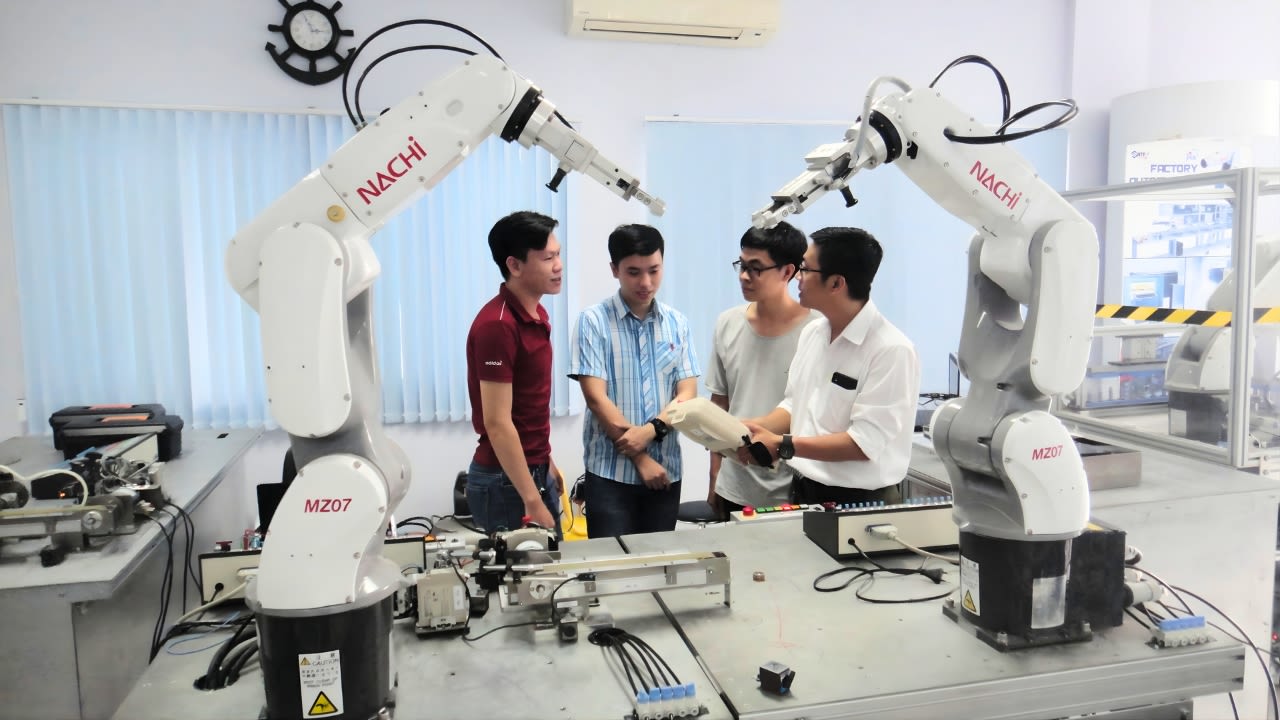
- Increase investment in, reform and improve the quality of education and training, ensuring a supply of high-quality human resources that meet the requirements of scientific and technological development, innovation and national digital transformation.
- Establish a number of advanced schools and training centres specialising in artificial intelligence. Introduce special mechanisms for public–private cooperation in training digital technology human resources.
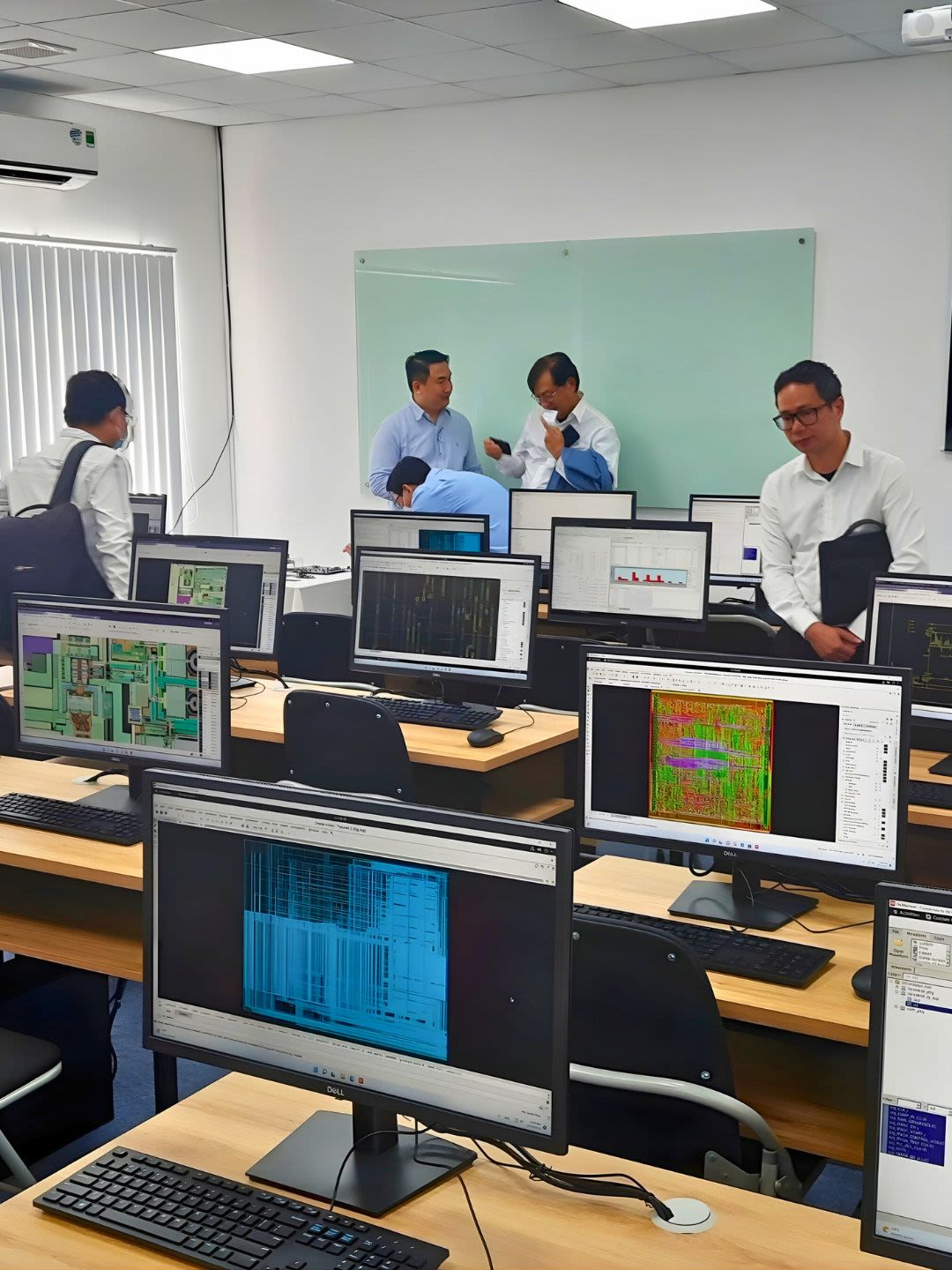
- Develop a contingent of lecturers and scientists with sufficient capacity and qualifications to meet teaching needs in basic sciences, semiconductor chip technology, microelectronics, and key engineering and technological fields.




5.Accelerate digital transformation and the application of science, technology and innovation in the operations of agencies within the political system; enhance the effectiveness of national governance and the efficiency of state management across sectors, ensuring national defence and security.
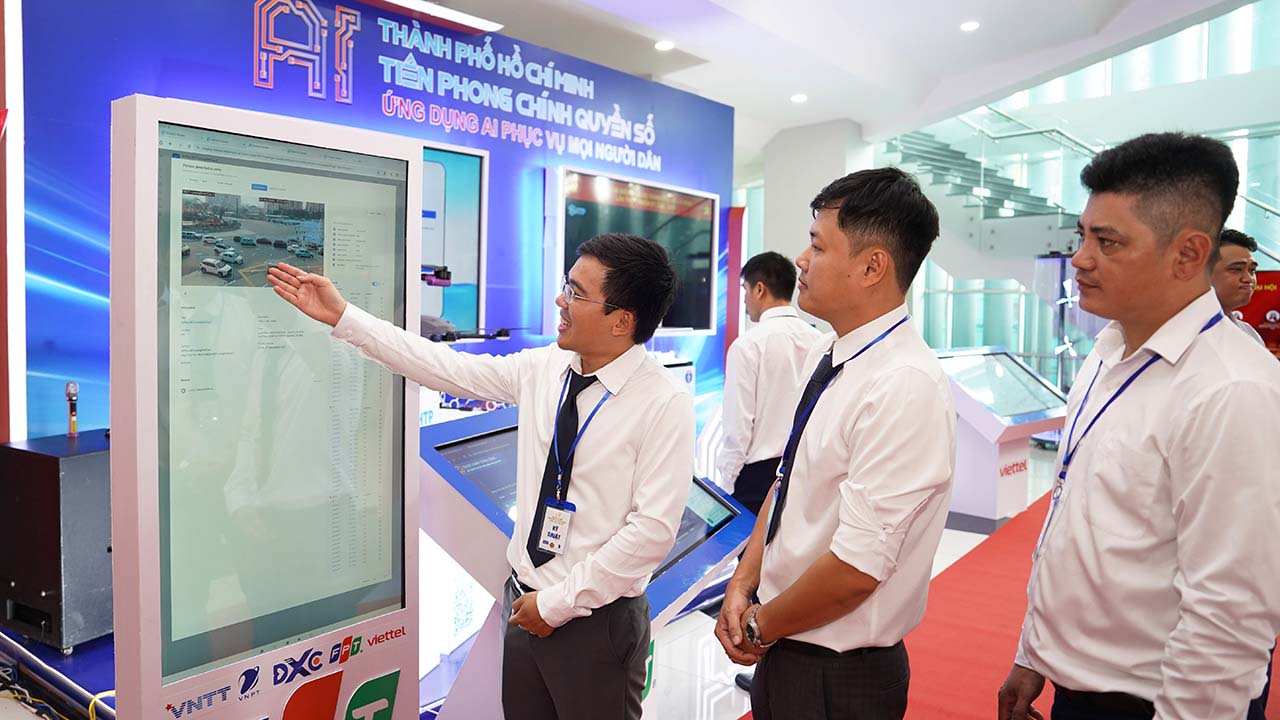
- Develop plans and roadmaps to bring all activities of agencies within the political system into the digital environment, ensuring interconnection and synchronisation.
- Develop secure digital platforms and intensify the application of digital technologies, forming digital citizens.
- Ensure cyber safety and security and national sovereignty on digital platforms and in cyberspace; safeguard the lawful data security and safety of organisations, individuals and enterprises, as well as national data security sovereignty.
6. Strongly promote scientific and technological activities, innovation and digital transformation in enterprises.


- Introduce preferential policies and incentives to encourage enterprises, especially small and medium-sized enterprises, to invest in digital transformation, research and the application of science and innovation to improve production and business efficiency and corporate governance.
- Adopt sufficiently strong policies to encourage the spirit of entrepreneurship in science, technology, innovation and digital transformation.
- Establish mechanisms and policies to support the formation and development of a number of large-scale strategic domestic digital technology enterprises to develop digital infrastructure, lead national digital transformation and possess sufficient capacity to compete internationally. Encourage enterprises to reinvest in infrastructure and invest in research and development (R&D).
- Promote the consumption of products and services in the digital environment, ensuring that the digital economy of sectors and fields accounts for at least 70% of the overall digital economy; promote smart production in sectors and fields such as agriculture, commerce, finance, education, health care, transport and logistics.
7. Strengthen international cooperation in the development of science, technology, innovation, and digital transformation.

- Promote research cooperation in science and technology development with countries possessing advanced scientific capabilities and sophisticated digital transformation, particularly in fields such as artificial intelligence, biotechnology, quantum technology, semiconductors, nuclear energy, and other strategic technologies.
- Develop policies for the procurement and transfer of advanced technologies suited to Viet Nam’s specific conditions.
- Proactively and vigorously participate in the formulation of international rules and standards for new technologies to ensure safety and mutual benefit. Promote capacity building and technology transfer within the framework of international agreements and treaties to which Viet Nam is a signatory.
OUTCOMES FROM RESOLUTION 57-NQ/TW
After one year of implementing Resolution 57-NQ/TW, awareness and action across the entire political system have shown positive shifts, affirming that this is a correct and timely policy to remove bottlenecks and drive development.
- The institutional and policy framework has been unlocked, with a significant number of laws, decrees, and circulars issued in a synchronised manner, establishing a robust legal corridor.
- Financial resources have been prioritised, allocated, and guaranteed at 3% of total state budget expenditure.
- Digital transformation across the entire political system has shown positive progress, especially in implementing Plan No. 02-KH/BCDTW, Regulation No. 05-QĐ/BCDTW, and the conclusions of the Steering Committee, alongside digital transformation programmes and projects across the four blocs of agencies.
- Science, technology, and innovation have identified systematic approaches, the correct strategic direction, and alignment with global development trends, with a primary focus on the tripartite cooperation model, high-tech zones, smart cities, innovation centres, and strategic technologies.
CONTRIBUTION RATIO IN 2025
The initial results of implementing Resolution No. 57-NQ/TW in 2025 have contributed to the share of science, technology, innovation, and digital transformation in GDP: > 16.4%
Producers: Party Building Department, Nhan Dan Online Department, Nhan Dan Newspaper’s Representative Office in the South