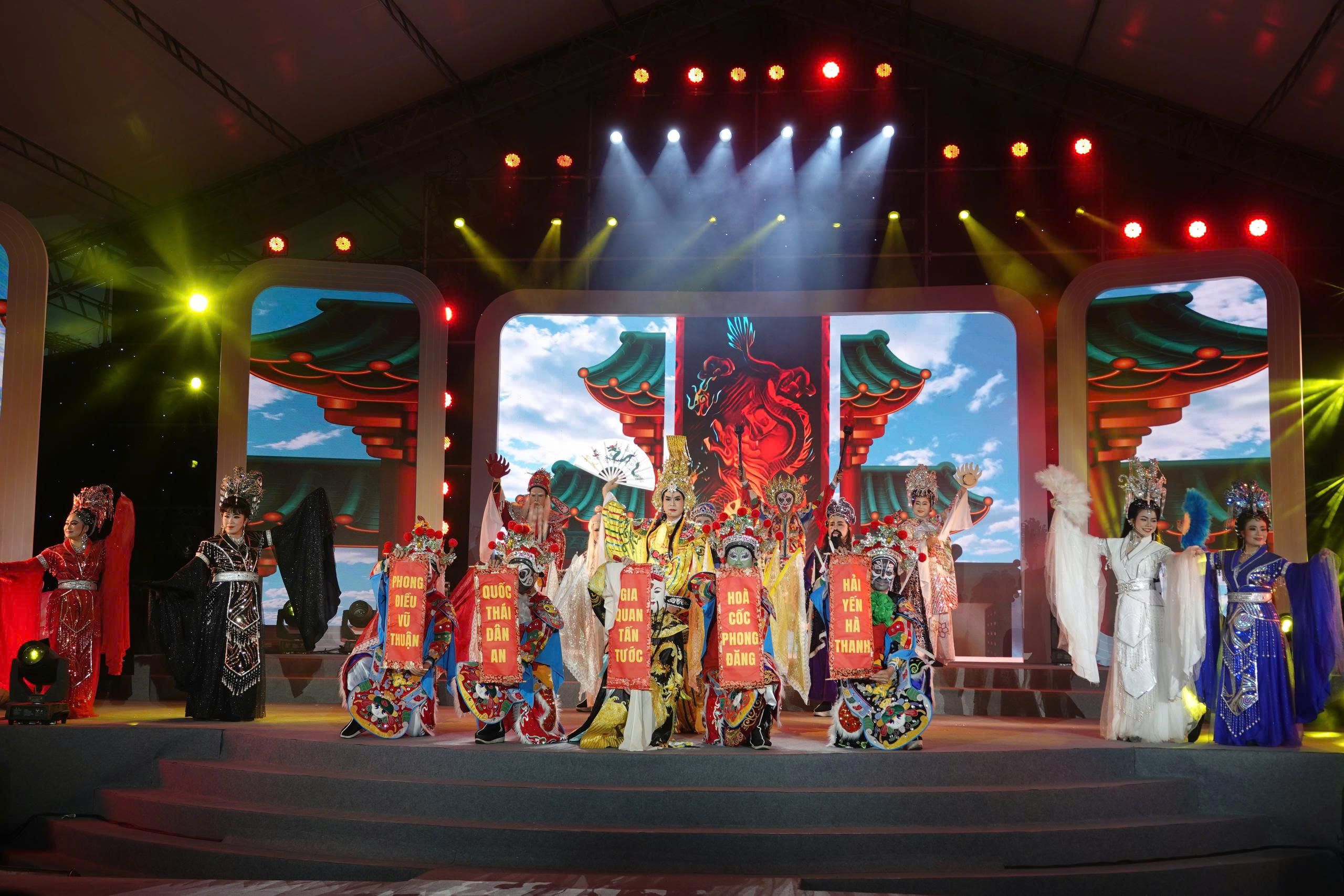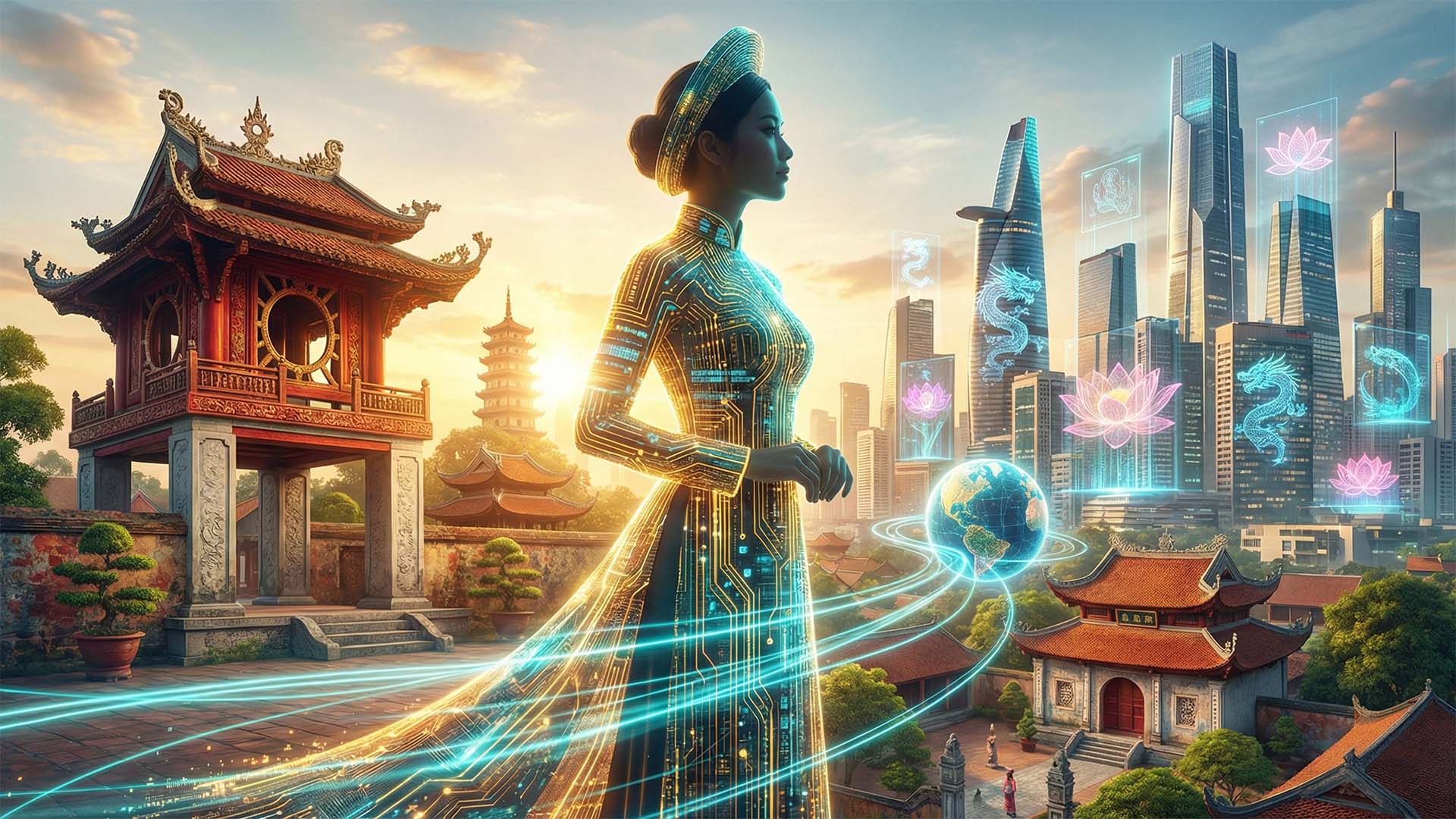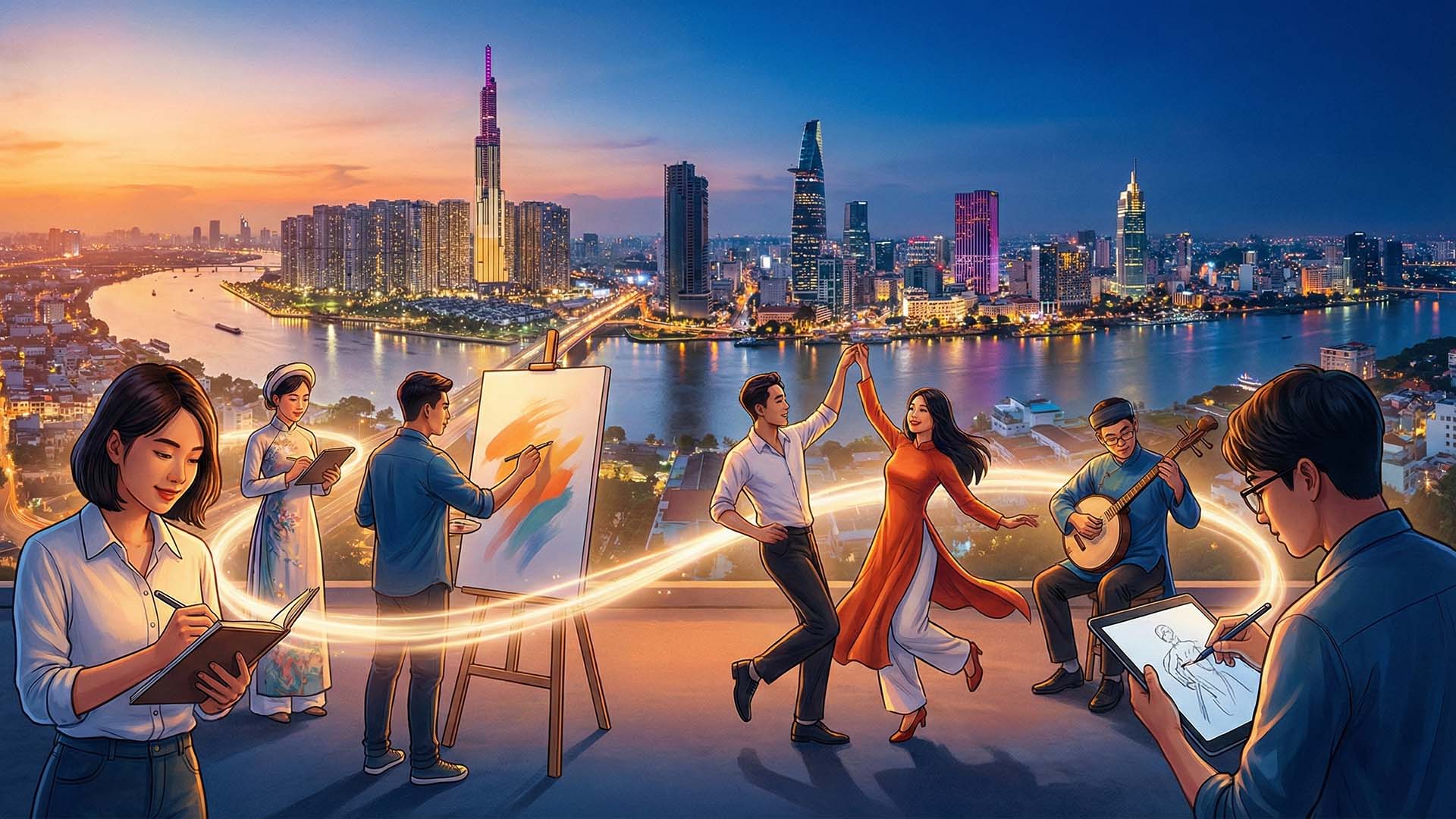


The Resolution affirms that the development of culture and people constitutes the foundation, an important endogenous resource, a powerful driving force, a pillar and a regulatory mechanism for the country’s sustainable development. The promulgation of Resolution No. 80-NQ/TW demonstrates the determination to perfect the personality of the socialist citizen in the new era; to promote the tradition of patriotism, courage, intellect, the spirit of autonomy and national self-reliance; to uphold morality, talent, creativity and the aspiration to contribute to the prosperity, civility and happiness of the people, as well as to the strong development of the Vietnamese nation in the new era.

Objectives
By 2030
Overall objectives:
- Accelerate the building and development of an advanced Vietnamese culture imbued with strong national identity.
- Build a healthy cultural environment from the family and schools to society and the digital space.
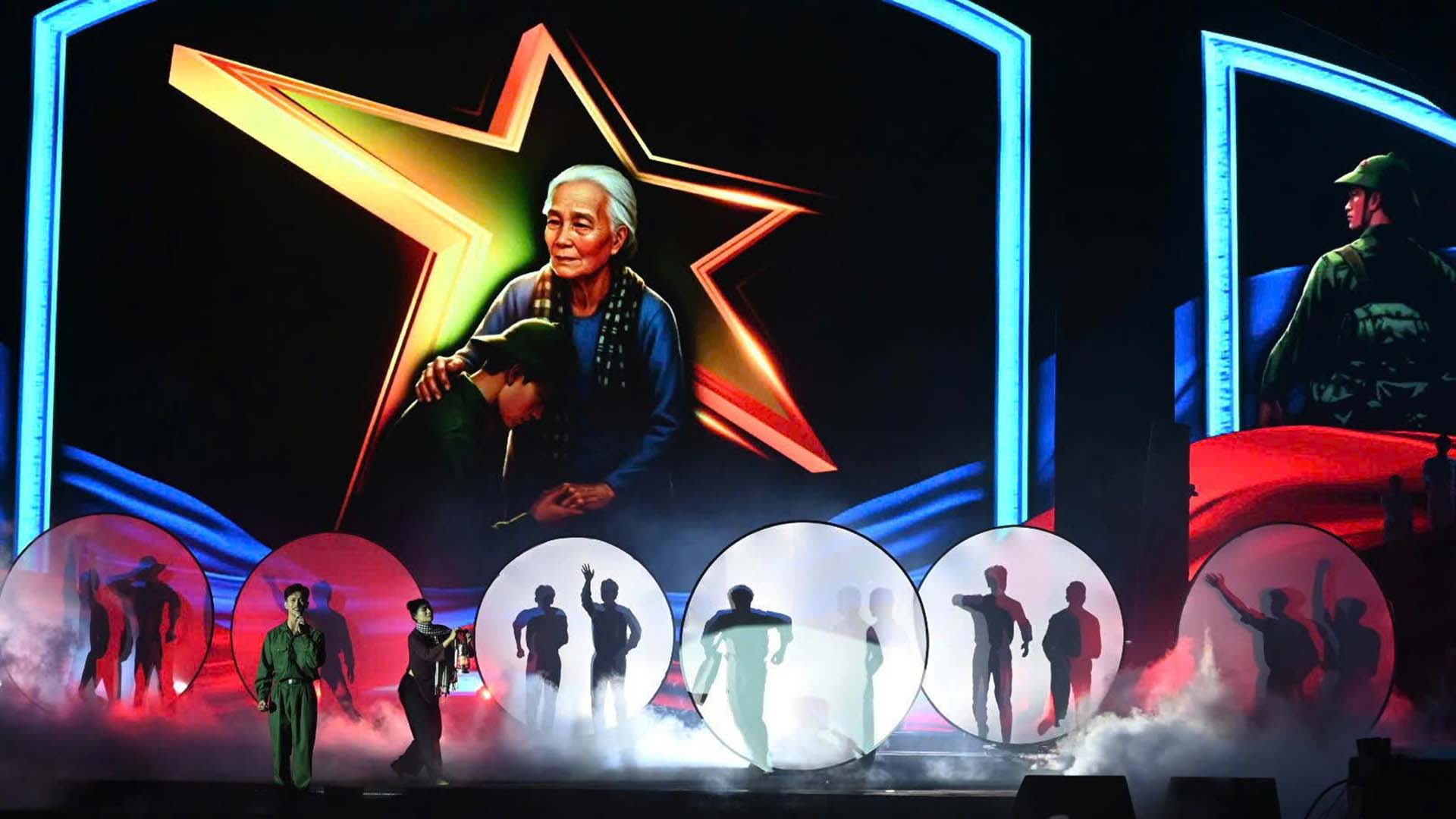
- Develop literature and the arts commensurate with the nation’s cultural history and the stature of the country in the new era.
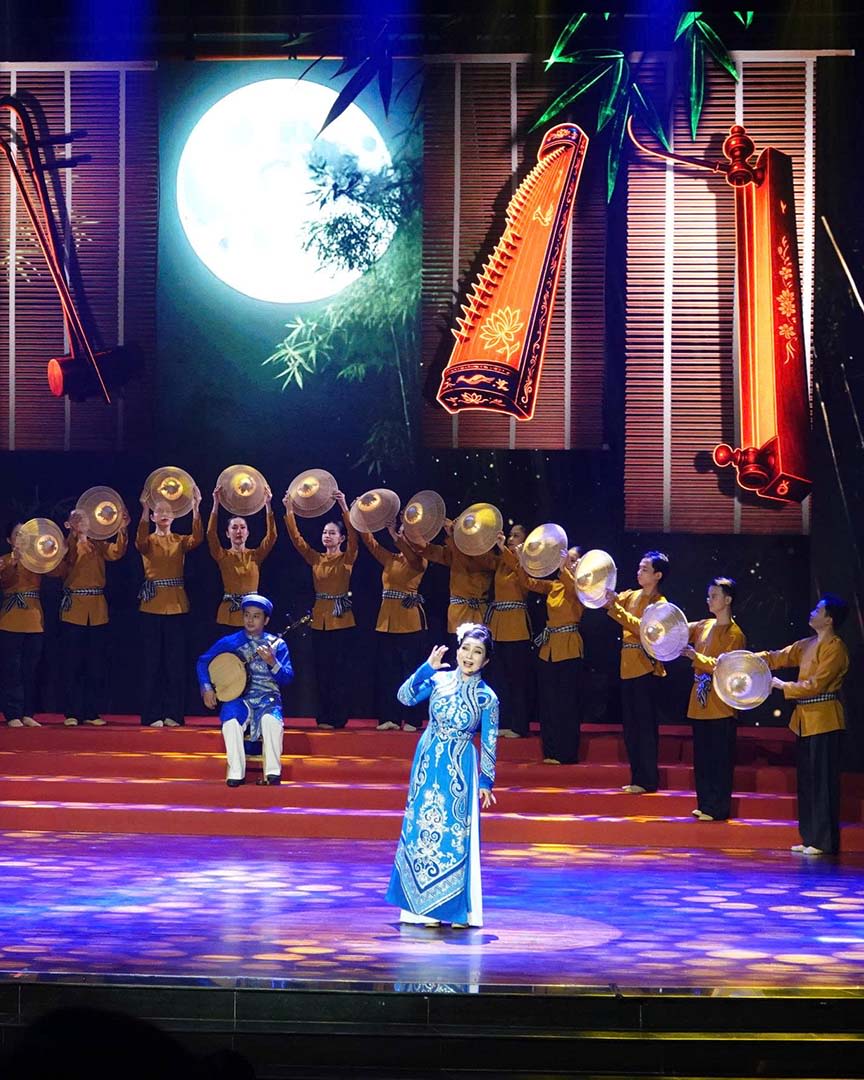
- Basically complete the restoration and embellishment of special national relics; to revive and preserve intangible cultural heritage and traditional arts that are at risk of fading and require urgent safeguarding.
- Promote the development of cultural industries; to form an ecosystem for start-ups in cultural industries and creative arts.
- Build several cultural industry groups, creative industry clusters and zones, and internationally scaled cultural creative complexes based on high technology and innovative business models.
- Proactively and actively integrate internationally in the field of culture; to build Viet Nam into an attractive destination for major cultural and artistic events at regional and global levels.

Some Targets
Development of Vietnamese Culture
Key targets
Cultural institutions
Contribution to GDP
Digitisation of heritage
Complete the national system of cultural institutions, ensuring that 100% of two-tier local governments and the armed forces have cultural institutions capable of meeting the needs for cultural creation and enjoyment of grassroots communities, officials and soldiers, 90% of grassroots-level cultural institutions operate regularly and effectively.
Complete the digitisation of 100% of cultural heritage sites classified at the national and special national levelsby 2026.
Ensure that 100% of pupils, learners, and students across the national education system have access to, and regularly and effectively participate in, artistic activities and cultural heritage education.
Ensure commensurate resources for cultural development by allocating a minimum of 2% of total annual state budget expenditure to culture, with a gradual increase in line with practical needs.
Introduce financial mechanisms to prioritise implementation in 3 breakthrough areas: training and remuneration of talent in culture and the arts; application of science and technology, and digital transformation in the cultural sector; and commissioning the creation of cultural works and literary and artistic works of high value in terms of ideology, content, and artistic merit.
Develop cultural industries to contribute 7% GDP; Establish from 5 to 10 national brands in cultural industries in sectors with strong potential.
Successfully build 5 international cultural and arts festival brands in cinema, music, and fine arts. Establish an additional one to three Vietnamese cultural centres overseas. Strive to secure the recognition and inscription of five more cultural heritage elements by UNESCO.
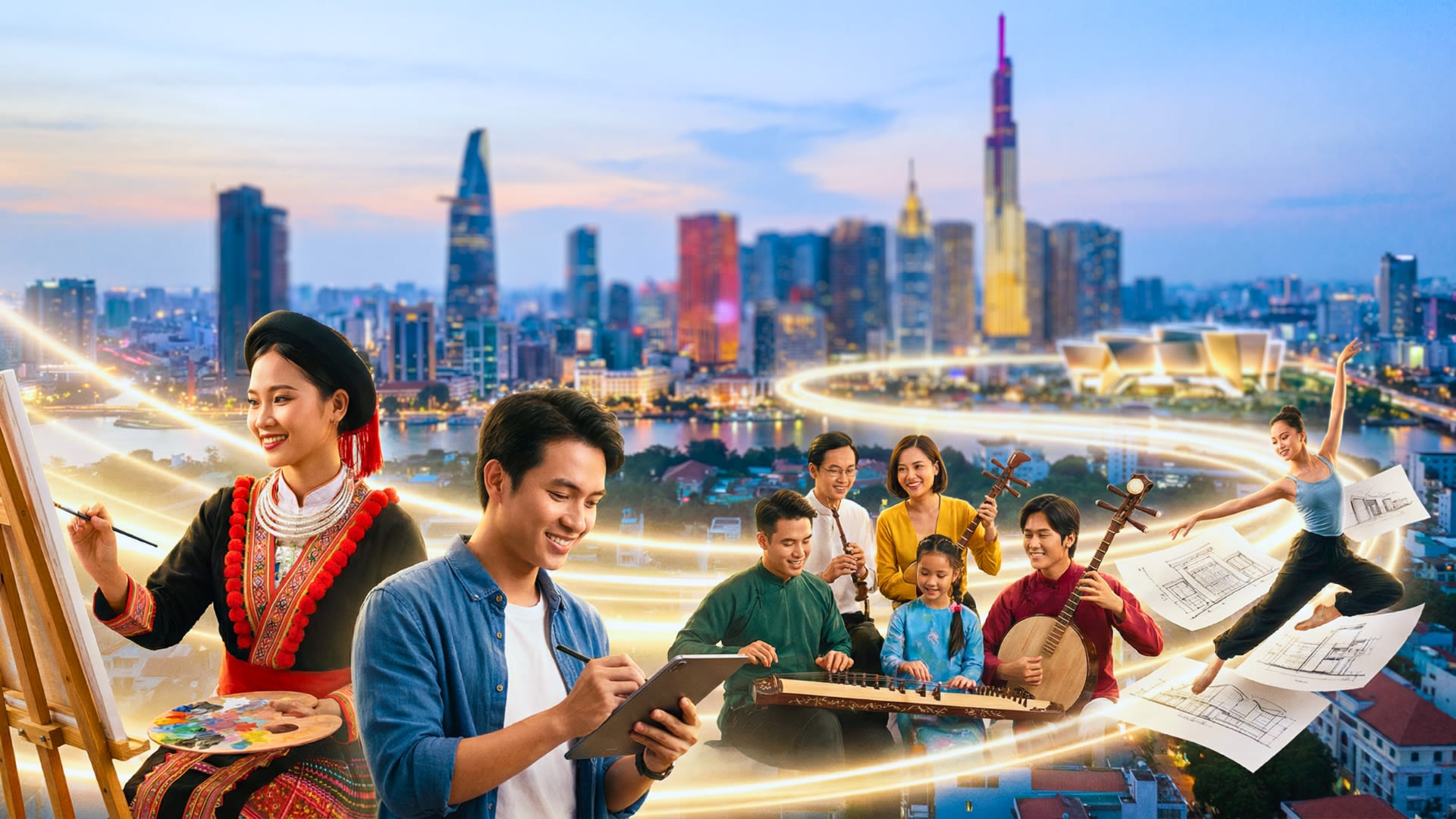
VISION TO 2045
- Build and develop a Vietnamese socialist culture, with people at the centre — as the subject, objective, and driving force of development.
- Affirm the cultural standing of a high-income developed nation with a socialist orientation.
- Become an attractive destination for major regional and international cultural and artistic events and one of the most dynamic centres of cultural and creative industries.
TASKS AND SOLUTIONS
Developing Vietnamese culture in the new era
Strongly renew thinking and achieve high level of unity in awareness and action
With a view to developing culture in the new era
- Party committees at all levels, Party organisations, cadres, Party members, and the people are to thoroughly grasp and fully, profoundly, and comprehensively recognise the foundational role and vital endogenous strength of culture in national development.
- Thoroughly understand the perspective of developing culture on par with politics, economics, and society, linked with building a cultural security and human security posture, and digital cultural sovereignty.
- Strengthen the work of propaganda and education on culture in a regular, continuous, and effective manner with the press and publishing playing a core role.
Improve institutions to create strategic breakthroughs
Unlock resources for cultural development
- Fully and synchronously institutionalise and effectively implement the Party’s guidelines and policies on culture.
- Develop, promulgate, and implement the National Cultural Index and the Statistical Index on the contribution of cultural industries to economic development according to international standards.
- Develop breakthrough mechanisms and policies for the development of science, technology, innovation, and digital transformation in the cultural field, while developing new cultural economic models, key projects, large-scale cultural projects, and creative industrial clusters and zones.
- There are specific, groundbreaking policies to promote public-private cooperation in the cultural sector.
- There are policies to provide appropriate incentives for folk artisans and artists.
- Pilot programmes are implemented on urgent issues that need immediate action to create breakthroughs for cultural development.
Build comprehensively developed Vietnamese people
Build a humane, healthy, civilised, and modern cultural environment
- Take the development of human character as the central focus đto guide cultural, educational, and scientific activities towards the goal of building comprehensively developed people in terms of morality, intellect, physical health, and aesthetics.
- Implement a synchronised system of cultural values, national values, family values, and standards for the Vietnamese people.
- Shape the cultural environment within the development space of each region and locality. Issue a code of conduct in the digital space; and clean up the digital cultural environment.
- Develop grassroots culture in accordance with the two levels of local government. Take residential areas as the core of the cultural environment, with the people as the subject and centre.
- Build a cultural posture linked to national defence and security, firmly protect the ideological foundation of the Party.
- Ensure full rights to enjoy and create culture; ensure equal access to culture; and develop cultural services to better meet the needs of the people. Unify the selection of November 24 every year as “Viet Nam Culture Day”.
Innovate cultural management methods
In the direction of creation and service, apply science, technology, and digital transformation
- Implement modern cultural governance approaches, taking effectiveness and multi-centred participation (the State – the market – society – the creative community) as core principles; transparency and accountability as the foundation; and creativity, institutional innovation outcomes, and process digitalisation as benchmarks.
- Streamline the cultural governance apparatus to ensure effectiveness and efficiency; shift from administration to governance, with clear decentralisation and delegation of authority.
- Proactively adapt to developments in science, technology, innovation, and digital transformation in cultural development.
- Attach importance to policy communication; develop diverse forms of media and information dissemination on digital platforms; and protect intellectual property rights, creative brands, cultural security in cyberspace, and digital cultural sovereignty.
Build a cultural ecosystem
Promote innovation; regard enterprises as the driving force and people as the central actors
- Build and develop a Vietnamese cultural ecosystem that is distinctive, diverse, modern, and capable of providing leadership and momentum for sustainable social development.
- Form creative spaces for digital content , and creative environments for communities of enterprises and organisations engaged in the production and supply of cultural products and services through connectivity and exchange activities.
- Fully identify and effectively exploit cultural resources; place cultural heritage at the centre and digital cultural resources as a strength, aiming at the preservation, promotion and sustainable development of cultural values.
- Attract, honour, unleash creative potential, and create a favourable environment for experts, intellectuals, talented artists, writers, and gifted pupils and students in the fields of culture and the arts to be nurtured and trained as well as to create, contribute, and develop.
Develop cultural industries and the cultural market
Position national brand products in association with cultural tourism
- Focus on the selective and targeted development of key cultural industry sectors, including cinema, music, fine arts, cultural tourism, design, fashion, traditional crafts, electronic games, cuisine, and digital software/content.
- Develop infrastructure and create key markets for cultural industries with competitive advantages.
- Strengthen local branding through the development of distinctive, culturally rich cultural products and services, while gradually forminga national brand. Promote exports of cultural products and services, publishing products, and media and multimedia products.
- Restructure and enhance the quality and competitiveness of Viet Nam’s tourism sector; build and develop a national brand for tourism and services imbued with Vietnamese cultural identity and people, and a national destination brand for Viet Nam associated with cultural values.
Mobilise resources and develop infrastructure
Enhance the quality of cultural human resources
- Conduct research and valuation of the Total Economic Value (TEV), develop the global branding of Viet Nam as a destination.
- Effectively implement the National Target Programme on Cultural Development for the 2025–2035 period.
- Formulate strategies for human resource development, particularly high-quality human resources and strategic-level cadres, with a focus on developing cultural human resources.
- Innovate arts education within educational institutions; prioritise the establishment and development of cultural research institutes and training institutions based on advanced and modern models.
- Intensify theoretical research and practical reviews on cultural construction and development; proactively forecast global trends; provide scientific foundations for advisory and consultative work in formulating strategies and supplementing, refining, and advancing the Party’s and the State’s guidelines, orientations, and policies on the development of Vietnamese culture in the new era.
International integration in culture
Promote Vietnamese cultural values and enhancing national soft power
- Promote the important role of culture in foreign affairs activities at all levels.
- Develop plans to accelerate and improve the effectiveness of Viet Nam’s international cultural integration.
- Establish and enhance the effectiveness of Vietnamese cultural centres abroad, particularly in countries that are comprehensive strategic partners, strategic partners, and comprehensive partners of Viet Nam. Expand the teaching of the Vietnamese language and create favourable conditions for overseas Vietnamese, international organisations, and international communities to introduce Viet Nam’s land, people, and culture.
- Actively host international cultural and artistic events, and participate more deeply in major global forums.
- Develop a strategy for international communication and promotion of Viet Nam’s image, with culture as the foundation and core pillar, spreading the image of Viet Nam as a country rich in cultural identity, humanistic values, responsibility, and active contributions to the flow of human civilisation.