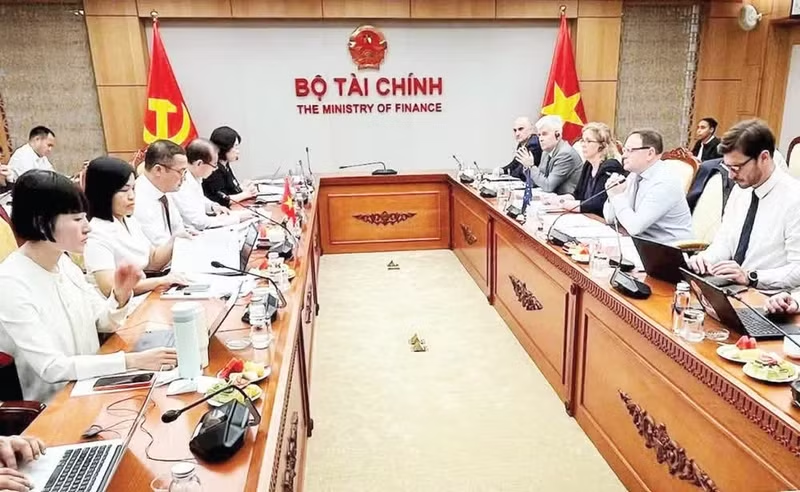
The 36-year journey of partnership has been marked by robust development in the relationship between Viet Nam and the EU.
Since establishing diplomatic relations in 1990, Viet Nam and the EU have made substantial and steady progress — from the signing of the Framework Cooperation Agreement (FCA) in 1995 and the Partnership and Cooperation Agreement (PCA) in 2012, to the EVFTA in 2019.
In early 2026, the two sides elevated their relationship to a comprehensive strategic partnership, opening a promising new chapter for bilateral cooperation. With this milestone, Viet Nam became the first Southeast Asian nation to establish a comprehensive strategic partnership with the EU.
By cultivating a strong, long-standing relationship with the EU — while also serving as an active and proactive member in the development of the ASEAN community — Viet Nam has become a vital bridge bringing the EU and ASEAN closer together.
The EVFTA stands as a prominent highlight in the economic cooperation between Viet Nam and the EU. After years of implementation, the agreement is yielding positive results. The EU is currently Viet Nam’s fourth-largest trading partner and third-largest export market, while Viet Nam has become the EU’s largest trading partner within ASEAN.
With a stable political environment, a rapidly evolving economy, and a high-quality workforce — all of which facilitate cooperation and investment by foreign enterprises — Viet Nam has emerged as an attractive destination, drawing significant interest and capital investment from the EU.
Viet Nam is actively advancing the transformation of its growth model, identifying new drivers rooted in science and technology, innovation, digital transformation, and the green transition — all areas in which the EU possesses notable strengths.
This creates ample room for both sides to further expand their cooperation. Science, technology, and innovation have become a new pillar of collaboration between Viet Nam and several EU member states.
In 2025, Viet Nam and various EU member states signed several cooperation instruments, including a strategic sectoral partnership agreement on science, technology, and innovation with Sweden; a memorandum of understanding on digital transformation and the digital economy with Estonia; and a cooperation agreement on science, technology, and innovation with France.
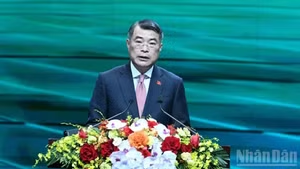
These agreements serve as vital foundations, enabling both sides to leverage their respective strengths, deepen their partnership, and contribute to the realisation of each party’s development goals. During a recent meeting with Deputy Prime Minister Le Minh Hung, Julien Guerrier, Ambassador and Head of the EU Delegation to Viet Nam, affirmed that maintaining and strengthening a stable and reliable partnership with Viet Nam is of particular importance to the EU.
The EU seeks to deepen cooperation with Viet Nam in areas such as the green transition, supply chains, transport, and science and technology, while also pledging to remain a steadfast partner to Viet Nam as the country enters a new phase of development.
Opportunities for collaboration between Viet Nam and the EU are expanding, especially in sectors of strategic importance to the sustainable future of both sides.
As it embarks on a new era of development, Viet Nam is determined to elevate its relationship with the EU to new heights. By fostering increasingly effective and substantive bilateral cooperation, Viet Nam and the EU aim to serve as a model for dynamic engagement between Asia and Europe — thereby contributing to global peace, stability, and sustainable development.