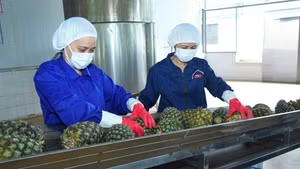
Manufacturing enterprises, suppliers, and retail systems nationwide have proactively drawn up early stockpiling plans to curb price fluctuations and ensure supply, with expected output growth of around 30% during the peak season.
So far, the volume of goods serving Tet has been assessed as fairly abundant, with prices remaining stable and numerous attractive promotional programmes being offered, effectively meeting consumer demand.
Enterprises proactively raise inventories by 30%
According to an assessment report by the Agency of Domestic Market Surveillance and Development under the Ministry of Industry and Trade, food producers, fast-moving consumer goods manufacturers, and distribution systems have all entered the final sprint, increasing long-term inventories by 15–30% compared with normal months. The focus is on essential commodities such as rice, livestock and poultry meat, eggs, fruit and vegetables, fresh and processed foods, cooking oil, sugar, confectionery, and beverages. These are products with strong Tet demand, requiring early and systematic supply planning by enterprises.
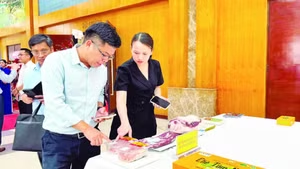
For example, the VISSAN Joint-Stock Company is expected to supply the market with 850 tonnes of fresh food and more than 3,400 tonnes of processed food, while maintaining an additional reserve of 10–20% of output to respond to demand fluctuations before, during, and after Tet. Confectionery producers such as Bibica, Kinh Do, and Huu Nghi have also reported that they have doubled or tripled production capacity compared with normal months, with planned Tet output of 3,000–6,000 tonnes per enterprise, focusing on traditional, safe, and nutritious products, accompanied by promotions offering discounts of 10–30%.
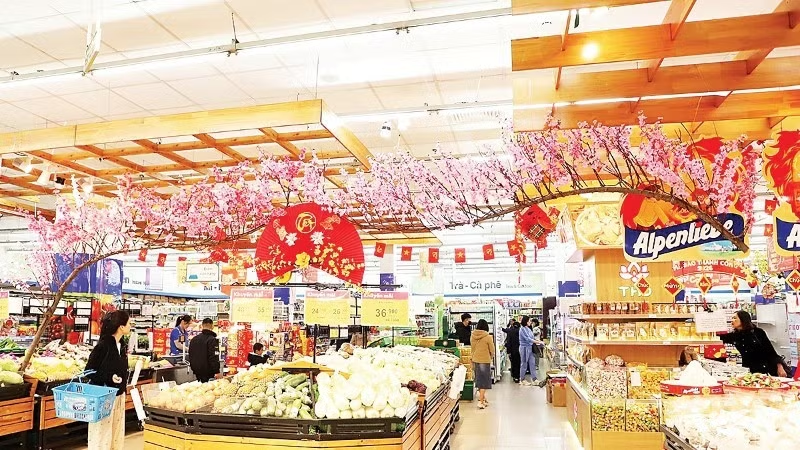
Alongside manufacturers, surveys show that modern retail and distribution systems are also busy preparing and stockpiling goods for the Tet market. Many systems have expanded mobile sales networks, online sales channels, and service hours to maximise convenience for consumers. Nguyen Thi Thuy Huong, Director of Operations of WinCommerce Northern Region, which owns the WinMart/WinMart+ supermarket chain, said the retailer had worked with suppliers two to three months ahead of Tet to increase inventories by 10–30% depending on product groups, ensuring essential goods are available at good, stable prices so that consumers can shop with peace of mind. In addition to exclusive programmes for Win members offering 20% discounts on WinEco clean vegetables and MEATDeli chilled meat, WinMart regularly runs promotions such as discounts of up to 50%, buy-one-get-one-free, and buy-two-get-one-free offers to meet year-end household needs.
Nguyen Duc Toan, Chief Executive Officer of MM Mega Market Viet Nam, also confirmed that total inventories across the MM Mega Market supermarket system have increased by 10–30% compared with Tet 2025, reaching around 30,000 tonnes of dry goods and 2,800 tonnes of fresh food. The system has launched a 40-day promotional campaign from December 25, 2025, to February 16, 2026, offering discounts of 10–35% on 500 essential items such as rice, meat, and vegetables to meet an estimated 30% increase in Tet demand. Similarly, Aeon Mall Viet Nam has rolled out its “Tet Food 2026” programme at retail centres, featuring thousands of essential products such as confectionery, soft drinks, and Tet gift hampers, while increasing inventories by about 15–20% compared with the previous Tet, focusing on fresh and ready-to-eat foods to serve the convenience needs of urban customers.
Effectively meeting people’s needs
According to reports from the Ha Noi Department of Industry and Trade, the city’s enterprises currently meet only about 50–65% of Tet demand through self-supply. As a result, authorities have directed enterprises to increase inventories by 10–20% and to implement price stabilisation programmes involving 19 enterprises. In addition, 170 production–consumption linkage chains for safe agricultural products, 1,327 safe food supply chains, and more than 3,400 certified OCOP products are being maintained, contributing to increased supplies of quality food.
In Ho Chi Minh City, the total value of goods prepared by enterprises for the 2026 Lunar New Year is estimated at around 30 trillion VND, the largest reserve level to date. Of this figure, about 13 trillion VND is allocated to market stabilisation programmes, with commitments to keep prices at least 5% lower than market levels during the peak month. Notably, before and after Tet, the prices of essential food and staple items will be kept fixed and unchanged.
Tran Huu Linh, Director of the Agency of Domestic Market Surveillance and Development under the Ministry of Industry and Trade, assessed that the capacity to ensure supplies of essential goods for this year’s Tet is very positive and sufficient to fully meet consumer demand. Therefore, there is no need for people to purchase large quantities for stockpiling, which could cause waste and place pressure on distribution systems. The Ministry of Industry and Trade is currently coordinating with ministries, sectors, and localities to implement supply–demand linkage activities, trade promotion, and support for Tet goods consumption, while continuing to promote the campaign “Vietnamese people prioritise using Vietnamese goods”, with domestic products accounting for 80–90% of items in major distribution systems. However, enterprises and distributors still need to closely monitor supply and demand developments to appropriately regulate distribution, avoiding shortages or price hikes before, during and after the Lunar New Year.
Alongside preparations for goods supply, Tran Huu Linh said the agency has issued a plan to step up market monitoring, focusing on high-demand items; established seven inspection teams to check, urge, and guide localities in combating smuggling, trade fraud, and counterfeit goods, and in balancing supply and demand and stabilising the market during Tet. At the same time, market management forces nationwide have been instructed to launch peak inspection campaigns, focusing on strictly handling acts of producing and trading counterfeit, low-quality, or origin-unknown goods, as well as violations of intellectual property and labelling regulations. In addition, distribution systems are required to strengthen quality control throughout supply chains, ensure transparent origins, proper storage conditions, and correct price listing, as well as selling at listed prices, in order to better meet people’s needs.
With the proactive efforts of enterprises and the coordinated involvement of management agencies in regulation, supervision, and enforcement of market discipline, the 2026 Lunar New Year is expected to proceed smoothly and stably, promising a safe and warm reunion season amid abundant goods and reasonable prices. This will help create a sense of reassurance and optimism for people to welcome a joyful and cosy Tet.