To further clarify the role of private enterprises in enhancing self-reliance and developing domestic industrial value chains, a reporter from Nhan Dan Newspaper spoke with Nguyen Viet Thang, General Director of Hoa Phat Group, on the issue.
Q: Hoa Phat Group has remained committed to steel production for many years and is now stepping up production of HRC, special steel, and railway rails. Why has the Group chosen to focus on an industry that requires such substantial capital and advanced technology?
A: Steel is a foundational industry that supplies materials for construction, mechanical engineering, transport, energy, and many other sectors. Therefore, a well-developed and integrated industrial base needs strong steel production capacity, particularly for products with demanding technical requirements. Viet Nam’s steel industry has made significant progress.
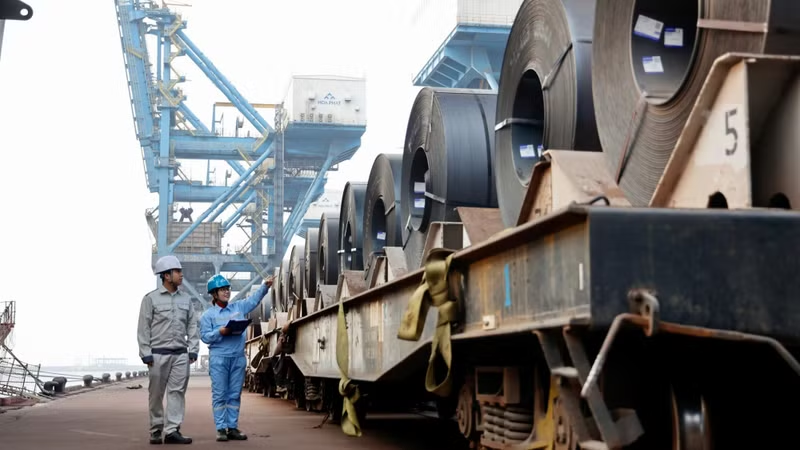
According to the World Steel Association (Worldsteel), Viet Nam produced 20.6 million tonnes of crude steel in the first eight months of 2026, up 29.1% from the same period in 2025, keeping the country among the world’s top 10 crude steel producers. Hoa Phat Group contributed more than 9.5 million tonnes, equivalent to 46% of the total. This underscores Hoa Phat’s position and role in Viet Nam’s steel industry.
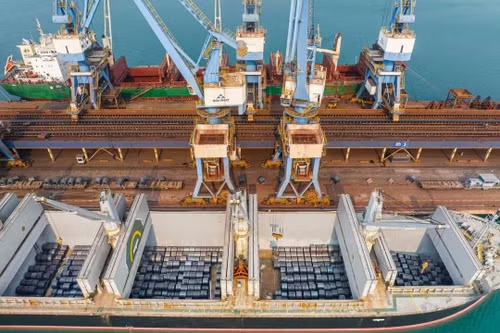
In the coming period, demand for high-quality steel will increase alongside the development of mechanical engineering, shipbuilding, energy, automotive manufacturing, and railways. Hoa Phat has therefore identified steel as its core business, focusing on products with higher technological content and added value.
Over the past more than 30 years, Hoa Phat has continued to invest in and improve its production capacity, which currently stands at 16 million tonnes per year and is expected to rise to 18 million tonnes by 2028. This would make it the largest steel producer in Southeast Asia, placing it among the world’s top 30 steel companies.
The group has also pioneered research and investment in high-quality HRC, steel for mechanical engineering and energy, steel cord and bead wire for automobile tyres, and railway rails. These efforts aim to strengthen domestic supplies of strategic products and reduce dependence on imports.
Hoa Phat regards mastery of production technology as essential to its survival and development. This means understanding and controlling the entire production process, from raw materials through the stages of smelting, casting, and rolling to the finished product.
At the same time, Hoa Phat is preparing a technical workforce capable of absorbing technology transferred by equipment and technology suppliers. For every new product, we carefully study and research how it is made, how to optimise the production process and quality standards, and how to ensure efficiency when scaling up production for the market.
Hoa Phat regards mastery of production technology as essential to its survival and development. This means understanding and controlling the entire production process, from raw materials through the stages of smelting, casting, and rolling to the finished product.
Nguyen Viet Thang, General Director of Hoa Phat Group
Q: The North–South high-speed railway project sets very demanding requirements for product quality, standards and reliable supply. How has Hoa Phat prepared its production capacity and technology at the Hoa Phat Dung Quat Rail and Special Steel Production Plant in Quang Ngai Province to participate in the supply chains for Viet Nam’s major railway projects?
A: The Hoa Phat Dung Quat Rail and Special Steel Production Plant has a designed capacity of 700,000 tonnes per year, with total investment exceeding 10 trillion VND. The project uses production lines supplied by Germany’s SMS group, featuring a high-precision steel rolling system.
Its products will include high-speed railway rails, urban railway rails, crane rails, and certain structural and special steel products. As of September 2026, the project was nearly 70% complete, with work focused on completing factory structures and installing technological equipment.
The first railway rails are scheduled to roll off the production line in the first quarter of 2027. Hoa Phat has therefore sent delegations of officials and engineers to countries with advanced railway industries to study technologies, product standards, and production organisation.
The Group is also working with TUV SUB of Germany, a leading international testing and certification organisation for rail products, to ensure that its products meet European standards. In addition, it is cooperating with Viet Nam’s Institute of Defence Technology to research and master the technology for manufacturing rails and related accessories, supporting the policy of localising production and developing a self-reliant railway industry.
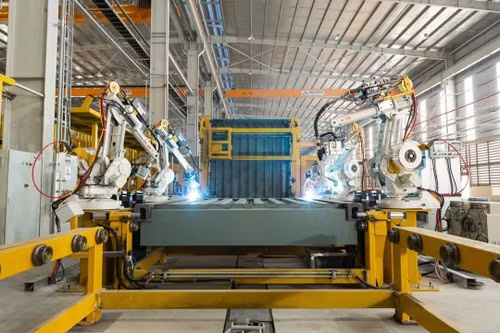
When the plant becomes operational, our engineers and technical workers must be able to operate the equipment, control quality, and resolve problems arising during production. Our goal is not merely to manufacture products but also to gradually master the processes and improve products to meet domestic needs. We are fully confident that Hoa Phat’s railway rails and accessories will be widely used in Viet Nam’s urban railway and high-speed railway projects.
However, what we most hope to see at present is the government’s prompt issuance of a clear set of technical standards for products supplied to these projects, enabling businesses to manufacture products that meet the required quality specifications.
Q: Resolution No. 68-NQ/TW identifies the private sector as the most important driver of the national economy and sets the goal of developing large enterprises that participate more deeply in global value chains. Based on Hoa Phat’s experience in investing in steel projects, what additional conditions are needed to encourage private enterprises to make long-term investments?
A: Firstly, I believe the state needs to continue creating a fair, transparent, and stable competitive environment in which businesses can plan their long-term investments with confidence.
Alongside macroeconomic policies, appropriate measures are needed to protect domestic production and ensure the stable development of businesses, particularly manufacturers. Economic development priorities must be sufficiently clear and based on a long-term vision. When businesses know which industries will be prioritised over the next 10–20 years, what market demand will look like, and what standards and technical requirements will apply, they can develop structured long-term investment and development plans.
In business, time itself represents an opportunity. If a project takes too long to complete administrative procedures, the business’s opportunity costs also rise. We therefore hope that, in the coming period, the state will establish a more enabling framework and substantially simplify and reduce administrative procedures to help businesses invest more efficiently.
Q: As its steel production capacity expands and it moves further into products with higher technological content, how is Hoa Phat planning to connect with other businesses to create a value chain whose benefits spread throughout the economy?
A: In the steel industry, our direction is to develop an ecosystem spanning the upstream stage of steelmaking through to downstream steel rolling, as steel billets are an input for many products, including construction steel, HRC, and high-quality steel coils. We will then continue developing more deeply processed products, such as steel pipes, coated steel sheets, prestressing steel, drawn wire, and steel grades for mechanical engineering, automotive manufacturing, energy, shipbuilding, and railways.
When these input materials can be produced domestically, mechanical engineering businesses and downstream industries will have greater control over their raw material supplies. This can help reduce dependence on imports, shorten supply lead times, and improve the commercial competitiveness of domestically manufactured products.
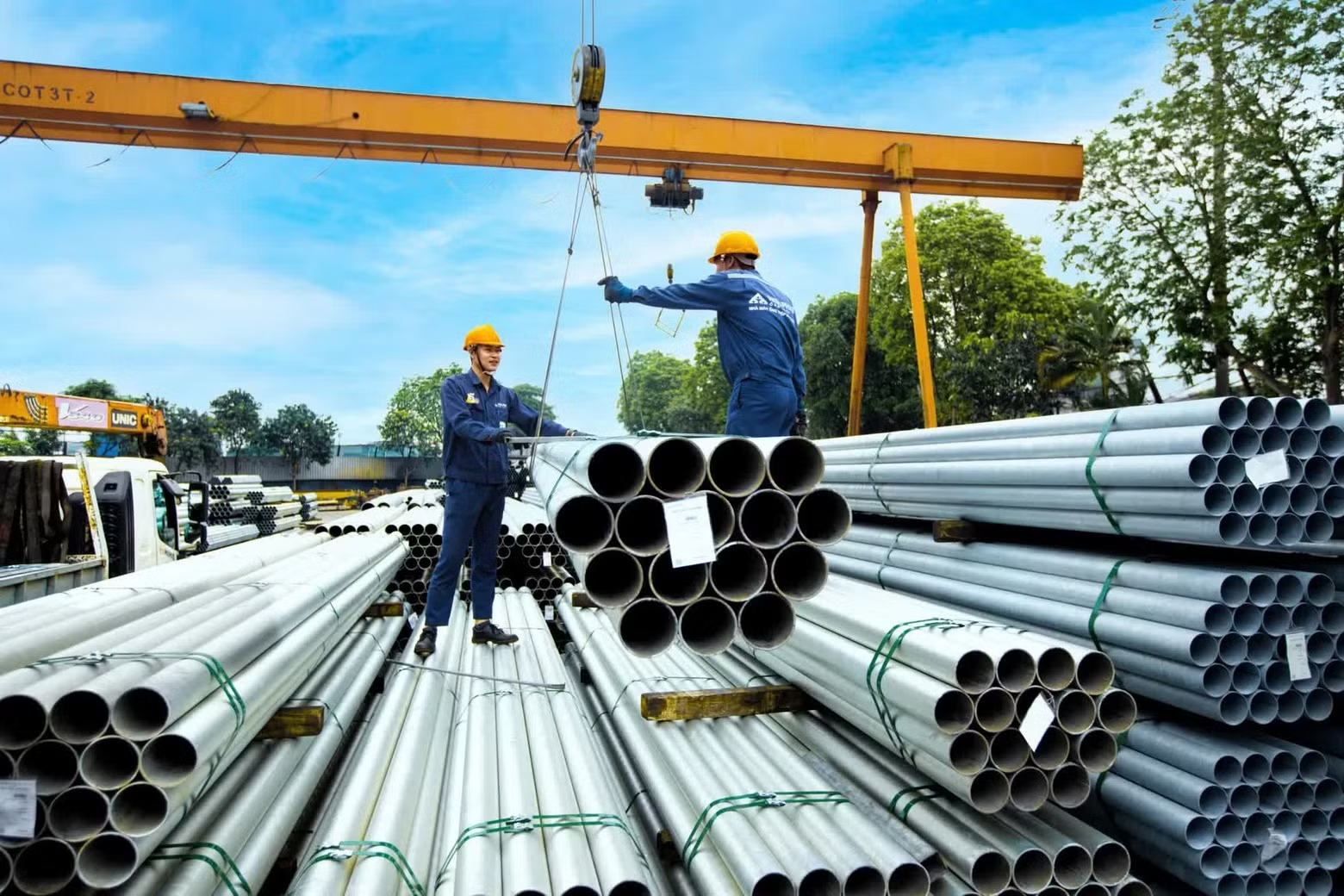
To date, Hoa Phat has taken initial steps towards establishing an industrial production value chain by supplying steel as a raw material to numerous domestic mechanical engineering and manufacturing businesses. This has helped them secure more reliable raw material supplies, reduce dependence on imports, lower production costs, and enhance competitiveness. It also gives businesses better opportunities to participate in supply chains and helps Vietnamese steel products meet stringent rules-of-origin requirements when exported to demanding international markets.
In the long term, Hoa Phat aims to continue developing high-quality steel products that strengthen the self-reliance of the country’s industry and enable the domestic production of strategic steel products with higher added value in the future.
Reporter: Thank you very much!