Renewing monetary policy management
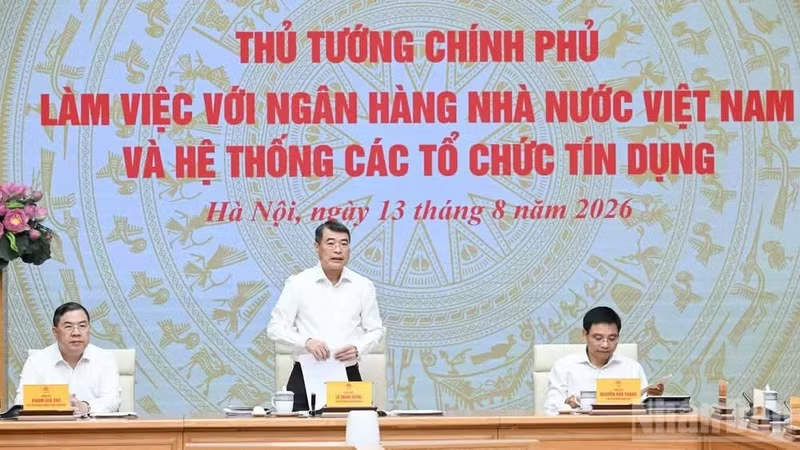
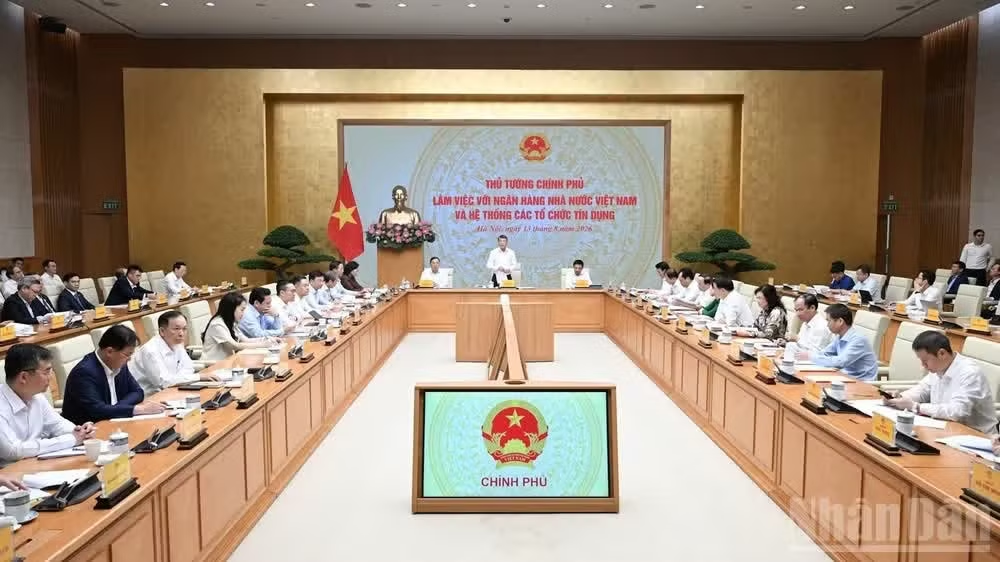
Chairing a working session with the SBV and credit organisations in Ha Noi on August 13, PM Hung said the Government views the monetary and banking system as the economic lifeblood, with a pivotal role in maintaining macroeconomic stability, controlling inflation, and fueling rapid, sustainable growth.
The central bank must unlock and allocate capital efficiently, give citizens and enterprises convenient access to credit and banking services, accelerate digital transformation and innovation, and strengthen competitiveness at credit organisations.
On future tasks, he told the SBV and lenders to follow the 14th National Party Congress’s resolution, as well as resolutions, conclusions and directives of the Party Central Committee and its Politburo and Secretariat, the National Assembly and Government.
The SBV needs to assess the “balance point” between inflation control and growth, update scenarios for interest rates, exchange rates, liquidity, and credit, and identify warning thresholds. Policy responses must be timely, while policy proposals must be specific, balanced, and properly calibrated.
It should adjust the intensity, scale, and timing of monetary tools within its authority to maximise effectiveness and hit targets - a key test of its management capacity and resolve. The central bank must renew its thinking and adopt a creative and decisive approach. Credit organisations must strictly comply with the law and the central bank’s directions.
The central bank must act with greater resolve in pooling resources for growth on a foundation of macroeconomic stability. They should share the burden with households and businesses through concrete measures to stabilise interest rates, channel credit to growth-supporting sectors, and control risk.
The SBV was required to keep policy interest rates steady and add liquidity so lenders can access cheaper funding. It must manage the exchange rate in line with market developments, coordinate monetary tools, and intervene to stabilise the foreign exchange market, while maintaining close oversight of gold. Lenders must continue cutting costs, stabilising lending rates, and delivering substantive reductions.
Targeted credit allocation
The leader asked the central bank to continue a review of regulations and improve the institutional framework for monetary and banking activities. It should partner with ministries, agencies, localities, business associations, and banks to propose policies for capital market development, corporate bonds, and priority sectors.
The SBV was assigned to work closely with NA agencies to finalise and submit the draft Law amending and supplementing several articles of the Law on the SBV, the Anti-Money Laundering Law and the Law on Credit Organisations for approval at the legislature’s August sitting. It must ensure that all necessary guiding documents are issued as soon as the law takes effect to avoid legal gaps.
It must complete a scheme by August 2026 to further modernise the banking system, handle weak credit organisations, and improve corporate access to capital, particularly for small and medium-sized enterprises.
Relevant ministries, agencies, and localities must partner with the SBV, particularly on institutional development, data connectivity and sharing, and preventing fraud in the banking sector.