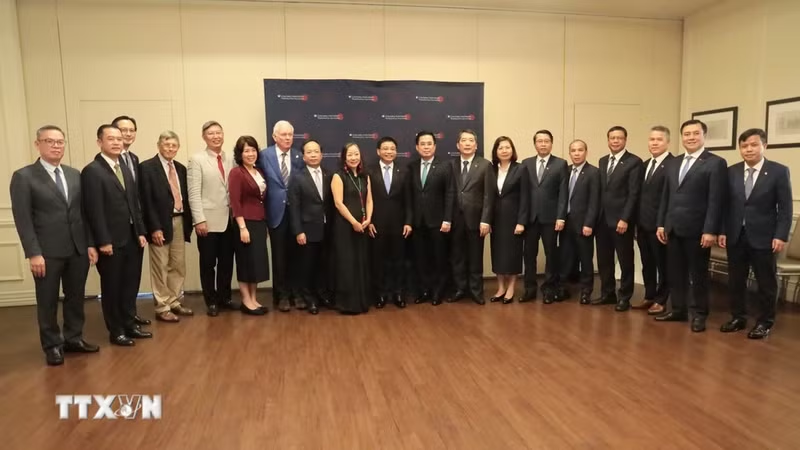
In his speech, Thang shared assessments by professors and experts that the world is at a critical turning point, with challenges intertwined with opportunities for countries determined to strengthen their autonomy and advance.
To achieve its goal of double-digit economic growth and the two centenary targets, Viet Nam fully recognises the need to maintain macroeconomic stability, proactively adapt to external crises, and regard science and technology, innovation, digital transformation, artificial intelligence (AI) and modern financial infrastructure as key drivers of growth.
Completing the institutional framework, creating a favourable environment for innovation and enhancing national competitiveness will be key to enabling Viet Nam to participate more deeply in global supply and value chains.
The Deputy PM expressed his belief that the programme's success would further strengthen the bridge of knowledge and help deepen the Comprehensive Strategic Partnership between Viet Nam and the US in a substantive and effective manner.
Speaking at the closing session, Columbia University Executive Vice President Amy Hungerford praised the frank, substantive and multidimensional discussions held under the VLP.
She highlighted Columbia University's role in promoting dialogue and connecting policymakers, academics and businesses, affirming its commitment to long-term collaboration with Viet Nam. The university hopes to expand teaching and research activities and regards VLP 2026 as the starting point for a sustainable dialogue-cooperation relationship between the two sides.
During the programme's discussion sessions, US professors and experts spoke highly of Viet Nam's potential for a breakthrough, while noting that mastering technology and developing modern digital financial infrastructure would provide important leverage for improving labour productivity and national competitiveness.
Against this backdrop, they recommended that the country proactively apply AI and data technologies to strengthen its capacity for self-reliance; establish pioneering institutional frameworks to promote innovation, master foundational technologies and ensure the safe governance of fintech models; and reform capital markets alongside modernising the banking system to optimise resource allocation and ensure that high growth goes hand in hand with macroeconomic stability.
At the discussions, the Deputy PM and members of the Vietnamese delegation shared Viet Nam's perspectives, vision, development orientations and specific solutions. They stressed that strengthening domestic capacity and strategic autonomy would play a decisive role, while Viet Nam should make the most of breakthrough international resources to maintain macroeconomic stability, improve institutions and promote new growth drivers, thereby laying a foundation for achieving the country's development goals.
Thang asked ministries, agencies and members of the delegation to study and distil valuable recommendations from the VLP for use in advising the Government on macroeconomic management and the formulation of socio-economic development policies.

![[Infographic] Comprehensive strategic partnership between Viet Nam and Denmark](https://en-cdn.nhandan.vn/images/SCsTDAWshkugd_CR7euN3dJE8R5tBjXTeI_Ei3N1rqlMQ51GV2YGcjvxpQFD7-NjQniu1tgyhNBVDsDJmLSxVpkf6BzifI5ne9fyVawgZKkw1QSqvshBTU8QQcE1uc2tD2kFaBWIxM59QGKFzthJwQ/comprehensive-strategic-partnership-between-viet-nam-and-denmark-8462.png.avif)