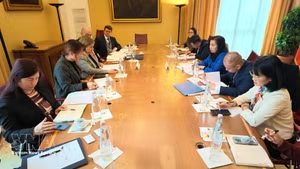
The commitment was made at a meeting between Vietnamese Deputy Minister of Foreign Affairs Nguyen Minh Hang and her Tajik counterpart Idibek Kalandar in Ha Noi on November 4.
Hang spoke highly of the positive strides in cooperation between the two countries, particularly the regular meetings and contacts between their senior leaders on the sidelines of international conferences. Bilateral trade turnover rose by nearly 60% in 2025 and continued to increase in 2026, while their ministries and agencies have actively discussed promising new areas of cooperation.
However, she noted that achievements to date, particularly in economic and trade collaboration, remain modest, calling on both sides to make greater efforts to capitalise on their respective strengths and seize cooperation opportunities in the current context.
For his part, Kalandar shared Hang’s assessment of bilateral relations and affirmed that Tajikistan attaches importance to developing its traditional friendship and cooperation with Viet Nam.
Expressing admiration for Viet Nam’s significant achievements during its Doi Moi (Renewal) process and in national development, he said Tajikistan is pursuing industrialisation and wishes to learn from Viet Nam’s experience. He also called on Vietnamese businesses to invest in Tajikistan’s industrial parks.
The two sides agreed that their foreign ministries should continue working together to promote high-level and other-level mutual visits and meetings; strengthen their role as focal points in supporting the countries' ministries, agencies and localities to step up economic, trade and investment partnerships; and make better use of the potential and complementary strengths of the two economies.
They also agreed to facilitate direct connections among agencies, organisations and businesses, provide platforms for sharing information on policies and markets, and explore and realise cooperation opportunities in areas with potential, including agriculture, textiles and garments, food processing and transport connectivity.
The officials further agreed to continue supporting negotiations and the signing of intergovernmental agreements and other arrangements to complete the legal framework for facilitating economic, trade and investment ties, while expanding collaboration in culture, education and tourism, as well as people-to-people exchanges.