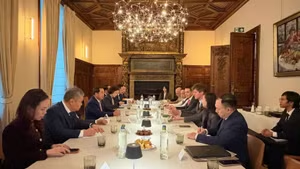
The SPD delegation was headed by Alexander Schweitzer, Vice Chairman of the SPD and Chairman of the SPD parliamentary group at the Rhineland-Palatinate state parliament.
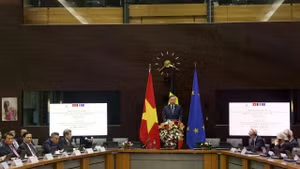
The event brought together leaders and representatives of agencies of the two parties, ministries, sectors and localities, as well as experts and researchers from the Central Council for Theoretical Studies and the Ho Chi Minh National Academy of Politics.
The two sides held four discussion sessions on the multipolar world and changes in the international order; development models in the digital and artificial intelligence (AI) era; protection of international trade in a multipolar world; and the role of political parties in guiding transformation and addressing contemporary challenges.
Participants exchanged views on rapid and complex global developments and theoretical and practical issues facing each party and country, as well as the impacts of AI, digital and green transformation and emerging political, economic and social challenges.
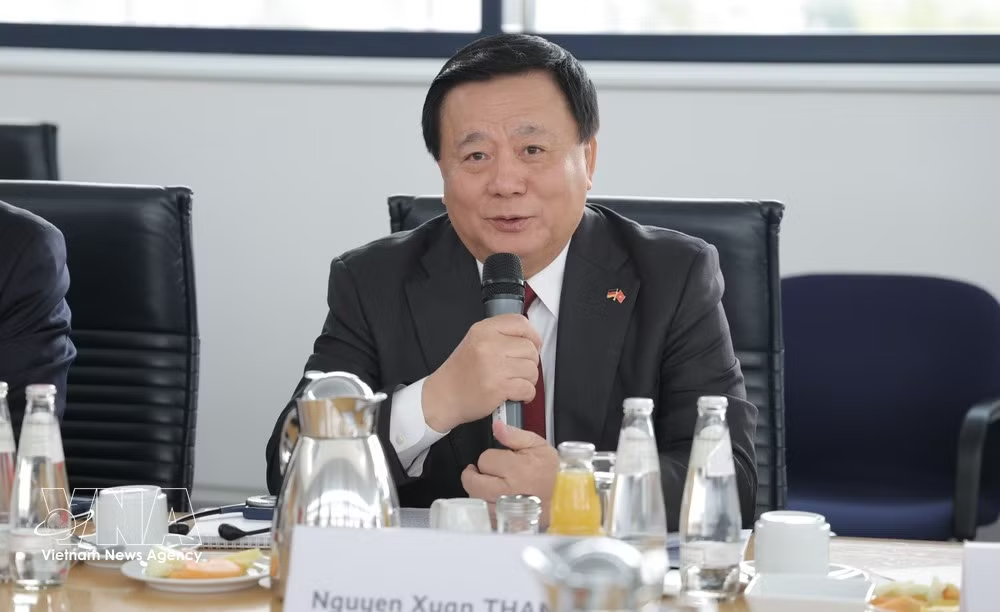
The Vietnamese delegation shared Viet Nam’s development achievements after 40 years of “Doi moi” (Renewal) and major orientations for the country’s new development phase, including reforming the growth model, promoting science and technology and innovation as new drivers, accelerating digital transformation, improving human resources and pursuing deeper international integration.
Thang stressed that countries may pursue different development paths but face common challenges, including how to maintain autonomy in an increasingly interdependent world, combine economic efficiency with social equity, and harness technological progress while protecting people.
He highlighted Germany’s experience in developing a social market economy, vocational training, human-centred governance and a just green transition as valuable references for further exchanges and cooperation. He also underscored the enduring relevance of President Ho Chi Minh’s principle of “utilising the invariables in response to variables”, saying that the commitment to peace and humanity’s future and people-centred development remain fundamental.
The SPD delegation highlighted the trust, openness and frankness demonstrated by both sides and expressed pride in the cooperation established through 11 rounds of theoretical exchanges.
The two sides agreed that the mechanism has become a meaningful channel for sharing views and experience, enhancing mutual understanding and trust and contributing to deeper Viet Nam-Germany Strategic Partnership. They agreed to maintain the mechanism and organise the 12th theoretical exchange in Viet Nam in 2027.
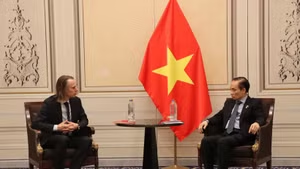
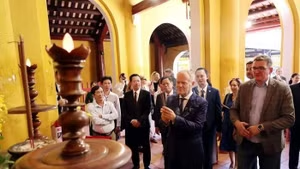
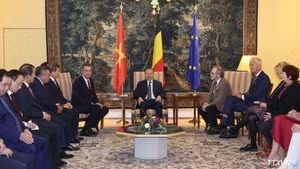
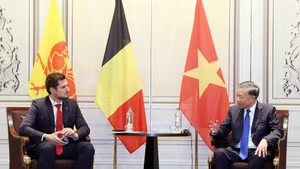
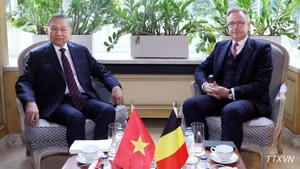
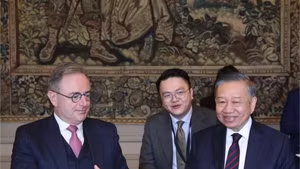
During the visit, Thang also held meetings with former German Chancellor Olaf Scholz, former Berlin Mayor Michael Mueller and Chair of the European Parliament’s Committee on International Trade Bernd Lange, discussing Viet Nam’s development orientations, Viet Nam-Germany and Viet Nam-EU relations, and opportunities for cooperation in trade, investment, science and technology, innovation, digital and green transformation and human resources.
The delegation also met with representatives of the Vietnamese community in Germany, encouraging them to remain united, integrate into the host society, preserve national cultural identity and continue serving as a bridge for friendship and cooperation between Viet Nam and Germany.