Each excavated grave, each carefully preserved sample of remains, serves not merely for DNA testing but also carries the hope of restoring the identities of those who fell for the Fatherland.
A race against the sun and rain
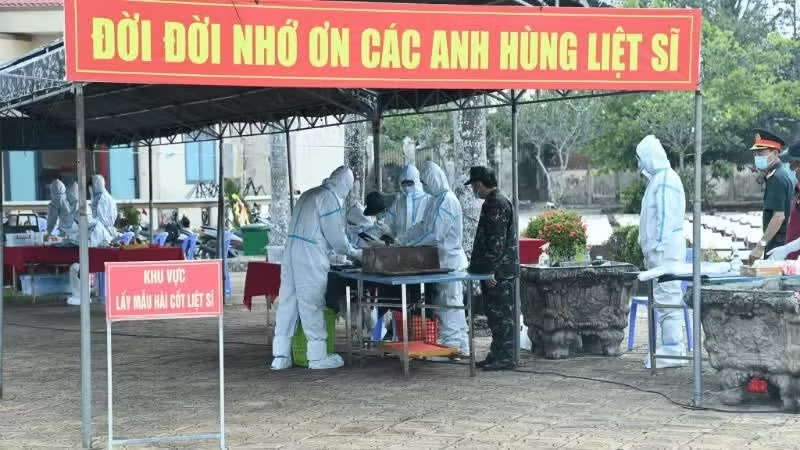
From early morning in July, the atmosphere at Can Tho City Martyrs’ Cemetery was bustling. Under temporary tarpaulin shelters to protect against sun and rain, working groups executed their duties. Some carefully excavated graves, others selected samples of remains, and still others recorded, preserved, and transported the samples to the collection point. Every operation was conducted in accordance with strict procedures to ensure optimal quality for DNA testing.
This is the daily routine of the forces participating in the “500-Day-and-Night Campaign” to accelerate efforts to identify and repatriate martyrs’ remains in Can Tho City. According to the plan, by July 2027, the city will collect 5,112 samples of unidentified remains of fallen soldiers from 17 martyrs’ cemeteries. This is not only a crucial political mission but also a journey rich in humanitarian significance, embodying the national principle of “When drinking water, remembering its source”.
The Can Tho City Martyrs’ Cemetery was designated as the initial site for execution. After more than 20 days of continuous work, the task force excavated 807 unidentified graves, collecting 670 samples that met the criteria for submission to the Military Forensic Institute for examination. All samples were transported by specialised vehicles to Can Tho International Airport for delivery to the examination unit in the strict compliance with established protocols.
According to Lieutenant Colonel Tong Hung Vinh, Deputy Head of Political Affairs of the Can Tho City Military Command, the unpredictable weather, with alternating rain and sunshine, significantly impacted progress. Therefore, the working groups proactively set up additional tents and carefully selected samples to ensure quality and enhance the effectiveness of DNA testing. “Every officer and soldier is determined to work meticulously and follow the correct procedures so that each sample sent has the highest value, contributing to the completion of the 500-day campaign,” Lieutenant Colonel Tong Hung Vinh shared.
Every officer and soldier is determined to work meticulously and follow the correct procedures so that each sample sent has the highest value, contributing to the completion of the 500-day campaign.
Lieutenant Colonel Tong Hung Vinh, Deputy Head of Political Affairs of the Can Tho City Military Command
At the O Mon Martyrs’ Cemetery, where 1,324 graves still require sample collection. From morning till night, military forces, militia, medical personnel, and local authorities collaborated closely at every stage to ensure adheraence to proper procedures and schedules. In the minds of the soldiers, each safely preserved remains sample represented not simply the result of a professional procedure; it represented hope for many families, after decades of waiting, to have the opportunity to find their loved ones, to be called by their correct names, and to return to the embrace of their homeland.
Finding comrades from remaining memories
In parallel with the work of collecting samples at cemeteries, the search and recovery forces of fallen soldiers in Can Tho City persistently followed up on every piece of information furnished by the public. Each memory of a witness, even if it dates back more than half a century, is valued as a precious clue.
In Truong Tho Hamlet, Truong Long Tay Commune, based on information from local residents, the Can Tho City Military Command, in coordination with Team K90 (Political Department of Military Region 9), surveyed and excavated many locations believed to contain the remains of fallen soldiers. Under the sweltering sun, each shovel stroke was executed with meticulous care, with the hope of not missing any trace.
Tran Van Quan, a war veteran who engaged in revolutionary activities in the area, still vividly recalls the 1969 raid when female guerrilla Nguyen Thi Ut (Ut Mom) bravely sacrificed herself and was temporarily buried by her comrades. This information became crucial for the authorities to precisely identify the search area and locate the remains of the female guerrilla.
In addition, the working groups also surveyed numerous other areas based on witness recollections of two mass graves of soldiers from the 10th-Song Huong Regiment after the Battle of Cai Tuc in 1973. Although the terrain has changed significantly over more than half a century, each excavation is conducted with the utmost precision and caution, because behind each layer of soil lies the longing of countless families.
When technology bridges the gap of reunion
If collecting remains is the first step, then collecting DNA from the relatives of fallen soldiers is the decisive link in the process of identifying them. Understanding the anguish of the families, Can Tho City simultaneously initiated the collection of DNA samples for over 2,700 relatives of unidentified fallen soldiers.
At the reception points, the police force, in coordination with the health sector, organised health check-ups, and consultations, dispensed medicine, and bestowed gifts upon relatives. For the elderly, those with weak health, or those unable to travel, the working groups brought equipment to their homes to collect samples.
According to Colonel Nguyen Thanh Binh, Deputy Director of the Can Tho City Police, the application of DNA data and scientific and technological achievements will create a breakthrough in identifying the remains of fallen soldiers, while also contributing to building a database to serve the search, collection, and implementation of policies for those who have rendered meritorious service.
The application of DNA data and scientific and technological achievements will create a breakthrough in identifying the remains of fallen soldiers, while also contributing to building a database to serve the search, collection, and implementation of policies for those who have rendered meritorious service.
Colonel Nguyen Thanh Binh, Deputy Director of the Can Tho City Police
For many families, the DNA collection programme has provided a renewed ray of hope. After many years of searching, they continue to believe that with the aid of science, their loved ones will have the opportunity to return to their rightful names and hometowns.
For Pham Thi Le, the younger sister of martyr Pham Van Kiet, the search for her brother’s remains had remained at a standstill for many years. Therefore, the DNA collection programme has provided a glimmer of hope for the family to welcome him home. Sharing the same hope, Nguyen Thi Bay, the younger sister of martyr Nguyen Van Ba, was deeply moved when her DNA sample was taken. For her, the most precious thing is not only the opportunity to find her loved one, but also the care and responsibility demonstrated by the Party, the State, the armed forces, and relevant agencies towards the families of martyrs after many years of waiting.
Continuing the “command from the heart”
According to the plan, after the Can Tho City Martyrs’ Cemetery and the O Mon Martyrs’ Cemetery, the campaign will be executed across the remaining 15 cemeteries. Facing the pressure of the flood season in the Mekong Delta, the units have proactively prioritised sample collection at difficult-to-reach grave sites to ensure progress and professional quality.
Colonel Pham Ngoc Quang, Political Commissar of the Can Tho City Military Command, asserted that the locality has formulated a detailed plan to conclude the collection of over 5,000 remains samples from 17 cemeteries on schedule. Early implementation will minimise the impact of weather conditions and ensure technical requirements are met at every stage of the process.
Each grave opened, each DNA sample collected, and each successful match provides renewed opportunities to restore the identities of those who sacrificed their lives for the independence and freedom of the nation. This is not only an achievement of science and technology but also the culmination of responsibility, gratitude, and appreciation from today's generation.