This place was once considered a “hell on earth” which detained many revolutionary soldiers and patriots, a shining symbol of the revolutionary spirit, the indomitable will of communist soldiers.
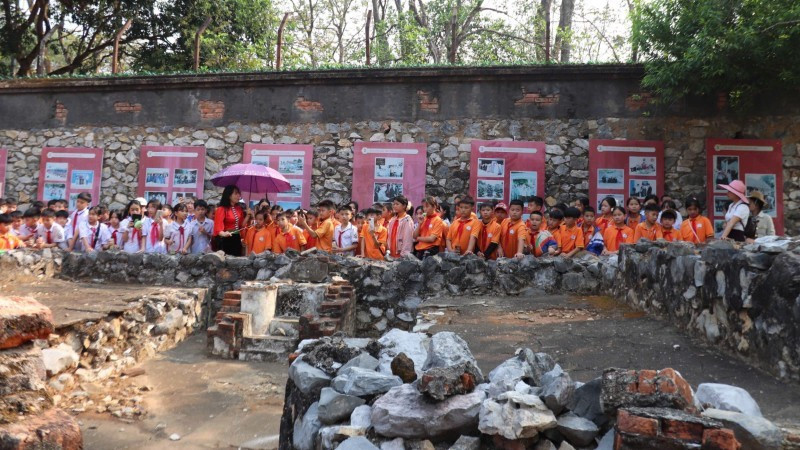
In early August, visitors came to Son La Prison, which marked the heroic pages of the nation's history. Standing in front of the stone walls full of memories, everyone was moved by the indomitable spirit of the communist soldiers who lived and fought here.
Son La Prison was built by the French colonialists in 1908 with an initial area of 500m². On February 3, 1930, the Communist Party of Viet Nam was born and led the entire nation in the people’s national democratic revolution. Panicked by the growing movement for national independence of the Vietnamese revolution, the French colonialists expanded Son La Prison by 1,500m² in 1930 and 170m² in 1940. The facility was reinforced and expanded.
The French colonialists turned this place into a hell on earth to imprison, torture, and destroy the fighting spirit of Vietnamese communists. In this place full of death, more than ever, the spirit of the communist soldiers shone and lit the flame of revolutionary struggle, spreading throughout the mountains and forests of the Northwest.
The prison became a great revolutionary school that trained and nurtured the Party and the revolution with outstanding communist soldiers such as To Hieu, Le Duan, Truong Chinh, Nguyen Luong Bang, Van Tien Dung, Le Duc Tho, Nguyen Van Tran, and many other loyal comrades. From 1930 to 1945, 1,013 revolutionary soldiers of the Party and the nation were imprisoned and tortured by the French colonialists here.
The resilience and indomitability of the generations of fathers and grandfathers in the struggle for independence have aroused deep national pride in the hearts of visitors. When witnessing historical artifacts, harsh prison spaces, and stories of brutal torture, many visitors could not help but be moved and deeply touched.
Tran Hoang Nam, 17 years old, a tourist from Ha Noi, said that he had studied History and therefore understood better the great contributions and sacrifices of those who went before. “Before visiting the relic site with my family, I searched for more information online. My first impression was that I saw the heroic spirit of our nation, especially those who bravely sacrificed themselves so that we could have what we have today,” said Nam.
“I was also moved by the artifacts and stories about the indomitable and loyal spirit of the communist soldiers, specifically comrade To Hieu. Currently, many items in the prison have been destroyed by bombs. When I took a virtual tour using the 3D model on the website of the Provincial Museum, I could visualise it more fully, especially the videos about the imprisonment and torture of revolutionary soldiers, which were really touching”, he added.
At Son La Museum, the staff are always deeply aware of their role in preserving and promoting the value of the relic. They continually learn, improve their knowledge, and refine their explanation methods to attract tourists, especially the younger generation.
Cam Thi May, a tour guide, shared: “A very touching story associated with Son La Prison is about the To Hieu peach tree. Comrade To Hieu, who was imprisoned here and was considered the leader of the revolutionary movement, planted a peach tree next to his cell. Despite illness and torture by the enemy, he continued to write documents, impart experiences, and train party members. After his death, this peach tree became a symbol of strong vitality, indomitable will, and hope for the revolutionary future.”
In 2022, the provincial museum and library piloted many modern technological solutions, typically the application of virtual reality (VR) technology and the QR system. Virtual reality technology helps visitors to visit the 3D exhibition space, and explore artifacts and historical contexts vividly, even when not physically at the museum.
Director of Son La Provincial Museum Ngo Thi Hai Yen said that the museum has now put into operation virtual reality technology application software, allowing people and visitors to visit the exhibition space in 3D online. This is an important step in applying digital technology for heritage preservation and in promoting cultural value. The museum will continue to refine, expand, and develop the application so that visitors can access technology more flexibly and experience new forms of display.
Since applying digital transformation solutions, especially virtual reality technology and the QR code system, the number of visitors to the electronic information page as well as in-person visits to the museum and provincial library has increased. Many tourists from inside and outside the province expressed their interest in the online 3D tour experience, thereby promoting the need to visit the place to explore artifacts, exhibition spaces, and cultural activities. The application of technology has helped expand the target audience, attract more visitors, and improve the effectiveness of promoting the local image.