APEC 2027: a test of operational capability
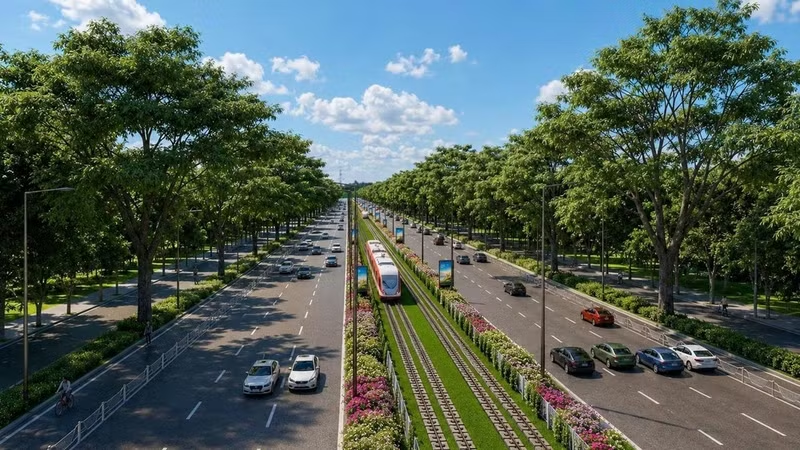
Phu Quoc’s light rail transit (LRT) project is being developed under a build-operate-transfer (BOT) model, with a total investment of nearly 9 trillion VND. The state accounts for 70% of the investment, while private investor Sun Group is contributing the remaining 30%. Under the construction plan, the system could operate up to 14 trains simultaneously. In Phase I, An Giang Province and Sun Group expect to put between six and 10 trains into service, each comprising three carriages and powered by clean energy.
For Phu Quoc’s LRT, serving the APEC 2027 is about more than introducing a new rail line; it is a test of the ability to operate a transport system serving an international destination. Accordingly, the LRT is being conceived not merely as a means of connecting the airport with the island’s southern area but also as one of the first points of contact for visitors arriving on the pearl island.
Along the Phu Quoc LRT route, six stations have been designed as six cultural snapshots, taking passengers from the north-west mountainous area through Ha Noi’s Old Quarter, the former imperial capital of Hue, and the vast forests of the Central Highlands, then on to vibrant Sai Gon before ending amid the lush greenery of the pearl island. In just around 20 minutes, a journey through Viet Nam unfolds through architecture, materials, colours, and landscapes.
This role becomes even more significant as Phu Quoc prepares to welcome heads of state, delegates, experts, and personnel supporting APEC 2027. For these special passengers, simply getting them to the right destination is not enough; every journey must also be safe, precise, and seamless. This sets a very high standard for operations, as a modern urban railway system must address several challenges simultaneously, including train frequency, operational safety, station management, passenger flow, incident response, and service quality.
To meet these stringent requirements, Sun Group has partnered with Ho Chi Minh City Urban Railway No. 1 Company Limited (HURC), the operator of Metro Line No.1 between Ben Thanh and Suoi Tien, to provide operational consultancy, staff training, and support for trial runs on the Phu Quoc LRT.
HURC’s practical experience operating Metro Line No. 1 has been selectively adapted and applied to the Phu Quoc LRT. The first priority is the ability to organise a stable operating system, covering traffic control, frequency allocation based on passenger volumes, safety management, and the handling of abnormal situations. This provides a basis for developing procedures tailored to the specific characteristics of the Phu Quoc LRT, which must serve everyday travel needs while remaining ready for peak periods during international events.
“We are paying particular attention to these requirements because the LRT connects the airport with the southern part of the island, where the APEC 2027 venue and Sun Group’s high-end entertainment and leisure complexes are located. With hourly capacity potentially reaching several thousand passengers, the line also requires sufficiently flexible operational arrangements to accommodate both everyday travel and surges in passenger numbers during events,” said Nguyen Duc Long, Director of Digital and Data at Sun Group.
Another important area is the experience of maintaining system reliability through maintenance, equipment monitoring, and the organisation of station services. These factors will help ensure that the LRT operates safely while providing passengers with a professional and convenient journey from the moment they enter a station. In terms of staffing, HURC has recruited 168 employees for the Phu Quoc LRT, including 130 operations staff and 38 maintenance staff. They will undergo four months of training combining theory with on-site practice, enabling them to progressively master the procedures and skills required to meet high operational standards.
Notably, for operational staff, foreign-language proficiency, communication skills, and the ability to assist international visitors are considered just as important as technical expertise. This approach is appropriate for a railway line serving not only the local residents but also a substantial number of international tourists. With operational foundations being carefully established, the next challenge is to make the LRT convenient for passengers from their very first interaction with the system.
The highlight of contactless payments
As part of their strategic cooperation, Sun Group and Visa — a world-leading payment technology company — are studying a contactless payment solution for the Phu Quoc LRT based on a “tap-to-ride” model. Accordingly, passengers would be able to use contactless Visa cards, mobile phones, or smart wearable devices to pass through ticket gates. The system would automatically record entry and exit points and calculate fares according to the journey taken.
“In the near future, the railway will be more than just a means of transport; it will become a link in visitors’ digital travel journeys,” said Nguyen Duc Long, Director of Digital and Data at Sun Group.
With the LRT expected to reduce the journey from the airport to the APEC Convention Centre to around 20 minutes, contactless payments will ensure that passengers do not have to add further time queuing to purchase tickets to those 20 minutes. For ordinary tourists, the LRT is expected to offer a new way to explore the island’s south instead of relying on taxis, ease congestion along Road DT.975, and support the island’s ambition to become a green destination.
For international visitors, this convenience offers clear benefits in terms of the travel experience. Rather than having to find a ticket counter, exchange cash, or familiarise themselves with a new payment method, tourists can use a payment instrument they have long been accustomed to. HURC has also successfully implemented this solution on Ho Chi Minh City’s Metro Line No. 1 in partnership with Mastercard, Napas, and Visa.
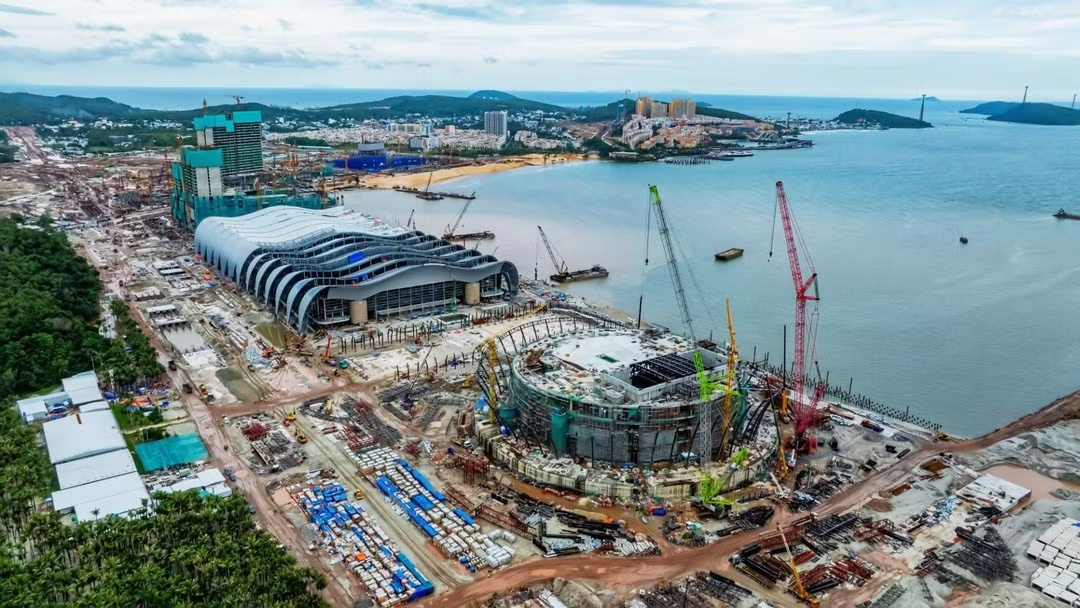
For APEC delegates and experts, the core requirement is a transport system that operates safely and precisely. However, for the long-term flow of international visitors, the experience will be shaped by convenience at every point of contact, beginning with one small detail that can make a significant difference: how tickets are purchased and paid for. APEC 2027 will therefore serve as a milestone for the Phu Quoc LRT, demonstrating its operational capabilities under the demanding conditions of a high-level international event.
The railway’s value will extend beyond the conclusion of the meeting. The standards established for APEC will provide a foundation for long-term operations, ensuring that every journey continues to offer a positive experience for visitors to Phu Quoc. From operational management and service quality to payment methods, every aspect of preparation is geared towards the same goal: elevating the LRT beyond the role of a new transport project and establishing it as a mode of travel befitting Phu Quoc’s status as an international destination.