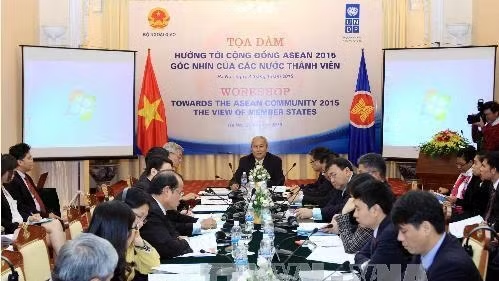
Many delegates emphasised the need to include preparations for the Community’s formation in the national agenda, including building of skilled and competitive human resources, enhancing educational and vocational training quality to ensure young people can build on the success of the current generation, and conducting reforms to improve the national economy’s competitiveness.
Representatives of Myanmar said the country’s priorities are developing small and medium-sized enterprises as the main driving force for ASEAN economic growth in the 21st century, narrowing the development gap and promoting sustainable development, while enhancing the spirit of self-reliance in responding to crisis and natural disasters.
The delegates agreed that communication activities to enhance the public’s understanding about the ASEAN Community are very important so that each and every person can maximise opportunities offered by the community’s formation. A range of activities have been conducted in ASEAN member countries, including lectures at schools, as well as mobile exhibitions.
Participants said the mass media and publications are effective means in educating the public about the ASEAN Community. They also mentioned the role of the mass media and young people, as well as Facebook as a channel to transmit information.
The workshop was organized by the Vietnamese Foreign Ministry in co-ordination with the United National Development Programme.
The 10-member Association of Southeast Asian Nations ASEAN aims to establish the ASEAN Community by 2015 on the basis of three pillars: the Political-Security Community, the Economic Community and the Socio-Cultural Community.
The ASEAN members include Brunei, Cambodia, Indonesia, Laos, Malaysia, Myanmar, the Philippines, Singapore, Thailand, and Vietnam.