Viet Nam–Poland relations are built on a longstanding tradition of friendship. Generations of Vietnamese experts and students who have studied in Poland have helped forge lasting connections between the two countries in knowledge, culture, and people-to-people exchanges. More than 75 years after establishing diplomatic relations, the two countries continue to promote cooperation across a wide range of fields.
In recent years, economic and trade cooperation between Viet Nam and Poland has recorded encouraging results, with bilateral trade reaching 3.94 billion USD in 2025.
Poland remains one of Viet Nam's leading trading partners in Central and Eastern Europe and serves as an important gateway for Vietnamese enterprises seeking greater access to the European Union (EU) market.
Beyond traditional areas of trade and investment, the two countries are placing increasing emphasis on cooperation in science and technology, innovation, environmental technologies, and sustainable development.
Poland is one of the countries with considerable economic potential in Central and Eastern Europe and an important member of the EU.
With its relatively large population within the EU, diversified economy, and favourable geographical and economic position, Poland plays a significant role in European production, trade, and logistics networks.
Meanwhile, Viet Nam enjoys a strategic location in Southeast Asia, a growing consumer market, an abundant workforce, and an expanding network of free trade agreements. Differences in geographical location, economic structure, and development advantages create opportunities for the two countries to complement each other across numerous sectors.
Poland is a leading European centre for food production and processing, while Viet Nam is a dynamic consumer market and a gateway to the Association of Southeast Asian Nations (ASEAN). Prospects for bilateral cooperation are further strengthened by the EU–Viet Nam Free Trade Agreement (EVFTA).
Trade remains one of the most promising areas for expanding Viet Nam–Poland relations. Viet Nam has competitive strengths in electronics, machinery, equipment, textiles and garments, footwear, wooden products, agricultural produce, and seafood.
Poland, meanwhile, has substantial capabilities in manufacturing machinery, industrial components, electrical equipment, processed foods, pharmaceuticals, and production-related goods. These complementary strengths provide a foundation for expanding bilateral trade and developing supply relationships involving raw materials, equipment, and production support services.
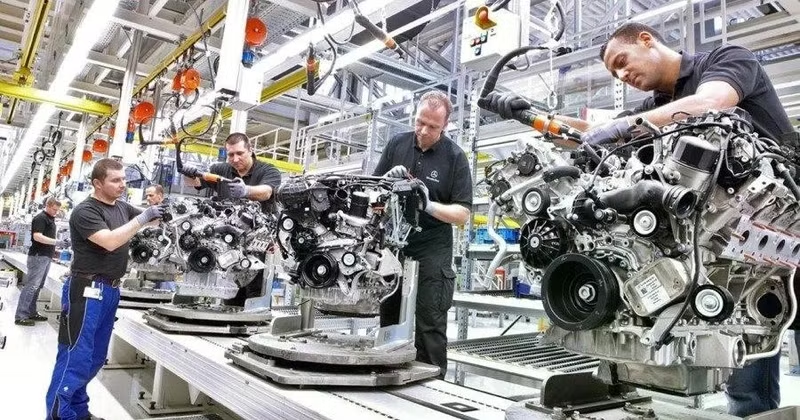
Manufacturing and processing industries stand out as another promising area of Viet Nam–Poland cooperation. Poland possesses considerable experience and production capabilities in mechanical engineering, automotive components, household appliances, and industrial machinery.
Viet Nam is accelerating the development of supporting industries, increasing localisation rates, and seeking deeper integration into global value chains. Against this backdrop, the two countries could expand cooperation in technology transfer, equipment supply, technical training, production process improvements, and supplier network development.
Notably, in the coming years, industrial cooperation could move beyond conventional buying and selling towards the development of shared value chains.
Poland's economic transformation over recent decades has also opened additional areas in which the two countries can complement each other. The country is gradually shifting towards greener production and energy models.
With its experience in water management, waste treatment, land rehabilitation, recycling, and circular economy development, Poland could help make environmental technologies an increasingly important area of cooperation with Viet Nam. This is particularly relevant as Vietnamese cities seek to balance economic growth with effective environmental management. Cooperation opportunities also exist in information technology, automation, and digital transformation.
Poland has notable strengths in information technology, banking transaction security, and data protection. These areas closely align with Viet Nam's needs as it develops electronic banking, e-commerce, and digital transformation.
Given their complementary economic advantages and considerable cooperation potential, Viet Nam and Poland are well positioned to enter a new phase of deeper and more extensive bilateral relations, with broader horizons for cooperation.
Trade and investment will continue to serve as key drivers, while manufacturing, pharmaceuticals, agriculture, digital transformation, green technologies, education, and science and technology offer new avenues for strengthening cooperation between the two countries.