Sustainable livelihoods
Tran Duc Tan, Director of the Tan Thinh Ceramics Production and Business Cooperative (Bat Trang Commune, Ha Noi), explained that the cooperative currently has 11 members. Notably, all members are local artisans, each possessing specific expertise in different types of ceramics.
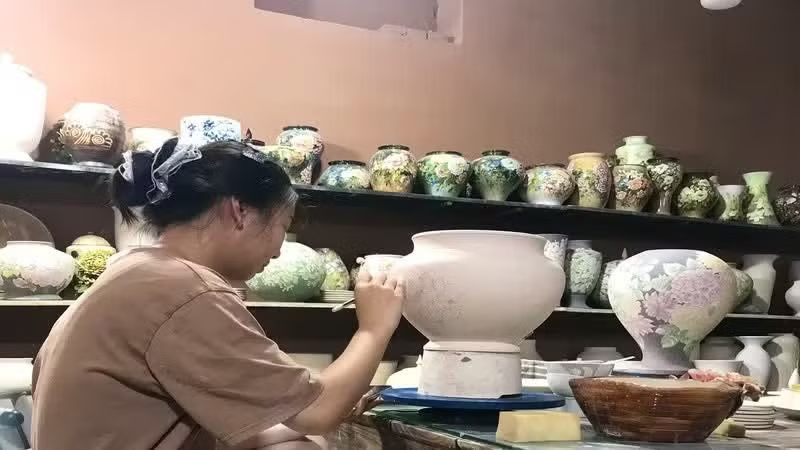
Every artisan operates their own workshop, forming a network of production facilities linked together within the cooperative. According to Tan, this model provides craftspeople with a unified organisation—one well-suited to the unique nature of a traditional craft village—while fostering collaboration for mutual growth.
Currently, each artisan’s workshop provides employment for over 20 workers, with an average monthly income of 10–15 million VND per person—significantly higher than what could be earned through conventional agricultural work.
“The value of this model lies not merely in revenue or production volume; each workshop serves as a source of employment, keeping workers engaged in the craft. Every year, the cooperative organises basic training courses on creative design, helping workers gradually refine their skills and building a new generation of craftspeople. When the trade generates an income that allows workers to live comfortably, young people have a compelling reason to carry forward the village’s cultural values and sustain them within contemporary life,” Tan emphasised.
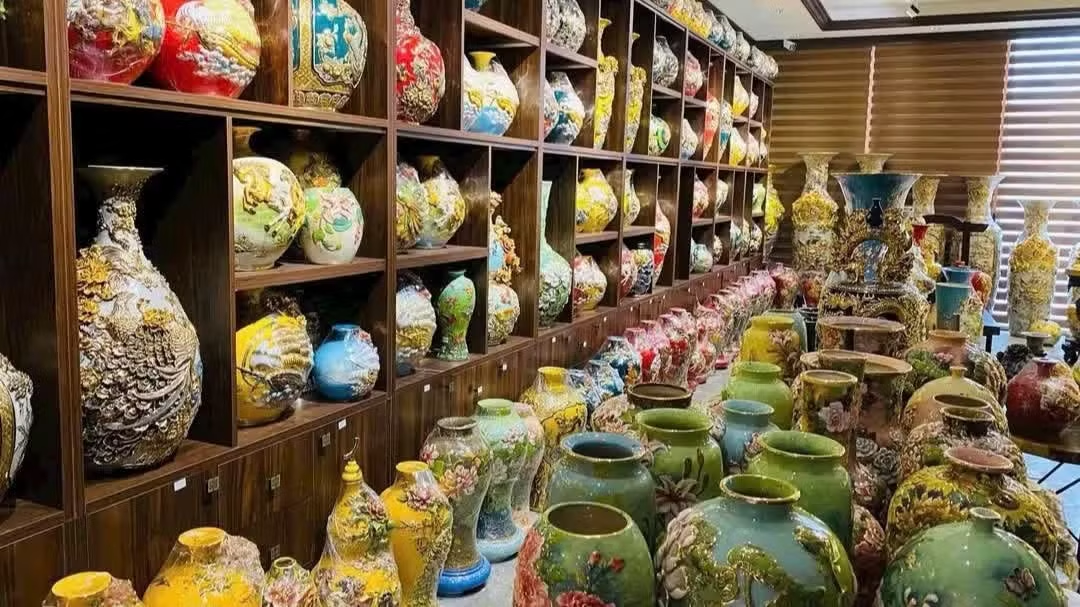
In addition to cooperatives, Bat Trang is home to many ceramic businesses that operate as family-run enterprises, each with its own workshop and a flexible scale of production.
From these production spaces, Bat Trang ceramics are reaching the market in a novel way: through live-streamed sales on social media platforms. For many households, digital platforms have become a vital sales channel, allowing products crafted in small workshops to reach consumers directly across various regions.
Khanh Linh (from Nghia Do Ward, Ha Noi), a customer who purchases ceramics via live streams, shared: “Seeing products showcased directly from the workshop or store—watching the crafting process, hearing the seller explain the materials, designs, and functions, and learning the stories behind each piece—makes the shopping experience truly engaging and enjoyable.”
A foundation for building new style rural areas
The operations of the Tan Thinh Ceramic Production and Trading Cooperative, along with the live-stream sessions hosted by individual family businesses, highlight a significant advantage for the economic development of this craft village. These activities serve as a cornerstone for the new style rural development initiative in Bat Trang Commune.
According to a report from the commune, the average per capita income for the 2020–2025 period was estimated at 83.5 million VND per person annually. The commune no longer has any households living in poverty, and over 95% of families have been recognised as “cultural families”. These achievements are, in large part, the result of the contributions made by the network of cooperatives, family businesses, artisans, and workers.
Meanwhile, according to the Ha Noi Coordination Office for the New Rural Development Programme, the set of criteria for new style rural communes in Ha Noi for the 2026–2030 period—recently issued by the City People’s Committee—includes “Rural Economic Development” as one of its 10 core categories.
Under this category, the city required that a commune must have effectively operating cooperatives, private economic activities that generate local employment and income, and either recognised craft villages or designated production and service zones that have been planned and invested in according to regulations. In this sense, the developments currently taking place in Bat Trang represent a fundamental aspect of the new style rural development model.
During a meeting on the development of cultural life for 2026, Hoang Anh Tu, Permanent Deputy Secretary of the Party Committee and Chairman of the People’s Council of Bat Trang Commune, emphasised that as the commune enters a new phase of development, there is an increased demand for preserving and promoting the traditional values of its craft village, while integrating these with the growth of tourism and services.
In practice, Bat Trang’s ceramic products are being incorporated into a wide range of trade promotion, tourism, and experiential activities. Toward the end of 2025, the commune will co-organise an exhibition designed to promote and facilitate trade for OCOP (One Commune, One Product) goods, handicrafts, and craft village products tailored for the tourism sector.
This initiative has connected artisans, businesses, and designers with the market, while simultaneously showcased the production process and the cultural landscape of the craft village to visitors—thereby opening up new avenues for economic development within the framework of new style rural construction.