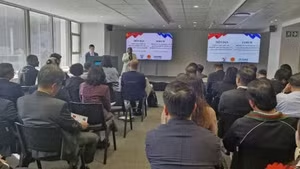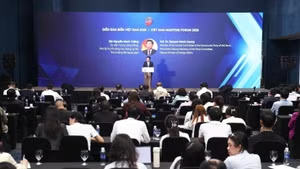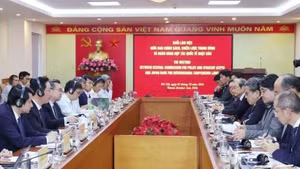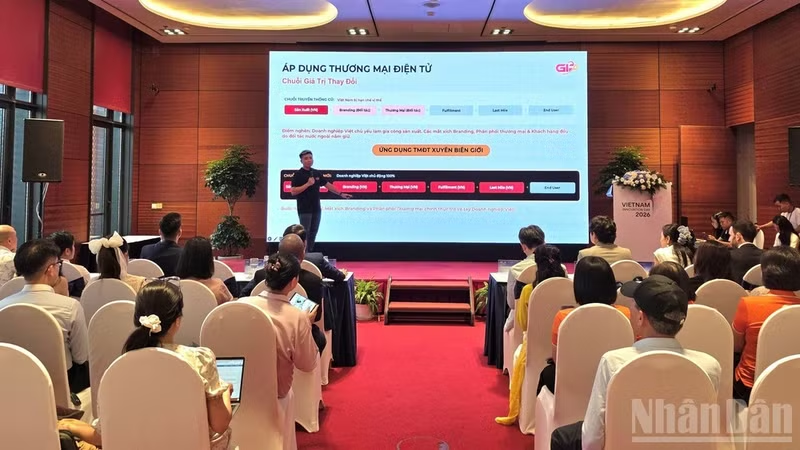
A seminar on “Innovation and e-commerce in global value chains”, held in Ha Noi on October 3, brought together experts and businesses to discuss shifts in global value chains and solutions to improve the international competitiveness of Vietnamese enterprises.
Pham Ngoc Hieu, Deputy Director in charge of the Innovation Support Centre under the State Agency for Technology and Innovation, said e-commerce had evolved from a means of buying and selling goods into important infrastructure enabling Vietnamese businesses to access international markets, build brands, connect with partners and participate more deeply in global value chains.
He stressed that innovation should be embedded in products, operational processes, management and business models. The application of artificial intelligence (AI), big data and automation should address specific needs, including improving productivity, product quality and operational efficiency.
Businesses also need to shift from a focus on “selling” to creating and positioning value in international markets. Cross-border e-commerce must be accompanied by product quality, technical standards and compliance with the requirements of individual markets. High-quality human resources, data management, logistics and electronic payments are also essential.
Nguyen Thanh Van, Chairman of the Viet Nam Global E-commerce Association, noted that 98% of Vietnamese businesses are small and medium-sized enterprises (SMEs), many of which face difficulties with digital transformation amid stricter measures against counterfeit goods and trade fraud and changes in tax policies.
He said geopolitical competition, protectionism and unilateralism were disrupting global supply chains, but Viet Nam had advantages including its geographical position, maritime connectivity and 16 free trade agreements (FTAs). He encouraged Vietnamese firms to pursue strategic partnerships with Chinese manufacturers, including joint ventures and production facilities in Viet Nam, while retaining control of their brands.
Van also urged businesses to use social media platforms such as Facebook, YouTube, TikTok, Zalo and WhatsApp to reach international customers and build brands.
Nguyen Thi Thu Hoa of the Ministry of Industry and Trade identified the Middle East, particularly the UAE, as a promising market. She urged Vietnamese businesses to meet technical requirements, including Halal certification, improve branding and strengthen direct trade links.
The seminar highlighted innovation and e-commerce as closely linked to brand building, data management, human resources and market connectivity as Vietnamese businesses seek deeper integration into global value chains.