
E-commerce opens new opportunities for Vietnamese businesses
Innovation, e-commerce and brand building are key drivers for Vietnamese businesses to strengthen competitiveness, expand markets and participate more deeply in global value chains.
#E-commerce
Innovation, e-commerce and brand building are key drivers for Vietnamese businesses to strengthen competitiveness, expand markets and participate more deeply in global value chains.

Viet Nam is rolling out a five-step roadmap to help domestic businesses expand overseas, build international brands and join global value chains under the GoGlobal programme for 2026-2030.

The Viet Nam E-commerce and Digital Economy Agency under the Ministry of Industry and Trade and TikTok Shop announced the “Beyond Viet Nam – Vietnamese Goods Taking Flight” initiative, aimed at helping Vietnamese businesses enhance their online export capabilities and reach global markets through discovery commerce in Ho Chi Minh City on September 3.

On July 31, the Ha Noi Department of Science and Technology, in collaboration with the Ha Noi Small and Medium Enterprises Association (HANOISME), held a forum on harnessing artificial intelligence (AI) and e-commerce to achieve double-digit growth.

The Viet Nam E-commerce and Digital Economy Agency under the Ministry of Industry and Trade (MoIT), in coordination with the Viet Nam Trade Office in Cambodia and the Cambodia Chamber of Commerce (CCC), held a seminar in Phnom Penh on July 15 to promote cross-border e-commerce between the two countries, helping businesses strengthen market connectivity and expand export opportunities.

The United Kingdom’s Office for Product Safety and Standards (OPSS) and the Agency for Domestic Market Surveillance and Development (DMS) held the 2026 Online Product Safety Summit on March 18 in Ha Noi.

In recent years, cross-border e-commerce has emerged as an important channel enabling Vietnamese businesses to overcome geographical barriers and sell their products worldwide, thereby participating more deeply in global value chains.

At present, the volume of import and export goods is increasing rapidly in both quantity and diversity, creating opportunities as well as challenges for the customs sector. Recently, the customs authority has focused on building an information technology system to implement digital customs with a high level of integration, moving towards full automation from the receipt of declarations and tax inspection to cargo clearance.
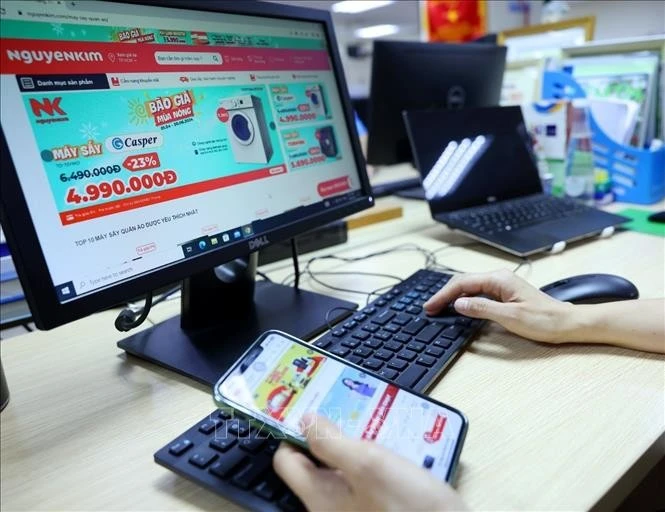
Viet Nam's digital technology industry solidified its role as a major economic driver in 2025, delivering strong financial and export performance that far surpassed targets, according to the latest report by the Ministry of Science and Technology.
Amid the rapid growth of e-commerce and social media, trade fraud and the sale of counterfeit and imitation goods have become increasingly sophisticated, posing major challenges for market regulators.

In the context of cross-border e-commerce being identified as a new pillar of the digital economy, online logistics and export are becoming decisive factors in the ability of Vietnamese goods to reach further in the global market.

According to data from the Agency for Domestic Market Surveillance and Development under the Ministry of Industry and Trade, e-commerce is playing a pivotal role in promoting the development of Viet Nam’s retail market. It not only contributes to revenue growth but also expands market access and promotes digital consumption.

Viet Nam’s e-commerce sector is experiencing strong growth driven by technology, livestreaming, and transparent services, moving towards sustainable development and strengthening consumer trust.

In recent times, amid global economic uncertainties, the domestic market has served as a vital pillar, providing a solid foundation for Viet Nam’s economic development. It is also an essential space for realising sustainable development goals and improving people’s quality of life.

Vietnamese Deputy Prime Minister Nguyen Chi Dung on October 28 attended the opening of the 9th edition of Future Investment Initiative (FII) conference in Riyadh, Saudi Arabia, and met with Saudi Arabian Minister of Economy and Planning Faisal bin Fadhil Al-Ibrahim as well as representatives of major Saudi Arabian corporations and investment funds as part of his working trip to the Middle East nation.
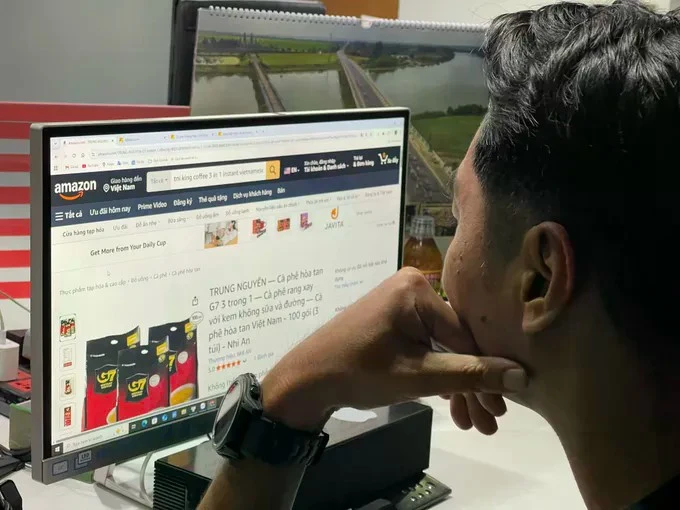
In recent years, international e-commerce platforms have helped Vietnamese products to reach more customers and markets, becoming an important export channel for domestic manufacturers.
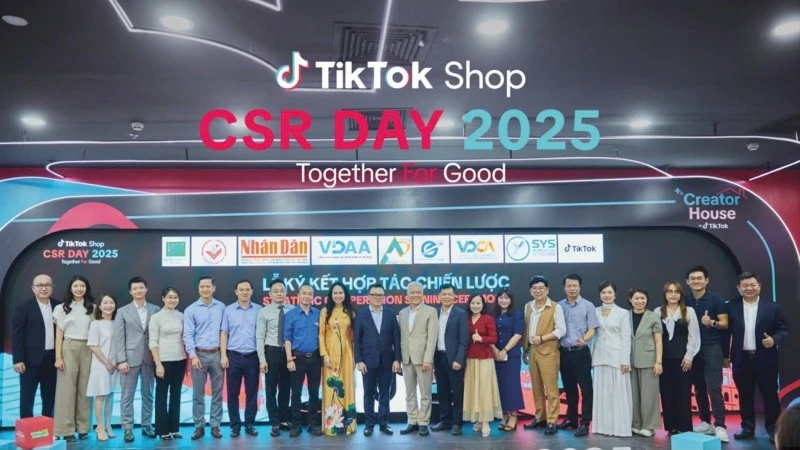
Amid the robust growth of e-commerce in Viet Nam, promoting digital transformation solutions is seen as the key to helping the country’s e-commerce industry in general and businesses and individual entrepreneurs in particular develop high-quality workforces and adopt suitable technological applications to thrive and swiftly adapt to new trends.

Alongside the shift towards green consumption, e-commerce is quickly becoming an “extended arm” to spread the philosophy of green living. Many Vietnamese businesses have taken advantage of e-commerce platforms to expand customer touchpoints, gradually “greening” supply chains and promoting sustainable development.
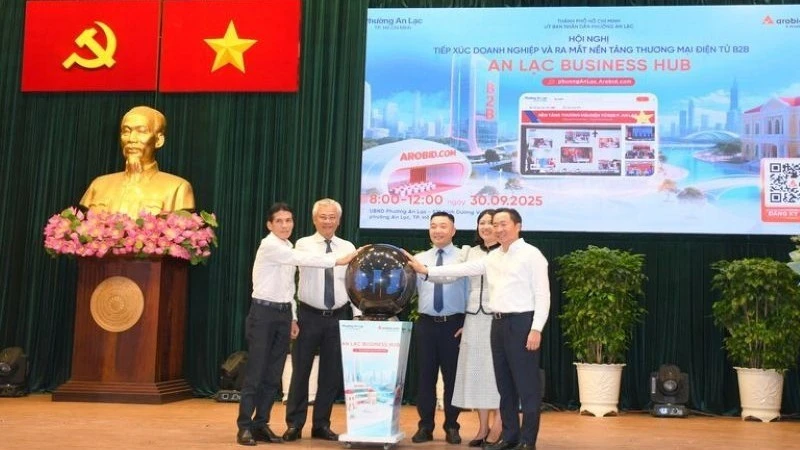
The People's Committee of An Lac ward in Ho Chi Minh City, in coordination with the Arobid Technology Joint Stock Company, launched Viet Nam’s first local-level business-to-business (B2B) e-commerce platform on September 30, marking a new step in building a digital economy ecosystem and supporting local enterprises in global integration.

Amid the robust growth of e-commerce in Viet Nam, cross-border e-commerce has been identified as a strategic pillar, opening up golden opportunities for Vietnamese goods to reach further on the global trade map while enhancing the nation’s competitiveness in global value chains.