These strong changes, from policy orientation to concrete action, demonstrate that the city is shifting its focus from merely providing new housing to ensuring quality of life, livelihoods, and sustainable social welfare.
The city has identified that resettlement is not simply about relocation, but a process of rebuilding community structures, where residents can continue to maintain their jobs, daily routines, and community relationships.
Urban renewal must go hand in hand with secure living conditions
Since late 2025, thousands of houses under the project to renovate and upgrade the northern bank of the Doi Canal running through Chanh Hung and Phu Dinh Wards (in the former District 8) have been dismantled. At the same time, groups of construction workers have set up temporary shelters and begun work on the first components of the project. After handing over their houses and land to local authorities, many families have started settling into new homes; among them, a considerable number have received resettlement apartments in social housing projects across the city.
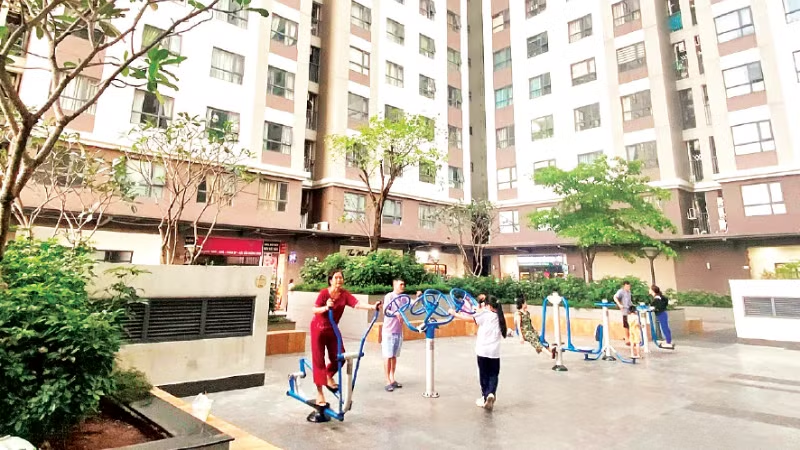
As dusk falls, Chau Hung, a resident of the Green River apartment complex in Binh Dong Ward, often comes down to the courtyard to enjoy the evening air and do some light exercise using the outdoor fitness equipment. The scene is markedly different from the cramped conditions of his former home, where a heavily polluted black canal flowed beneath the house on the northern bank of the Doi Canal, where his family had lived for nearly 25 years.
Hung said: “After receiving compensation for my old house of about 40 square metres, half of which extended directly over the canal, I added another 200 million VND to purchase a 60-square-metre apartment. The new home is only about three kilometres from the old one, clean, convenient, and reasonably priced. With the compensation of 1.8 billion VND, it would have been very difficult to buy a new house otherwise.”
Hung is one of 1,600 households affected by clearance for the project to renovate and upgrade the northern bank of the Doi Canal in the former District 8. He chose the option of receiving a resettlement apartment, which suited his family’s financial conditions and minimised disruption, allowing family members to stabilise their lives as quickly as possible.
According to the government of Chanh Hung Ward, 130 households in the ward affected by the project have registered for resettlement apartments at the Green River complex (part of the Hung Phat social housing project). This relatively high proportion compared with other resettlement housing locations reflects a growing preference among residents to settle in new homes close to their former neighbourhoods, placing greater demands on local authorities to prepare and allocate resettlement housing in a more proactive and practical manner.
Alongside a series of urban upgrading projects, particularly those addressing environmental pollution in combination with canal restoration, the Tham Luong–Ben Cat–Nuoc Len canal renovation project is also accelerating construction with the aim of completing the entire project in 2026. Observations show that several kilometres of roads running along the canal have already taken shape after nearly three years of construction.
In particular, the section from Cho Cau Bridge to Truong Dai Bridge, the final segment of the project, now sees motorbikes travelling daily along the newly asphalted road, while rows of trees have been planted along the canal bank, providing cool shade.
Thanh, a resident living near the canal in An Hoi Tay Ward, shared: “Now every afternoon, I take my grandchild for a walk to admire the canal. In the past, it was a year-round black stream, with polluted rubbish dumps along the banks. Fortunately, I only had to give up part of my land for the project, so I can still live in the same place and witness a meaningful urban renewal project taking shape.”
First neighbours, then relatives
The Vietnamese saying “first neighbours, then relatives” has now become a guiding principle for Ho Chi Minh City’s resettlement policy. A new home should not only provide accommodation but also preserve the community environment, livelihoods, and services that residents have long relied upon.
Pham Dang Ho, Head of the Urban Development Division under the Ho Chi Minh City Department of Construction, said that stabilising residents’ lives after resettlement is not simply about moving them to a different location.
What matters is ensuring that social infrastructure — schools, healthcare facilities, markets, and transport — remains well connected, while keeping the distance between the new and old homes as short as possible so that people’s livelihoods and jobs are not significantly affected.
Therefore, alongside compensation policies, the development of social housing and resettlement housing funds plays a decisive role in preventing situations where housing supply is abundant in some places but lacking in others during project implementation.
According to the Ho Chi Minh City Department of Construction, the city aims to compensate and relocate 6,500 houses located on and along canals; so far, 4,321 have been addressed. The department estimates that the city requires about 221.37 trillion VND in initial funding to implement the urban upgrading programme, with priority given to compensation, relocation, site clearance, construction of resettlement housing, and infrastructure improvements, particularly the accelerated development of social housing projects.
In August 2025, Ho Chi Minh City broke ground on a social housing project in Binh Thanh Ward, comprising 864 apartments to serve resettlement needs for urban renewal projects, including the Xuyen Tam Canal rehabilitation project.
The project is considered a model because it integrates comprehensive infrastructure, including community spaces, parks, landscaped areas, and commercial services. More importantly, the short distance between the former residential areas and the new project provides favourable conditions for residents to settle and stabilise their lives soon after relocation.
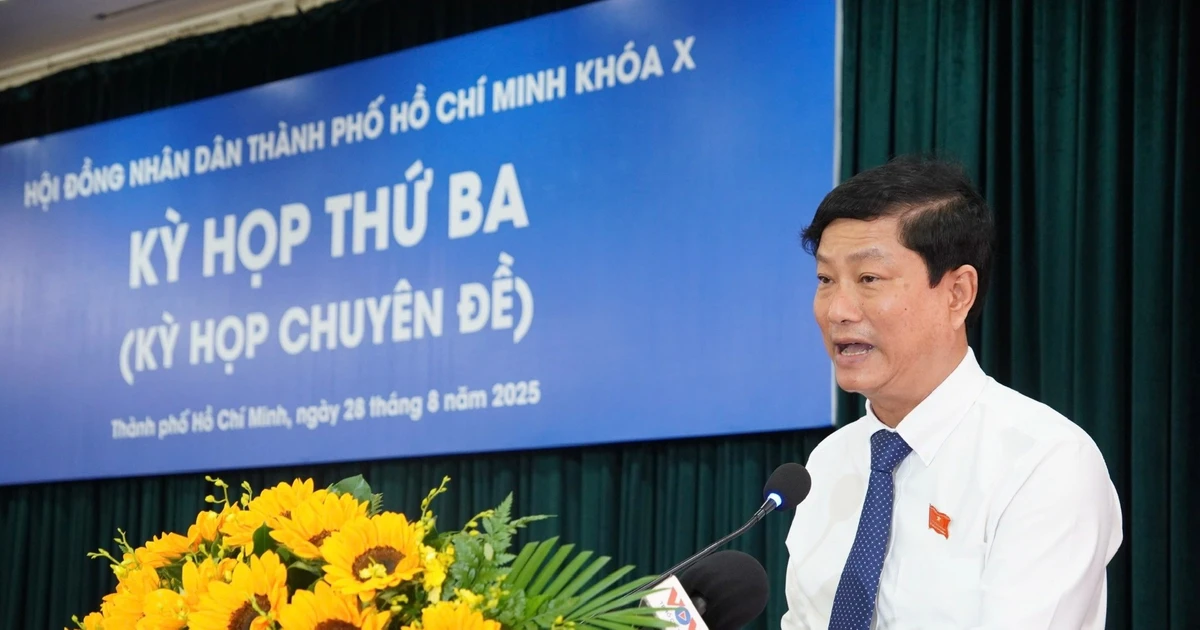
Following field surveys along major rivers and canals with large-scale land acquisition and many affected households, Ho Chi Minh City Chairman Nguyen Van Duoc emphasised that projects to upgrade housing along canals and waterways must be regarded as a top priority in the city’s urban development programme, particularly in addressing housing needs for residents, with special attention given to disadvantaged households.
Projects to upgrade housing along canals and waterways must be regarded as a top priority in the city’s urban development programme, particularly in addressing housing needs for residents, with special attention given to disadvantaged households.
The city will issue a roadmap and prioritise budget allocation to implement the plan to relocate all houses built on canals and waterways in a focused and effective manner. New housing must not only ensure stable living conditions but also maintain livelihoods, with on-site resettlement or locations close to former homes to facilitate residents’ daily lives, education, and work.
With its determination to complete urban upgrading programmes, canal rehabilitation, and social housing development, Ho Chi Minh City is gradually building a more civilised, liveable, and sustainable environment. It is a place where every resident can settle down, contributing to community development and shaping the future of a modern city rich in compassion and solidarity.








![[Video] Ho Chi Minh City to offer free bus services from April 30](https://en-cdn.nhandan.vn/images/dcd63867a0eed4c7753eb4bfb346593abc1ce710dfab8ad1b9aebd75ea6bf9308a18476413ebb2c6444053f1f3d631fc7e73e1f3c83809429191b95da12a6364/xe-bus-2.png.avif)