The official organisation of All People’s Health Day is a strong affirmation of the strategic vision of the Party and the State: health is the most valuable asset of every citizen and of society as a whole; investing in health is investing in sustainable development.
Protecting health before getting diseases
Over the past many years, the Party and the State have always placed the people’s health as the top priority in development policies. Investment in health is an investment in the sustainable development of the population, a driving force for economic growth, the maintenance of social security, and the firm safeguarding of the Fatherland. As a result, Viet Nam has achieved many important achievements in protecting, caring for, and improving the people’s health.
However, this work is facing unprecedented pressures and challenges. These include the rapid and complex changes in disease patterns. The rates of incidence and mortality from non-communicable diseases (cancer, cardiovascular diseases, hypertension, diabetes and chronic obstructive pulmonary disease) are rising quickly and becoming increasingly prevalent among younger people; the population is ageing at one of the fastest rates in the world; and the risk of emerging diseases remains ever-present.
The process of industrialisation and urbanisation has led to air and water pollution; issues of food safety and hygiene, along with unhealthy lifestyles such as physical inactivity, excessive alcohol consumption and tobacco use, are directly threatening the public health on a daily basis. This situation inevitably puts great pressure on healthcare facilities, while rising treatment costs create financial burdens for many households. If the management of healthcare continues to follow a passive approach—waiting until people get disease before providing treatment—all economic growth resources will be eroded only to deal with consequences, making it difficult for sustainable development. Meanwhile, with early detection through regular health check-ups or screening, many diseases can be effectively controlled.
Resolution No.72-NQ/TW issued by the Politburo on September 9, 2025, “On breakthrough solutions to strengthen the protection, care and improvement of the people’s health”, sets out a requirement for a breakthrough in policy vision. Accordingly, the approach will shift from treatment-centred healthcare to proactive disease prevention and comprehensive care from an early stage and at a distance. This represents not only a major change in medical practice but also a profound reform, placing people at the centre and prioritising the protection of health before illness occurs.
Notably, for the first time, quantitative targets on physical development have been set, such as: by 2030, the average life expectancy of Vietnamese people will reach 75.5 years, including at least 68 years of healthy life; the average height of children and adolescents will increase by at least 1.5cm; by 2030, the goal of free health check-ups for all people will be achieved; and every citizen will have a lifelong health record, with health risks prevented from the earliest stage when the body is still healthy.
The 14th National Party Congress has identified the goal of building a fair, high-quality, effective and sustainable healthcare system; focusing on improving the quality and skills in disease prevention, examination and treatment, and effective pandemic control. It also emphasises the effective implementation of the National Target Programme on healthcare, population and development, and improving the quality and efficiency of the healthcare service network from central to grassroots levels to meet changing disease trends and achieve universal health coverage.
Building and practising a culture of health
In recent times, the healthcare sector has been taking action with urgency, determination and synchronisation, gradually establishing solid foundations to care for the people’s health. Turning-point policies have begun to take effect in real life. These include the strong implementation of lifelong electronic health records for every citizen; the comprehensive strengthening of the grassroots healthcare network to truly become a reliable “gatekeeper”; and the launch of a roadmap for regular health check-ups and free screening, creating opportunities for early disease detection and reducing the burden of illness on the population.
To concretise the spirit and content of the people’s healthcare, Resolution No.72-NQ/TW has designated April 7 every year as the All People’s Health Day.
The theme of the All People’s Health Day 2026 is “Proactive Disease Prevention – For a Healthy Viet Nam”, clearly reflecting the shift in focus from disease treatment to proactive disease prevention. This is not only a campaign activity but also an affirmation of the strategic vision of the Party and the State: placing human at the centre, with health as the foundation, the goal and the driving force for rapid and sustainable development in the 2026–2031 period and following years.
According to Minister of Health Dao Hong Lan, to realise the Party’s resolution, Party committees, authorities, the Viet Nam Fatherland Front and mass organisations at all levels need to continue raising awareness and action, and consider the protection and care of the people’s health as an important and regular political task. The health sector and localities should focus on enhancing preventive healthcare and grassroots healthcare capacity; implement early, remote and community-based disease prevention; and focus on protection, care and improvement of the people’s health in a comprehensive and continuous manner throughout their life cycle.
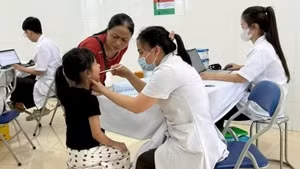
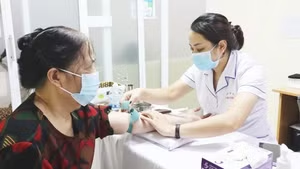
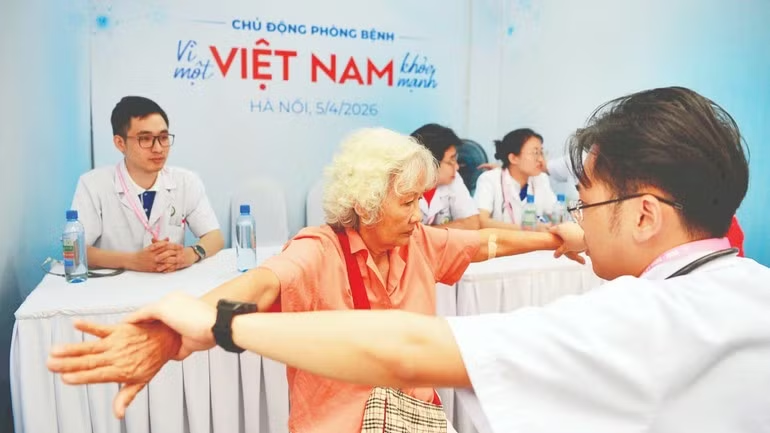
From 2026, regular health check-ups and free screening will be implemented for people according to target groups and priority roadmaps, including people with meritorious service, the elderly, poor and near-poor households, ethnic minority communities, those living in areas with difficult socio-economic conditions, island communes, and special administrative zones.
Disease prevention is not only the responsibility of the health sector but of the entire political system and society as a whole, with citizens as the central actors.
At the launch ceremony of the All People’s Health Day on April 5, Trinh Van Quyet, Politburo member, Secretary of the Party Central Committee, and Head of the Party Central Committee’s Commission for Communication, Education, and Mass Mobilisation, called on all levels, sectors, and the entire population to make proactive disease prevention a long-term strategy; to build and practise a “health culture” through active physical exercise, proper nutrition, maintaining a scientific lifestyle, controlling risk factors, and undertaking regular health check-ups.
All sectors and levels are urged to promote digital transformation in healthcare; apply big data and artificial intelligence in health forecasting and management; and effectively implement electronic health records, contributing to improving the quality of public healthcare. Each citizen should start with themselves; each family should become a “fortress” of disease prevention; and each organisation and locality should be a “bright spot” in community healthcare.