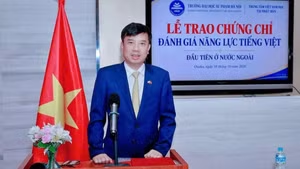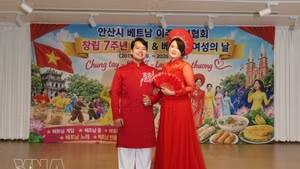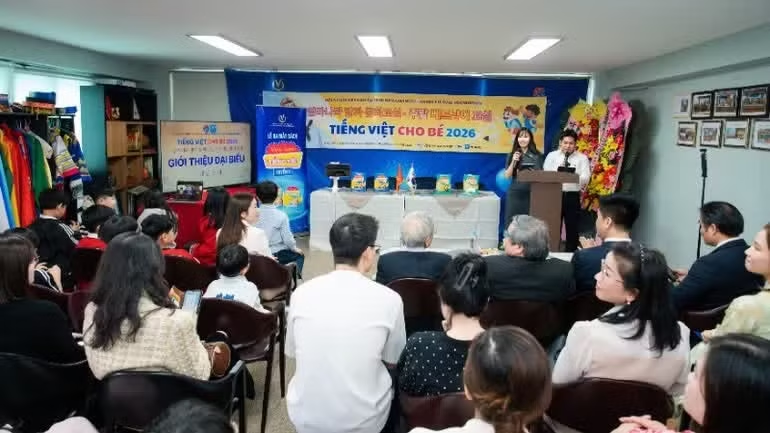
The event was part of broader efforts to preserve and promote the Vietnamese language among overseas Vietnamese communities.
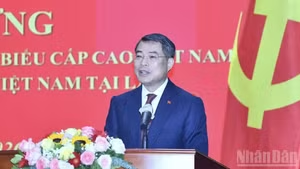
Speaking at the event, Ngo Thi Thanh Mai, Vice Chairwoman of the State Committee for Overseas Vietnamese Affairs, affirmed that preserving and promoting the Vietnamese language within overseas Vietnamese communities is not only a cultural imperative, but also provides a vital foundation for strengthening national identity and intergenerational cohesion.
Amid the rapidly growing relationship between Viet Nam and the Republic of Korea, the Vietnamese language is finding greater opportunities to flourish, however it also faces considerable challenges, as younger generations born and raised in multilingual environments often see a decline in proficiency with their mother-tongue.
In light of this reality, she stressed the need to adopt fresh approaches, including expanding the use of technology, developing flexible learning models, and accelerating the digitalisation of learning materials
Sharing this view, Dang Thanh Phuong from the Viet Nam Fatherland Front noted that Vietnamese is not merely a means of communication, but also a cultural bridge and a vital link between overseas Vietnamese communities and their homeland.
He said preserving the Vietnamese language should be regarded as a shared responsibility of society as a whole, requiring coordinated participation from community associations, families, and Vietnamese diplomatic missions abroad.
Many parents noted that language barriers prevent their children from fully expressing their affection for their grandparents when visiting Viet Nam.
From this perspective, parents believe that teaching Vietnamese is not simply about language instruction, but about preserving family bonds while providing younger generations with a sense of cultural identity and belonging to their roots.
Teachers also highlighted difficulties in maintaining classes, including a shortage of suitable learning materials for children from multicultural backgrounds, a lack of specialised teaching approaches, and limited coordination among community classes.
From these discussions, a shared understanding emerged: preserving the Vietnamese language cannot rely solely on classroom teaching, it must begin within families and the wider community.
Experts stressed that teaching Vietnamese to children overseas requires a shift in approach from pure language instruction to creating immersive and engaging learning experiences.
Accordingly, Vietnamese should be integrated into activities such as storytelling, games, and cultural events, to enable children to engage with the language more naturally and with greater enthusiasm.