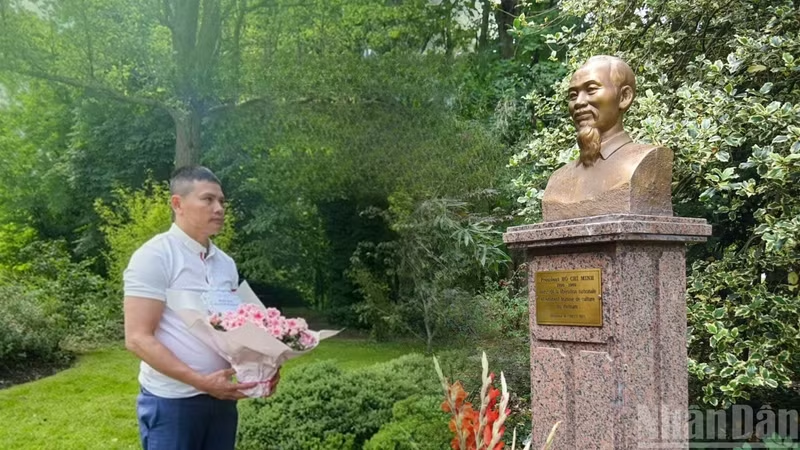
Each visit begins with quiet dedication. Khanh carefully picks up fallen leaves, sweeps the tiled area around the statue and takes a fresh cloth from his backpack to wipe dust from the shoulders and pedestal of the bust. He then straightens a bouquet of flowers before solemnly placing it in front of the statue. For nearly a year, he has repeated the routine almost every Saturday morning without fail.
A promise from the heart
“It has been exactly one year since I started cleaning this place,” Khanh said in an interview with Nhan Dan Newspaper. Although Montreau Park is around 14km from his home, he usually runs there every week.
“Uncle Ho, I’ll come back next week.” That simple promise has become what Khanh calls a “command from the heart” — the reason the 37-year-old from Dien Chau District in Nghe An Province wakes at 6am every Saturday morning regardless of rain, blazing sunshine or freezing snow.
Even on winter mornings when Paris was covered in snow and temperatures dropped to minus 6 degrees Celsius, Khanh still made the journey. Once, he slipped on the ice and injured himself, yet he never broke his promise.
The destination of those weekly runs is Montreau Park in Montreuil — one of the historical “red addresses” connected with President Ho Chi Minh in France. Surrounded by bamboo and greenery, the area carries a distinct Vietnamese atmosphere in a city long associated with Viet Nam.
The bust of President Ho Chi Minh was presented to Montreuil by the Ha Noi Museum and inaugurated on May 19, 2005 to mark the 115th anniversary of his birth. Nearby stands the living history museum, home to the Ho Chi Minh Space, where photographs and artefacts linked to his activities in France between July 1921 and June 1923 are preserved.
For many overseas Vietnamese, the site is more than a tourist destination. It is a place that recalls the revolutionary journey of the national leader more than a century ago.
Khanh moved to France nearly eight years ago. Life there has been demanding. He works up to 18 hours a day and sleeps only five or six hours a night.
Every morning, he wakes at 6am, spends half an hour studying French, helps his wife with housework and then runs to work in Paris. Returning home around midnight, he studies French again before repeating the routine the next day. He only has Monday evenings and Saturday mornings free.
Yet instead of resting on those precious Saturday mornings, Khanh chooses to run nearly 14km to Montreau Park to clean the statue area, offer flowers and return in time for work.
“My first purpose is to keep the area around Uncle Ho’s statue clean every week. Secondly, running helps me stay healthy for work. Thirdly, I want more people in France to know about Uncle Ho,” he explained.
After placing flowers before the statue, Khanh always repeats the same words quietly to himself: “Uncle Ho, I’ll come back next week.”
“If I’ve promised, I must come,” he said. “Rain or shine, I always try to be here.”
Cao Ba Khanh
Spreading Vietnamese values through simple acts
At first, passers-by and park staff were puzzled by the sight of a Vietnamese man carrying a bamboo broom and flowers into the park every weekend.
Over time, curiosity turned into admiration. Many foreigners now stop to ask him about President Ho Chi Minh. Some ask to take photographs with him after hearing his stories. A French woman who regularly walks through the park once approached him to say she had often seen him cleaning the site. After learning whose statue it was, she asked for a commemorative photograph and wished him success in continuing his work.
Friends from Spain and other countries have even joined him at weekends, helping to sweep leaves and clean the area.
Khanh still remembers meeting an Algerian man who approached him while he was placing flowers before the statue. After hearing about President Ho Chi Minh, the man said he deeply admired both Viet Nam and its leader, before warmly raising his hand and saying: “Viet Nam.”
For Khanh, such encounters show how deeply the image of Viet Nam and President Ho Chi Minh resonates with international friends.
“I want people here to know that Vietnamese people deeply respect their leader,” he said.
Despite receiving thousands of likes and shares on the videos he posts online, Khanh insists he is not seeking fame or attention. “What matters most is helping young Vietnamese people abroad understand more about Uncle Ho and the journey he once took in France,” he said.
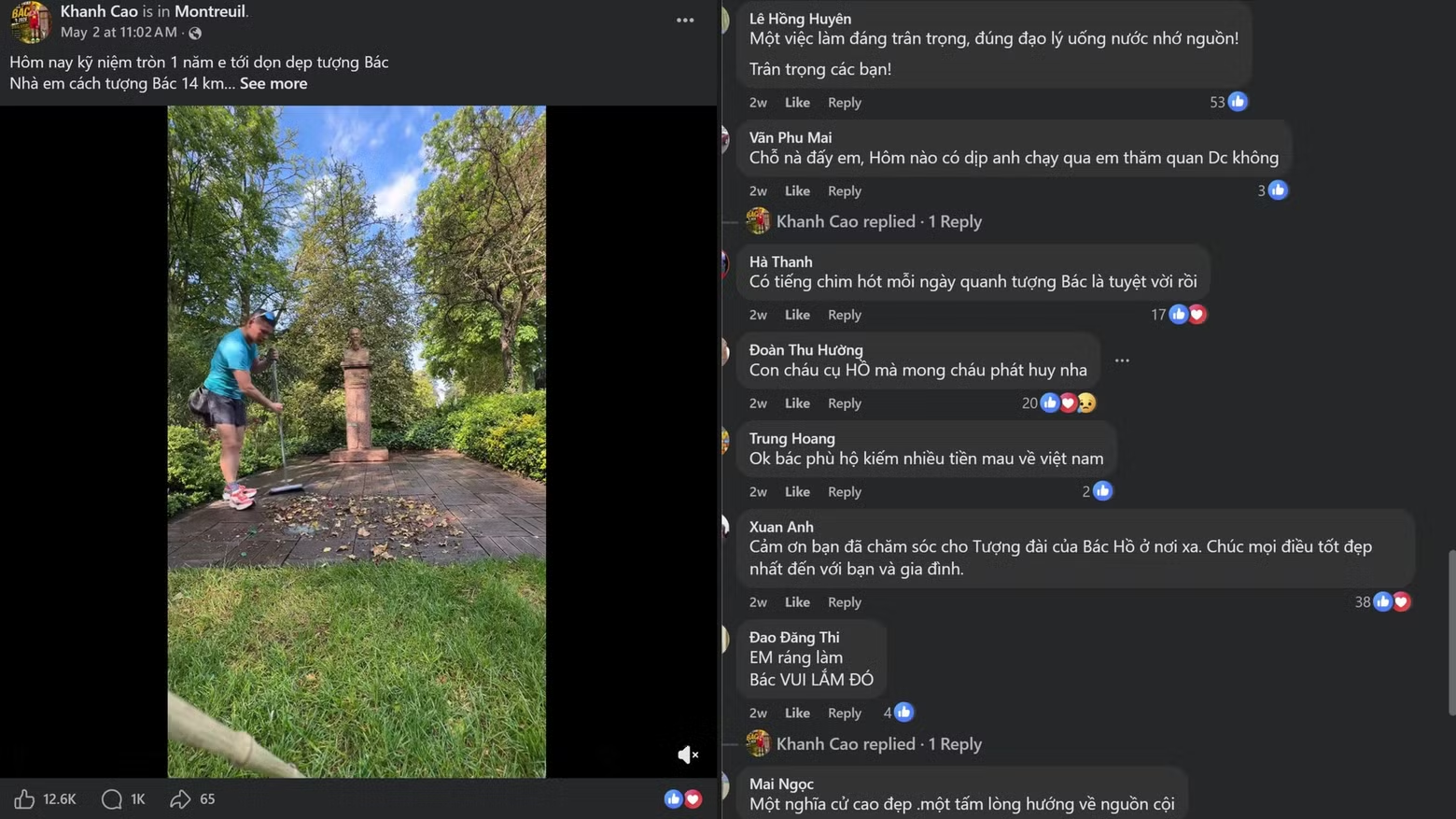
Remembering and following Uncle Ho can begin with the smallest things. You do not need to do anything grand. Simply visiting the statue, cleaning the area and placing flowers is already a meaningful way of remembering him.
Cao Ba Khanh
After one year of quietly carrying out the voluntary work, Khanh still does not believe he has done anything extraordinary.
Yet his quiet dedication has touched many Vietnamese people far from home. Amid the pressures of life overseas, his simple acts have become fragrant flowers offered in tribute to the beloved leader of the nation.