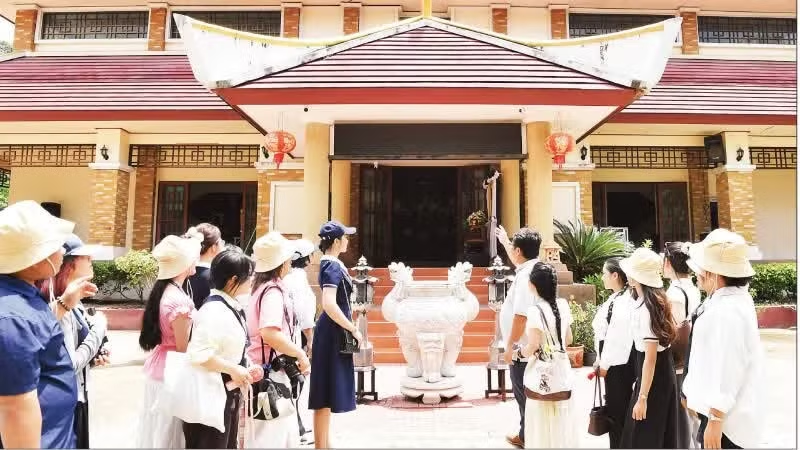
In the final days of May 2026, we visited the President Ho Chi Minh Relic Site in Udon Thani Province and met several members of the Vietnamese community there. From National Highway 2263, we turned onto Thau Chin 1 Road and then Thau Chin 2 Road, a tree-lined route stretching about 1km, before arriving at the gate of the relic site, the first memorial work dedicated to President Ho Chi Minh in Thailand.
The site is solemn yet simple. For Vietnamese people in Thailand, it is a sacred address, preserving memories of the years when President Ho Chi Minh lived and carried out revolutionary activities in Thailand from 1928 to 1929.
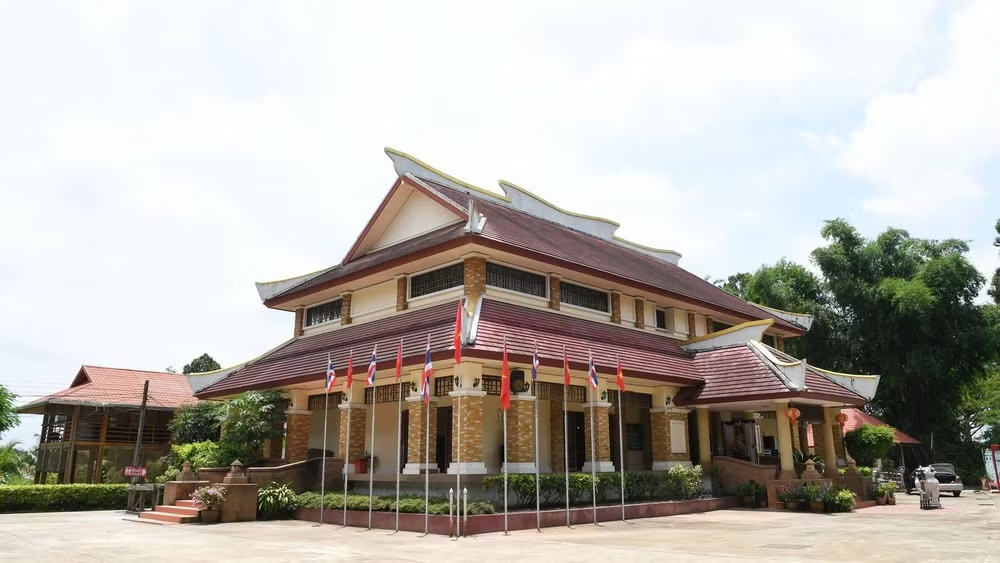
Under the shade of green trees, Pham Duc Dau, Head of the Management Board of the President Ho Chi Minh Relic Site in Udon Thani Province, said the site was built on the former location where President Ho Chi Minh once carried out revolutionary activities under the name Thau Chin. The relic site now covers 11,200 square metres and comprises four areas: Uncle Ho’s House, the multi-purpose house, the garden landscape, and an expanded area. Construction began in 2003, with Uncle Ho’s House inaugurated in 2006 and the multi-purpose house in 2011.
Dau said his family had donated the entire funding for the construction of Uncle Ho’s stilt house in the expanded area and hoped to continue making modest contributions to the relic site. He wished that the site would continue to be a place where generations of overseas Vietnamese children could visit and learn more about President Ho Chi Minh’s revolutionary life.
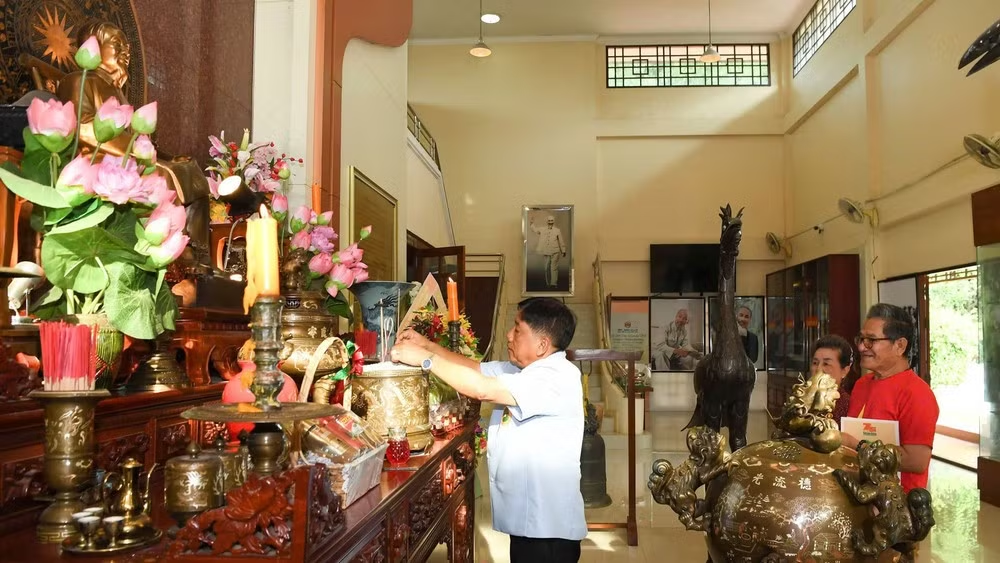
The relic site was built on the former location where President Ho Chi Minh once carried out revolutionary activities under the name Thau Chin. The relic site now covers 11,200 square metres and comprises four areas: Uncle Ho’s House, the multi-purpose house, the garden landscape, and an expanded area. Construction began in 2003, with Uncle Ho’s House inaugurated in 2006 and the multi-purpose house in 2011.
Pham Duc Dau, Head of the Management Board of the President Ho Chi Minh Relic Site in Udon Thani Province.
Leading us into Uncle Ho’s House, Van Viet Thanh, who has worked at the relic site for 11 years, introduced the three-compartment house with a thatched roof, which was reconstructed based on the original model of the house where President Ho Chi Minh once lived. The house has a simple thatched roof, clay walls and a floor paved with fired bricks. The central compartment served as a common meeting room with three sets of tables and chairs. The left compartment contains a wooden table and chairs where President Ho Chi Minh worked. In one corner are a small bed with a mosquito net and a wooden platform. The right compartment was used as the sleeping area for his comrades. The house also includes a kitchen, pigsty, chicken coop, rice store and well.
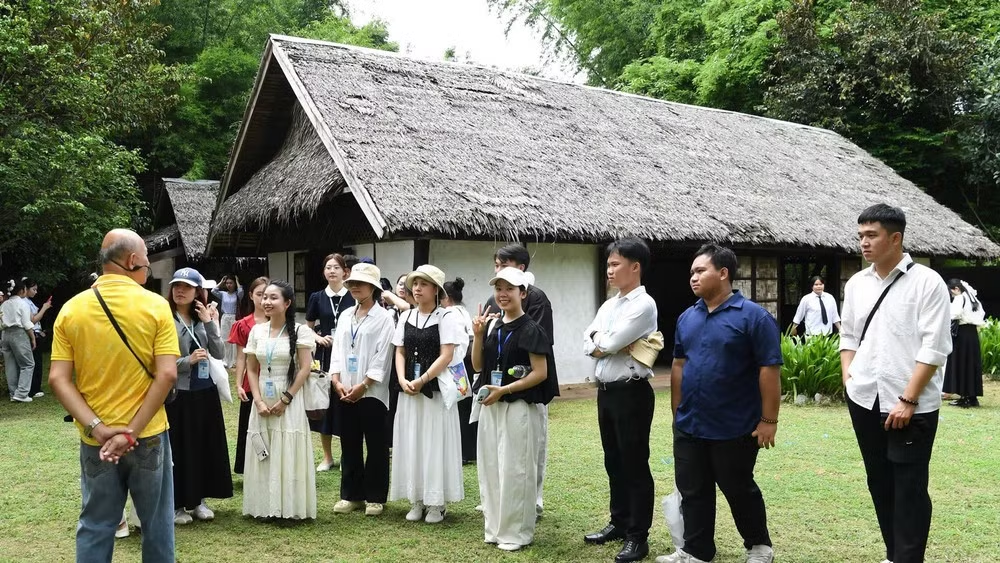
Each year, the relic site welcomes about 15,000 visitors, including many delegations from Viet Nam, especially on the occasion of President Ho Chi Minh’s birthday anniversary. Joining a group of students from the University of Science and Education, the University of Da Nang, during a study visit to the site, Pham Man Minh said: “After visiting Uncle Ho’s House, which was restored in its original architectural style, together with artefacts recreating the place where he once lived and worked, my friends and I understand and respect President Ho Chi Minh even more. He was a great leader with an extremely simple lifestyle.”
At the headquarters of the Vietnamese Association in Udon Thani Province, we met Luong Xuan Hoa, Member of the Central Committee of the Viet Nam Fatherland Front, Vice President of the Vietnamese Association in Thailand, and President of the Vietnamese Association in Udon Thani Province. He told us that since childhood, he had heard many stories about President Ho Chi Minh’s life in Udon Thani.
Hoa said President Ho Chi Minh lived simply among the Vietnamese community, helped build houses, production workshops and schools, called on Vietnamese people to stay united with local residents, and spread patriotism and support for the Vietnamese revolution.
As president of the association, Hoa said he always wished to contribute to the community and made every effort to organise commemorative events about President Ho Chi Minh, so that overseas Vietnamese in Udon Thani would feel closer to him. Despite living far from the homeland for many years, the Vietnamese community’s affection for President Ho Chi Minh remains deep. In their stories, the image of President Ho Chi Minh appears as a spiritual bond connecting Vietnamese people far from home.
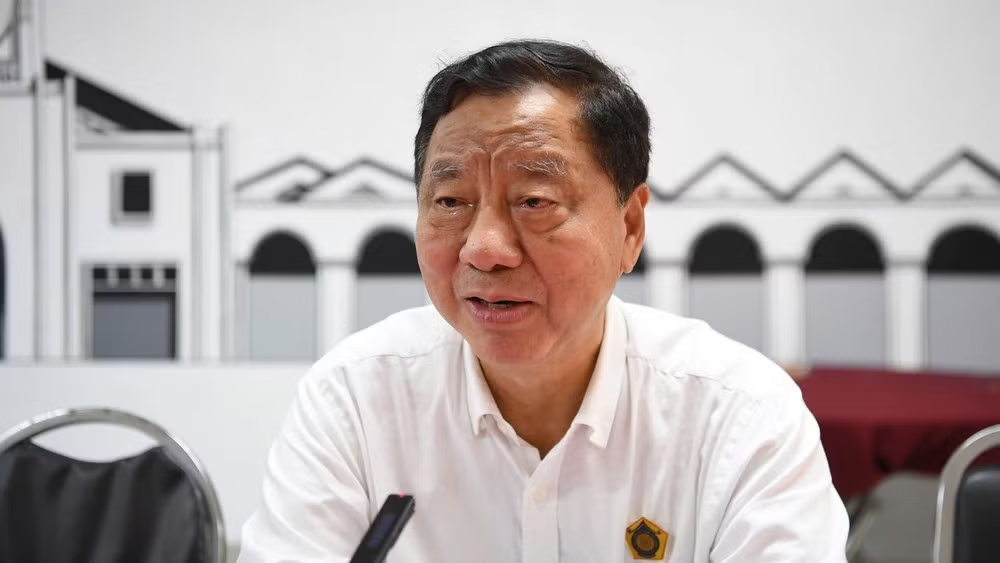
According to Hoa, the fine relationship between the two countries provides an important foundation for overseas Vietnamese in Thailand to live with peace of mind. Many have become successful and well-off, earning certain positions and prestige in Thai society. The Vietnamese community itself is also one of the bridges of friendship between the two peoples.
Each year, the relic site welcomes about 15,000 visitors, including many delegations from Viet Nam, especially on the occasion of President Ho Chi Minh’s birthday anniversary.
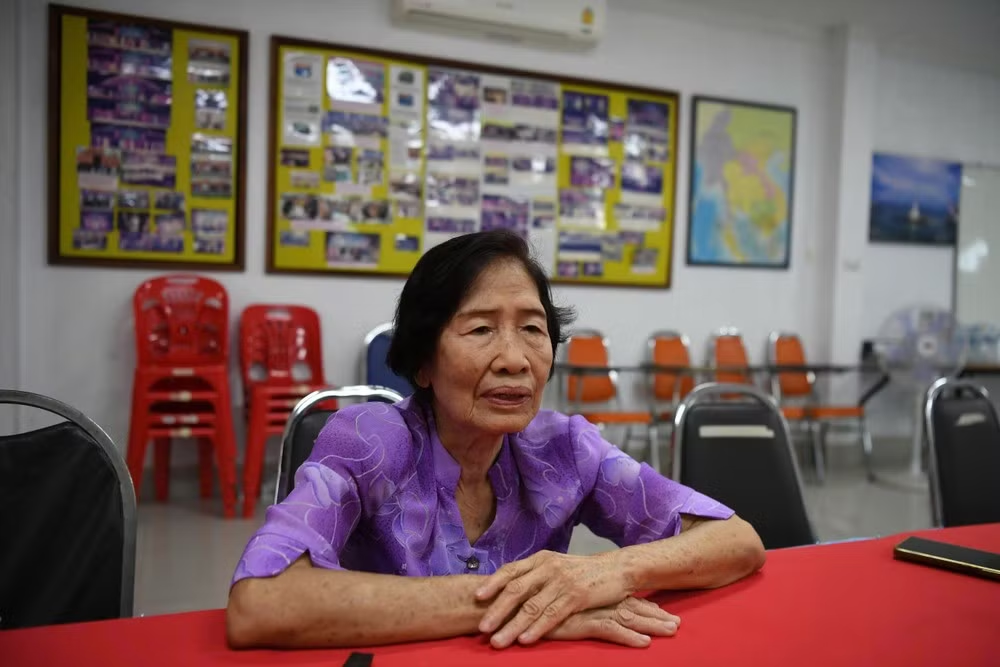
Nguyen Thi Xuan Oanh said many generations of overseas Vietnamese in Udon Thani have continued to pass down stories about President Ho Chi Minh to their children and grandchildren. With the desire to preserve traditional customs and always remember their Vietnamese roots, she has volunteered for many years to teach Vietnamese. Through her lessons, she hopes that overseas Vietnamese children will understand President Ho Chi Minh’s character, morality and simple lifestyle, as well as his immense love for children.
She said she often visits the relic site because “respect and love for President Ho Chi Minh run in the blood of the Vietnamese community in Thailand and cannot be measured”.
Leaving Udon Thani with deeply moving stories, we felt that the image of President Ho Chi Minh continues to live on in the hearts of the overseas Vietnamese community. The President Ho Chi Minh Relic Site in Udon Thani Province is not only a place to commemorate the beloved leader, but also a testament to solidarity, patriotism and the deep attachment of the Vietnamese community in Thailand. Wherever Vietnamese people may live, they continue to turn towards their national roots with pride and deep affection for President Ho Chi Minh.