As of the morning of August 2, no additional Vietnamese casualties have been reported following the earthquake in Japan's Kumamoto Prefecture, beyond one worker who was killed and another who was injured.
On August 1, the local Vietnamese community held a funeral for Tran Van Son, the Vietnamese victim who lost his life in the disaster.
The cities of Yatsushiro and Uki were among the hardest-hit areas. Around 1,000 Vietnamese nationals live in Yatsushiro and about 350 in Uki, most of them technical interns and specified skilled workers employed in agriculture.
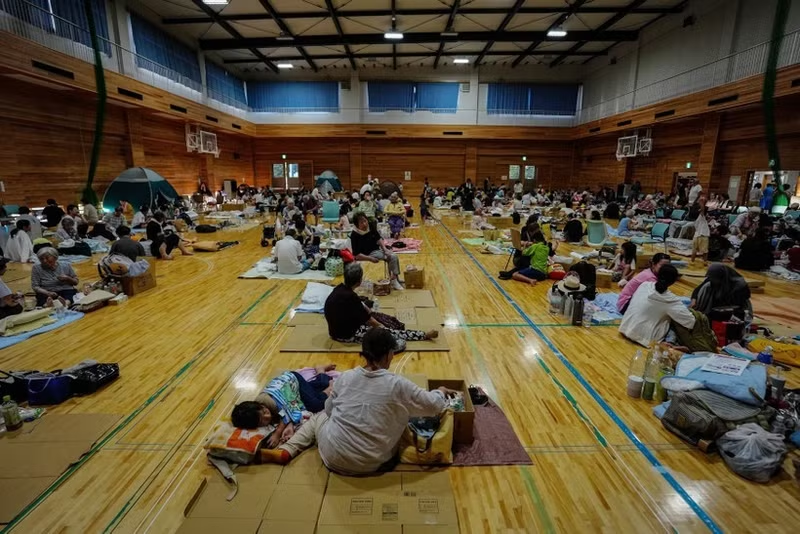
The biggest challenge facing residents in the aftermath of the earthquake has been widespread water shortages. Le Tram, President of the Vietnamese Association in Kumamoto, and Vice President Xuan Hoa told the Viet Nam News Agency's correspondent in Tokyo that local authorities have ensured adequate food and drinking water supplies at evacuation centres.
Vietnamese families with young children have generally relocated to safe shelters, while many single workers have remained at their residences and appealed for drinking water and food through community social media groups.
In response, Vietnamese associations and community groups in Kumamoto and across the Kyushu region have organised relief convoys to deliver drinking water and food directly to affected workers.
By the morning of August 2, many supermarkets and grocery stores had reopened, easing shortages of essential supplies in the worst-hit areas.
Meanwhile, search and rescue operations at major disaster sites where people had been trapped have largely been completed. At the Nippon Paper Industries plant in Yatsushiro, rescue teams freed all 11 trapped workers by the afternoon of July 30, although nine were confirmed dead.
At Aeon Mall Kumamoto in Kashima, rescue operations concluded at midday on August 1 after 12 people were pulled from the rubble, seven of whom did not survive.
At Aeon Mall Uki, rescuers recovered an approximately 80-year-old man from beneath a collapsed wall on the evening of July 31. He was found in cardiac arrest.
With large-scale rescue efforts at the two sites with the highest numbers of trapped victims – Nippon Paper Industries and Aeon Mall Kumamoto – now completed, emergency operations are shifting from search and rescue to supporting evacuees and restoring essential infrastructure.
The Japanese government has prepared 73 hotels and other accommodation facilities capable of housing around 2,200 people as part of a secondary evacuation programme, relocating evacuees from overcrowded shelters or centres unable to provide suitable long-term living conditions.
Public bathing facilities, water distribution points, post-disaster waste collection services and volunteer centres have also begun operating in Uki, Uto, Mashiki, Kashima and Mifune.
According to the latest figures released on the morning of August 2, the earthquake in Kumamoto Prefecture has claimed 38 lives and injured 101 others.