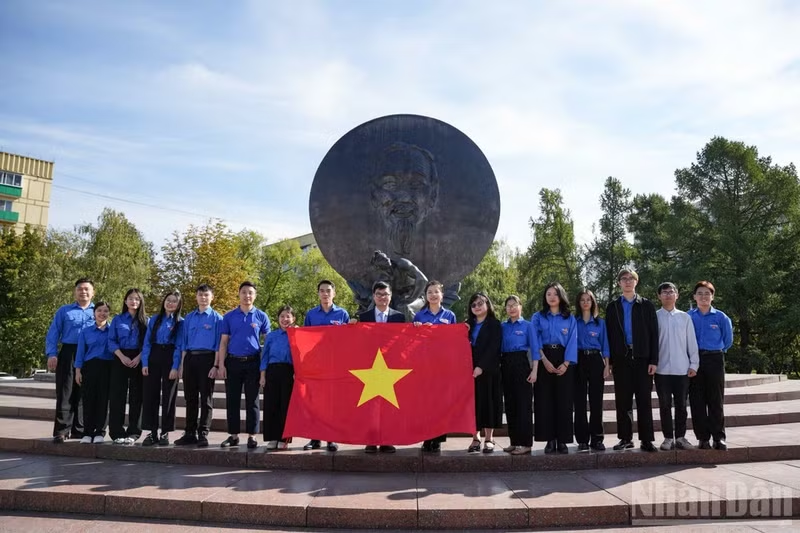
Vietnamese students studying abroad are a young, educated group who are regularly exposed to diverse information environments. They are both targets of hostile efforts and potential active participants in the struggle to safeguard the Party from outside the country’s borders.
On August 2, 2026, the Politburo issued Resolution No. 23-NQ/TW on work relating to Vietnamese people overseas, replacing Resolution No. 36-NQ/TW after more than 20 years of implementation. The resolution identifies the community of more than 6.5 million Vietnamese people in over 130 countries and territories as an “important strategic resource” and a “bridge between Viet Nam and the world”, working alongside the country and directly contributing to the cause of national construction, development, and defence.
More notably, it calls for “proactive prevention, resolute action, and the blocking of attempts to exploit the Party’s guidelines and policies and the State’s policies and laws on work relating to Vietnamese people overseas for personal gain or to sow division within the community, thereby affecting national prestige and interests.”
This spirit points to a clear direction: Vietnamese people overseas in general, and students studying abroad in particular, are not merely beneficiaries of policies designed to care for and protect them. They are also responsible actors with the capacity to contribute to safeguarding the Party’s ideological foundation and combating “peaceful evolution.” To neutralise subversive schemes targeting overseas students while bringing their role as “core members” on the ideological front to the fore, coordinated and specific solutions are needed, and implementation must begin today, before the “information vacuum” is filled with false and distorted narratives.
When the ideological struggle knows no borders
Across the world, increasingly complex and unpredictable new issues are emerging. As a result, the struggle to safeguard the Party’s ideological foundation is no longer confined to Viet Nam but has become a borderless “front” in global cyberspace. Domestically, ideological and political degradation, declining ethics, bureaucratic lifestyles, corruption and wastefulness, as well as signs of “self-evolution” and “self-transformation” among some officials and Party members, are becoming increasingly sophisticated.
Exploiting this situation, hostile forces, political opportunists, and disaffected extremists are making greater use of the advantages offered by the internet and cross-border social media to spread false and distorted narratives about the Party’s leadership, smear the regime, and divide the great national unity bloc. Their targets are not limited to people inside the country. They also focus on a particular group: Vietnamese communities overseas — including thousands of students who are young, dynamic, educated, regularly exposed to diverse information environments, and susceptible to conflicting viewpoints.
According to statistics from the Ministry of Education and Training, tens of thousands of Vietnamese pupils and students go abroad each year under scholarship, self-funded, and exchange programmes. Vietnamese students are present in almost all developed countries, including Russia, the US, Australia, Canada, the UK, France, Germany, Japan, the Republic of Korea, and China. They have a voice on international academic forums and social media, while also being able to experience, compare, and assess the country and its political system first-hand. They are therefore both targets of hostile propaganda campaigns and potential active participants in safeguarding the Party and the regime from outside the country’s borders.
In practice, hostile forces’ subversive activities in international cyberspace have become increasingly sophisticated and organised, focusing on several “hotspots”. These include: (1) exploiting domestic political and social events — such as Party congresses at various levels, elections, complaints, and disputes — to spread fake news, distort facts, and stir discontent among Vietnamese communities overseas; (2) infiltrating student groups and forums on Facebook, Telegram, and other platforms to post documents, videos, and articles with subversive content, and to recruit and sow division; (3) organising discussions, seminars, and media campaigns at universities and within host communities under the pretext of “defending human rights” and “freedom of speech” but in reality seeking to smear the Party and the State of Viet Nam; and (4) exploiting the anxiety of some young students who have recently gone abroad and lack access to official information or a firm political grounding.
However, alongside these “hotspots”, an increasing number of positive examples have emerged: individual students and groups of students who voluntarily and proactively participate in safeguarding the Party’s ideological foundation and rebutting false narratives on the opponents’ own “home ground.” They are not only high-achieving students but also responsible citizens with firm political convictions, who use their knowledge, skills, and personal credibility to spread positive information about the Party and the country.
Vietnamese students studying abroad can be considered particularly well suited to becoming a core force on the ideological front overseas for three reasons. (1) Language and technological advantages: They are proficient in foreign languages, familiar with international social media platforms, and able to access and process information from diverse sources, giving them an advantage when rebutting false narratives. (2) Credibility and trust: As young, educated people studying at prestigious institutions, they enjoy a degree of standing within academic circles and among international friends, enabling them to spread accurate information and exert a positive influence in their communities. (3) First-hand experience: Having lived, studied, and worked in international environments, they understand misconceptions and misunderstandings about Viet Nam and can offer appropriate, persuasive responses and explanations.
With these advantages, overseas students are no longer passive “targets” who need ideological protection. They have become “core members” who directly contribute to safeguarding the Party and the regime from outside the country’s borders. Every article, video, and story they share about their homeland is a building block in establishing a strong “people’s support” position across the globe.
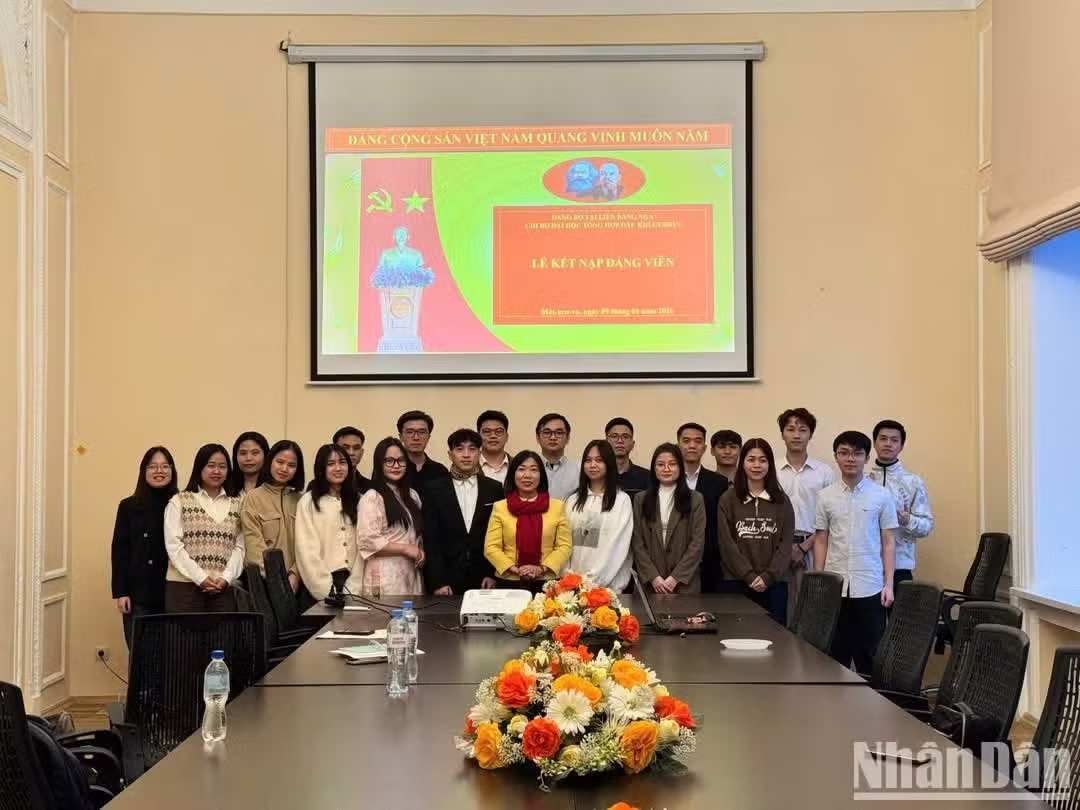
“Core members” far from home
In the Russian Federation, the Party organisation has an extensive network, with subordinate Party committees and affiliated cells in major cities such as Moscow, Yekaterinburg, Tyumen, and Kazan. Notably, students make up a large proportion of the Party cells. This shows that Party membership development among overseas students is becoming an increasingly substantive movement, closely linked to their study and personal development in their host country. These young Party members do not merely attend regular Party activities; they also directly participate in efforts to safeguard the Party’s ideological foundation in their daily lives.
First, the “Party–Youth Union–Student Association” model features close coordination, with the Party organisation serving as the core leadership body. In Russia, Party organisations within the overseas student community do not operate in isolation but maintain close ties with youth union and student association organisations. Party committees provide strategic direction, while youth union and student associations organise implementation, creating a unified approach from ideology to action.
This approach ensures that activities to safeguard the Party’s ideological foundation do not become “rigid” but are embedded in concrete initiatives, ranging from political commentary writing competitions, and academic discussions to online competitions on Party-related knowledge and activities supporting the homeland.
Second, the “academic platforms linked to political and ideological work” model turns learning and research into forums for safeguarding the Party. Rather than holding political study sessions in traditional formats, Party, youth union, and student association organisations in Russia have incorporated the safeguarding of the Party’s ideological foundation into academic competitions, conferences, scientific discussions, visits to historical revolutionary sites, and research projects. This approach helps improve professional expertise, strengthen political resolve, and produce work that is persuasive to the international academic community.
Third, the model of “renewing grassroots communications to bring official information to Vietnamese communities in host countries”. Its essence is to make ideological work a continuous part of everyday life, using political and social organisations as bridges to provide official information on the Party’s policies and the country’s achievements, while promptly rebutting distorted narratives. The model also connects domestic communications with external communications, as many organisations produce content in local languages to introduce Viet Nam and the Party’s renewal policy, thereby helping to shape the country’s image in the eyes of international friends.
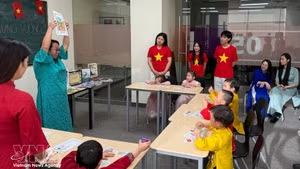
Communications have also expanded significantly as overseas students have become “cultural ambassadors”, introducing the beauty of Viet Nam, its land, and its people to international friends. From food stalls and cultural performances to presentations on history and customs, as well as cross-cultural research projects, these activities all help foster goodwill, build consensus, and enhance Viet Nam’s standing internationally. This is also a way of safeguarding the ideological foundation at its roots.
Fourth, the model of “every Party member as a communicator” promotes the exemplary role of young Party members in the overseas student community. In addition to thematic meetings and the dissemination of directives and resolutions, Party cell committees assign specific tasks to individual members in their studies, personal development, and community activities. These include taking the initiative in learning and scientific research, actively participating in youth union and student association movements, helping new students and maintaining the image and conduct expected of Party members far from home. Such everyday examples naturally attract others and encourage them to strive for membership, helping foster the right motivation for joining the Party.
This model plays a highly important role in ideological work, helping transform efforts that were once spontaneous into conscious and voluntary action. Rather than merely engaging in “empty propaganda”, young Party members have become living examples. When a Vietnamese student in Russia sees a fellow student who studies and participates in activities alongside them admitted to the Party and genuinely mature as a result, trust and motivation develop naturally, in a more approachable and sustainable way than through any theoretical lecture. This is the effectiveness of “communicating through action” and “setting an example in everyday life” — a method of political and ideological education whose influence spreads quietly but powerfully.
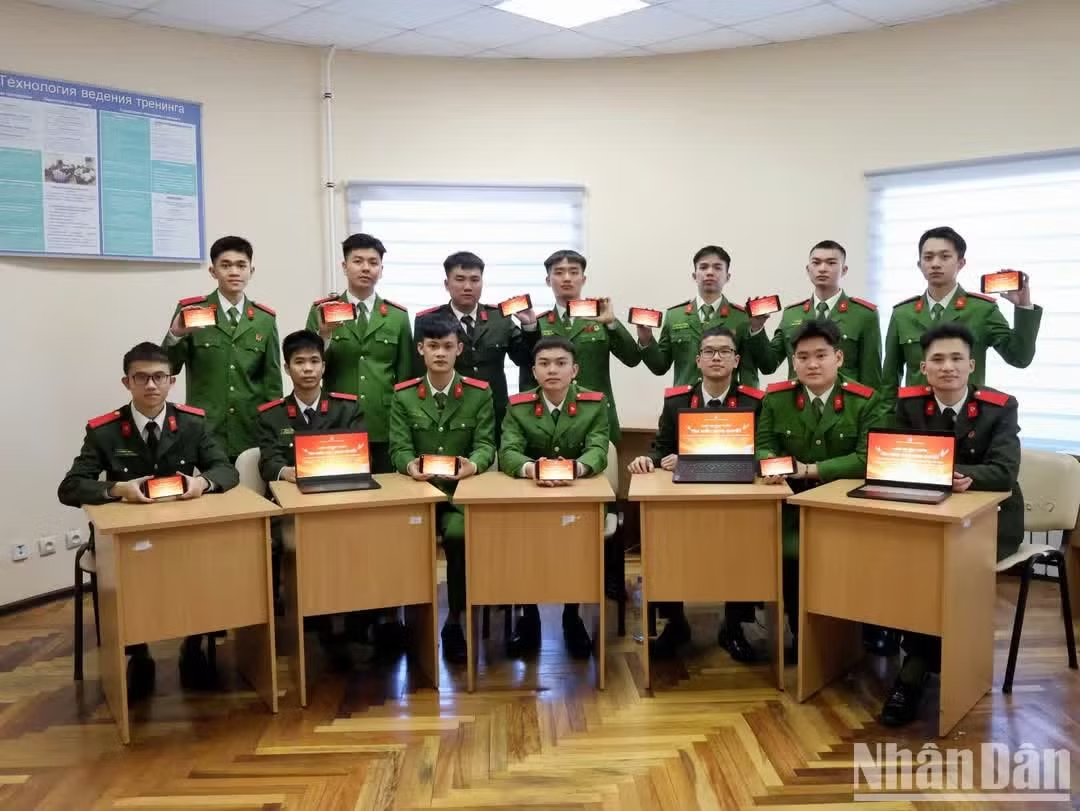
Alongside these positive examples, practical experience in Russia also reveals challenges that must be considered when expanding any model.
First, geographical and organisational challenges. Russia has a vast territory spanning 11 time zones. Vietnamese students at universities are spread across cities that are far apart. This creates an urgent need for flexible online activities suited to practical circumstances, while highlighting the value of local leaders — Party members and youth union and student association officials in individual cities and universities — who can maintain connections, monitor developments, and guide activities at grassroots level, becoming the Party Committee’s “extended arms” in ideological work. In addition, internet access and some connections in Russia are restricted at certain times, creating considerable difficulties for learning, information exchange, and the implementation of tasks passed down from higher-level bodies to grassroots organisations.
Second, pressure from academic commitments and financial constraints. Vietnamese students in Russia must devote most of their time to study and research, and many also take part-time jobs to cover their living expenses. As a result, they have less time and energy to devote to ideological work. This situation can also lead some students to adopt a “stand aside” attitude if ideological content is not designed to suit their pace of life and immediate concerns.
Third, differences in the political and cultural environment. Living in a country with a political system and information environment different from those of Viet Nam, overseas students must maintain their political resolve while ensuring that their activities comply with the host country’s laws. These challenges are compounded by complex and volatile international developments, particularly the ongoing and unpredictable escalation of the conflict in Ukraine.
Experience in Russia shows that legitimacy and support from diplomatic missions are key to overcoming these difficulties. Ideological activities organised under the auspices of the Party Committee, the Embassy and the Consulate General both ensure compliance with host-country law and reassure students. Meanwhile, maintaining official information channels and providing timely guidance on public opinion are effective ways to strengthen the political resolve of young people far from home.
Solutions to promote the role of overseas Vietnamese students as a core force
Based on an analysis of practical experience and lessons learned, the following groups of solutions need to be implemented in a coordinated manner to ensure that Vietnamese students studying abroad truly become a core force on the ideological front overseas.
Solutions to build a firm ideological foundation for Vietnamese students studying abroad
First, equip students with an “ideological compass” before they go abroad. Political education for pupils and students preparing to study overseas needs to be renewed, with a practical focus on the theoretical foundations of Marxism-Leninism, Ho Chi Minh Thought, and the Party’s policies, with links to specific situations that students may encounter abroad. The aim is to enable learners to distinguish right from wrong and truth from falsehood when confronted with erroneous arguments, rather than simply memorising abstract theory.
Second, develop scientific critical thinking. Students studying abroad need to be equipped with essential skills for navigating a diverse information environment, helping them avoid being swept up in conflicting currents of opinion. At the same time, they should receive training in scientific critical thinking.
Third, nurture national pride grounded in knowledge and practical experience. Students studying abroad need to be provided with systematic and up-to-date information on the country's achievements in renewal across the economic, political, and foreign affairs sectors. With a clear understanding of the reality in Viet Nam, they will be better able to identify and counter arguments that deny the country's achievements, incite division, and foster disillusionment.
Solutions to organise, connect with, and support Vietnamese students studying abroad
First, strengthen the role of Party organisations, the Ho Chi Minh Communist Youth Union and student associations in host countries. These organisations should not merely serve as venues for regular meetings but should also become official information channels and spaces for Vietnamese culture within the wider international environment. Online meetings on developments in Viet Nam and policy discussion forums should be held regularly to help students keep abreast of the Party's policies and equip them with the tools to counter misinformation.
Second, further promote and strengthen the closely coordinated Party-Youth Union-Student Association model. Lessons from the Russian Federation demonstrate the effectiveness of a model in which Party committees provide guidance on content while youth unions and student associations organise implementation, ensuring consistency between ideology and action. This approach should be expanded, making ideological work a regular feature of concrete activities such as political essay competitions, academic discussions, and activities promoting ties with the homeland.
Third, establish a local network of key figures. Given that Vietnamese students are dispersed across numerous cities and universities, core Party members along with youth union and student association officials in each locality should be identified to act as an extension of Party committees. They should be responsible for maintaining connections, keeping abreast of developments and guiding activities at the grassroots level. At the same time, online activities should be organised flexibly to accommodate the geographical conditions and limited internet connectivity in some areas.
Fourth, ensure legitimacy and strengthen support from diplomatic representative agencies. Experience in Russia shows that ideological activities organised under the auspices of Party committees, embassies, and consulates general both ensure compliance with host-country laws and provide reassurance to students. These channels of coordination should be maintained and expanded, alongside the establishment of an effective two-way information exchange mechanism between diplomatic representative agencies and the student community.
Solutions to renew the content and formats of ideological activities
First, link the defence of the Party's ideological foundations with academic and professional activities. Rather than organising traditional political study sessions, ideological content should be incorporated into academic competitions, scientific conferences, research projects, and visits to historical sites associated with the revolution. This approach would enhance professional competence, strengthen political resolve, and produce work that is highly persuasive within the international academic community.
Second, tailor content to students' lifestyles and immediate concerns. In practice, many students must devote the majority of their time to studying and part-time work, which can lead them to feel disengaged if ideological content is not relevant to their interests and needs. The approach should shift from “propaganda” to “accompaniment and support”, integrating ideological content into academic assistance, career networking, and the sharing of life experiences.
Third, step up communication efforts and promote students' role as “cultural ambassadors”. Students should be encouraged to develop content introducing Viet Nam, the Party's renewal policy, and the country's achievements through academic activities and at international forums, conferences, and festivals. Cultural and artistic exchanges, food events, and sporting activities should also be promoted as a way of defending the ideological foundations at their roots, fostering goodwill, and enhancing Viet Nam's standing.
Solutions to promote the exemplary role of young Party members
First, translate the requirement to set an example into concrete actions and tangible results. General Secretary and President To Lam has stressed the need to “set an example through work results and effectiveness” and to “reflect on oneself and make self-corrections”. For young Party members abroad, setting an example should be demonstrated through outstanding performance in their studies and scientific research, active participation in youth union and student association activities, proactive support for new students adapting to their surroundings, and the maintenance of proper conduct while living far from home. Party cell committees should assign clear responsibilities linked to specific assessment criteria, ensuring that each member understands their responsibilities in even the smallest actions.
Second, harness young Party members' technological advantages in cyberspace. Each member should be encouraged to become a positive communication channel, sharing official information on the Party's policies and the country's achievements, promptly countering erroneous arguments with evidence-based reasoning and a civil attitude, and promoting a positive image of their homeland among international friends. Support mechanisms should be established to provide reference materials and content guidance so that young Party members do not have to face the “information battle” alone.
Third, recognise and honour achievements promptly to amplify the impact of exemplary conduct. When students see their peers admitted to the Party and genuinely developing as individuals, their trust and motivation to strive for similar goals will emerge more naturally and sustainably than through any theoretical lecture. Young Party members who excel in their studies, community activities, and ideological struggle should be commended. Forums should be organised for them to share their experiences and inspire others, turning the emulation of exemplary young Party members into an intrinsic motivation within the student community.
Fourth, setting an example can carry real weight only when young Party members genuinely believe in the ideals they pursue and possess the ability to identify and analyse political and ideological issues. Particular attention should be paid to thoroughly studying and implementing the Resolution of the 14th National Party Congress and the Resolution of the 13th National Congress of the Ho Chi Minh Communist Youth Union.
For young Party members abroad, studying and implementing these resolutions cannot be conducted as a mere administrative exercise. Instead, it must reflect the specific circumstances of students studying overseas through online thematic sessions, scientific discussions that combine the resolutions' content with professional expertise, and the provision of systematic materials for independent study.
At the same time, scientific critical thinking skills should be developed to help young Party members remain clear-headed when faced with conflicting information, resist distortions, and turn the resolutions' content into persuasive arguments when engaging in dialogue with international friends.
Solutions to strengthen inter-agency coordination and mobilise community resources
First, strengthen coordination among agencies across the political system. Protecting the Party's ideological foundations among students studying abroad requires coordinated participation by the Party Central Committee’s Commission for Information and Education, the Ministry of Foreign Affairs (State Committee for Overseas Vietnamese), the Ministry of Education and Training, the Central Committee of the Ho Chi Minh Communist Youth Union, the Central Committee of the Viet Nam National Union of Students, and diplomatic representative agencies. A regular coordination mechanism should be established to avoid overlapping responsibilities and ensure consistent and timely information.
Second, mobilise the intellectual resources of the overseas Vietnamese community and expert networks. In the spirit of Resolution No. 23-NQ/TW, overseas Vietnamese constitute an “important strategic resource”. Students studying abroad should be connected with overseas Vietnamese intellectuals, experts, and entrepreneurs in their host countries to create opportunities for learning, career guidance, and the sharing of life and study experiences, while providing the younger generation with reliable ideological and intellectual support.
Third, establish a dedicated database and official information channel for students studying abroad. A centralised information platform should be developed and regularly updated with the Party's and State's policies on students studying abroad and Vietnamese communities overseas. It should also provide accessible and systematic tools and reference materials for countering erroneous arguments. The channel should be designed to suit students' social media habits and foreign-language proficiency in each locality.
These groups of solutions need to be implemented in a coordinated manner and adapted flexibly to the specific circumstances of each locality, guided by the overarching principle of putting students at the centre and transforming them from passive “targets” into active “participants”. This requires closely combining efforts to build a firm ideological foundation with the creation of a substantive and engaging environment for activities, while ensuring legitimate support from diplomatic representative agencies so that students can participate and contribute with confidence.
As the ideological struggle is no longer confined by territorial boundaries, Vietnamese students studying abroad in general, and those in Russia in particular, have become and continue to become an important “core force” in defending the Party's ideological foundations from beyond the country's borders.
Armed with a firm ideological foundation fostered through education, solid support from Party organisations, youth unions, and student associations, a strong voice through the media, and lasting ties maintained after graduation, students studying abroad will form a robust line of defence and remain steadfast in their faith in the path chosen by our Party and people.
To turn this potential into reality, the Party, State, and Government of Viet Nam must continue to place their trust in these students, stand alongside them, and take decisive action, ensuring that each student studying abroad is not only an excellent learner but also a steadfast soldier who brings honour to Vietnamese intellect on the international stage and holds the ideological front firm in the face of the challenges of our time. We can confidently affirm that, wherever they may be, Viet Nam's younger generation will always remain an important part of the cause of building and defending the Party, safeguarding the Fatherland, and protecting the socialist regime.