Politburo Resolution No. 23-NQ/TW (dated August 2, 2026) on work concerning overseas Vietnamese in the new situation opens a new approach by defining overseas Vietnamese not only as an integral part of the Vietnamese national community but also as one of the country’s important strategic resources.
More than 6.5 million Vietnamese people are currently living in more than 130 countries and territories. Behind this figure lies not only a source of remittances but also a major resource of knowledge, technology, investment capital, business networks, international relations, and the capacity to connect Viet Nam with the world.
How can these resources be substantively connected with the country’s development challenges? What mechanisms are needed so that a Vietnamese scientist, expert or entrepreneur, wherever they may be, can participate in Viet Nam’s development journey?
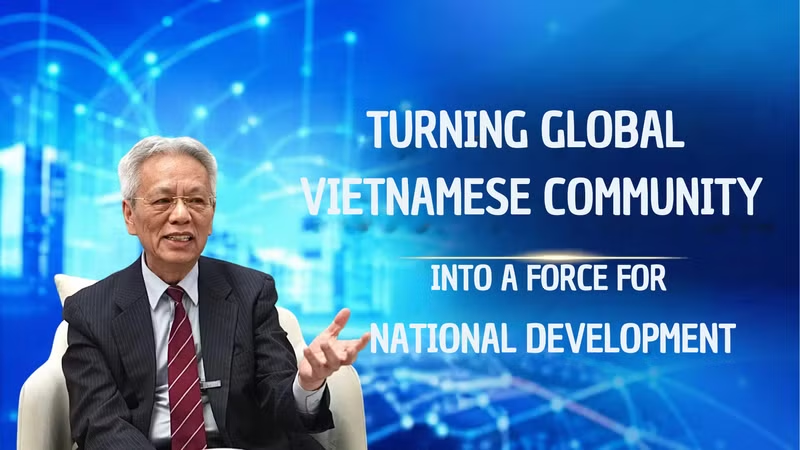
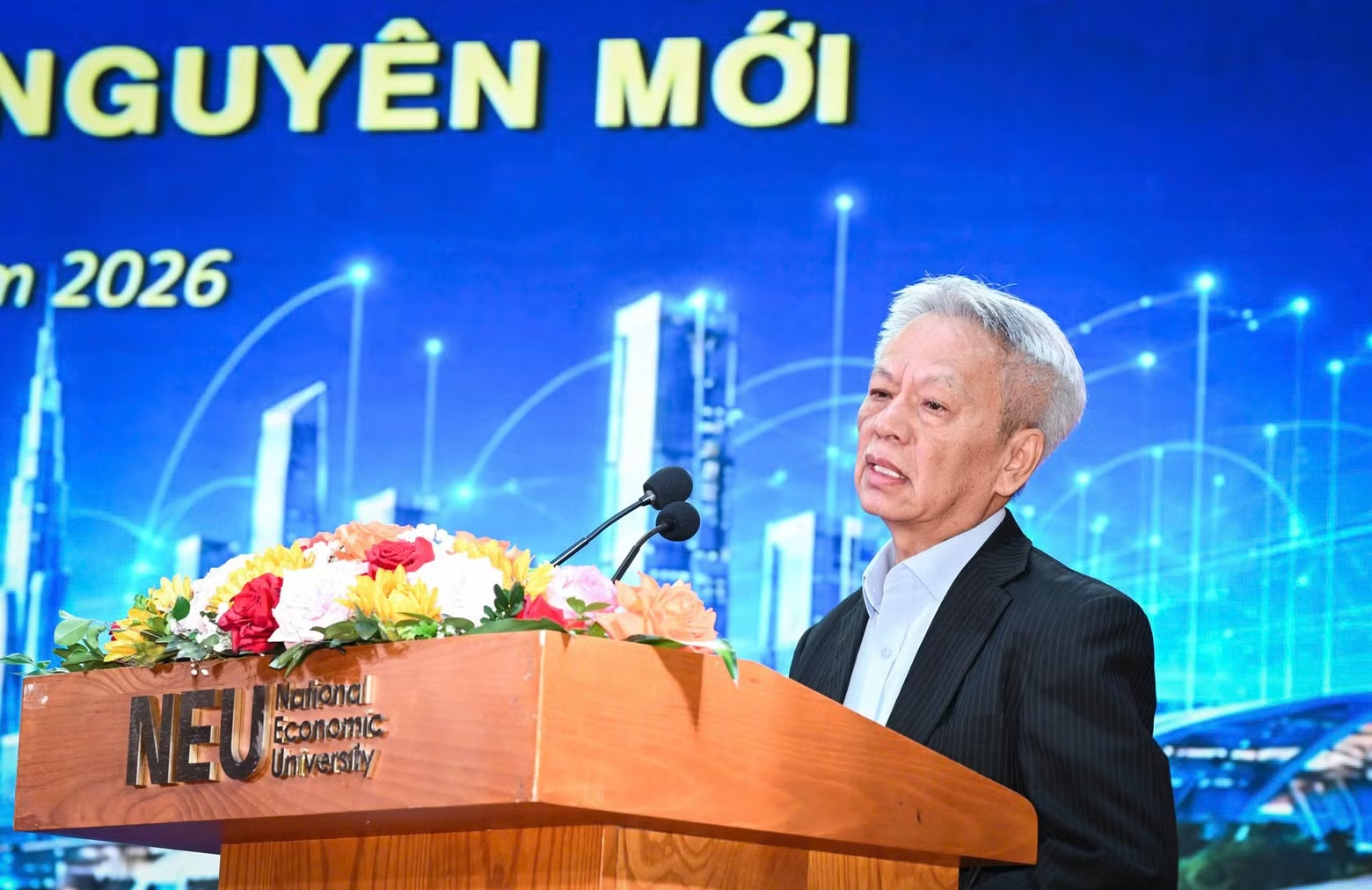
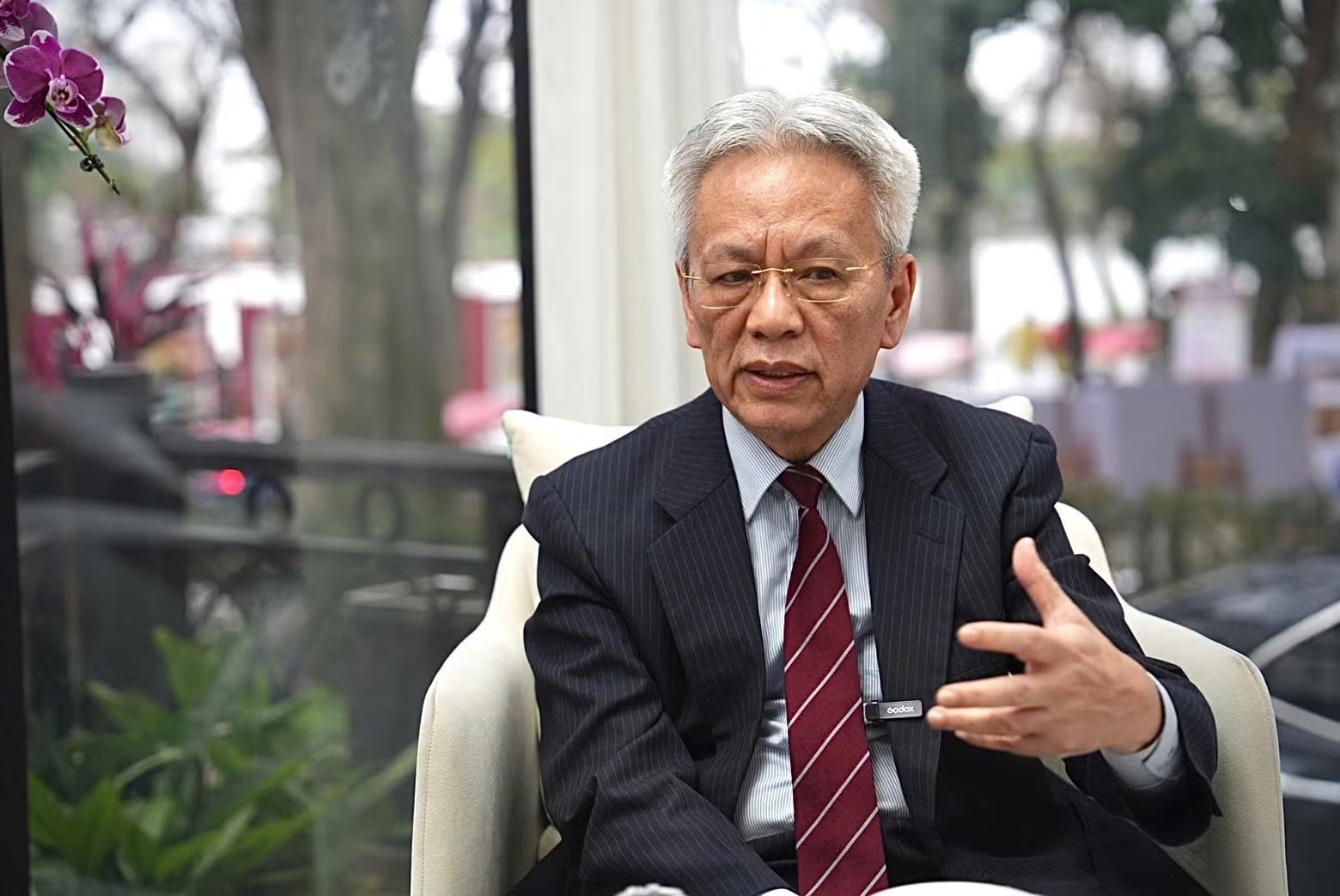
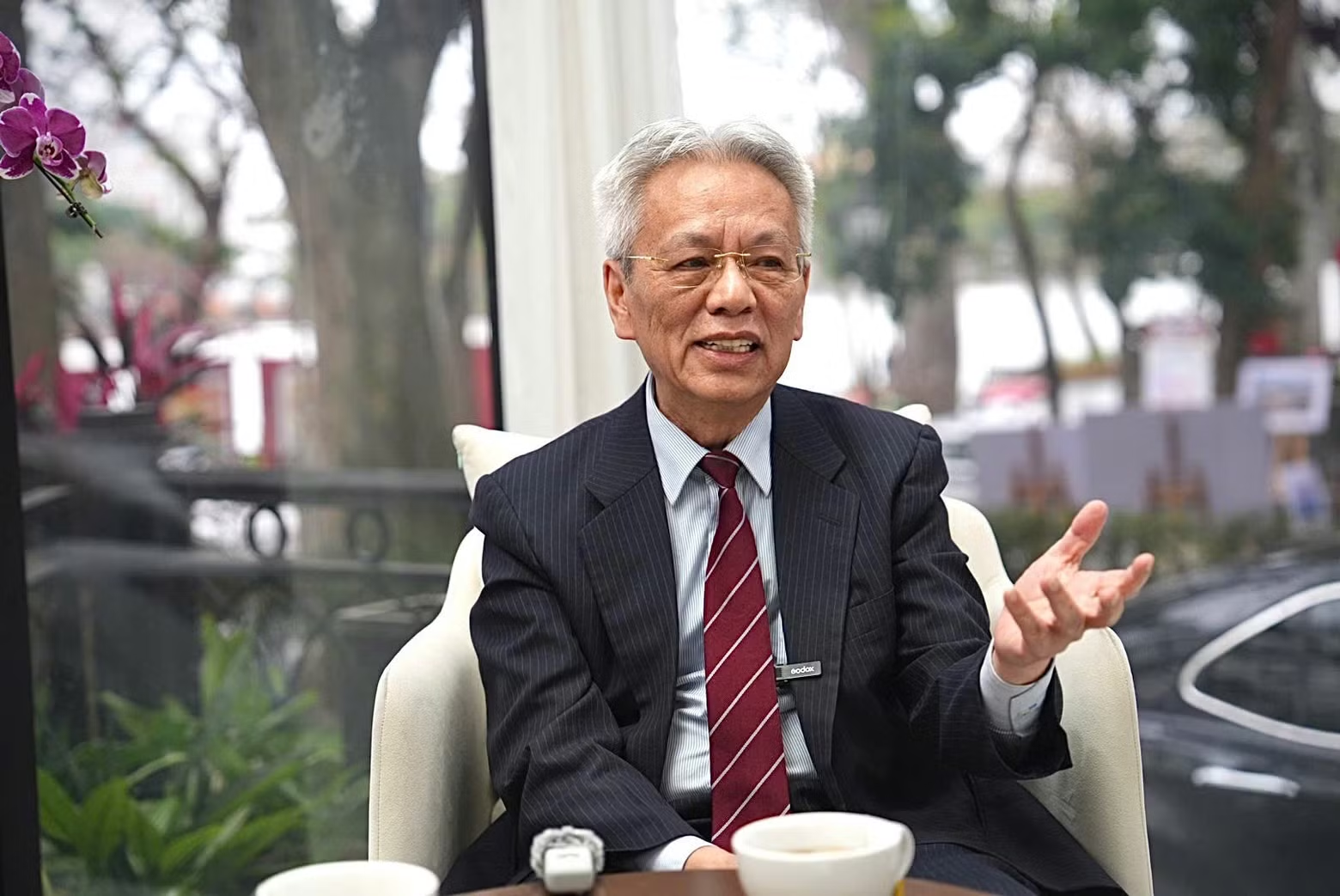
Speaking to a reporter from Nhan Dan Newspaper, Dr. Nguyen Si Dung, former Deputy Chairman of the Office of the National Assembly, said that the time had come to take another step forward in thinking: from “attracting overseas Vietnamese to contribute” to creating a global Vietnamese development community.
Integrating global Vietnamese resources into national development capacity
Q: Resolution 23 identifies Vietnamese people overseas as an integral part of the nation and one of the country’s important strategic resources. In your view, what significance does the resource of more than 6 million Vietnamese people around the world have for the journey towards realising the goal of making Viet Nam a developed, high-income country by 2045?
A: I believe that a very new and strategically significant point of Resolution 23 is that we are broadening our understanding of national resources. Viet Nam’s strength does not lie solely within Viet Nam’s borders but is also present wherever Vietnamese people live, work, create, and aspire to contribute to the country.
Currently, the Vietnamese community overseas numbers more than 6.5 million people in more than 130 countries and territories. Notably, the proportion of experts, intellectuals, scientists, entrepreneurs, and highly skilled workers is increasing.
This is a special resource because these people simultaneously belong to two spaces: the Vietnamese space and the global space. They understand Viet Nam but also understand the world; they have affection for their homeland while also possessing knowledge, technology, networks, and experience accumulated in leading centres of development.
Therefore, the contributions of Vietnamese people overseas should not be viewed solely through the lens of remittances, although remittances alone reached approximately 17.7 billion USD in 2025. More valuable resources also include knowledge, technology, investment capital, business networks, international relations, and connectivity.
To become a developed, high-income country by 2045, Viet Nam must mobilise the best resources of the nation, regardless of where those resources are located.
In my view, therefore, we need to take another step forward in our thinking: from “attracting overseas Vietnamese to contribute” to “creating a global Vietnamese development community”. In that case, more than 6.5 million Vietnamese people overseas would not merely look towards their homeland but could join the more than 100 million Vietnamese people at home to form a common network of knowledge, aspiration, and action.
Ultimately, the 2045 aspiration is not merely the aspiration of Viet Nam within its national territory. It must be a shared aspiration of Vietnamese people around the world.
Q: In an era of deep integration, national strength lies not only in domestic resources but also in the ability to connect global knowledge, technology, capital, and networks. In your view, what does Viet Nam need to do to make the Vietnamese community overseas a substantive part of national strength?
A: In my view, the most important thing is to shift from the thinking of “attracting resources from overseas Vietnamese” to “integrating global Vietnamese resources into national development capacity”. These are two very different approaches.
For a long time, we have often thought about inviting experts back to the country, attracting remittances or calling on entrepreneurs to invest. These things are still necessary, but they are not enough.
In the digital age, a Vietnamese scientist in Boston, a semiconductor engineer in Taiwan (China), an artificial intelligence expert in Paris, or an entrepreneur in Singapore does not necessarily have to return to live in Viet Nam permanently in order to contribute to the country. What matters is having mechanisms that enable them to participate in addressing specific development challenges facing Viet Nam.
Resolution 23 has pointed in the right direction by raising the issue of building sustainable networks and ecosystems connecting Vietnamese experts, intellectuals, scientists, entrepreneurs, artists, and young people around the world. In my view, the next step is to turn these networks into infrastructure for connecting national intellectual resources.
Viet Nam needs to identify strategic challenges, such as semiconductors, artificial intelligence, biotechnology, new energy, international finance, and urban governance, and then connect the most capable Vietnamese people around the world with each specific challenge. Resolution 23 has also clearly identified priority technology fields and called for conditions to be created for flexible contributions, including remotely.
But more fundamentally, if we want Vietnamese people around the world to remain closely connected with the country, we need not only preferential policies but also trust, respect, and genuine opportunities to contribute.
I think the principle should be very simple: wherever a Vietnamese person may be, if they have talent and the aspiration to contribute to the country, there must be a door through which they can enter Viet Nam’s development journey. When this is achieved, geographical borders will no longer be the borders of national resources.
Resolution 23 has pointed in the right direction by raising the issue of building sustainable networks and ecosystems connecting Vietnamese experts, intellectuals, scientists, entrepreneurs, artists, and young people around the world. In my view, the next step is to turn these networks into infrastructure for connecting national intellectual resources.
Dr. Nguyen Si Dung
Q: Resolution 23 and Resolution 57 both place people, knowledge, science, technology, and innovation in important positions within the new development model. In your view, how can we connect global Vietnamese intellectuals with the country’s science, technology, and innovation development goals?
A: In my view, Resolutions 23 and 57 converge on a very important point: if we want to develop through science, technology, and innovation, we must first develop through people and knowledge.
Resolution 57 also sets out the requirement to build and connect networks of domestic and international experts and scientists, while establishing special mechanisms to attract highly qualified Vietnamese people overseas.
However, for this policy to be put into practice, I believe the approach needs to change. We should not begin with the question: “How many Vietnamese intellectuals overseas can we mobilise?” Instead, we should begin by asking: “What strategic challenges does Viet Nam need to address?”
For example, if the country identifies semiconductors, artificial intelligence, biotechnology, new energy, advanced materials, or quantum technology as areas requiring breakthroughs, then for each field, specific tasks must be identified, followed by a search for the most capable Vietnamese people around the world who can participate in addressing them.
Resolution 57 itself places a focus on strategic technologies and calls for the maximum promotion of Vietnamese potential and intellect, combined with the absorption and mastery of the world’s advanced scientific and technological achievements.
More importantly, we should not simply “invite experts back to the country”. We need to build a global Vietnamese innovation network in which a scientist can be based in Silicon Valley, Tokyo, or Berlin while still participating in a national research programme, mentoring a young research team, transferring technology, or connecting Vietnamese businesses with leading technology ecosystems.
Thus, what we need is not only a policy to attract talent, but also an institutional infrastructure that enables Vietnamese intellect, wherever it is, to participate in creating value for Viet Nam.
If we can achieve this, Viet Nam will have a major advantage: it does not necessarily need to possess all the world’s intellectual resources, but it must have the capacity to connect the best Vietnamese minds around the world to solve the country’s development challenges.
From a shared heritage to co-creating the future
Q: From being a community primarily viewed in terms of maintaining ties and looking towards the homeland, Vietnamese people overseas are now being placed in the position of accompanying the country, co-creating and directly contributing to national development. In your view, what significance does this change have for the strength of national unity in the new period?
A: In my view, this is a highly significant shift in thinking about national unity. If, in the past, ties with compatriots overseas were often emphasised in terms of their sentiments towards the homeland, today we need to take another step: from sharing the same roots to sharing a common future.
Resolution 23 clearly reflects this spirit by defining Vietnamese people overseas as a special part of the great national unity bloc, while emphasising the promotion of common ground, the enhancement of national reconciliation, the elimination of prejudices, putting the past behind us, and looking towards the future.
In my view, this is a very important approach. Sustainable national unity does not mean that everyone must be the same, think alike, or share the same historical experiences.
Vietnamese people around the world may differ in their living circumstances, generations, viewpoints, and experiences. However, we can meet on a broader common ground: national interests and the aspiration for a peaceful, powerful, prosperous, civilised, and happy Viet Nam.
When compatriots overseas are viewed not merely as a target of mobilisation but as partners in accompanying the country and co-creating its future, the relationship between the country and overseas Vietnamese also changes. It is no longer merely a question of “what does the homeland need its compatriots to contribute?”, but also “what conditions can the country create so that all Vietnamese people can participate in building a shared future?”
Resolution 23 also sets out the requirement to facilitate the participation of Vietnamese people overseas in political, economic, and social life as well as their contributions to policymaking and development programmes.
I believe that national unity in the new period must be unity for development. The 2045 aspiration is precisely the common ground capable of bringing Vietnamese people everywhere together.
The past may have left differences behind; but Viet Nam’s future can bring us closer together. And co-creating the future is the highest form of connection.
Q: To realise the aspiration for Viet Nam in 2045, Viet Nam needs not only domestic resources but also a global network of connections. In your view, what role should external relations and international integration play in connecting global Vietnamese resources with the country’s development opportunities?
A: In my view, in the new period, external relations and international integration should be seen not only as a gateway for Viet Nam to reach the world but also as infrastructure for connecting the world’s best resources with Viet Nam’s development. Within this infrastructure, the Vietnamese community overseas holds a special position.
Resolution 59 identifies international integration as a strategic driving force, with the requirement to make the most of external resources to strengthen internal capacity and develop the country. Resolution 23, meanwhile, emphasises the role of Vietnamese people overseas as a bridge of friendship and cooperation between Viet Nam and the world, connecting national strength with the strength of the times. These two orientations need to be implemented within a unified architecture.
In my view, every Vietnamese embassy and representative mission overseas should not only conduct diplomacy in the traditional sense but increasingly become a “development connection hub”: identifying talented Vietnamese people, connecting entrepreneurs and investors, seeking technologies, identifying market opportunities, and linking these resources with ministries, sectors, localities, universities, and domestic businesses.
Conversely, the global Vietnamese community can also become a very special part of the country’s external relations capacity. An entrepreneur who understands the local market, a professor with prestige in scientific circles, or an expert working for a major technology corporation can all serve as natural “development bridges” for Viet Nam.
Thus, a virtuous cycle needs to be established: external relations open space – overseas Vietnamese create connections – domestic actors absorb resources – and national capacity is enhanced.
The 2045 aspiration requires Viet Nam to know how to combine national strength with the strength of the times. And more than 6 million Vietnamese people around the world are one of the most natural bridges for connecting these two sources of strength.
The 2045 aspiration requires Viet Nam to know how to combine national strength with the strength of the times. And the more than 6 million overseas Vietnamese people around the world are one of the most natural bridges for connecting these two sources of strength.
Dr. Nguyen Si Dung
Q: If you look back from 2045, how would you like the overseas Vietnamese community to be remembered in the story of Viet Nam’s rise and prosperity? What needs to be done from today so that the aspiration for Viet Nam in 2045 truly becomes a shared aspiration of Vietnamese people at home and abroad?
A: Looking back from 2045, I hope history will not say that overseas Vietnamese people were merely those who “looked towards” and “contributed to” the country’s development. I hope history will recognise them as people who jointly participated in creating Viet Nam’s development miracle.
At that time, the success of a Vietnamese scientist in the US, an entrepreneur in Europe, an engineer in Japan, or a young person of Vietnamese origin in Australia, if contributing to making Viet Nam stronger, will all be part of the Vietnamese story.
The strength of a nation in the 21st century is measured not only by what that nation possesses within its territory but also by its ability to connect and harness the knowledge, talent and standing of people who share the same roots around the world.
To achieve this, what needs to be done immediately today, in my view, is first and foremost to build trust. Every Vietnamese person overseas must feel that the country truly values them, listens to them, and gives them genuine opportunities to participate.
Resolution 23 has opened a highly valuable spirit: promoting common ground, enhancing national reconciliation, putting the past behind us, and looking towards the future.
Next comes creating mechanisms for participation. From scientists and entrepreneurs to young intellectuals, everyone with the capacity and desire to contribute needs to find a door through which they can connect with the country’s development challenges.
But at the deepest level, what matters is creating a shared dream. The goal of becoming a developed, high-income country by 2045 was identified by the 14th National Party Congress as a national vision. This aspiration will only truly become a great force when more than 100 million Vietnamese people at home and more than 6.5 million Vietnamese people overseas can all say: “That is also the future I want to help create.”
I believe that by 2045, the greatest source of pride will not only be that Viet Nam has become more prosperous but that Vietnamese people around the world have together created that prosperity.
Q: Thank you!