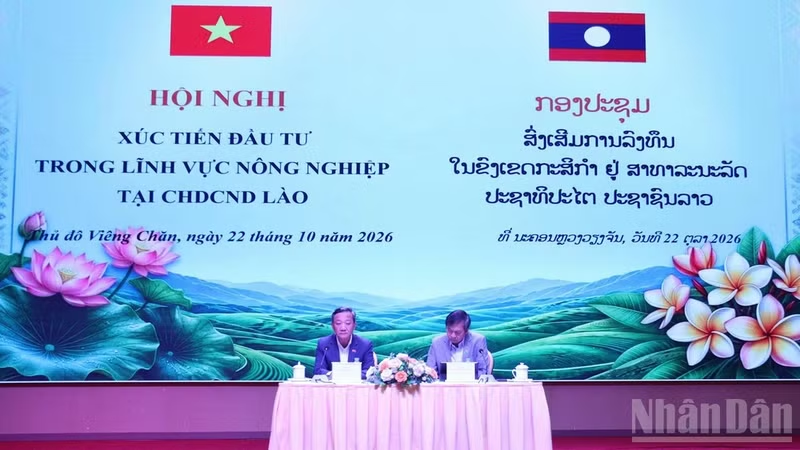
The event was organised by the Vietnamese Embassy in Laos in coordination with the Lao Ministry of Agriculture and Environment, the Laos-Viet Nam Cooperation Committee, the Lao Investment Promotion and Management Committee and the Association of Vietnamese Investors in Laos (AVILA).
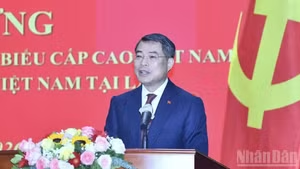
Co-chaired by Vietnamese Ambassador to Laos Nguyen Minh Tam and Lao Deputy Minister of Agriculture and Environment Xaynakhon Inthavong, the conference attracted more than 250 participants, including Lao National Assembly Vice President Kongkeo Xaysongkham, officials from central agencies and 11 Lao provinces, and representatives of businesses from both countries.
In his opening remarks, Tam said agriculture directly supports livelihoods, rural development and Laos’s production capacity, while the two countries have complementary strengths. Laos has abundant land and favourable natural conditions, while Viet Nam offers experience in production, scientific and technological application, crop varieties, processing and access to international markets.
He highlighted Viet Nam’s agricultural achievements and urged Vietnamese investors in Laos to honour their commitments, comply with local laws, protect the environment, train local workers and link business performance with social welfare.
Xaynakhon said the Lao Government remains committed to attracting investment in clean agriculture linked with processing industries to help build an independent and self-reliant economy. Laos is continuing to improve its legal framework for investors, including through legislation on cultivation and investment promotion and revisions to land leasing regulations and the Land Law.
He also acknowledged the contributions of 208 Vietnamese businesses investing in crop production, forestry and livestock farming in Laos, with total registered capital of about 1.4 billion USD.
Representatives of the Laos-Viet Nam Cooperation Committee outlined priorities for stronger economic connectivity, particularly in transport infrastructure and energy, as the two countries work towards the target of 10 billion USD in two-way trade by 2030. Lao officials also briefed participants on investment incentives, licensing procedures and land policies.
Representatives of major Vietnamese businesses, including the Viet Nam Rubber Group, Vinamilk and Greenfeed, shared experience and plans to expand cultivation and livestock production. They also raised challenges involving land clearance and compensation, overlapping land areas, delays in land-use rights certificates and tax incentives.
At a discussion within the conference, Lao officials directly addressed businesses’ concerns. Both sides agreed to strengthen coordination and establish closer information-sharing channels to resolve outstanding issues and help investors operate with confidence over the long term.
In his closing remarks, Xaynakhon called on Lao agencies and local authorities to reduce unnecessary administrative procedures and apply the principle of “three openings”: opening doors, removing barriers and opening minds. He also urged businesses to follow the principle of “three shared commitments” - thinking, working and benefiting together with local communities - to build consensus and support sustainable development.