The Politburo's Resolution No. 23-NQ/TW on overseas Vietnamese affairs has placed increasing importance on the intellectual resources of the global Vietnamese community in the country's development process.
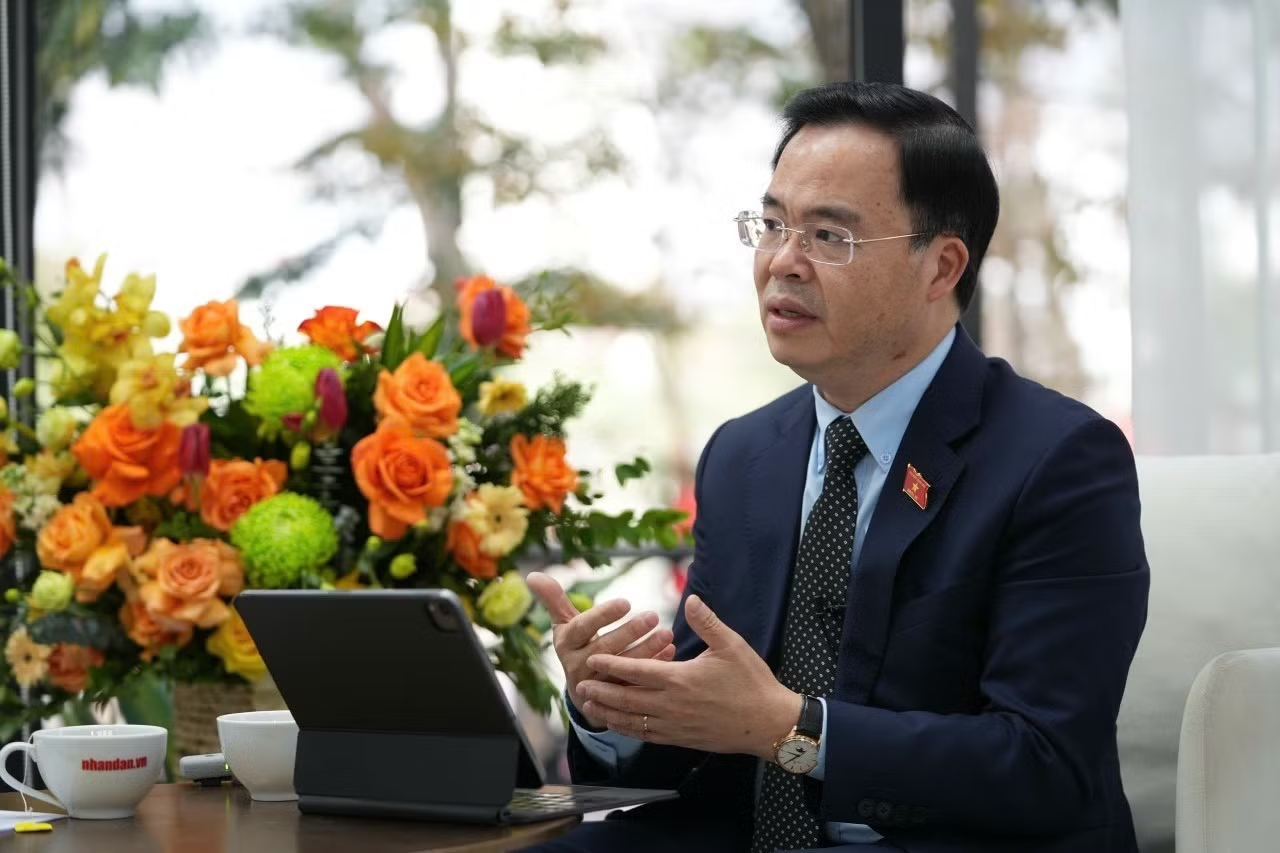
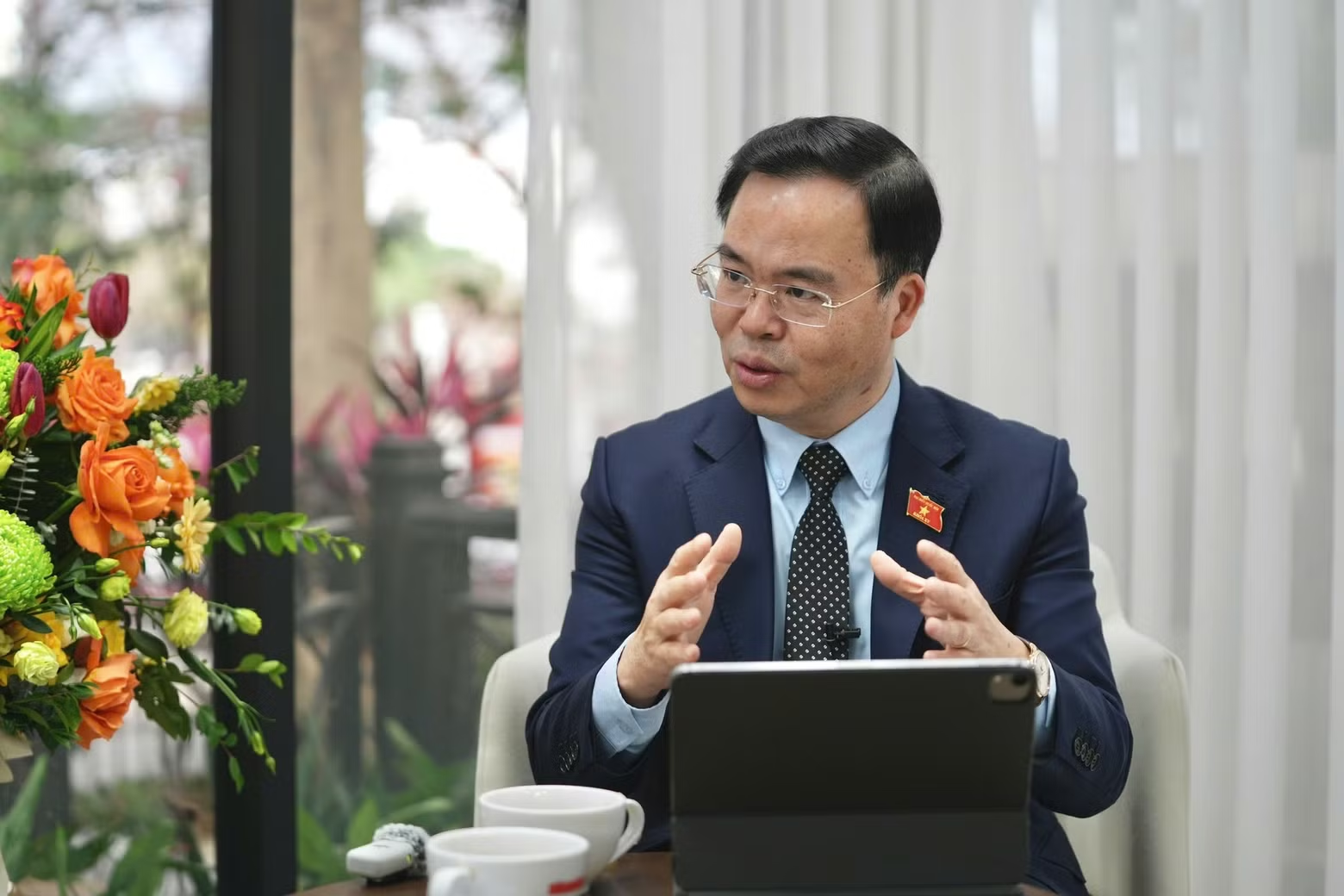
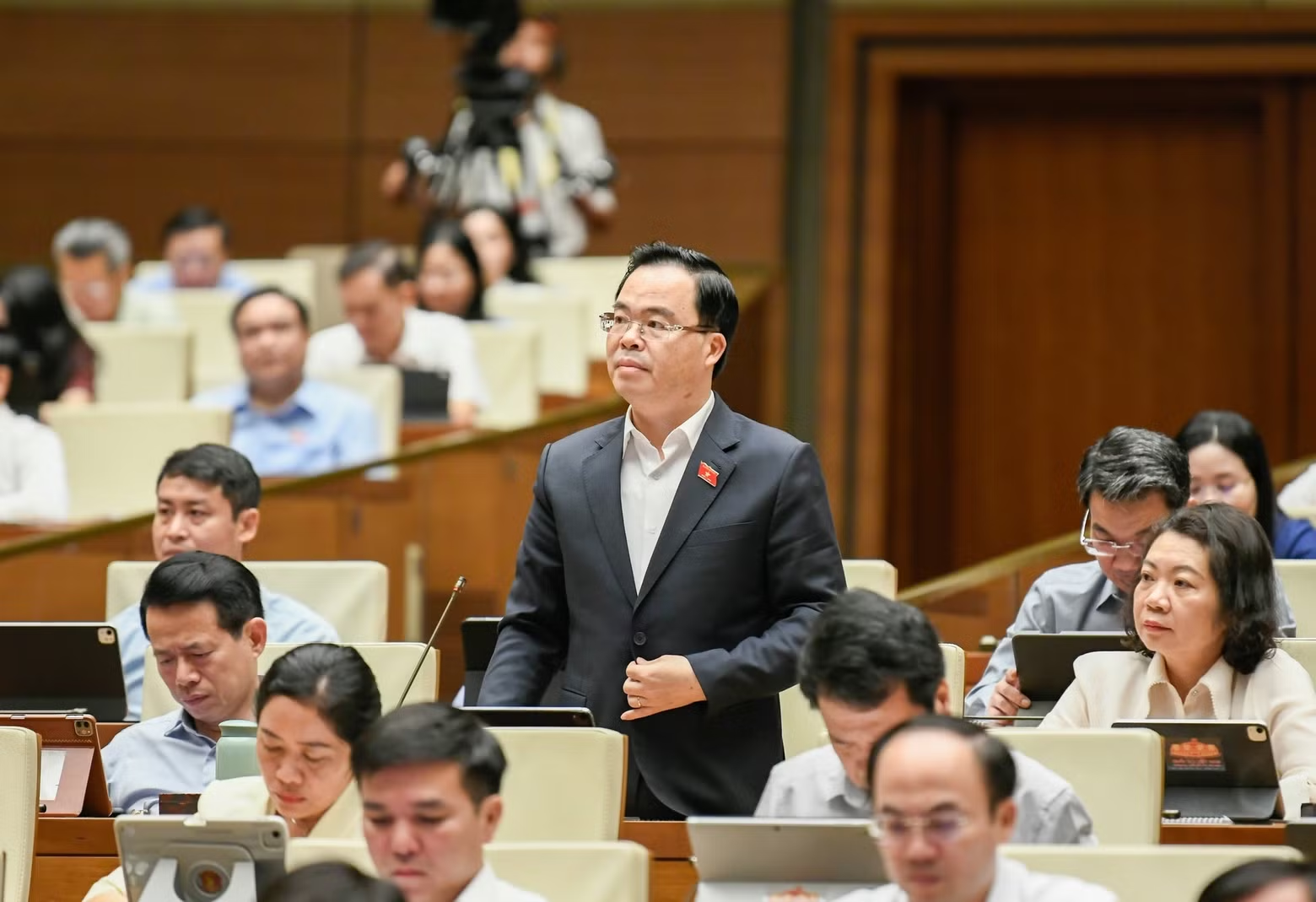
Against the backdrop of rapid advances in artificial intelligence (AI), semiconductors and other strategic technologies, this requirement has become even more urgent. According to National Assembly (NA) Deputy Tran Van Khai, Deputy Chairman of the NA’s Committee on Science, Technology and Environment, Viet Nam needs to make a decisive shift from the approach of "attracting experts back to the country" towards establishing mechanisms to mobilise Vietnamese intellectual resources worldwide, even when experts do not return to work in Viet Nam on a long-term basis. Most importantly, the country must identify challenges of sufficient scale, establish sufficiently flexible mechanisms and create an attractive environment in which knowledge can be transformed into technology, products and Viet Nam's endogenous capabilities.
Resolution No. 23 opens new opportunities to mobilise global Vietnamese intellectual resources
Q: With AI, semiconductors and emerging technologies advancing at an unprecedented pace, what breakthrough mechanisms does Viet Nam need to attract overseas Vietnamese experts to participate in domestic research and development (R&D) programmes, even if they do not return to work in the country permanently?
A: The digital era allows us to challenge a long-standing assumption: that contributing to one's homeland requires returning to live there. In artificial intelligence, semiconductors and quantum technology, the greatest value an expert brings lies in ideas, algorithms, designs and professional networks, all of which can be transferred across borders. I therefore support a shift in thinking from "attracting experts back to Viet Nam" to "mobilising Vietnamese intellectual resources worldwide". What needs to return is knowledge, not necessarily the people themselves.
To achieve this, I propose five breakthrough mechanisms.
First, a National Challenge Bank should be established. A single digital platform should publicly list all 20 major national challenges, 30 groups of strategic technology products, and the technological needs of ministries, localities and enterprises. Each challenge should clearly specify its objectives, budget, project owner, acceptance criteria and deadline, enabling experts anywhere in the world to register their participation. Without a marketplace, there can be no transactions.
Second, Viet Nam should introduce the position of non-resident expert and a co-leadership mechanism. This would allow overseas Vietnamese to jointly lead scientific research projects funded by the state budget without being required to reside permanently in Viet Nam or hold a position on the public payroll. Decree No. 249/2025/ND-CP has already introduced significant flexibility, including multiple-entry visas, temporary residence cards corresponding to working periods, recruitment into civil service and public employment positions, and appointments to leadership roles without necessarily meeting conventional requirements concerning age, personnel planning or political theory qualifications. What remains is to provide implementation guidance and demonstrate the willingness to make full use of these mechanisms.
Third, a financing mechanism based on technical milestones should be introduced. Funding should be allocated on the basis of final deliverables, with payments linked to agreed technical milestones rather than individual expenditure receipts. The mechanism should also recognise international consultancy rates and permit payments in foreign currencies. A preliminary review has already highlighted that existing expenditure norms do not reflect the actual costs of highly specialised intellectual labour. We cannot invite the world's leading experts to contribute and then compensate them according to the financial norms applied to small-scale research projects.
Fourth, Viet Nam should develop a "twin laboratory" model and a "technology shuttle" mechanism. Under this approach, one research team would be based overseas and another in Viet Nam, working on the same challenge and sharing a common data system. The teams would hold weekly online meetings and undertake reciprocal in-person exchanges lasting four to eight weeks each year. Their cooperation would follow a five-step process, from identifying and receiving technological needs to evaluation and wider application. This is the fastest way to bring knowledge home without requiring experts to abandon their existing careers.
Fifth, Viet Nam should establish a national one-stop service for experts. A single focal point should handle visas, work permits, taxation, insurance, money transfers, and the importation of research equipment and specimens, with clearly defined processing deadlines. This should be accompanied by a database of overseas Vietnamese experts and intellectuals, interconnected with the five existing innovation networks and approximately 50 associations of Vietnamese experts and intellectuals abroad.
These five mechanisms share a common philosophy: instead of asking, "When are you coming home?", we should ask, "Which of the country's challenges would you like to help solve?" The second question is much easier to answer and far more effective.
Q: In practice, financial incentives are only one factor in attracting scientific and technological talent. Equally important are the research environment, autonomy, resources and challenges of sufficient scale to enable experts to realise their full potential. In your view, how should Viet Nam reform its policies to create an environment attractive enough to draw the world's leading experts?
A: If Viet Nam competes solely on financial incentives, we will never win. We simply cannot offer higher salaries than the world's leading technology corporations. However, we can compete on something money cannot buy: the opportunity to make a meaningful contribution to our own country and to be recognised for that achievement.
To turn this advantage into reality, four major policy shifts are needed.
First, we must shift from providing upfront incentives to assigning major tasks and rewarding performance based on results. A preliminary review of the implementation of Resolution No. 57 concluded that the priority now is to "shift from upfront incentives to assigning major tasks, ensuring adequate research conditions, providing remuneration based on deliverables and results, and establishing mechanisms to retain talent". Offering an attractive salary package alongside a minor research project is the quickest way to lose talented people. By contrast, a challenge of national significance, accompanied by genuine decision-making authority, can persuade them to stay.
Second, we must grant genuine autonomy, not merely pay lip service to it. This means four specific rights: the freedom to choose research directions; the authority to recruit and determine remuneration for research collaborators; the flexibility to manage funding based on final deliverables; and the right to own and commercialise research outcomes. These rights must be accompanied by controlled experimentation mechanisms that accept research risks and provide exemptions from liability in cases of genuine, good-faith research failure.
At present, there is no clear legal framework allowing research projects to fail for legitimate reasons, leaving officials reluctant to take responsibility. If science is not allowed to make mistakes, it cannot achieve breakthroughs.
Third, investment in research infrastructure must reach a critical level. Viet Nam currently has 16 national key laboratories, four of which require comprehensive upgrading. Research infrastructure remains generally fragmented, while much of the equipment is outdated. No one will leave a modern laboratory overseas to return to work with obsolete equipment. The Central Steering Committee has called for the establishment of at least nine shared research infrastructure facilities and three real-world testing environments. These objectives must be achieved through concentrated investment, with facilities made accessible to enterprises on a rental basis.
Fourth, Viet Nam must develop a comprehensive living ecosystem for experts. The preliminary review highlighted that, in high-tech parks, social infrastructure, housing, services and amenities for experts have not developed in step with research and production infrastructure. A 45-year-old expert does not simply ask about laboratory facilities. They also want to know where their children will go to school and how their parents will receive medical care. Housing for experts, international schools, high-quality healthcare and visas for family members are also integral parts of science and technology policy.
Finally, there is the question of institutional culture. Researchers should be evaluated through independent peer review and academic integrity standards. We must end the excessive bureaucratisation of scientific research and respect the freedom to engage in academic debate. The Party General Secretary has called for "encouraging and protecting officials who dare to think, act and take responsibility for the common good". This principle must be fully extended to the scientific community.
In my view, talented individuals need three things: a challenge worthy of their abilities, an environment that does not hold them back, and genuine respect. Financial incentives are a necessary condition. These three factors are what make the difference.
Q: Resolution No. 23 emphasises the importance of strengthening the transfer of knowledge, technology and management expertise from overseas Vietnamese communities to Viet Nam. In your view, how can the intellectual resources and global networks of overseas Vietnamese be transformed into genuine technological capabilities for Viet Nam, enabling the country to gradually master and develop its own technologies rather than merely receiving and adopting technology transfers?
A: This is the central question of the entire strategy. Knowledge does not flow through pipelines; it flows through people. Technology transfer can only become a national capability when there are sufficiently qualified people in Viet Nam to absorb it, facilities in which to apply it, and ownership rights over the resulting outcomes.
Talented individuals need three things: a challenge worthy of their abilities, an environment that does not hold them back, and genuine respect. Financial incentives are a necessary condition. These three factors are what make the difference.
Dr Tran Van Khai
The reality presents a warning. During 2021–2025, Viet Nam signed 100 commitments on science and technology cooperation. In 2025 alone, 45 commitments were signed, followed by another 70 in the first six months of 2026. However, the preliminary review report frankly acknowledged that efforts to purchase, acquire and transfer advanced technologies had "yet to record any completed transactions", while technology linkages and transfers from the foreign direct investment (FDI) sector had "yet to produce any significant improvements". Signing numerous agreements but achieving limited tangible results is a problem that must be addressed.
I propose five solutions.
First, we should adopt the principle of "dual-team". Every overseas Vietnamese expert should work alongside and lead a strong domestic research team, with clearly defined targets: the number of engineers and postgraduate researchers trained to the required standards; the number of technical processes, designs and source codes transferred; and the number of jointly owned patents. Without a capable domestic team to absorb knowledge, that knowledge will leave when the expert departs.
Second, mandatory technology transfer provisions should be incorporated into all contracts. These should require not only the delivery of finished products but also design documentation, technological know-how, testing procedures, modification rights and training programmes.
For major FDI projects and international partnerships, progress should be measured through specific indicators: how many Vietnamese engineers have upgraded their skills, how many components have been designed by Vietnamese professionals, and the localisation rate measured by actual value added rather than assembly value.
Third, technology transfer must be linked to the domestic market. A country can only truly master a technology when it is put into practical use and commercialised. The mechanism under which the State acts as the first customer can serve as a powerful catalyst. Ho Chi Minh City has piloted the commercialisation of 54 technological products with investment exceeding 500 billion VND, of which non-state funding accounts for more than 50%. This model should be expanded.
Fourth, global networks must be transformed into institutional infrastructure. There are currently nearly 2,000 members in expert networks, five networks specialising in strategic technologies, and approximately 50 associations of Vietnamese intellectuals in countries around the world. A national database should be established and interconnected with the proposed National Challenge Bank, ensuring that cooperation no longer depends on personal relationships or a handful of conferences each year.
Fifth, Viet Nam must remain committed to building its own technological capabilities. Viettel has successfully designed a 5G DFE chip using 28-nanometre technology, capable of performing one trillion operations per second and featuring the highest level of complexity in Southeast Asia. The lesson is clear: when presented with major challenges, sustained investment and teams entrusted with substantial responsibilities, Vietnamese professionals are fully capable of progressing from technology adoption to technological innovation.
The Party General Secretary has called for international cooperation to "shift its focus from attracting capital to attracting knowledge, technology and experts, while strengthening domestic research and development capabilities and the capacity to master technology". That is the most concise answer to this question.
Creating a “landing ground” through major challenges and substantive research environment
Q: Viet Nam is investing heavily in AI, semiconductors, biotechnology and other strategic technology sectors. In your view, how can these investments be transformed into a sufficiently attractive environment, offering major challenges that encourage overseas Vietnamese experts to return to the country or contribute remotely?
A: An attractive "landing ground" is not a red carpet rolled out at the airport. It is a runway equipped with lights, guidance and a clearly defined destination. In my view, a genuinely attractive environment for talent requires four concrete elements.
Real challenges. Viet Nam has already identified 10 groups of strategic technologies, 30 groups of products and 20 major challenges assigned to 10 ministries and lead agencies. These are valuable assets. However, they must be made publicly accessible and opened up internationally. Each challenge should have a detailed technical brief, an allocated budget and clear acceptance criteria, while overseas Vietnamese experts should be allowed to apply for positions as chief project architects. Someone who has led semiconductor projects overseas will not be persuaded by a vague invitation. But they may be inspired by a specific challenge, such as designing processors for Viet Nam's next-generation telecommunications infrastructure or developing a sovereign Vietnamese large language model.
Real funding. Spending on science and technology, innovation and digital transformation has reached 3% of total state budget expenditure, the highest level in the past decade. Ha Noi has allocated 9.09 trillion VND for 2026, equivalent to 4% of its budget expenditure. Ho Chi Minh City has established a venture capital fund with initial charter capital of 500 billion VND, aiming to increase this to 5 trillion VND by 2030. However, a substantial gap remains between allocated funding and actual disbursement. For scientists, one dong disbursed on time is worth more than ten dong committed only on paper.
Real infrastructure. Semiconductor development is impossible without cleanrooms, just as artificial intelligence cannot advance without computing infrastructure and data. There have been encouraging developments. Da Nang has attracted a project worth 1.8 trillion VND to establish a laboratory combined with an advanced semiconductor packaging facility. NVIDIA has established an Artificial Intelligence Research and Development Centre and an AI Data Centre in Viet Nam, while Qualcomm has opened a research and development centre. The next priority is to establish a network of shared laboratories that enterprises can access on a rental basis.
Real customers. This is an often-overlooked but decisive factor. Applied researchers need to know who will use the results of their work. A mechanism under which the State acts as the first customer, purchasing the initial batch of products, would provide a powerful assurance of market demand. Combined with a domestic market of more than 100 million people and a digital technology industry whose hardware and electronics exports reached 84.31 billion USD in the first five months of 2026 alone, this represents a compelling proposition.
Beyond these four concrete elements, one more factor is essential: speed. Global technological competition is measured in quarters, not political terms of office. Party General Secretary and State President To Lam has called for clearly defined targets for each strategic technology over one-, three-, five- and ten-year periods, specifying the technologies to be mastered, the products to be developed and their export potential. When experts can see such a clear roadmap, they will have confidence that their time and efforts will not be wasted.
I believe the best landing ground is one where people can arrive and immediately get down to work.
Q: In your view, how should the effectiveness of policies aimed at attracting overseas Vietnamese talent be measured? By the number of experts returning to Viet Nam, the number of collaborative projects, or, more importantly, the number of patents, technologies mastered and innovative products developed in the country?
A: We should not count how many people return. We should count how many challenges are solved. Party General Secretary and State President To Lam has established a particularly rigorous benchmark: a task should only be considered completed when there are "operational products, verifiable data, actual users and measurable results". Success must not be defined merely by the issuance of documents, the formulation of plans or the organisation of conferences. This principle must also apply to policies aimed at mobilising the intellectual resources of overseas Vietnamese.
I propose a three-tier set of performance indicators.
The first tier comprises effort indicators. These include the number of experts participating in projects, the number of commissioned research contracts signed and the number of cooperation agreements concluded. These indicators are necessary, but they must never be treated as achievements in themselves.
The lesson is already clear. During the 2021–2025 period, Viet Nam signed 100 commitments, followed by 45 in 2025 and another 70 in the first six months of 2026. Yet the preliminary review report acknowledged that "the proportion of agreements translated into actual projects, investment capital, technology, human resources and products has not been fully quantified". Counting signatures is the easiest way to lull ourselves into a false sense of achievement.
These are the core measures of effectiveness. They include the number of patents granted in Viet Nam and major international markets involving overseas Vietnamese experts as co-inventors; the number of technologies successfully mastered in accordance with the one-, three-, five- and ten-year milestones set by the Party General Secretary; the number and value of technology transfer contracts; and the number of prototypes and products that meet established standards and have undergone independent testing. Another indicator, rarely mentioned but extremely important, is the number of domestic professionals whose skills and qualifications have been upgraded through these projects.
The third tier comprises impact indicators. These include revenue and export earnings generated by technological products; localisation rates measured by actual value added, including software and digital services; contributions to total factor productivity; the number of spin-off enterprises established; and the extent to which dependence on imported technologies has been reduced in critical areas.
Regarding the measurement framework, I propose three measures.
First, Viet Nam should establish a national database of overseas Vietnamese experts and intellectuals, linked to the Resolution No. 57 Monitoring System, so that every challenge can be tracked through to its final deliverables. Second, results should be published annually, with comparisons across ministries, sectors and localities. Transparency is one of the strongest drivers of reform. Third, these results should be incorporated into performance assessments of officials and institutional leaders.
I would also emphasise that the effectiveness of policies to attract overseas Vietnamese talent should not be measured by where experts are physically based, but by how far Viet Nam's technological capabilities have advanced.
A professor living overseas who trains 10 Vietnamese PhD researchers each year and contributes to three patents registered in Viet Nam makes a far greater contribution than someone whose return to the country looks impressive on paper but produces no tangible results.
In my opinion, the ultimate measure of any policy is the products it delivers. Without tangible products, all other figures merely reflect activities rather than achievements.
From connecting intellectual resources to mastering technology
Q: As science and technology increasingly become decisive factors in national competitiveness, how should "science and technology diplomacy" be pursued to effectively strengthen Viet Nam's technological capabilities and enhance its international standing?
A: The conclusions delivered by Party General Secretary and State President To Lam at the national review conference on July 1, 2026, set out a clear direction: "International cooperation must shift its focus from attracting capital to attracting knowledge, technology and experts, while strengthening domestic research and development capabilities and the capacity to master technology.” In my view, this is the most concise definition of science and technology diplomacy in the new development stage.
To translate this approach into substantive results, six measures are needed.
First, we must identify our needs before entering negotiations. The preliminary review report highlighted a fundamental weakness: domestic technological needs have not been clearly identified, while technology absorption capacity and counterpart resources remain limited. Viet Nam needs a national list of technological requirements, clearly identifying which technologies the country lacks, what it needs to acquire, what expertise it needs to develop and which organisations will be responsible for absorbing the technologies. This should form the basis of all negotiations. Entering negotiations without a clear understanding of our needs will achieve little, regardless of how many agreements are signed.
Second, we must shift from signing agreements to implementing them. Every commitment must be translated into a concrete project with a designated project owner, counterpart funding, human resources, deliverables and implementation milestones. There must also be a clearly identified focal point responsible for ensuring that each project delivers its intended results. This is precisely the missing link in the current approach.
Third, we must develop a professional science diplomacy workforce. Science and technology representatives and attachés should be assigned to key international locations, with clearly defined responsibilities for identifying technologies, connecting experts and facilitating technology transfer. Decree No. 258/2026/ND-CP on special mechanisms for attracting scientists and international integration experts has established a legal foundation for this approach.
Fourth, Viet Nam must actively participate in shaping global rules and standards. This means contributing to the development of international standards on artificial intelligence, data and semiconductors; applying the principle of equivalence recognition to ISO, IEC and ITU standards; and concluding mutual recognition agreements on testing results with major markets to reduce costs for exporting enterprises. A country that helps shape the rules is better positioned to avoid being placed at a disadvantage.
Fifth, overseas Vietnamese should be recognised as natural partners in science diplomacy. With more than 6.5 million Vietnamese living in over 130 countries, including approximately 650,000 people holding university degrees or higher qualifications, this represents a global network that money alone cannot create. Resolution No. 23-NQ/TW identifies overseas Vietnamese as "a bridge between Viet Nam and the world". This bridging role should be institutionalised through mechanisms enabling overseas Vietnamese experts to provide policy advice, introduce international partners, assess technologies and conduct independent evaluations.
Sixth, we must uphold the principle of safeguarding national interests. Technology diplomacy must go hand in hand with data security, digital sovereignty and controls over sensitive technologies. The guiding principle is clear: security and safety must not be sacrificed for development, but concerns over potential risks must not be allowed to slow innovation.
Science and technology diplomacy should not be measured by the number of memoranda of understanding signed. It should be measured by the number of technologies Viet Nam has genuinely acquired and mastered.
Q: As Viet Nam works towards its development goals for 2045, what should the country do to ensure that young overseas Vietnamese not only preserve their cultural identity but also become active contributors to innovation, science and technology, and national development?
A: Today's younger generations of overseas Vietnamese are very different from those of their parents and grandparents. Many were born and raised abroad, Vietnamese may not be their strongest language, and their memories of their ancestral homeland may not come from personal experience.
Resolution No. 23-NQ/TW recognises this reality by calling for the preservation and promotion of national cultural identity and the Vietnamese language "among younger generations and future generations of Vietnamese people", while developing a sustainable network of interconnected ecosystems that includes young Vietnamese people worldwide.
Young people will not return because of the past. They will come because of the future. Our responsibility is to build that future in time.
Dr Tran Van Khai
I believe we must pursue two objectives simultaneously: preserving our roots and opening up new opportunities.
Preserving our roots means making serious investments in the Vietnamese language and culture as a form of soft infrastructure. This includes free digital learning materials, high-quality online classes, AI-powered Vietnamese language learning applications, and mechanisms for recognising and converting Vietnamese language qualifications. But I would emphasise that cultural identity can only be sustained when it is associated with a sense of pride. A young person of Vietnamese origin living in Europe will feel much greater pride in their heritage when they learn that Vietnamese engineers have designed 5G chips, developed sovereign Vietnamese large language models and brought technological products to global markets. Achievements in science and technology are becoming a new source of national pride.
Opening up opportunities means giving young people the chance to become involved early and make meaningful contributions.
First, we need entry-point programmes. These could include summer research internships at Vietnamese laboratories, research institutes, universities and technology enterprises specifically designed for students of Vietnamese origin, as well as science summer camps, coding competitions, hackathons and global entrepreneurship competitions for young Vietnamese people. The first impression made at the age of 20 can shape the choices a person makes at 35.
Second, we should introduce jointly supervised scholarship programmes. Postgraduate researchers of Vietnamese origin studying abroad could undertake research projects addressing challenges facing Viet Nam, under the joint supervision of two academic advisers, one based in Viet Nam and the other overseas. This is one of the most cost-effective ways to nurture a generation of scientists who meet international standards while understanding Viet Nam's development needs.
Third, we must improve the legal framework to make returning to Viet Nam easier and less costly. This includes policies on nationality, identity documents, home ownership rights, long-term visas, and the recognition of academic qualifications and professional licences.
Fourth, young people should be integrated into the five existing innovation networks covering artificial intelligence, semiconductors, quantum technology, cybersecurity and aerospace, with mentoring mechanisms provided by experienced experts.
Looking towards 2045, our objective should not simply be to "encourage young overseas Vietnamese to return".
Instead, we should strive to ensure that a young engineer of Vietnamese origin, wherever they may be in the world, sees Viet Nam as one of their top choices when deciding where to pursue their greatest ambitions — not out of nostalgia, but because of the opportunities the country offers.
Young people will not return because of the past. They will come because of the future. Our responsibility is to build that future in time.
Thank you very much!