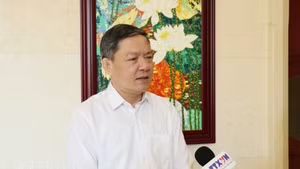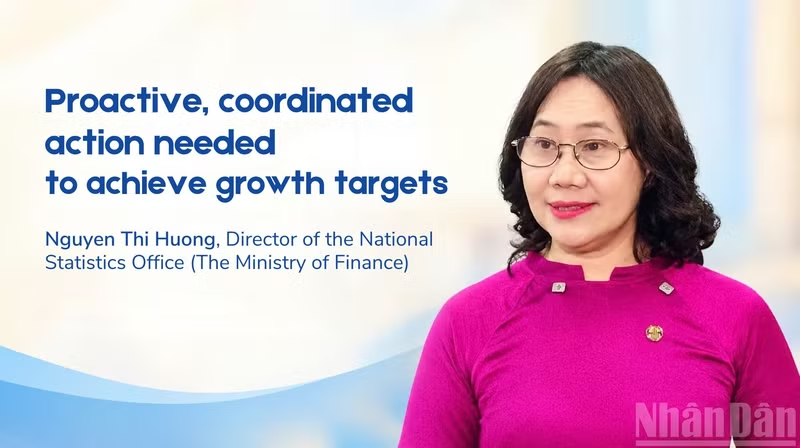
This was affirmed by Nguyen Thi Huong, Director of the National Statistics Office under the Ministry of Finance, in an interview with Nhan Dan Newspaper.
Q: Two-thirds of 2026 has passed, with the socio-economic picture showing many positive signs and prospects of coming close to the growth target set for the full year. What is your assessment of this view?
A: With the leadership of the Party, the decisive direction and management of the Government and the Prime Minister, the active involvement of ministries, sectors and localities, and the efforts of the business community and the public, Viet Nam’s economy grew by 9.01% in the first nine months of 2026. This is a very high growth rate by the standards of recent years and provides an important foundation for achieving the highest possible level of growth in line with the set target.
In particular, the macro-economy remained stable, inflation was kept under control at an appropriate level, and the supply and demand of essential goods were secured. Domestic consumption and tourism recorded strong growth, while international tourist arrivals to Viet Nam increased significantly.
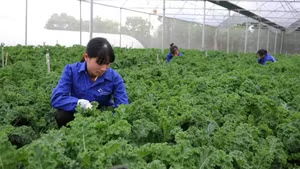
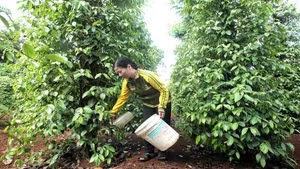
The agriculture, forestry and fisheries sector continued to serve as a mainstay of the economy, maintaining stable growth, ensuring supplies of food, agricultural produce and essential goods, and contributing to export growth.
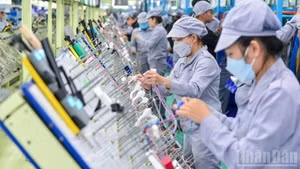
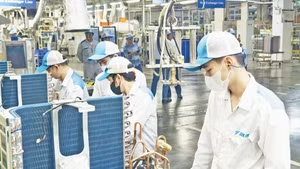
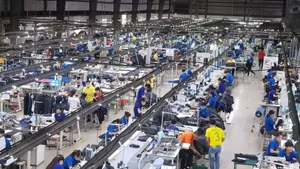
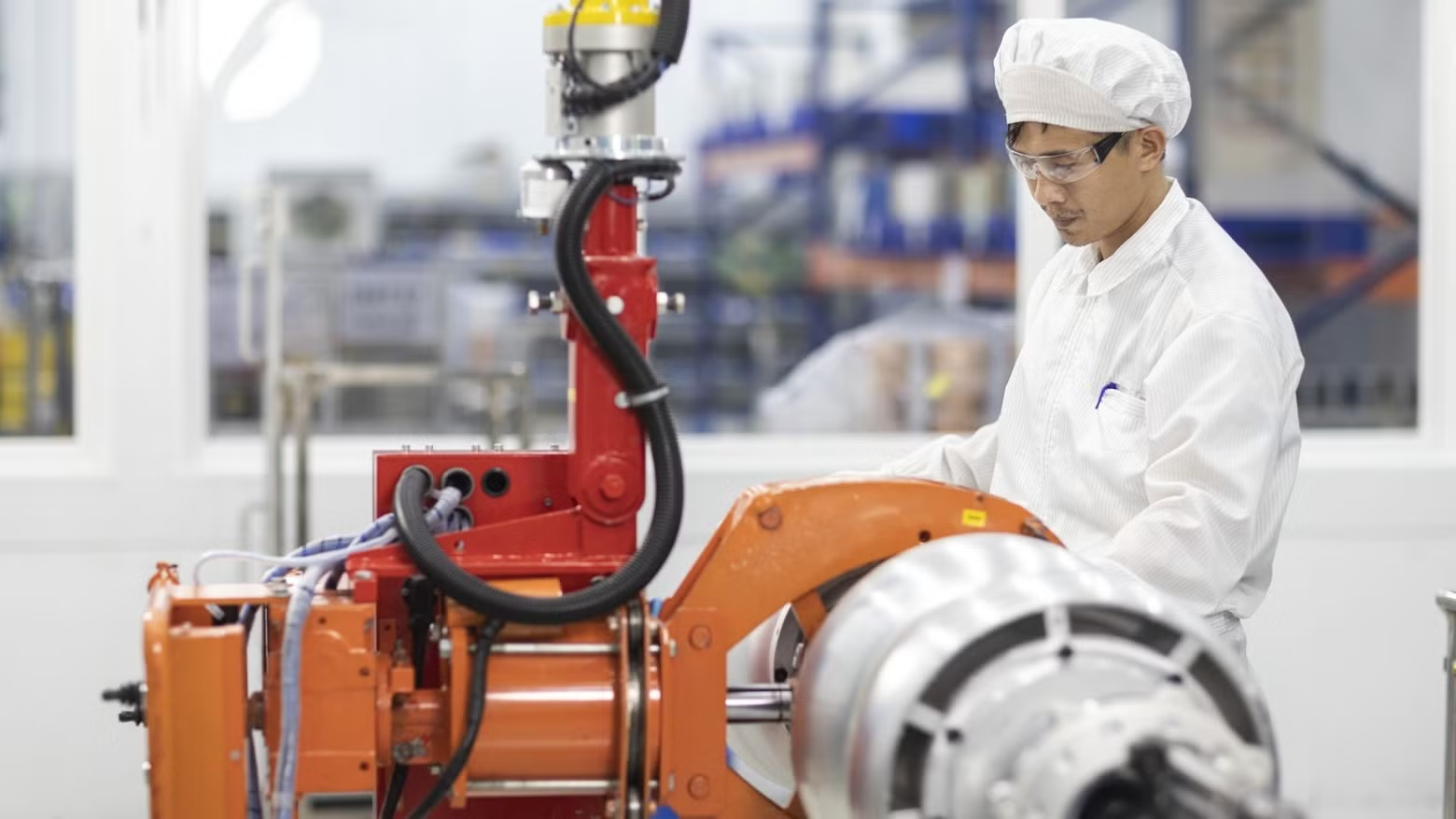
Industrial production continued to grow at double-digit rates, while exports and imports maintained their upward momentum through the effective utilisation of free trade agreements (FTAs). The investment and business environment continued to improve. High growth in realised investment helped build and strengthen important infrastructure facilities and enhance the production capacity of many industries and sectors. People's living standards gradually improved, while security, safety and social welfare were strengthened.
Achieving the double-digit growth target will be a major challenge, requiring concerted efforts and a united response from the entire political system, the Government, businesses and people nationwide, as well as support from international partners.
Director of the National Statistics Office Nguyen Thi Huong
However, in the final three months of the year, Viet Nam’s socio-economic development will face considerable difficulties and challenges, particularly because the country’s high degree of economic openness leaves it significantly exposed to external impacts. Achieving the double-digit growth target will therefore be a major challenge, requiring concerted efforts and a united response from the entire political system, the Government, businesses and people nationwide, as well as support from international partners.
I believe that ministries, sectors and localities must also strengthen their monitoring and forecasting of developments, adopt flexible management measures suited to the new circumstances, and respond promptly to emerging situations. They must remain committed to effectively promoting growth while maintaining macroeconomic stability, controlling inflation, ensuring social welfare and safeguarding people's livelihoods.
Q: Alongside the economic achievements in recent times, how do you assess the contribution of the services sector, as well as the electricity and transport industries, to production and business activities?
A: Based on the statistical data we have just reported for the third quarter and the first nine months of 2026, the overall socio-economic picture shows that the services sector has played a very positive role in supporting and working alongside goods-producing sectors, including industrial production and agriculture.
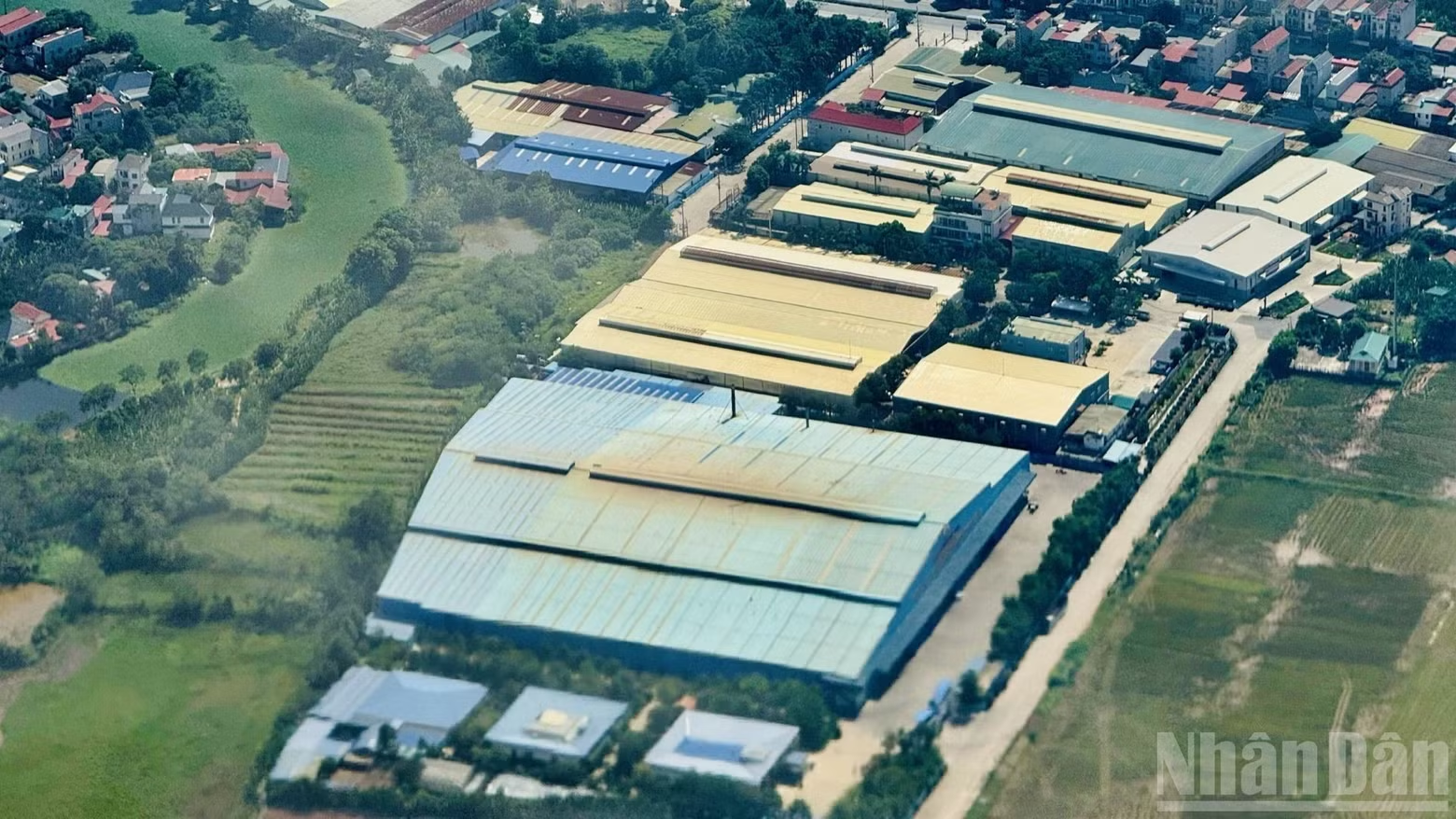
All sectors, including electricity, have recorded impressive double-digit growth, helping to ensure energy supplies for industrial operations and other highly energy-intensive activities in recent times. This is also a particularly notable achievement for Viet Nam compared with the rest of the world. While many countries have faced severe energy shortages and sharp increases in energy prices, with repercussions for Viet Nam, our electricity production and distribution have grown impressively, demonstrating our ability to ensure domestic power supplies.
Transport services have also recorded strong growth, supporting the production, distribution, export and import of goods.
Supply-side and demand-side data also show that gross capital formation has increased by a record rate of nearly 18%. This includes inventory accumulation, namely stockpiles of goods held by foreign direct investment (FDI) enterprises and other economic sectors.
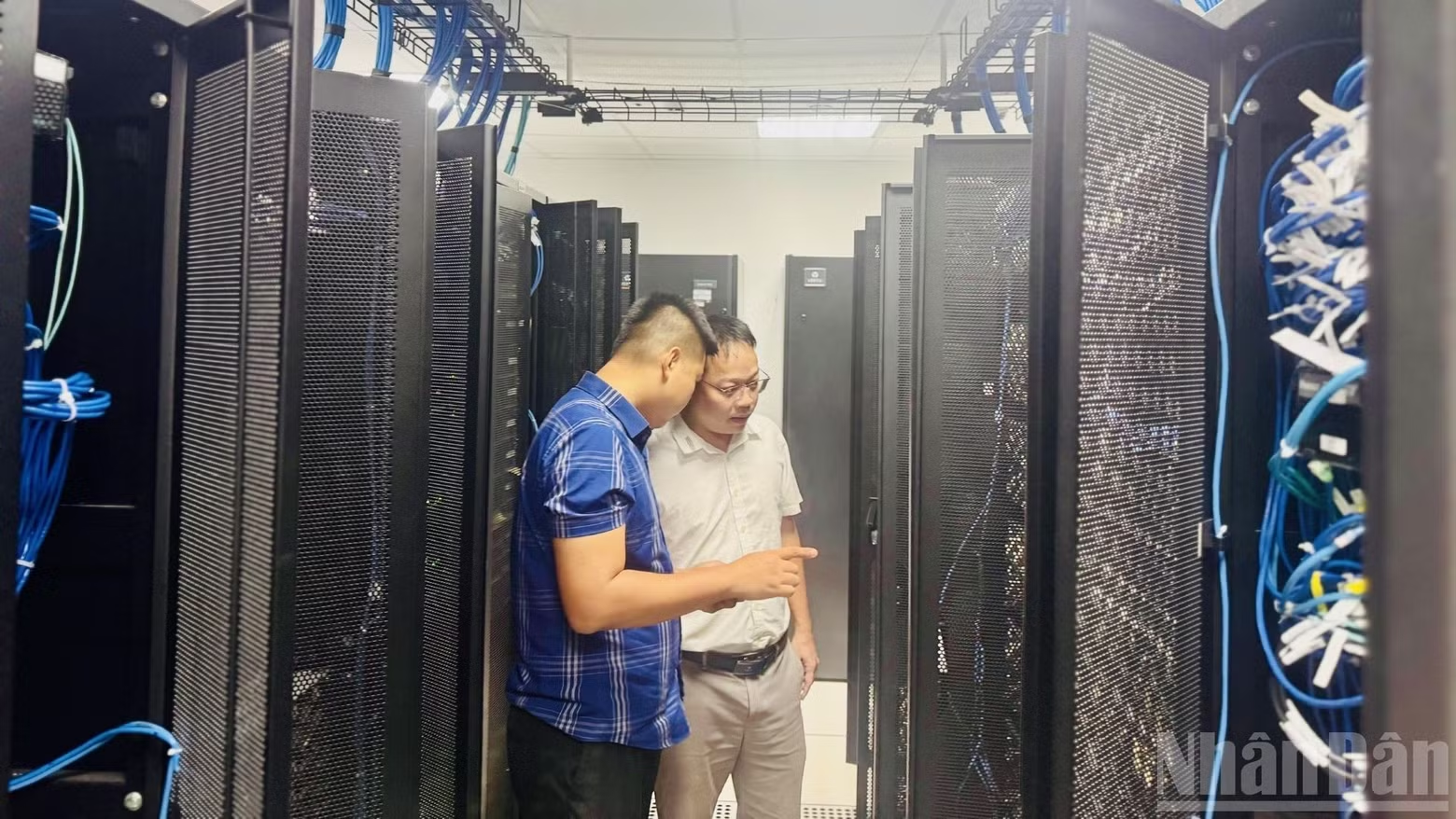
This has helped prepare us for the period ahead, enabling us to mitigate market price fluctuations and secure stable supplies of input materials, thereby allowing production and exports to proceed proactively. This is one of the factors distinguishing the current period from previous reporting periods and phases.
Q: Although Viet Nam recorded a trade deficit over the first nine months of the year, it posted a trade surplus in September alone. However, the FDI sector's trade surplus was substantial, while domestic producers continued to record a sizeable trade deficit. How do you assess this situation, and what adjustments are needed in the final months of the year, particularly in domestic enterprises' production activities?
A: Total import-export turnover has increased by 30%, which could be considered a record figure. Exports have also risen sharply, by more than 24%. This demonstrates that domestic production is well connected with the global economy.
Another figure attracting considerable attention is the 36% increase in imports, which has resulted in a relatively large trade deficit of nearly 20% (19 billion USD). There have been various comments on this figure. However, from a positive perspective, it can be understood in the context of global assessments that Viet Nam is attracting relocated investment flows, particularly in information technology, artificial intelligence (AI) and semiconductor chips. Viet Nam is receiving these investment flows to support the next production cycle. The associated capital will be channelled into inventory accumulation. This also explains why inventory accumulation has doubled compared with previous periods.
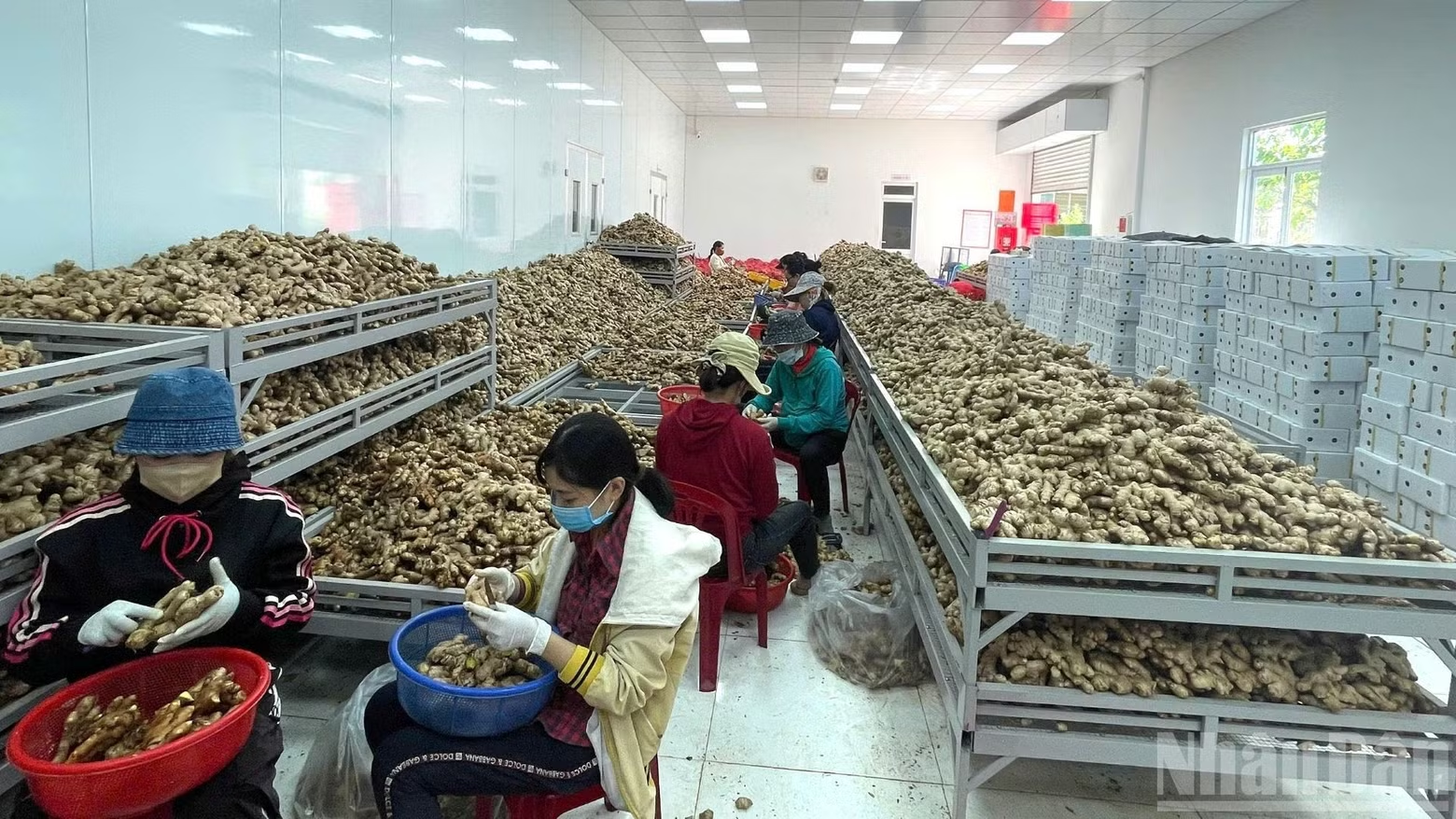
To make effective use of these investment flows, we need to step up production and strengthen connections with export markets and domestic consumers to ensure goods are sold and prevent excess inventory.
Q: What tasks and measures should be prioritised in the fourth quarter, the final quarter of the year? What specific targets should be set for industries and sectors during this period?
A: We all know that the growth target set by the National Assembly is very ambitious. Therefore, we must make every effort in the remaining months of the year to achieve growth of around 12.5% or higher. This would be a record rate and would be extremely difficult to achieve given the current circumstances.
Nevertheless, there is still room for growth, particularly as public investment disbursement is entering its final push in the closing months of the year, with more positive signs emerging.
We must also strengthen our links with the global economy to facilitate the flow of goods and increase domestic production of input materials. This will help safeguard people's livelihoods and maintain price stability, as there is now very limited room for further CPI increases. We need to stabilise the overall price level, ensure balanced supplies of essential goods, and step up the consumption of domestic products and exports. These measures will help reduce the trade deficit in the final months of this year and the early months of next year.
Q: What needs to be done to implement these measures effectively?
A: Given the specific functions and responsibilities of the statistics sector, the National Statistics Office has, based on the data collected, compiled and proposed eight groups of key tasks and measures, as follows:
First, the Government should remain steadfast in prioritising growth while maintaining macroeconomic stability, ensuring major economic balances, controlling inflation and prices, and stabilising the market. It should closely, consistently and effectively coordinate fiscal and monetary policies. It should closely monitor global economic and political developments, particularly tensions in the Middle East and Ukraine, fluctuations in oil prices, transport costs and exchange rates. It should update national and local economic growth scenarios and inflation projections in a timely manner. It should manage petrol and oil prices flexibly and effectively, and direct credit towards production, exports, high-tech industries, supporting industries and innovation.
Second, the Government should continue to restructure agriculture towards higher quality, greater efficiency and improved resilience to climate change. The Government should strengthen linkages between agricultural production, processing and consumption, and develop sustainable value chains. At the same time, the Government should enhance disease control, develop biosecure livestock farming on a concentrated, large-scale basis, and build value chains linked to high-tech applications and digital transformation.
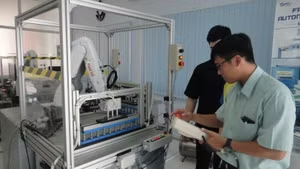
Third, the Government should promote industrial production by enhancing competitiveness. Supply chain risks should be proactively managed, sources of supply diversified and logistics costs controlled. Difficulties and bottlenecks relating to administrative procedures, land availability and other production and business conditions should be promptly resolved to bring new production capacity into operation as quickly as possible. The development of strategic technology products should be accelerated, with priority given to semiconductors, AI and core technologies. At the same time, energy security must be ensured, while digital transformation and the application of AI should be stepped up to improve business quality and efficiency.
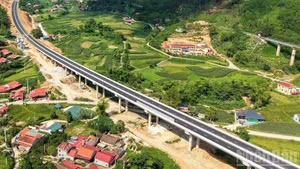
Fourth, the Government should accelerate public investment disbursement while assessing its economic and social impacts and evaluating investment efficiency. The Government should expedite the implementation of nationally important projects, key transport infrastructure projects, strategic infrastructure projects and projects with significant spillover effects, while ensuring their quality. Priority areas include railways, roads, aviation, energy, agriculture, national digital infrastructure and national target programmes. The Government should selectively attract investment projects, prioritising high technology, innovation, green transition and digital transformation. At the same time, the Government should improve the effectiveness of linkages between foreign-invested enterprises and domestic businesses to strengthen the economy's competitiveness and resilience.
There is still room for further growth, particularly as public investment disbursement in the final months of the year enters its final stretch and begins to show more positive signs.
Director Nguyen Thi Huong
Fifth, the Government should support and strengthen the export capacity of the domestic economic sector, promote sustainable exports, increase added value, and diversify markets, products and supply chains. FTAs should be effectively utilised, and export markets should be expanded, while the capacity to meet international standards is improved. Logistics services should be developed and transport costs reduced. Support should be provided for the sale of agricultural, forestry and fishery products, while imports of goods that can already be produced domestically should be controlled.
Sixth, the Government should continue to effectively implement consumer stimulus, promotional and supply-demand matching programmes to boost domestic purchasing power. At the same time, the development of e-commerce should be accelerated, modern distribution networks expanded, and supplies of essential goods ensured, thereby helping to stabilise the market and increase total retail sales of goods and revenue from consumer services.
Seventh, the Government should continue to promote tourism and services, making effective use of the potential of domestic and international markets. Tourism promotion and marketing should be strengthened, tourism products diversified and innovated, and international visitor markets expanded. Service quality should be improved, transport and aviation connectivity strengthened, and travel made more convenient for tourists, helping achieve the target for international arrivals in 2026.
Eighth, the Government should strengthen disease prevention and control and proactively respond to natural disasters, heavy rain and flooding, drought and saltwater intrusion. The safety of agricultural production must be ensured, forest fires prevented, and disaster-related losses minimised. Social welfare policies should be effectively implemented to maintain stability and progressively improve people's living standards in practical terms.
Thank you very much!