Ho Chi Minh City has an inland waterway network comprising rivers, canals, and streams spanning approximately 1,450km, giving it one of the densest waterway systems in the country. The network includes major rivers such as the Sai Gon, Dong Nai, Nha Be, and Long Tau, offering enormous potential for the development of freight transport and waterway tourism.
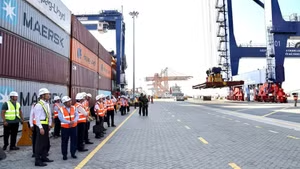
The city is also home to the largest seaport system in Southern region, including the Cai Mep–Thi Vai international port complex, alongside a relatively well-developed network of passenger terminals serving tourism, such as Cau Da Wharf and the Vung Tau–Ho Chi Minh City express boat service (Bach Dang Wharf). These complementary geographical advantages have helped make the inter-regional transport and logistics network increasingly sustainable.
Director of Tay Nam ICD Port One Member Company Limited Nguyen Ngoc Khanh said that the company currently transports around 750,000 TEUs of cargo each year between large vessels at Cai Mep–Thi Vai Port and Truong Tho Port in both directions, with annual freight volumes growing steadily by 10%. Transporting these containers by road along National Highway 51 to Ho Chi Minh City would incur additional costs and delays due to traffic congestion, while extending transit times. This is a key advantage for waterway transport, which logistics businesses are increasingly leveraging.
According to logistics businesses, waterborne freight transport generally costs 30–50% less than road transport and is well suited to large-volume cargoes such as construction materials, agricultural products, and containers. If waterway routes linking Ho Chi Minh City with Dong Nai and the Southwestern region are organised effectively, they could significantly ease pressure on major transport arteries such as National Highway 1 and the Ho Chi Minh City–Trung Luong Expressway. Meanwhile, inland container depots (ICDs) and inland waterway terminals would play a vital role in redistributing cargo flows and easing the burden on seaports.

Alongside freight transport, passenger services combined with tourism also hold considerable potential. In recent years, Ho Chi Minh City has introduced several specialised models that have helped boost GDP by capitalising on its identity as a river city. One example is River Bus Route No. 1 (Bach Dang–Linh Dong), which operates along the Sai Gon River. Since its launch in November 2017, the service has attracted millions of passengers and tourists, helping to ease localised road traffic pressure along the central-eastern corridor.
Nguyen Kim Toan, Director of Thuong Nhat Company Limited, which manages and operates the Bach Dang–Linh Dong river bus route, said that in the first 10 months of 2026, the service carried nearly 900,000 passengers, marking a sharp increase after eight years of operation. This represented a 100% rise in passenger numbers compared with its first year, helping cultivate the habit of using waterway transport among city residents.
These figures show that fully leveraging the city's waterway network could generate significant economic value, particularly by enhancing the appeal of Ho Chi Minh City's riverside landscapes.
Developing synchronised infrastructure
Statistics indicate that over the past five years, total investment in Ho Chi Minh City's waterway transport projects amounted to only 1.5 trillion VND, equivalent to 5.5% of the more than 27.2 trillion VND invested in road infrastructure, despite the growing capacity and considerable growth potential of waterborne freight transport.
To open up new opportunities for waterway transport, drive regional development, and tap into its vast potential, the city has been prioritising infrastructure solutions to build a more synchronous waterway network.
Recently, Ho Chi Minh City announced the locations and operating boundaries of anchorage areas across its waterway network. This is a necessary step towards completing inland waterway infrastructure and enhancing their management and utilisation. A total of 12 anchorage locations have been designated along the Sai Gon River and 11 in the former Can Gio District.
A representative of the Inland Waterway Management Division under the Department of Construction said that several other areas in the city also had demand for vessel anchorage, including the Vam Thuat River, Ben Nghe Canal, Tau Hu Canal, Ngang No. 2 Canal, and Te Canal. Accordingly, the Department of Construction will continue reviewing and assessing actual needs before advising the municipal People's Committee on adding eligible sites to the list of designated anchorages in the coming period.
According to Acting Head of the Inland Waterway Management Division Nguyen Ngoc Hai, Ho Chi Minh City currently has 132 rivers, canals, and streams, forming an inland waterway network stretching approximately 1,385km. Investment in infrastructure development and synchronisation would therefore help stimulate tourism, services, and logistics.

The announcement of 23 anchorage locations is designed to establish an organised, safe, and interconnected waterway network. Only when waterways, ports, terminals, anchorage areas, and logistics infrastructure are planned and developed cohesively can Ho Chi Minh City's river network be converted into genuine transport capacity.
In late 2025, the city earmarked 200 billion VND for construction work to raise the clearance heights of Binh Trieu 1 and Binh Phuoc 1 bridges, removing long-standing bottlenecks that had seriously hindered waterway transport and prevented many large cargo vessels from navigating these routes.
Ho Chi Minh City does not lack potential; what it needs is a sufficiently ambitious and cohesive strategy for developing its waterways. With targeted investment in the network, inland waterways would not merely help relieve traffic congestion but could also become a new pillar of economic growth and an “economic flow” connecting the city with the wider Southeastern region.