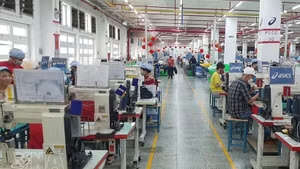
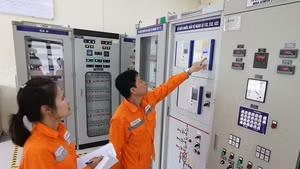
Under the development orientation, Tay Ninh aims to become a dynamic, green, and sustainable province by 2030, serving as a key link between the southeastern region and the Mekong Delta while promoting trade with Cambodia. It also seeks to build a modern industrial and service-based economy closely integrated with sustainable agriculture by 2050.
In the new development phase, Tay Ninh plans to organise its socio-economic space around a model comprising three socio-economic regions, three centres, six economic corridors, three growth-driving axes, and one border belt. This framework will bolster links between urban areas, industrial parks, border-gate economic zones, logistics centres, and agricultural production areas, while guiding resource allocation and attracting investment tailored to the strengths of each locality.
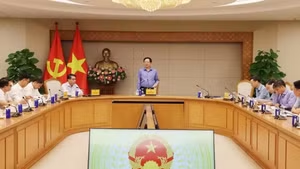
Chairman of the Tay Ninh Provincial People's Committee Le Van Han has called for aligning sectoral and field-specific plans with urban, rural, and land-use planning. The allocation of land for industry, services, logistics, and high-tech agriculture must go hand in hand with infrastructure investment, environmental protection, and the capacity to balance available resources. Authorities and sectors at all levels need to resolve the lack of coordination between plans, delays in project implementation, and inefficient land use.
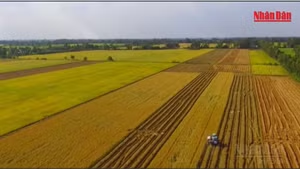
Alongside developing a multi-centred urban system, the province must link new-style rural development with production growth, the application of science and technology, the preservation of cultural identity, and improvements in living standards. Border areas, the Dong Thap Muoi region, and disadvantaged localities need to be prioritised for investment in transport infrastructure, irrigation, education, and healthcare, as well as the creation of stable livelihoods to gradually narrow development gaps.

Practical experience at the grassroots level reveals that land management, planning, and construction order still face numerous challenges. In Kien Tuong Ward, local authorities have reviewed 14,841 land plots and finalised data for 13,173 of them. They have also conducted 456 urban order patrols and inspections, imposing penalties for 74 violations. In Binh Minh Ward, officials received 558 land-related applications, processed 435, and conducted 97 inspections of construction works over the past nine months.
In Hoa Hiep Commune, the construction of houses on agricultural land remains a concern. Difficulties in adjusting plans, completing land databases, and handling public buildings and land have underscored the need to strengthen inspections, promptly address violations, and make grassroots authorities accountable for management.
To translate planning into practice, development orientations must be concretised into programmes, plans, and lists of priority projects, with clear implementation schedules, resources, lead agencies, and coordination responsibilities. Under the direction of Chairman of the Tay Ninh Provincial People's Committee Le Van Han, authorities and sectors at all levels must strengthen their implementation accountability, ensuring that sectoral and field-specific plans, as well as urban and rural planning, are consistent with land-use and public investment plans. This will help minimise overlaps and prevent the waste of resources.
Provincial departments, sectors, and local authorities need to expedite the completion of land databases and make planning information publicly available so that residents and businesses can easily access and monitor it. Construction permitting, urban order management, and land use must comply with regulations. Cases involving the misuse of land, unauthorised construction, or violations of urban planning must be identified and addressed promptly, so they do not persist.

In addition, inspection and supervision must be closely linked to implementation schedules and task performance outcomes. Relevant agencies need to proactively resolve difficulties in preparing and adjusting plans, review delayed projects, and handle public buildings and land that are underutilised, in accordance with regulations. The application of information technology and digital transformation should be accelerated to enhance land management effectiveness, monitor progress, and assess the results of plan execution.
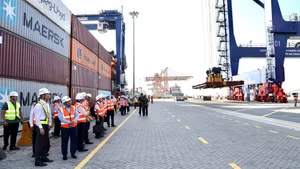
Investment resources should be concentrated on inter-regional connectivity projects, border-gate infrastructure, logistics facilities, and essential works in rural and border areas. Attracting capital must go be paired with economical land use, environmental protection, and the safeguarding of people's legitimate rights and interests.
Planning can deliver its intended benefits only when it is implemented rigorously and consistently, with clear accountability and effective inspection and supervision. Tay Ninh will therefore continue to emphasise the responsibility of agency heads, tighten administrative discipline and order, and use task performance as a basis for evaluating each agency and locality. This will be instrumental in enhancing state management, making efficient use of resources, tapping into the province's potential and advantages, and laying the groundwork for rapid and sustainable development in the new period.