However, challenges related to waste classification, technical standards, circulation mechanisms, and market demand have hindered the effective utilisation of these secondary resources. Refining institutional frameworks, connecting recycling supply chains, and incentivising businesses to invest in green technologies are essential steps toward advancing a circular economy.
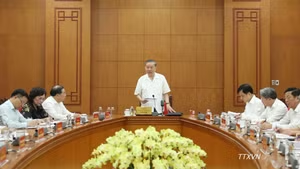
During the discussion forum titled “Removing Bottlenecks to Promote the Recycling, Reuse, and Circularity of Industrial Waste for Efficient Resource Use and Environmental Protection”, organised by Industry and Trade Magazine on November 2, experts, policymakers, and business representatives highlighted a paradox: while the demand for raw materials in manufacturing continues to grow, many types of industrial waste that could be recycled still face significant barriers in re-entering the production chain.
According to Nguyen Thi, a senior lecturer in the Department of Law at the Ha Noi University of Natural Resources and Environment, the 2020 Law on Environmental Protection has marked a significant shift in waste management philosophy — moving away from “end-of-pipe” treatment toward a full product life-cycle management approach. This new perspective emphasises waste prevention from the very beginning, focusing on product design, material selection, the implementation of cleaner production processes, the extension of product life cycles, and the promotion of waste collection and recycling.
Furthermore, the Extended Producer Responsibility (EPR) mechanism, along with preferential policies regarding taxes, fees, land access, green credit, and green finance, has created new opportunities for businesses to invest in circular economy initiatives.
However, according to Truong Viet Truong, a senior specialist at the Environment Division for Industry and Trade (under the Industrial Safety and Environmental Techniques Agency, Ministry of Industry and Trade), the recycling and reuse rates across the sector have yet to meet expectations. Transitioning from “end-of-pipe” waste treatment to integrating circular economy principles directly into production lines remains fraught with obstacles.
According to a report presented by a business during the discussion, producing one ton of steel via blast furnace technology generates an average of approximately 1.8 tonnes of CO2, whereas electric arc furnace (EAF) technology produces about 0.5 tons of CO2. Actual emission levels depend on operational processes, input materials, and the energy sources utilised.
Additionally, slag from electric arc furnaces is being researched and processed for use as raw material in the production of cement and lightweight concrete. Another issue concerns the requirement for businesses importing wastepaper to place a security deposit equivalent to 15–20% of the shipment’s value.
The Ministry of Industry and Trade is currently implementing a development program for Viet Nam’s environmental industry for the 2025–2030 period, in accordance with Prime Minister Decision No. 1894/QD-TTg. The ministry’s action plan, outlined in Decision No. 3637, focuses on researching and mastering waste treatment and recycling technologies; refining the list of environmental technologies, equipment, and products; promoting industrial symbiosis; and facilitating access to green financial resources.
Beyond the foundational role played by the state, businesses must proactively collaborate to establish circular value chains, where the output of one enterprise becomes the input for another. In particular, greater attention must be paid to developing markets for recycled materials; focusing solely on supply without corresponding demand makes it difficult for collection and recycling activities to achieve sustainable growth.