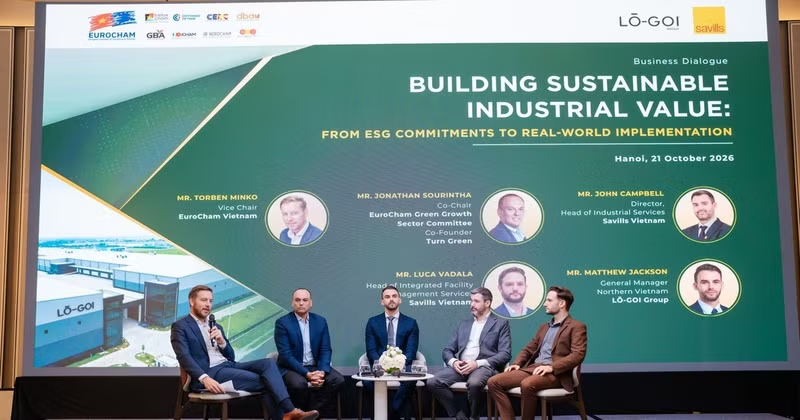
These trends were discussed at the specialist forum “Building sustainable industrial value: From ESG commitments to practical implementation,” recently co-organised by EuroCham and Savills Viet Nam in Ha Noi.
At the forum, representatives from manufacturing companies, industrial real estate developers, and the wider business community examined how environmental, social, and governance (ESG) factors are influencing investment decisions, industrial development, and the day-to-day operation of facilities.
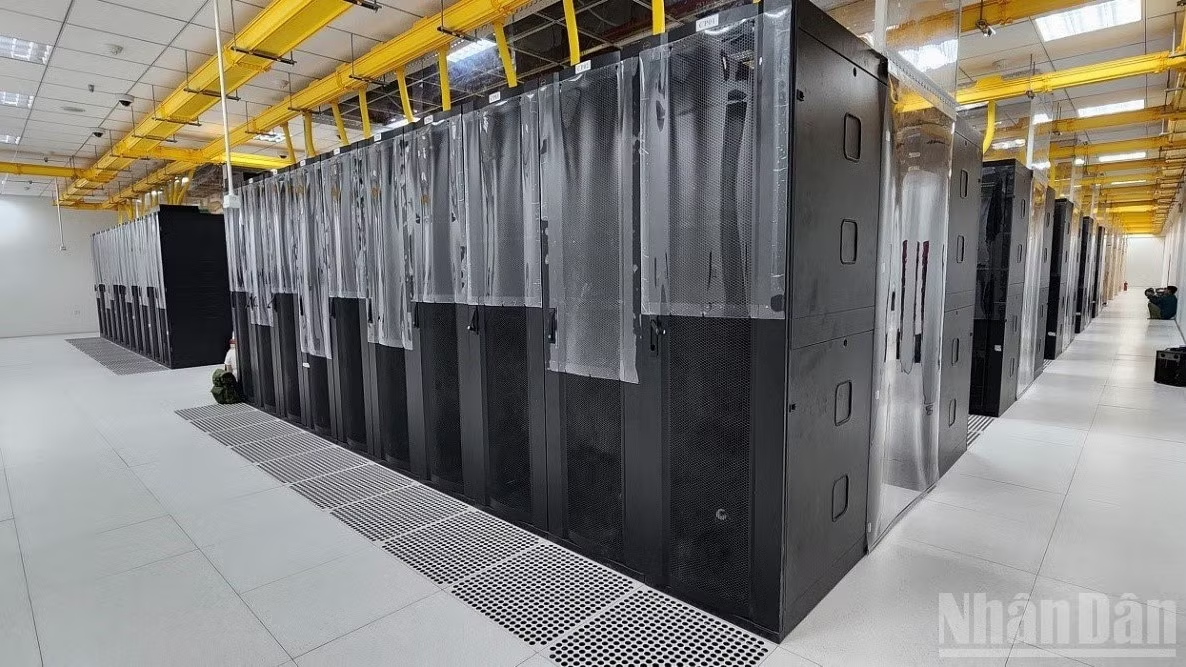
Representatives of Savills Viet Nam noted that selecting industrial sites in the country was becoming increasingly complex and required more careful consideration. In addition to fundamental factors such as location and cost, manufacturers in higher-value segments were placing growing importance on reliable power supplies, infrastructure quality, access to skilled labour, operational efficiency, time to readiness, and sustainability.
As Viet Nam continues to attract investment in high-tech industries, industrial parks will need to evolve beyond simply providing space towards developing resilient, efficient, and sustainable ecosystems capable of meeting businesses’ long-term growth needs.
Viet Nam is also seeing a growing trend towards attracting high-value manufacturing investment, particularly in technology-intensive industries. At the same time, investment flows appear to be shifting away from numerous small-scale projects towards fewer, larger projects with greater capital requirements.
According to research by the International Facility Management Association (IFMA), approximately 60–80% of a building’s total life-cycle costs are incurred during the operational phase. This highlights the importance of effective maintenance, resource management, and long-term asset planning.
At the forum, Head of Integrated Facilities Management Services at Savills Viet Nam Luca Vadala explained how integrated facilities management (IFM) can translate sustainability objectives into measurable operational outcomes. From energy and water consumption to preventive maintenance, waste management, and the reliability of critical assets, effective facilities management requires clearly defined accountability, consistent performance monitoring, and continuous improvement.
Reflecting the increasingly important role of sustainable industrial and logistics facilities in supporting Viet Nam’s manufacturing sector, as businesses seek to balance operational efficiency, environmental responsibility, and long-term investment objectives, the organisers also aimed to promote a stronger commitment to ESG principles.
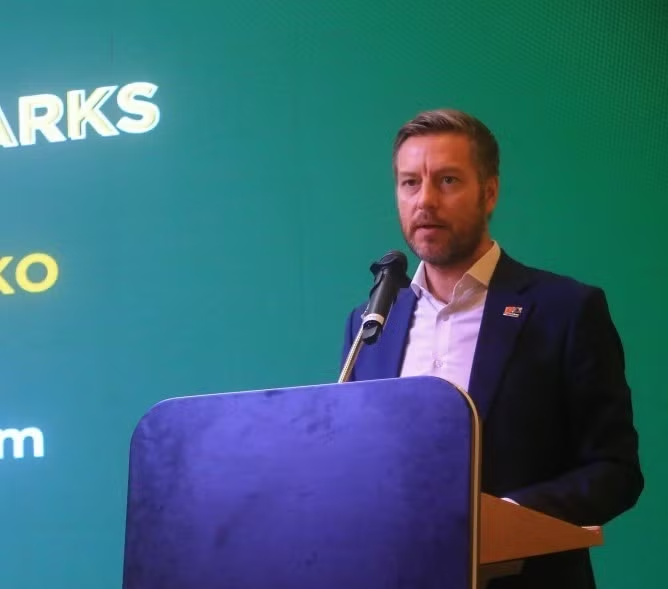
From the perspective of European businesses, Vice Chairman of EuroCham Torben Minko said that ESG was no longer simply a matter of reporting or regulatory compliance, but had become a key factor in investment decisions in Viet Nam.
According to Minko, Viet Nam must compete with numerous other countries to attract international capital. Meeting sustainability requirements is therefore playing an increasingly significant role in the competitiveness of its investment environment.
Notably, the event’s sustainability message was also translated into concrete action. The organisers donated 500 trees to support forest restoration through Gaia, a Viet Nam-based organisation specialising in reforestation and biodiversity conservation. The initiative was based on a commitment to contribute five trees for every event participant, linking attendance at the forum with broader environmental restoration efforts.
This effort embodied the forum’s overarching theme: moving beyond ESG commitments towards practical action, both in industrial operations and through wider contributions to the environment.