
Asian markets drive recovery
According to the State Bank of Viet Nam’s Regional Branch 2, remittances to Ho Chi Minh City exceeded 2.84 billion USD in Q3 2026, up 39.5% quarter on quarter and 3.6% year on year.
Tran Thi Ngoc Lien, Deputy Director of the branch, said this was the first quarter of 2026 to record positive year-on-year growth in remittances, following declines of 16.9% in Q1 and 27.9% in Q2. The strong rebound had significantly narrowed the cumulative decline over the first nine months, she added.
Asia accounted for most of the recovery. Remittances from the region exceeded 1.67 billion USD in Q3, representing 59.1% of the city’s total, up from 49.3% in Q2. These inflows largely came from Vietnamese workers in the Republic of Korea, Japan, Taiwan (China), Singapore and Malaysia.
One key driver was the appreciation of the Korean won. Between late June and late September 2026, the exchange rate fell from around 1,549 won per US dollar to approximately 1,353 won, representing an appreciation of about 14.5% against the US dollar.
Strong semiconductor exports and a record current account surplus in the Republic of Korea helped support the currency. As a result, Vietnamese workers earning in won saw the US dollar value of their income increase significantly. This contrasted with the first half of the year, when the won depreciated by 12.1%, contributing to lower remittances from the country.
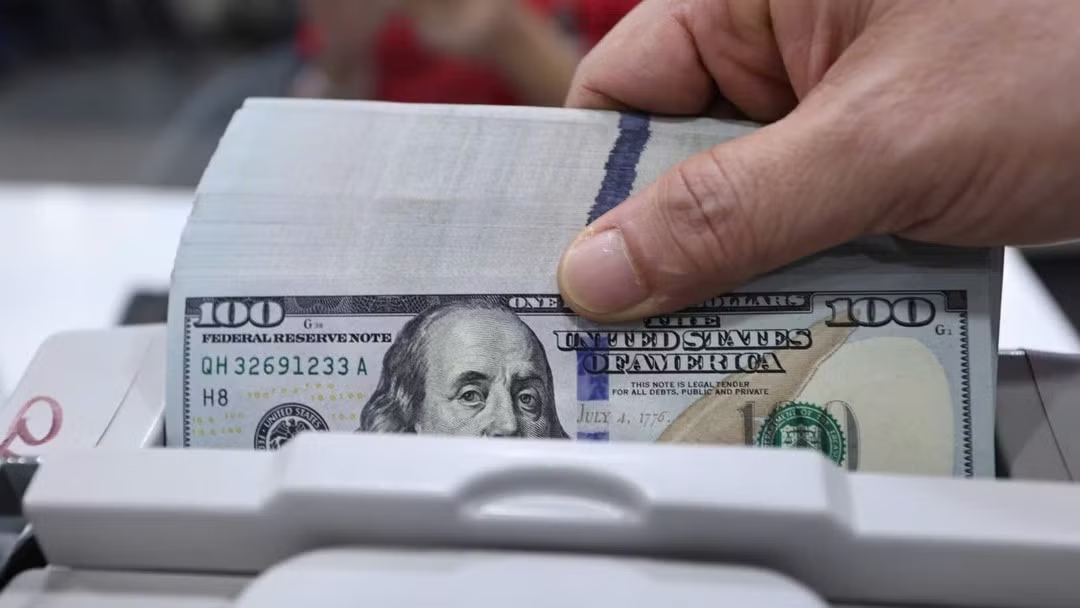
Transfer channels also shifted significantly. Remittances sent through economic organisations exceeded 2.2 billion USD in Q3, accounting for 77.7% of the total and rising 58.5% from the previous quarter.
Within this channel, transfers from Asia increased from 690.5 million USD to 1.4 billion USD, more than doubling and accounting for 88% of the overall market increase. Transfers through credit institutions, meanwhile, totalled 631.4 million USD, or 22.3% of the total, down 1.6% quarter on quarter.
Lien attributed the rebound to favourable exchange rate movements in key markets and seasonal factors. In the second half of the year, overseas Vietnamese and migrant workers typically send more money home to support family investment, business activities and consumption, as well as preparations for year-end holidays and Tet. Some transfers postponed during the first half also resumed during this period, she said.
Full-year inflows forecast at 9.5-9.8 billion USD
Despite the Q3 recovery, remittances to Ho Chi Minh City totalled just over 6.87 billion USD in the first nine months of 2026, down 13.8% year on year, equivalent to a decrease of around 1.09 billion USD. This represented approximately 66.7% of the total recorded for 2025. The decline narrowed from 22.8% in the first half, thanks to the stronger Q3 performance.
By region, Asia remained the largest source, contributing 3.59 billion USD, or 52.3% of total inflows. The Americas ranked second with 2.1 billion USD, accounting for 30.9%, followed by Oceania with 591.5 million USD (8.6%), Europe with 535.7 million USD (7.8%), and Africa with 29.2 million USD (0.4%). Asia and the Americas together accounted for 83.2% of total remittances to the city.
According to the State Bank’s Regional Branch 2, the decline across most regions reflected mounting global economic challenges. Military conflict in the Middle East, which escalated in late February 2026, added to uncertainty. In the US, the consumer price index rose 3.4% in August, while higher living costs reduced overseas Vietnamese communities’ capacity to save and send money home.
Monetary policy changes in major economies also affected transfer decisions. On September 16, 2026, the US Federal Reserve raised interest rates by 0.25 percentage points to 3.75-4.00%, its first increase since July 2023. Higher US dollar interest rates encouraged overseas Vietnamese to keep their savings in their countries of residence rather than transfer funds to Viet Nam.

In Japan, the yen remained weak at between 157 and 164 yen per US dollar in Q3 despite an interest rate increase by the Bank of Japan, reducing the dollar value of Vietnamese workers’ earnings. Remittance taxes in the US and tighter immigration policies also created additional barriers.
Lien said the Q3 rebound was driven mainly by Asia, supported by the recovery of the won, seasonal demand and a sharp increase in transfers through economic organisations. However, inflationary pressures, persistently high interest rates in major economies, remittance taxes and stricter immigration controls continued to weigh on inflows from other regions.
Based on current trends, the State Bank’s Regional Branch 2 forecasts remittances of 2.6-2.9 billion USD in Q4, bringing the full-year total to an estimated 9.5-9.8 billion USD, down 5.1-8.0% from 2025.
The strength of the recovery in the final months of the year will depend largely on exchange rate movements and labour market conditions in Asian countries.