In the coming months, the city plans to accelerate preparations for the construction of three new metro lines with a combined length of nearly 90km and preliminary total investment of more than 254 trillion VND (9.8 billion USD), according to the city Management Authority for Urban Railways (MAUR).
The projects include a nearly 31km line linking the former Binh Duong area with Suoi Tien, a 33.2km route connecting Thu Dau Mot with Tao Dan, and the first phase of Metro Line No. 6 between Tan Son Nhat International Airport and Phu Huu. The lines are designed to improve regional connectivity, ease traffic congestion and support the development of key industrial and urban areas, with completion targeted for 2030.
Meanwhile, construction of Metro Line No. 2, linking Ben Thanh with Tham Luong, is gathering pace. Work is underway at several underground stations, with additional sites scheduled to begin construction towards the end of the year. The project aims to complete its main structures in March 2029 and begin commercial operations before 2030.
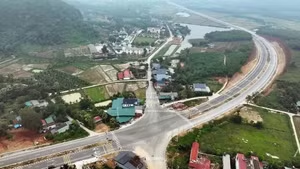
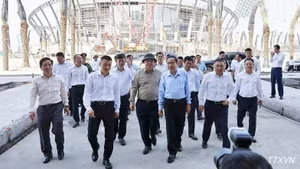
Two other landmark projects are also approaching major milestones: Long Thanh International Airport and a pedestrian bridge spanning the Saigon River. Long Thanh airport has completed more than 80% of its total workload, while the 1-trillion-VND pedestrian bridge connecting Bach Dang Wharf Park with Thu Thiem Riverside Park has reached a key construction milestone. The bridge is expected to improve pedestrian links between the city’s historic centre and the emerging Thu Thiem financial hub, while boosting tourism, trade and services.
Investment in infrastructure to drive economic growth
Ho Chi Minh City faces considerable pressure to achieve growth of more than 13.23% in the fourth quarter to meet its full-year gross regional domestic product (GRDP) growth target of 10.02%.
Dr. Pham Viet Thuan, director of the Ho Chi Minh City institute of environment and resources economics, said accelerated public investment can generate broad economic spillover effects. Major construction projects will stimulate demand for building materials, machinery, transport, fuel and logistics services, while creating jobs and boosting household incomes and consumption.
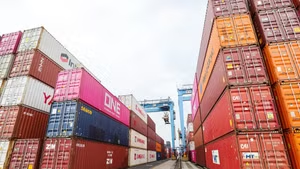
Improved transport infrastructure will also attract private investment in housing, offices and logistics facilities. Faster goods movement and lower logistics costs could strengthen export competitiveness, while better connectivity would support retail, tourism and other services during the year-end peak season.
However, Dr. Huynh Thanh Dien of Nguyen Tat Thanh University stressed that effective implementation is essential to translating infrastructure investment into immediate growth. He called for the removal of obstacles to payment and settlement procedures, faster disbursement of public investment funds and better access to low-interest-rate financing for small- and medium-sized enterprises participating in major projects.
In the longer term, metro lines, Long Thanh International Airport and landmark bridges are expected to reshape the city’s urban structure and economic landscape.
Expanded metro networks could encourage a shift towards public transport and transit-oriented development, with residential, commercial and service hubs emerging around stations. Meanwhile, the combined connectivity of Long Thanh and Tan Son Nhat airports could strengthen the city’s role as a regional aviation, financial and logistics centre.