This presents a challenge: how to stimulate investment and narrow the gap between research findings and the market so that R&D can genuinely drive productivity gains, generate new products, and support economic growth.
Unlocking potential
In Viet Nam’s current development landscape, science and technology, innovation, and digital transformation have become strategic priorities, directly linked to labour productivity, competitiveness, the quality of economic growth, and the economy’s self-reliance. In practice, Viet Nam can no longer rely primarily on capital, cheap labour, resource extraction, and extensive growth. Instead, it needs to build the capacity to research, acquire, master, and develop technologies, while deepening R&D activities and aligning them with market needs.
In practice, Viet Nam can no longer rely primarily on capital, cheap labour, resource extraction, and extensive growth. Instead, it needs to build the capacity to research, acquire, master, and develop technologies, while deepening R&D activities and aligning them with market needs.
According to Vice President of the Viet Nam Young Entrepreneurs Association Vu Hong Quan, Viet Nam’s investment in R&D currently stands at just 0.5% of gross domestic product (GDP), compared with the global average of 2.62% of GDP in 2021. Nevertheless, Viet Nam ranked 44th out of 139 economies in the 2025 Global Innovation Index.
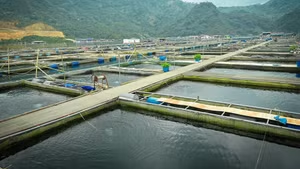
Moreover, Viet Nam is not short of research institutions or technologies with practical applications. For example, the technology portfolio of the Viet Nam Academy of Science and Technology already includes a wide range of solutions in artificial intelligence (AI), the Internet of Things (IoT), cloud computing, edge computing, robotics, GPTViet, and the Digital Core Platform, as well as applications for agriculture, irrigation, the environment, aquaculture, food, construction, pharmaceuticals, and healthcare. This demonstrates the country's considerable innovation potential. However, turning that potential into tangible economic growth requires businesses to strengthen their scientific and technological capabilities and their ability to commercialise research results.
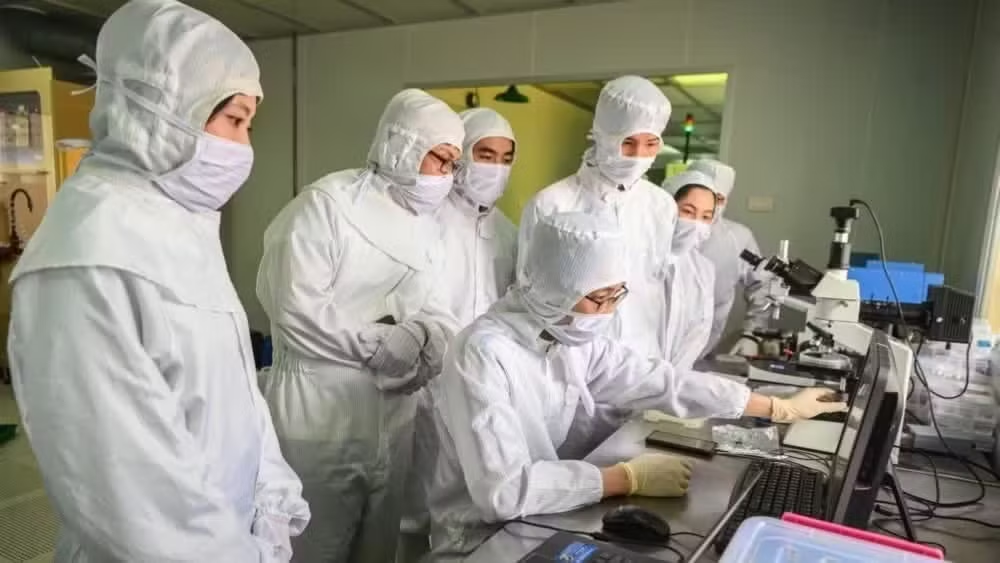
Notably, the policy framework is gradually being refined to establish businesses as key players in the science, technology, and innovation ecosystem.
The Law on Science, Technology, and Innovation No. 93/2025/QH15 has opened up important opportunities by requiring scientific and technological activities to be aligned with socio-economic development needs. It encourages businesses to propose, commission, and carry out science and technology projects; recognises the principle of accepting risks in research, controlled experimentation, and venture investment; and establishes provisions for commercialising research results and distributing the resulting profits.
In several localities, research institutes, universities, and businesses have begun promoting R&D by tackling scientific and technological challenges that closely reflect practical needs and local development priorities.
Phu Tho Province, for example, has mobilised more than 61 billion VND in counterpart funding from businesses, accounting for nearly 40% of R&D expenditure. This demonstrates that research activities are increasingly responding to market demand and attracting businesses willing to finance and purchase the research outputs.
Meanwhile, at Viet Nam National University, Ha Noi, the development of science and technology infrastructure and increased investment in R&D have been identified as strategic pillars for strengthening research capacity and mastering core technologies. R&D projects commissioned by businesses are being pursued alongside international cooperation aimed at jointly developing technologies and commercialising research results.
In 2025, Viet Nam National University, Ha Noi, readied 50 science and technology products in AI/IoT, semiconductors, and advanced materials for technology transfer and commercialisation.
From the business perspective, Truong Hai Group Corporation (THACO) completed the construction and commissioning of a new R&D centre in Chu Lai, Da Nang, in 2025. Covering an area of 30,000 square metres and representing a total investment of nearly 40 million USD, the facility comprises a design centre, a materials research and testing unit, a prototype production workshop, and a multi-purpose auditorium.
Making R&D a new driver of growth
Despite these positive developments, a paradox remains: many Vietnamese engineers conduct R&D for products and markets around the world, yet when domestic businesses need to innovate, they still have to purchase machinery, hire consultants, import software, or seek solutions from abroad.
There is also a persistent gap between researchers and businesses. Scientists tend to focus on novelty, originality, technical processes, and technology readiness, while businesses are more concerned with revenue, costs, payback periods, operational risks, and market acceptance. Notably, the financial ecosystem supporting R&D and commercialisation remains underdeveloped. Many businesses lack dedicated R&D departments and specialist staff, as well as clean data, standardised processes, technological assessment capabilities, and the capacity to organise trials.
An assessment by the Ministry of Science and Technology identifies three main areas underlying these difficulties: institutional and policy mechanisms, business capabilities, and the science and technology market. Accordingly, one of the key priorities for 2026 is to promote cooperation in strategic technology sectors and strengthen R&D partnerships with countries with advanced expertise in science, technology, and digital transformation.

The goal is not simply to conduct research, but to develop joint research programmes, collaborative laboratories, and innovation centres that enable Vietnamese businesses to access foundational technologies, test products, master core technical processes, and participate more deeply in global supply chains.
Drawing on practical experience working with the Viet Nam Academy of Science and Technology, Chairman of the Board of Directors of Ben Tre Pharmaceutical Joint Stock Company Tran Dinh Van said that businesses approach research institutes not merely to find existing technologies, but to seek scientific partners.
Businesses approach research institutes not merely to find existing technologies, but to seek scientific partners.
Tran Dinh Van,
Chairman of the Board of Directors of Ben Tre Pharmaceutical Joint Stock Company
Businesses have investment resources, factories, and markets, while the Viet Nam Academy of Science and Technology brings together scientists, laboratories, expertise, and research findings accumulated over many years. If these strengths are connected effectively, they can generate far greater value than either side could achieve by working independently.
The company hopes to establish a new model of cooperation: not merely signing agreements, but working together; not merely conducting research, but pursuing practical applications; and not merely transferring technology, but jointly creating products.
According to experts, R&D does not necessarily begin with large investments. For many businesses, it can start with a specific production challenge, a small team, a pilot project, and a clearly defined measurement system. Most importantly, businesses must develop their capacity to absorb technology, foster a culture of rapid experimentation, and master and improve technologies after acquiring them.
The effectiveness of R&D must be measured by tangible outcomes: the number of problems solved, technologies matched to the actual needs, pilot projects undertaken, technology transfer contracts signed, new products brought to market, costs reduced, additional revenue generated, and improvements in productivity and competitiveness.
Crucially, an effective cooperation mechanism is needed in which the State establishes an enabling institutional framework and shares risks; scientists generate knowledge and technologies; businesses identify challenges, organise trials, and bring products to market; and investors provide tailored funding. Only then can R&D truly become a driver of higher productivity, new products, new markets, and enhanced competitiveness for Vietnamese businesses.