However, to achieve the full-year growth target for 2026, localities need to build on existing growth drivers, unlock untapped potential and translate their determination into tangible economic results during the final three months of the year.
Decisive management grounded in practical realities
At the end of the first nine months of 2026, Ha Tinh Province ranked second nationwide in gross regional domestic product (GRDP) growth, at 12.36%, behind Quang Ninh Province. Ha Tinh’s growth was driven primarily by industrial production and the stable operation of major projects. The province’s industrial production index rose by more than 56% year on year and by over 40% in the first nine months. These results reflected the recovery and expansion of production at key industrial facilities.
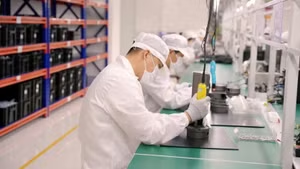
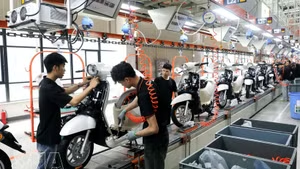
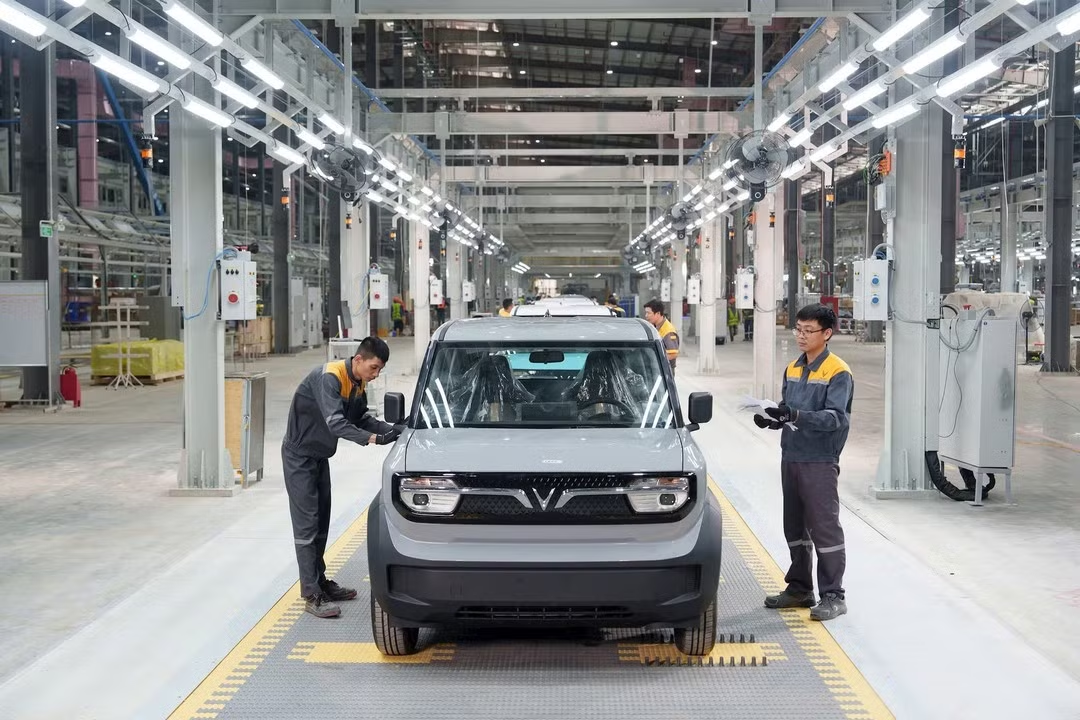
After experiencing difficulties caused by steel price competition, Formosa gradually improved its production performance from late 2025. The lithium battery factory in Vung Ang upgraded its facilities and installed additional production lines, increasing capacity from 100,000 to 230,000 battery packs annually. The VinFast factory expanded its range of electric cars and began producing electric motorbikes in April 2026.
Meanwhile, the resumption of operations at Unit 1 of the Vung Ang 2 Thermal Power Plant and the connection of Unit 2 to the grid for commercial electricity generation in April 2026 helped increase electricity output.
In the third quarter of 2026, Thanh Hoa Province recorded GRDP growth of 10.49%, supported by coordinated measures to resolve long-standing project difficulties, increase the supply of construction materials and strengthen discipline in leadership and administration. In late July, the province issued Directive No. 12/CT-UBND, calling for improvements in the quality of policy advice, fewer unnecessary meetings and more time spent working directly at the grassroots level to resolve problems.
Provincial leaders and working groups held direct meetings with investors and commune- and ward-level authorities to remove obstacles and accelerate project implementation.
Of more than 300 long-stalled projects, 287 have had obstacles removed, unlocking over 144.571 trillion VND in investment capital and nearly 2,086 hectares of land. An additional 38 factories and production facilities have commenced operations in the province, with total investment of 33.66 trillion VND.
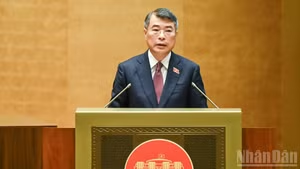
During a meeting with voters in Thanh Hoa, National Assembly Vice Chairman Nguyen Doan Anh noted that the province’s efforts to standardise administrative procedures, improve the effectiveness and efficiency of state management, and address bottlenecks, particularly in key projects, had contributed to positive changes.
Unlocking untapped growth drivers
Alongside localities that recorded double-digit GRDP growth during the first nine months, 22 provinces and cities have yet to meet their projected growth scenarios, with some performing below expectations, mainly because their growth potential has not been fully unlocked.
Despite being known as the “fruit capital of the north-west”, Son La Province recorded GRDP growth of just 5.59% during the first nine months, below its projected target of 7%. Chairman of the Provincial People’s Committee Nguyen Dinh Viet said the province’s economy depends heavily on electricity generation and distribution, which account for more than 18% of GRDP and nearly 65% of the industry and construction sector.
In the second quarter, unfavourable weather and hydrological conditions caused electricity output to fall by more than 700 million kWh. In the third quarter, electricity production increased by only 5.58%. Meanwhile, landslides along National Highway 6 significantly disrupted transport, goods circulation and tourism.
Alongside localities that recorded double-digit GRDP growth during the first nine months, 22 provinces and cities have yet to meet their projected growth scenarios, with some performing below expectations, mainly because their growth potential has not been fully unlocked.
In response, Son La is shifting towards diversifying its growth drivers, reducing dependence on natural conditions and increasing the added value of its products. The province aims to achieve GRDP growth of more than 13.8% in the fourth quarter, working towards full-year growth of 8%. It will accelerate investment in transport infrastructure to reduce logistics costs and improve connectivity between production areas, while ensuring that energy, industrial and tourism projects remain on schedule.
By the end of the third quarter of 2026, Lang Son Province had recorded GRDP growth of just 7.52%. Dinh Huu Hoc, Permanent Vice Chairman of the Provincial People’s Committee, said the province’s main growth driver, the industry and construction sector, had fallen short of its target, expanding by less than 12%, or 9.01 percentage points below the projected scenario. Industrial production alone grew by 6.7%, falling 15.12 percentage points short of expectations.
The main reason was the suspension of operations at the Na Duong Thermal Power Plant for technical upgrades, which caused electricity output to decline by 70%. Meanwhile, the services sector, accounting for nearly 50% of GRDP, grew by only 7.66%, or 3.61 percentage points below the projected level.
To stimulate growth, the province is accelerating infrastructure projects at border gates and completing site clearance for industrial parks and clusters. It aims to bring the Na Duong II Thermal Power Plant into commercial operation in December while expediting wind power projects.
Despite its considerable potential in fisheries, renewable energy and the marine economy, Ca Mau Province recorded GRDP growth of only 7.37% during the first nine months. This was largely attributable to transport infrastructure bottlenecks and weak logistics connectivity. The disbursement of public investment capital and implementation of major growth-driving projects also faced obstacles related to compensation and site clearance.
By the end of September, public investment disbursement had reached just 5.165 trillion VND, approximately 50% of the planned amount and well below the target.
Chairman of the Provincial People’s Committee Lu Quang Ngoi instructed investors and grassroots authorities to urgently resolve difficulties and accelerate project implementation. To expand growth opportunities, the province is promoting advanced processing and developing integrated fisheries value chains linked to aquaculture farming area identification codes and international certification. It is also removing obstacles facing renewable energy projects, developing seaports and logistics services, and accelerating key transport infrastructure projects to generate wider regional growth.
Viet Nam’s two major economic centres, Ha Noi and Ho Chi Minh City, have also demonstrated strong determination to achieve double-digit growth in 2026, contributing to the maintenance of major national economic balances. Chairman of the Ha Noi People’s Committee Vu Dai Thang said the capital’s GRDP expanded by 10.02% in the third quarter of 2026, although this remained below the projected scenario.
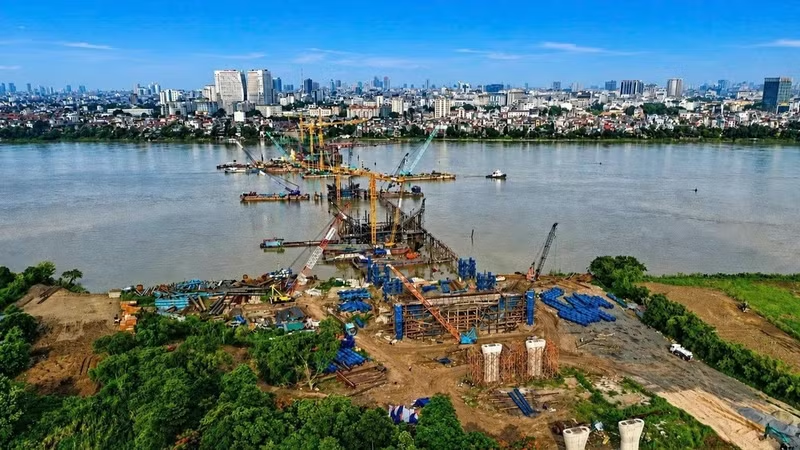
To achieve its full-year growth target of 11%, the city is focusing on three groups of measures. The first involves accelerating public investment and major infrastructure projects while resolving site clearance obstacles. The second centres on making full use of special mechanisms under the Capital Law to attract non-state investment, prioritising major projects capable of generating immediate construction output and economic value in the fourth quarter. The third focuses on increasing production capacity in industries such as electronics, metals and electrical equipment, while implementing measures to stimulate demand.
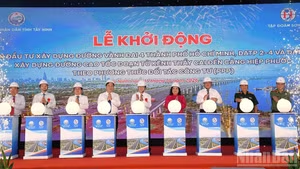
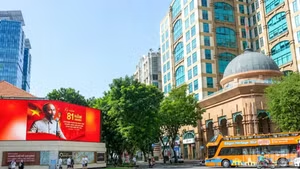
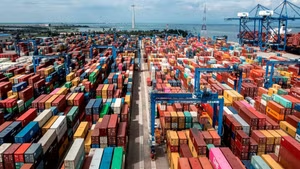
In Ho Chi Minh City, Chairman of the municipal People’s Committee Nguyen Van Duoc said the city’s traditional growth drivers continued to strengthen, while new drivers were gradually emerging. During the remainder of 2026, the city will make effective use of available mechanisms and policies, particularly the Urban Development Law. Alongside its three traditional pillars of production, consumption and exports, Ho Chi Minh City is developing three new growth drivers: an international financial centre, a seaport and logistics system, and innovation linked to green and digital transformation.
The city is determined to improve its investment environment, enhance competitiveness and become a major national services hub. It is also restructuring its urban space under the development orientation of “three regions, one special zone, three corridors and five growth drivers”.