The European Union Deforestation Regulation (EUDR) will officially take effect on December 30, 2026, while the EU's Carbon Border Adjustment Mechanism (CBAM) entered its definitive phase at the beginning of this year. These measures introduce new and more stringent requirements for Vietnamese exports, while also creating positive pressure to accelerate the green transition and enhance the competitiveness of Vietnamese products in international markets.
The EU is one of Viet Nam's leading trading partners and a market that increasingly imposes demanding sustainability requirements. From December 30, 2026, coffee, timber, rubber and other products covered by the EUDR may only be placed on the EU market if they can be demonstrated to be free from deforestation occurring after December 31, 2020.
Under the CBAM, obligations are calculated on imports entering the EU from the beginning of 2026, although carbon certificates will not go on sale until February 2027 and the first declarations must be submitted by September 30, 2027. This means that emissions data for exports in 2026 will determine the costs businesses must bear in the following year.
Neither regulation specifically targets Viet Nam. Rather, they reflect a broader global trend in which goods are assessed not only on quality and price but also on how they are produced. In implementing the policy of proactive and active international integration under the Politburo's Resolution No. 59-NQ/TW on international integration in the new situation, Viet Nam must regard these regulations as requirements affecting the entire economy, from improving the legal framework to organising production, procurement and supply chain management.
Legal nature and impact mechanisms of the two regulations
From a legal perspective, both measures are internal EU regulations. Regulation (EU) 2023/1115 of the European Parliament and of the European Council, dated May 31, 2023, concerning the placing on the EU market and export from the EU of certain commodities and products associated with deforestation and forest degradation, imposes obligations on businesses placing goods on the EU market. Similarly, Regulation (EU) 2023/956 of the European Parliament and of the Council, dated May 10, 2023, establishing the Carbon Border Adjustment Mechanism, which was amended in 2025 to simplify administrative procedures, places obligations on importers. Vietnamese businesses are not directly subject to either regulation.
However, to fulfil their legal obligations, EU importers will pass the relevant requirements on to their suppliers. Under the EUDR, products may only be placed on the market if they are deforestation-free after the 2020 cut-off date, have been produced in accordance with the relevant legislation of the country of production, and are covered by a due diligence statement submitted through the EU information system. EU businesses found in breach of the regulation may face fines with a maximum level of at least 4% of their total annual turnover within the bloc, confiscation of goods and exclusion from public procurement procedures.
When submitting a due diligence statement, importers assume responsibility for the compliance of the goods and must retain the statement for five years. During this period, competent EU authorities may conduct inspections. Therefore, European buyers are becoming increasingly cautious when selecting suppliers, as documentation relating to a shipment exported today may still be subject to scrutiny several years later.
Contracts for the purchase of coffee, timber and rubber have consequently changed. Buyers are increasingly incorporating clauses requiring compliance commitments, granting rights to conduct on-site inspections, and allowing contract termination or compensation claims if origin documentation fails to meet the required standards.
The CBAM operates differently. Rather than prohibiting goods, it places a price on the emissions embedded in imported products. From 2026, only authorised CBAM declarants may import iron and steel, aluminium, cement, fertilisers, electricity and hydrogen into the EU. They must purchase certificates corresponding to the embedded emissions, at prices linked to the bloc's carbon market. Where verified actual emissions data are unavailable, importers must use default values established by the EU, which are often considerably higher. Actual emissions must be calculated using EU-prescribed methodologies and verified by accredited independent verification bodies.
This requires Vietnamese businesses to monitor fuel consumption, raw material inputs and production output at the level of individual production facilities. The capacity to measure and report emissions therefore has a direct bearing on production costs and the competitiveness of exported goods.
For Viet Nam, coffee, timber and rubber that are key agricultural and forestry exports to the EU all fall within the scope of the EUDR. The EU alone accounts for more than 40% of Viet Nam's coffee export turnover. Meanwhile, the steel industry, despite its relatively modest export volume to the EU, is the first Vietnamese sector to be directly affected by the CBAM.
Implementing the EUDR: advantages and challenges
Viet Nam enters this new phase with an important advantage. On May 22, 2025, the European Commission announced its country classifications according to deforestation risk, placing Viet Nam in the low-risk category. As a result, importers of goods from Viet Nam are eligible for simplified due diligence procedures, without having to conduct risk assessments and mitigation measures for each shipment. The minimum annual inspection rate applied by competent EU authorities to this category is 1%, compared with 3% for standard-risk countries and 9% for high-risk countries (Commission Implementing Regulation (EU) 2025/1093 of May 22, 2025; Articles 13 and 16 of Regulation (EU) 2023/1115).
However, simplified due diligence does not mean exemption from the obligation to provide evidence of compliance. Importers must still obtain complete information about the goods, including the geographical coordinates of every plot of land used for production. This technical requirement is relatively manageable for smallholder farmers, as plots of less than four hectares require only a single geolocation point. The main difficulties lie elsewhere.
The first challenge concerns procurement. The EUDR requires geolocation data for every plot of land producing commodities contained in a shipment, together with an assessment of the risk of mixing them with products of unknown origin. However, in Viet Nam, agricultural products are largely collected through multiple layers of intermediaries. A failure to maintain adequate records at any stage can disrupt the traceability of the entire supply chain.
The rubber industry alone has approximately 300,000 smallholder households, accounting for more than half of the country's rubber-growing area. Most are not accustomed to maintaining records for individual harvesting periods.
Another challenge concerns legal compliance, an issue that has not yet received sufficient attention. The concept of "legal production" under the EUDR is broad, covering land-use rights, environmental protection, forest management, third-party rights, labour rights, taxation, anti-corruption measures, and trade and customs regulations in the country of production.
In the coffee sector, some plantations established on land previously classified as forest land have yet to receive land-use rights certificates. Without establishing the legality of these growing areas, demonstrating the legal origin of their products becomes difficult.
The timber industry is in a more favourable position. The Voluntary Partnership Agreement on Forest Law Enforcement, Governance and Trade (VPA/FLEGT) between Viet Nam and the EU was signed on October 19, 2018. Government’s Decree No. 102/2020/ND-CP, dated September 1, 2020, established the Viet Nam Timber Legality Assurance System.
Under the EUDR, timber covered by a FLEGT licence is deemed to meet the legality requirement. Moving the agreement into the licensing phase as soon as possible would significantly reduce compliance costs for the timber industry. Experience gained in developing this system could also be applied to the coffee and rubber sectors.
The coffee industry likewise benefits from a relatively favourable starting point, as a substantial proportion of its growing areas have already been certified under voluntary standards such as 4C and Rainforest Alliance. Although these certifications do not replace due diligence obligations, they provide existing data on land plots, farm owners and production volumes. If standardised, such information could form the foundation of a sector-wide traceability system.
The CBAM and the need for domestic Ccarbon pricing
Some argue that the CBAM has yet to exert a significant impact on Viet Nam because exports of steel, cement, aluminium and fertilisers to the EU remain relatively modest. This assessment may be accurate in the short term, but it should not be a reason to delay preparations.
The obligation to purchase CBAM certificates will increase gradually as the EU reduces the free emissions allowances allocated to businesses within the bloc. In 2026, the obligation covers only 2.5% of embedded emissions. By 2030, this proportion will rise to nearly half, reaching 100% by 2034 under the current regulations. In July 2026, the European Commission proposed extending this timetable to 2038, although the proposal has yet to be adopted. This approach is also gaining ground elsewhere. The United Kingdom is set to introduce a similar mechanism in 2027, while the EU is considering extending the CBAM to downstream products made from steel and aluminium.
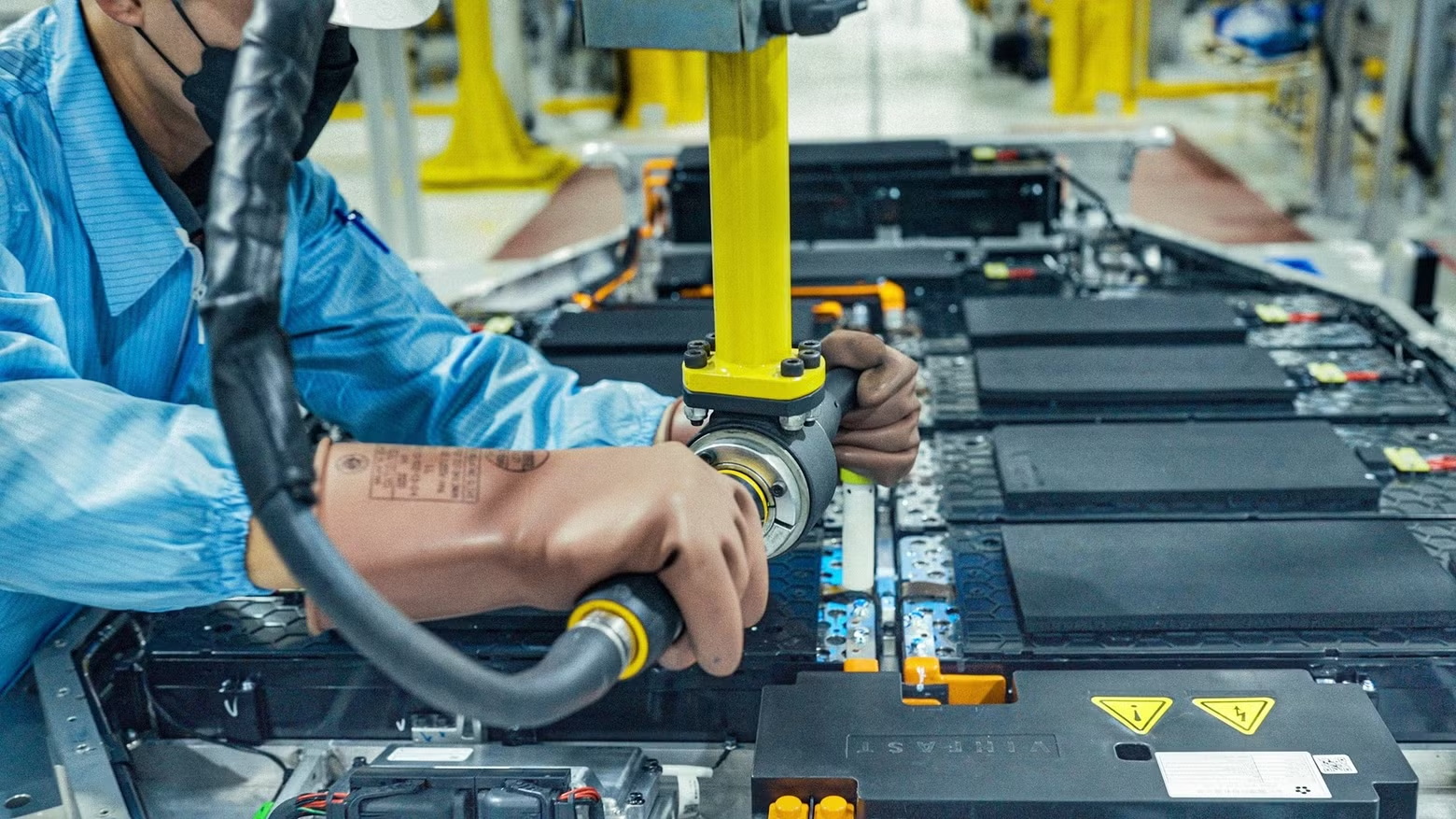
For the steel industry, the extent of the impact will depend largely on production technology. Steel produced from iron ore in blast furnaces generates substantially higher emissions per tonne than steel manufactured from scrap using electric arc furnaces.
According to some assessments, the CBAM could increase the cost of importing steel into the EU by approximately 15–25%, depending on the production technology employed. Technological modernisation in the steel industry is therefore not merely an environmental requirement. It will also determine whether Vietnamese producers can retain customers in markets with stringent standards.
From a legal perspective, Article 9 of Regulation (EU) 2023/956 allows a reduction in the number of CBAM certificates required, corresponding to the carbon price actually paid in the country of origin. If Viet Nam establishes an effective carbon pricing mechanism, some of the financial resources that would otherwise be paid to the EU could instead be retained domestically to support the green transition.
In the country, the Law on Environmental Protection No. 72/2020/QH14, adopted by the National Assembly on November 17, 2020, provides for the establishment of a carbon market under Article 139. Government’s Decree No. 06/2022/ND-CP, dated January 7, 2022, on greenhouse gas emissions reduction and ozone layer protection, together with the Prime Minister's Decision No. 232/QD-TTg, dated January 24, 2025, approving the Scheme for the Establishment and Development of a Carbon Market in Viet Nam, further sets out the implementation roadmap. On June 29, 2026, a pilot carbon trading platform officially began operating at the Ha Noi Stock Exchange.
However, the EU recognises only the carbon price actually paid, after deducting any rebates or other forms of compensation. If free emissions allowances are allocated too generously, trading prices will remain low, and the amount eligible for deduction under the EU's border adjustment mechanism will be correspondingly limited. Therefore, Viet Nam’s domestic carbon market should be regarded not only as an environmental protection instrument but also as an important tool of trade policy.
Solutions from building a unified database to strengthening businesses' legal capacity
Based on the above analysis, priority should be given to the following solutions.
First, a shared database of production areas should be established for each sector. Having individual businesses develop their own traceability systems is both costly and unlikely to ensure consistent reliability. It is crucial to form a unified database covering coffee-growing areas, rubber plantations and planted forests as soon as possible, with a clearly defined legal status and provisions specifying the responsibilities of commune-level authorities for verifying information. Businesses and importers should be allowed to access the database and connect it with the EU's information system. At the same time, outstanding legal issues concerning agricultural land previously classified as forest land must be definitively resolved.
Second, procurement practices need to be restructured to improve transparency. Individual farming households cannot be expected to meet European market standards on their own. Cooperative-based production and supply chain partnerships should be encouraged, with exporters signing long-term contracts, supporting farmers with geolocation and documentation, and sharing the additional value generated with producers. Consideration should also be given to requiring collection facilities handling commodities covered by the regulations to maintain records of product origins.
Third, a domestic carbon market should be developed in a substantive and effective manner. Viet Nam should announce a roadmap for gradually reducing free emissions allowances in high-emitting industries, standardise emissions measurement, reporting and verification in line with internationally recognised standards, and develop a domestic network of independent verifiers. On that basis, competent authorities should proactively engage with the EU and the United Kingdom to seek recognition of carbon costs already paid by businesses in Viet Nam.
Fourth, it is essential to make effective use of bilateral and multilateral cooperation frameworks. The Trade and Sustainable Development Chapter of the EU–Viet Nam Free Trade Agreement (EVFTA) contains specific provisions on sustainable forest management and trade in forest products (Article 13.8), together with a dedicated committee mechanism for dialogue between the two sides. This provides an appropriate channel for Viet Nam to raise difficulties arising from the implementation of the EUDR and propose mechanisms for data exchange and support for smallholder producers.
Fifth, businesses' legal capacity should be strengthened. Unless expressly excluded by the parties, contracts for the sale of goods with buyers in most EU countries fall within the scope of the United Nations Convention on Contracts for the International Sale of Goods (CISG), adopted in Vienna on April 11, 1980, to which Viet Nam has been a party since January 1, 2017. Under Article 35 of the Convention, goods must be fit for any particular purpose made known to the seller at the time of concluding the contract.
Where buyers have clearly indicated that goods are intended for import into the EU market, shipments lacking the documentation required under the EUDR may be considered non-conforming under the contract, potentially giving buyers grounds to reject the goods or claim damages. Therefore, businesses should review their contracts and negotiate balanced provisions concerning compliance warranties, risk allocation, inspection rights and contract termination. Industry associations could also develop model contractual clauses to support small and medium-sized enterprises.
Green standards are increasingly becoming the norm in international trade. Proactively adapting to these requirements is also part of implementing Viet Nam's National Green Growth Strategy for 2021–2030, with a vision to 2050, approved under the Prime Minister's Decision No. 1658/QD-TTg, dated October 1, 2021.
Today's efforts to improve data systems, enhance supply chain transparency and reduce emissions will help strengthen the reputation of Vietnamese products, maintain market access and contribute to the country's goal of rapid and sustainable development.