Experts say this is a major challenge, given that Viet Nam’s R&D spending has remained below 0.6% of GDP for years and relies heavily on the State budget.
The resolution calls on private enterprises to become leading forces in core technology development. However, high investment costs, commercialisation risks and legal uncertainties continue to discourage businesses, particularly small- and medium-sized enterprises (SMEs), from investing in R&D.
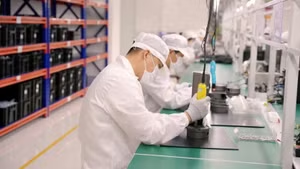
According to the Viet Nam Association for Supporting Industries (VASI), manufacturing and assembly remain at the lower end of global value chains, with thin profit margins and high vulnerability to replacement. Although R&D is essential to improving competitiveness, many domestic businesses remain reluctant to make the transition.
Nguyen Huu Yen, Deputy Director of the Ho Chi Minh City Department of Science and Technology, said that businesses have accumulated 8.92 trillion VND (345.1 million USD) in science and technology development funds, but have used only around 33.8% of the total. The challenge is to turn these funds into practical resources for innovation rather than leaving them unused.
New regulations taking effect in 2026, including Government Decree No. 320/2025/ND-CP, allow businesses to allocate up to 20% of their income to science and technology development funds and deduct up to 200% of actual R&D expenses when calculating corporate income tax.
Despite these incentives, businesses remain concerned about stringent accounting requirements and the risk of tax authorities rejecting expenses due to inadequate documentation.
Dinh Hong Ky, Chairman of Secoin Group, noted that complicated finalisation procedures discourage businesses from investing in R&D. Companies fear that failed projects could result not only in substantial financial losses but also in rejected deductions, additional tax payments and penalties.
To mobilise private capital, the State needs to shift from controlling funds to sharing risks. A clear legal framework should recognise that failure is an inherent part of scientific research, allowing legitimate R&D expenses to remain deductible even when projects fail, provided the research process is transparent and free from abuse.
Stronger links between academic research and businesses are equally important. At a meeting on October 14, Deputy Prime Minister Ho Quoc Dung stressed that at least 50% of research projects should be linked to enterprises by 2030, producing tangible products and outcomes.
A transparent, consistent policy framework and effective risk-sharing mechanisms will be essential to encouraging private businesses to invest in core technologies, improve productivity and move beyond low-cost manufacturing, making innovation a genuine driver of Viet Nam’s economic growth.