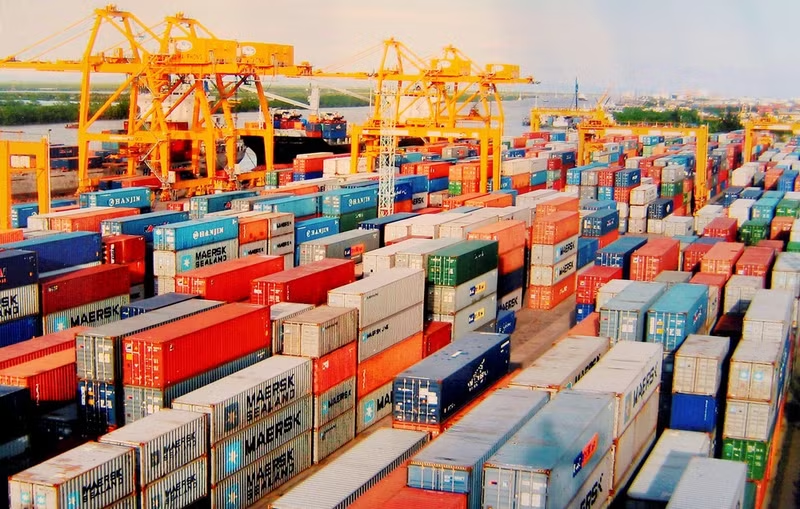
Developing physical commodity exchanges could help address this situation by making supply and demand information publicly available, facilitating competitive buying and selling offers, and standardising trading conditions. At the same time, it would enable traders, cooperatives, businesses and distributors to participate in the market through a more transparent platform.
Alongside the need to reorganise the physical commodity market, sharp fluctuations in international commodity prices have also highlighted the need to develop a derivatives market to help businesses hedge against risks.
A modern commodity trading system
A commodity exchange is an institution that organises transactions in commodities or commodity-based contracts under common rules governing membership, standards, pricing, payment, delivery and supervision.
Such an institution can reduce the costs of searching for trading partners, negotiation, quality assessment and contract enforcement. It helps market participants lower the costs of evaluating and selecting products that differ in quality grade, delivery time and location, and storage requirements.
Depending on the subject and purpose of trading, commodity exchanges can be divided into two basic categories: physical commodity exchanges (spot markets) and commodity derivatives exchanges.
A physical commodity exchange organises transactions involving actual goods, linked to the transfer of ownership or the right to receive goods, as well as payment and delivery under agreed conditions.
The economic function of this type of exchange is to organise the movement of goods from sellers to buyers in a more transparent, standardised and efficient manner.
By bringing together buy and sell orders or organising competitive auctions, an exchange helps reflect actual supply and demand, establishing transaction prices for specific commodities, quality grades and delivery conditions.
Therefore, physical commodity trading cannot operate independently of warehousing, quality inspection, logistics, commodity documentation and payment systems.
The effectiveness of a physical commodity exchange is primarily reflected in its ability to facilitate the movement of goods, reduce transaction costs, improve market transparency, provide information on underlying commodity prices and improve access to buyers and sellers.
Meanwhile, a commodity derivatives exchange is a platform for trading financial contracts whose value depends on the price of an underlying commodity, primarily futures and options contracts.
The economic function of this type of exchange is not to directly facilitate the movement of physical goods, but to create a market in which participants can transfer and allocate risks arising from price fluctuations.
For example, a coffee exporter may sell futures contracts to limit the risk of falling coffee prices, while a processing company may buy futures contracts to hedge against rising raw material costs.
As derivatives transactions typically involve margin requirements, clearing and position adjustments, most contracts can be closed out before maturity without the physical delivery of goods.
The effectiveness of a derivatives exchange is therefore primarily reflected in its ability to generate liquidity, establish reference prices for different maturities and provide price risk management instruments for market participants.
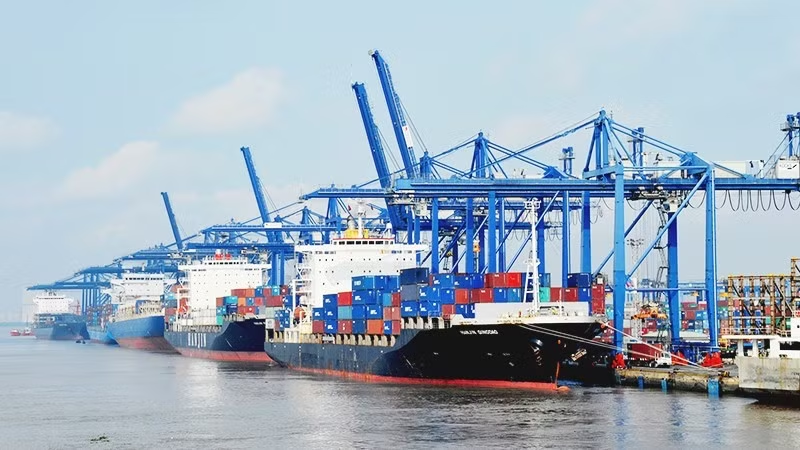
Although they differ in their trading instruments, methods of contract execution and direct functions, the two types of exchanges share several important characteristics.
Both are organised trading institutions operating on the principles of standardised contracts, information transparency, market-based price formation and control of risks associated with fulfilling contractual obligations. Both help reduce information asymmetry, improve resource allocation efficiency and enhance transparency in commodity markets.
Developing a modern commodity trading market therefore requires attention to both physical commodity trading and commodity derivatives trading, as the two markets perform different but complementary functions in facilitating the movement of goods, price formation and risk management.
If development focuses solely on derivatives exchanges without a transparent physical commodity trading system, the economy may gain additional trading and price-hedging instruments, but shortcomings in the purchasing, standardisation, delivery and sale of physical goods would remain unresolved.
Conversely, if only spot exchanges are developed without access to derivatives instruments, businesses will remain exposed to price volatility, particularly in sectors that are highly integrated into international markets.
Physical commodity markets remain inefficiently organised
In recent years, landmark resolutions issued by the Party Central Committee have set out important directions for institutional reform, including Resolution No. 57-NQ/TW on science, technology and digital transformation; Resolution No. 66-NQ/TW on reforming law-making and removing institutional bottlenecks; and Resolution No. 68-NQ/TW on private sector development. These major policy directions need to be promptly translated into a comprehensive and consistent legal framework for commodity trading markets.
These major policy directions need to be promptly translated into a comprehensive and consistent legal framework for commodity trading markets.
In practice, several commodities in which Viet Nam has competitive strengths have recorded impressive results, demonstrating that the country has developed sufficient supply and trading demand to support organised commodity markets. According to statistics from the Viet Nam Customs Department up to the end of September 2026, coffee exports reached approximately 1.45 million tonnes, worth 6.57 billion USD, ranking second globally. Cashew nut exports exceeded 542,000 tonnes, valued at 3.84 billion USD, while pepper exports reached approximately 216,000 tonnes, with a turnover exceeding 1.2 billion USD. Both cashew nuts and pepper ranked first globally.
However, large-scale production and exports do not necessarily mean that commodity markets are efficiently organised, particularly in terms of access to information, competitive price formation and the distribution of benefits among participants in supply chains.
One of the major shortcomings of Viet Nam’s commodity market is that trading remains fragmented, with a lack of centralised, transparent trading platforms capable of connecting buyers and sellers on a broad scale.
For many agricultural products, producers mainly sell through traders, purchasing agents or a limited number of familiar businesses, while lacking comprehensive information on demand, purchasing prices and trading conditions in different markets.
Without knowing to whom, where or when they could sell their products most profitably, producers are often placed in a weak bargaining position, particularly when crops reach harvest time, products are difficult to preserve or goods must be sold quickly to recover capital.
In some cases, traders purchase products directly from farms and may take advantage of producers’ limited access to information and constraints in transportation and storage to offer low prices. This is not merely a problem affecting individual transactions but also reflects information asymmetry and limited competition in the organisation of commodity markets.
A similar situation exists in distribution. Many retail shops, business establishments and small enterprises depend on a few traditional suppliers, with limited opportunities to access and compare multiple sources of goods simultaneously in terms of price, quality, delivery time and transportation costs.
Limited supplier choice can increase input costs, weaken bargaining power and affect retail prices for consumers.
Thus, the lack of a centralised trading system not only puts producers at a disadvantage but also limits buyers’ ability to choose suppliers, compete and optimise costs.
Developing physical commodity exchanges could help address these shortcomings by making supply and demand information publicly available, organising competitive buying and selling offers, and standardising trading conditions. At the same time, such exchanges would enable traders, cooperatives, businesses and distributors to participate in the market through a more transparent platform.
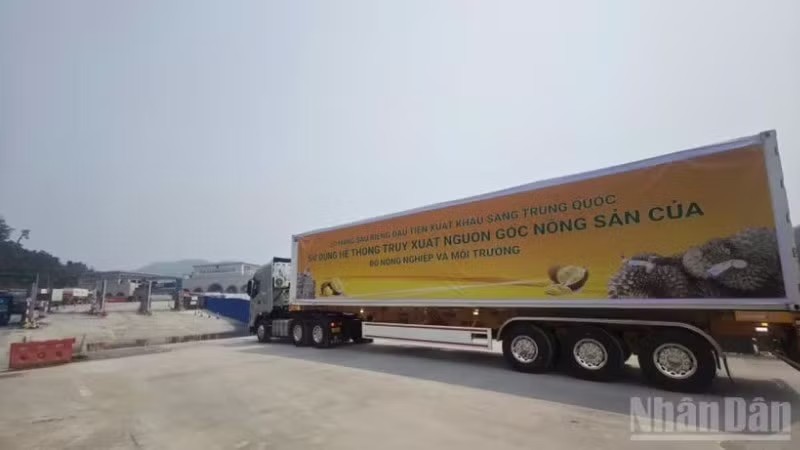
Derivatives markets: An indispensable component
Alongside the need to reorganise physical commodity markets, sharp fluctuations in international commodity prices have also highlighted the need to develop derivatives markets to help businesses hedge against risks.
Viet Nam has already established certain foundations for this development. In 2025, the commodity derivatives market recorded approximately 1.54 million contracts, with a total trading value exceeding 1.9 quadrillion VND and an average trading value of around 7.5 trillion VND per session.
However, according to figures published by the Mercantile Exchange of Viet Nam (MXV), individual accounts accounted for approximately 99.5% of the total, while institutional and corporate accounts represented only around 0.5%.
Although the proportion of accounts does not directly reflect the share of transactions conducted for hedging purposes, this structure highlights the need to encourage greater participation by production, processing and import-export businesses.
Notably, the Ministry of Industry and Trade has also acknowledged that links between the derivatives market and domestic physical commodity trading remain limited.
Viet Nam currently possesses favourable conditions for developing a commodity exchange system, including large-scale production and trade, networks of businesses and banks, logistics services, digital infrastructure and experience in organising derivatives trading.
On April 6, 2026, Ho Chi Minh City launched a pilot programme for centralised trading of pork carcasses through a commodity exchange, using the existing technological infrastructure, legal framework and trading system of the MXV, with all products being traceable.
By the end of September 2026, trading volume through the exchange had reached 25,000 carcasses, and the city was considering expanding the model to poultry meat and eggs.
However, the conditions necessary for centralised physical commodity trading, including quality standards, warehouses, independent inspection, commodity documentation, payment systems and price data, have yet to be fully interconnected.
Experience from centralised trading models already implemented shows that establishing an exchange and investing in technology are not sufficient to create an efficient market without adequate commodity supplies, buyers, sellers and mechanisms to ensure genuine transactions.
Notably, if the draft new law repeals Articles 63 to 73 of the 2005 Commercial Law without including provisions governing centralised spot markets, it could create a serious legal vacuum, leaving insufficient legal grounds for organising and supervising spot trading through commodity exchanges.

The coordinated development of physical commodity exchanges and commodity derivatives exchanges is therefore an important requirement in the process of improving Viet Nam’s market economy institutions.
Physical exchanges help expand opportunities to choose trading partners, increase competition in buying and selling, improve price transparency and reduce distribution costs. Meanwhile, derivatives exchanges help hedge against price fluctuations and stabilise production and business operations.
Combining the two types of markets could improve resource allocation efficiency, strengthen business competitiveness, enhance producers’ bargaining positions and promote international trade integration.
However, these benefits can only materialise when exchanges have sufficient liquidity, operate transparently, maintain reasonable costs and remain closely aligned with the needs of the real economy.
The objective, therefore, is not to establish numerous exchanges, but to build an organised, competitive and efficient commodity market system that directly supports Viet Nam’s economic development.