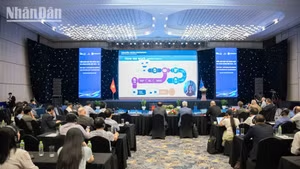
The event took place as Viet Nam is stepping up implementation of Politburo Resolution No. 70-NQ/TW on ensuring national energy security, while addressing the urgent tasks of energy transition and upgrading technical infrastructure amid complex fluctuations in the global energy market.
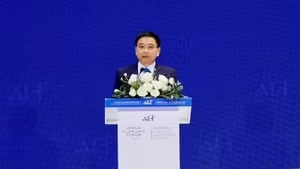
In his opening remarks, Member of the Party Central Committee and Deputy Head of the Party Central Committee’s Commission for Policy and Strategy Nguyen Van Phuong stressed that firmly safeguarding national energy security is a vital prerequisite for maintaining macroeconomic stability and enhancing national competitiveness in the new stage of development.
Viet Nam has achieved notable initial results, including putting the Thi Vai LNG Terminal and the Nhon Trach 3 and Nhon Trach 4 power plants into commercial operation.

However, Nguyen Van Phuong also pointed out that LNG infrastructure development in Viet Nam still faces four challenges, namely ensuring synchronisation across the entire value chain from imports, storage, and regasification to power generation and transmission; developing a sufficiently large, stable, and creditworthy consumption market; balancing supply security, economic efficiency, and energy transition goals, including controlling the risks of excess capacity and methane emissions; and designing effective investment models while reasonably allocating five main groups of risks related to fuel prices, volumes, exchange rates, project schedules, and finance.
Following the opening session, US Ambassador to Viet Nam Jennifer Wicks commended Viet Nam’s progress in adjusting Power Development Plan VIII and affirmed that LNG-fired power is a strategic investment to ensure stability for the national energy system.
The Ambassador noted that the development of modern LNG terminals would help Viet Nam proactively access long-term supply contracts and minimise adverse impacts from external market shocks.

The US Ambassador also emphasised that, to attract international investment flows and participation from US businesses, Viet Nam needs to facilitate access to financing, establish transparent energy pricing mechanisms, set clear capacity regulations, and finalise licensing contracts in line with international standards.
Jennifer Wicks affirmed that the US side stands ready to accompany and support Viet Nam through policy advice, experience sharing, and technology transfer.
From the perspective of the state management agency for the energy sector, Deputy Minister of Industry and Trade Nguyen Viet Son highlighted five key issues requiring focused attention, namely linking infrastructure development with planning based on actual consumption demand; promoting energy hub models and shared infrastructure to optimise costs; strengthening coordination between the gas and electricity markets; diversifying supply sources through a combination of long-term and spot contracts; and stepping up international cooperation in investment, technology, and finance.
The Deputy Minister of Industry and Trade added that the National Assembly had recently passed the Law amending and supplementing a number of articles of the Electricity Law, while the Ministry of Industry and Trade is actively finalising and updating the adjusted Power Development Plan VIII, expected to be completed in 2026, thereby creating a favourable legal framework to attract investment and remove existing bottlenecks in the LNG project chain.

Representing the international partner, Vice President for Asia-Pacific at Excelerate Energy Derek Wong pledged to widely share practical international experience, advanced technical solutions, and flexible infrastructure models such as floating storage and regasification units (FSRUs), to help Viet Nam address bottlenecks, optimise investment costs, and advance an efficient and sustainable energy transition.
The insights shared by speakers at the workshop are expected to provide comprehensive perspectives, contributing to efforts to refine institutional frameworks and build a synchronised LNG infrastructure system for Viet Nam.