This orientation establishes a strategic vision for transforming Viet Nam into a strong maritime nation, with the goal that by 2030, coastal provinces and cities will contribute over 70% of the national GDP. It also placed higher demands on the leadership, governance, and implementation capabilities of Party committees and organisations at all levels.
Among coastal localities, Hai Phong possesses the ideal conditions to realise the objectives of Resolution No. 20-NQ/TW, thanks to its international gateway seaport system, multimodal transport network, and well-developed industrial base. Following recent administrative consolidations, the city’s development space has expanded, creating greater scope for establishing interconnected chains spanning seaports, industry, logistics, urban development, tourism, and services.
The Hai Phong City Party Committee has articulated this development vision within the Action Programme of the City Party Committee for the 2025–2030 term. The city aimed to transform itself by 2030 into a modern, civilised, and eco-friendly port city—a highly livable urban centre of regional significance within Southeast Asia—as well as a premier national hub for the maritime economy, high-quality tourism, logistics, and clean energy.
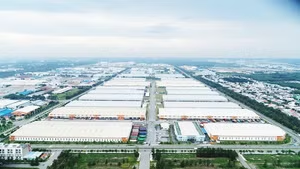
The city has identified industry, logistics, and seaports as key pillars of its economy. It is pursuing a strategy of developing a modern, smart industrial sector and establishing large-scale logistics hubs, while ensuring seamless connectivity between its seaports and road, rail, and air transport networks.
As a result, Hai Phong’s Gross Regional Domestic Product (GRDP) is estimated to have grown by 12.08% in the first nine months of 2026—the highest rate in the past six years. This marks the eleventh consecutive year of double-digit growth, with the city’s economy reaching a scale of nearly 30 billion USD, ranking third nationwide.
These results clearly demonstrate the leadership and guidance provided by Party committees and organisations in executing strategic breakthroughs—specifically, the comprehensive and modern development of infrastructure for seaports, industry, transportation, and logistics.
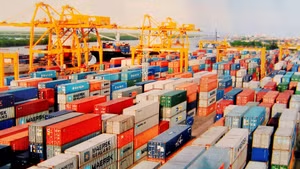
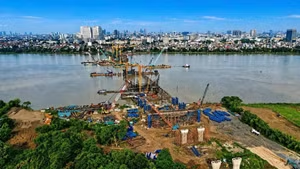
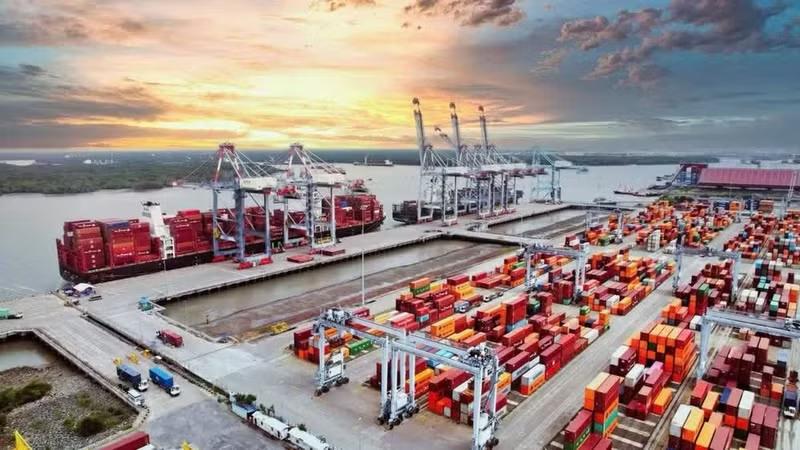
The city has commenced construction on the T2 passenger terminal at Cat Bi International Airport and brought terminals 1 through 6 at the Lach Huyen International Port into operation, with the capacity to accommodate vessels exceeding 130,000 DWT.
By 2025, the volume of cargo passing through these ports reached approximately 200 million tons, with a container throughput of about 8.5 million TEU—steadily strengthening the city’s position as a gateway for imports and exports in Northern Viet Nam and enhancing its ability to integrate into international maritime transport networks.
Alongside its seaports, the Dinh Vu-Cat Hai Economic Zone and various coastal industrial parks have become prime destinations for major technology corporations. The scope of the maritime economy has also expanded to include coastal and island tourism.
The recognition of the Cat Ba Archipelago—together with Ha Long Bay—as a UNESCO World Natural Heritage site has created further opportunities for Hai Phong to develop high-end resort tourism and premium maritime services.
Experience has shown that shifting from a narrow focus on the maritime economy to a comprehensive approach to developing the entire maritime space has fostered strong, integrated links between the mainland and the islands. In the case of Khanh Hoa province, this orientation is even more pronounced as its maritime space has expanded.
Following the reorganisation of its administrative units, Khanh Hoa now possesses a coastline nearly 500 kilometers long and over 200 islands and islets. With the Van Phong, Nha Trang, and Cam Ranh bays, as well as the Truong Sa (Spratly) administrative unit, the province occupies a unique strategic position—providing the ideal foundation to simultaneously leverage its advantages in tourism, fisheries, seaports, logistics, energy, and marine science and technology.
The Resolution of the 1st Provincial Party Congress for the 2025–2030 term sets a goal for Khanh Hoa to become a centrally-run municipality by 2030—a hub for international marine services and tourism, and a major growth pole for the entire country.
The province has identified key growth pillars, with the marine economy serving as the foundation; the processing industry, logistics services, renewable energy, and the digital economy are designated as breakthrough sectors, while tourism is prioritised as a spearhead economic sector.
To date, the marine and coastal economy has contributed approximately 80% of the province’s Gross Regional Domestic Product (GRDP), with the GRDP growth rate reaching 11.21% in the first nine months of 2026.
The tourism sector has welcomed over 20 million visitors—including an estimated 7.1 million international tourists—generating a total revenue of nearly 68 trillion VND. Cargo throughput at the province’s ports has reached nearly 15 million tonnes, with projections indicating an increase to 38–39 million tonnes per year by 2030.
Concurrently, the province has expanded into new energy and marine-related economic sectors, fostering aquaculture and fisheries, as well as research and development for offshore wind power.
Furthermore, the province has finalised proposals for a national research center for ocean technology and a high-tech marine aquaculture development initiative, effectively transforming its maritime advantages into new resources for development.