Technology transfer remains a bottleneck
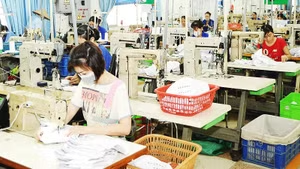
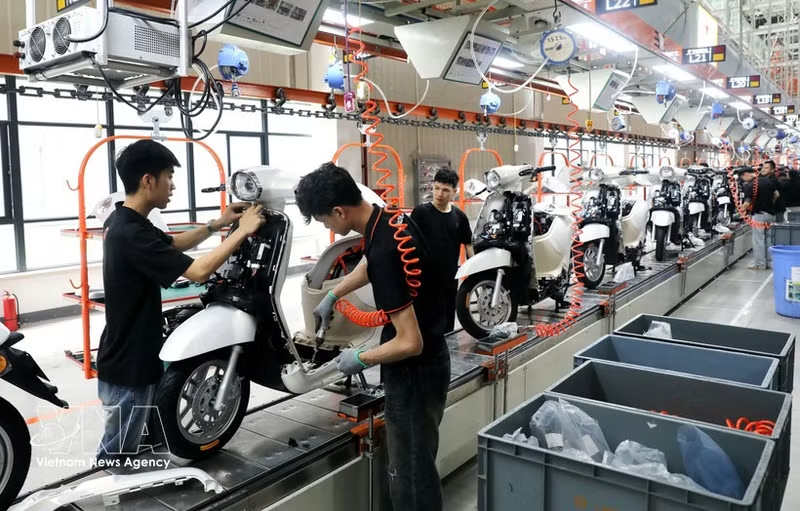
Foreign-invested firms account for a large share of Viet Nam’s exports, yet much of that value rests on imported raw materials and components. Domestic added value is below half, well behind other East and Southeast Asian economies, particularly in manufacturing and electronics. Most Vietnamese companies remain confined to simple processing and low-added-value stages of the value chain.
Technology transfer from FDI enterprises remains limited and has improved only slowly, said Bui Thu Thuy, Deputy Director of the Foreign Investment Agency (FIA) under the Ministry of Finance (MOF).
Citing the Ministry of Science and Technology data, Thuy said only about 600 technology transfer contracts were registered nationwide in 2006-2016, equal to less than 4.3% of FDI projects. Around 400 were recorded in 2018-2022, mostly intra-company transfers between parent companies and their Vietnamese branches, aimed chiefly at supporting the foreign firms’ own production and operations. Transfers centred on technical support (77%), training (71%) and production processes (73%), while those involving intellectual property made up just 13%.
Under the Politburo’s Resolution 10-NQ/TW dated June 8, 2026 on developing the foreign-invested economy, Viet Nam is fundamentally overhauling its approach to FDI, shifting from passive attraction to proactively selecting quality, hi-tech investment with spillover impacts on the domestic economy.
The MOF is studying amendments to the Investment Law to codify more generous preferential mechanisms, steering investment attraction toward selectivity rather than courting capital at any cost.
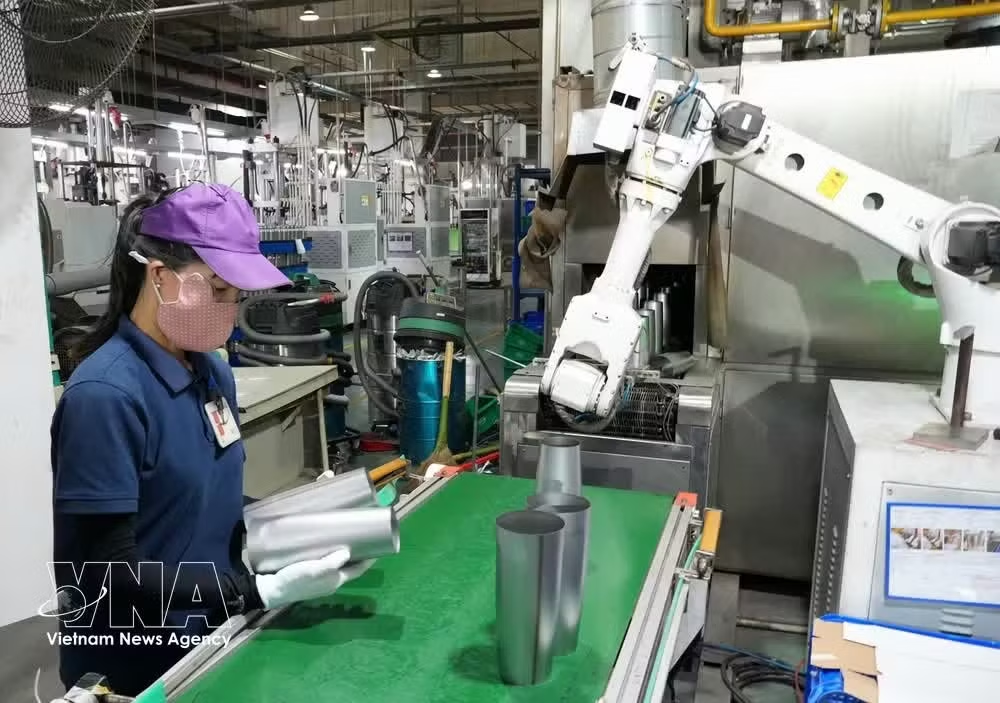
Incentives will increasingly hinge on investors’ performance and commitments, not just on landing projects. Key commitments include transferring technology to Vietnamese firms, training workers, providing technical support and opening FDI supply chains to domestic companies.
Making Viet Nam’s manufacturing ecosystem more competitive
Resolution 10-NQ/TW targets about 10,000 domestic firms in the value and supply chains of FDI enterprises by 2030, including 500-1,000 tier-1 suppliers. The 2026-2035 supporting industry development scheme, approved under Decision 929/2026/QD-TTg, makes developing supporting industries along global supply and value chains a priority, with leading enterprises’ technical requirements, quality standards and localisation rates serving as key criteria for support policies.
Many foreign-invested companies want to buy more from Vietnamese enterprises, Thuy said.
Cha Ji Ho, Samsung Viet Nam’s Deputy General Director in charge of its procurement centre, said Samsung is shifting from boosting suppliers’ production capacity to building deeper specialised capabilities and a supplier ecosystem in Viet Nam. The company plans to widen its support geographically, add participating firms and deepen their capabilities, extending from hubs like Bac Ninh and Ho Chi Minh City to Phu Tho, Hai Phong and Thai Nguyen, while stepping up cooperation with local suppliers.
Samsung proposed systematic cooperation among the Government, the company and Vietnamese enterprises, built on a supplier database and clear support policies and frameworks. The aim is to raise localisation rates, broaden access to supply chains and sharpen domestic manufacturers’ competitiveness.
It also suggested publishing an annual Supplier Development White Paper to establish a mechanism for cooperation and long-term monitoring of supply chain development.
Under this approach, ties between FDI and Vietnamese companies will move beyond simple buyer-supplier relationship toward joint development and sustainable partnerships, and better competitiveness of Viet Nam’s manufacturing ecosystem as a whole.





![[Infographic] GRDP growth scenarios for 34 provinces and cities in fourth quarter of 2026](https://en-cdn.nhandan.vn/images/nyM650OGFWrOVWc-xajqN-rTZ68Rlmc1fiGJOhBRYHFSa4DhrHNDxEFdnz313Vk5dNJuxdkHglPA3rLeaPeiaUheNuCI723k2lNssd-YLJuKR58epWq7s21lV5WjM-HR2-Qpbi4MwAzqt9wRjL4WjGkfEz7RO9qhcwg8o8LQFK8/grdp-growth-scenarios-for-34-provinces-and-cities-in-q42026-anh-dai-dien.jpg.avif)