External pressures and domestic challenges
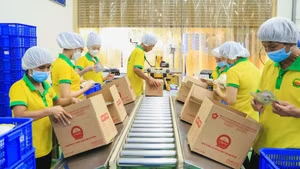
A garment manufacturer receives additional export orders for the year-end shopping season. At first glance, this appears to be an opportunity to boost revenue. However, after recalculating the costs of raw materials, transport and labour, the expected profit margin turns out to be slim. Accepting the orders means accelerating production, but maintaining profitability remains the greater challenge.
This situation reflects the pressures facing many Vietnamese exporters in the final months of 2026. With demand recovering unevenly across major markets and fluctuations in raw material prices and logistics costs, exporters must not only ensure timely deliveries but also find ways to remain competitive.
In Thanh Hoa Province, many businesses are concentrating their resources on fulfilling existing orders. However, fluctuations in raw material prices, transport costs and tariff policies in major markets are creating considerable difficulties for exporters. Hoang Thi Kim Dung, Vice Chairwoman of the Thanh Hoa Textile and Garment Association, said businesses must cut costs, improve productivity and proactively organise production to retain orders.
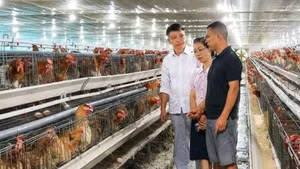
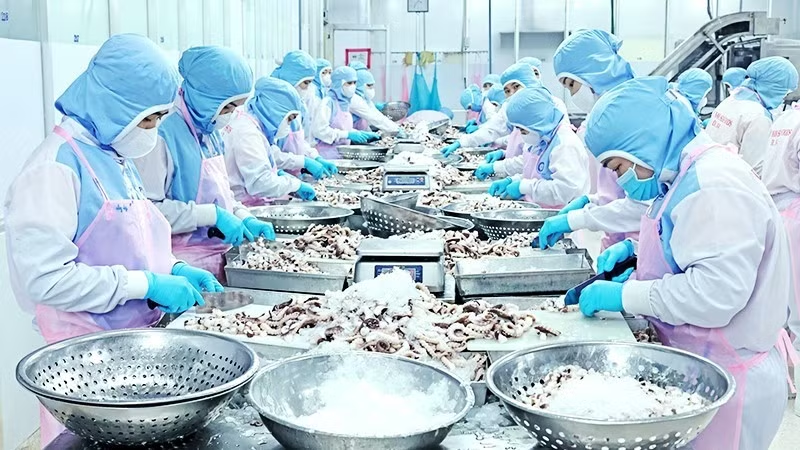
Meanwhile, exporters of agricultural, forestry and aquatic products face additional pressures from quality standards, food safety regulations, traceability requirements and the need to maintain stable supplies. Le Quy Viet, Chairman of the Board of Directors of Thanh Hoa Seafood Import-Export Joint Stock Company, said strengthening internal capabilities, improving production efficiency and meeting international standards were decisive factors in retaining markets and securing new orders.
These difficulties partly reflect the broader challenges facing Viet Nam's export sector, where trade turnover continues to increase while cost pressures and dependence on imported raw materials are growing.
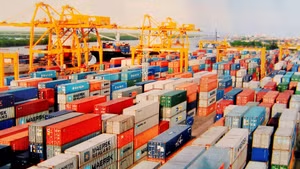
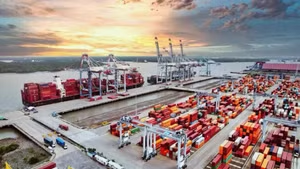
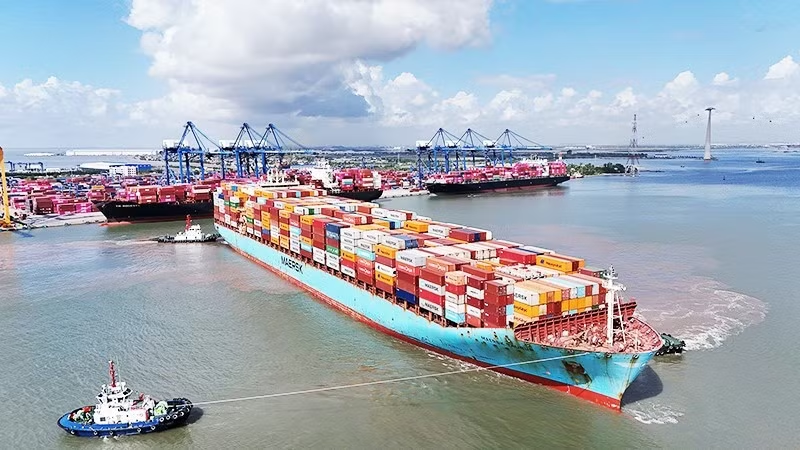
According to the Customs Department, Viet Nam's total import-export turnover reached 56.68 billion USD in the first 15 days of October 2026, up 48.5% year on year. By October 15, cumulative trade turnover had exceeded 945 billion USD, comprising 463.7 billion USD in exports and 481.36 billion USD in imports.
Earlier, total import-export turnover reached 888 billion USD in the first nine months of 2026, an increase of 30.4%. Exports rose 25.4% to 434.3 billion USD, while imports surged 36.7% to 453.7 billion USD.
With imports growing faster than exports, the trade balance shifted from a surplus of 16.87 billion USD in the same period of 2025 to a deficit of 19.4 billion USD.
Notably, electronics accounted for more than 42% of total export turnover but also recorded a substantial trade deficit. During the first nine months, imports of computers, electronic products and components reached 188.9 billion USD, up 71.7%, while exports stood at 123.6 billion USD, leaving a gap of more than 65 billion USD.
Explaining the situation, Trinh Thi Thu Hien, Deputy Director of the Agency of Foreign Trade under the Ministry of Industry and Trade, said prices of raw materials used in electronics and semiconductor manufacturing had risen sharply, with some chips and solid-state drives (SSDs) recording price increases of 300–500%, pushing up import values.
In addition, rapidly growing demand for materials used in manufacturing technology products, particularly those related to artificial intelligence (AI), has prompted businesses to increase their inventories. Some companies have extended their inventory coverage from six to 12 weeks, while the value of inventories held by many businesses has risen from 100 million USD to 700 million USD.
Investment expansion by major corporations such as Samsung, Intel and BYD has also driven demand for imported machinery, equipment and production components.
From a management perspective, Bui Huy Son, Director of the Planning and Finance Department under the Ministry of Industry and Trade, noted that industrial production and exports continued to record positive growth, although the quality of growth remained uneven.
Notably, foreign direct investment (FDI) enterprises accounted for 80.9% of total export turnover, with their exports increasing by 29.2%, compared with growth of just 6.1% among domestic businesses. This indicates that export growth remains heavily dependent on the FDI sector, while domestic enterprises still have limited capacity to participate in supply chains.
Increasing domestic value added for sustainable growth
According to Trinh Thi Thu Hien, maintaining export growth is the first priority in reducing the trade deficit. However, imports must also be considered in relation to demand for raw materials, machinery and components used in production.
The Ministry of Industry and Trade is implementing measures to help businesses expand their markets and promote exports, while strengthening domestic production capacity, increasing localisation rates and raising value added throughout supply chains.
This is also a key direction outlined in the draft Strategy for Goods Import and Export to 2030, with a vision to 2045. Under the draft strategy, Viet Nam aims to achieve average annual export growth of 15–16% and import growth of 12–13% during 2026–2030, while maintaining a sustainable trade surplus equivalent to 3–6% of total export turnover.
By 2045, Viet Nam aims to rank among the world's 10 largest trading nations in terms of import-export turnover, with the trade surplus reaching 7–10% of export turnover.
Notably, the strategy seeks to increase the share of exports generated by domestic enterprises to 28–30% by 2030 and 38–40% by 2045. The proportion of processed or refined goods in total exports is targeted to reach 89–90% by 2030 and exceed 92% by 2045.
In terms of scale, the draft outlines three export scenarios for 2030, ranging from 765 billion USD to 1.0411 trillion USD. These targets demonstrate that export growth cannot rely solely on market expansion or an increase in orders. More importantly, Viet Nam needs to develop supporting industries, strengthen the capabilities of domestic enterprises and increase the technological content of its products.
In the short term, maintaining export growth will help improve the trade balance. In the longer term, however, reducing dependence on imported raw materials, increasing the export share of domestic enterprises and retaining more value within supply chains will provide the foundation for sustainable export growth in Viet Nam.