Criteria for meeting ecological standards
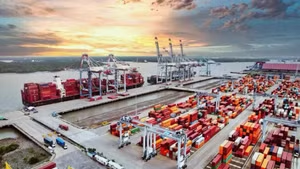
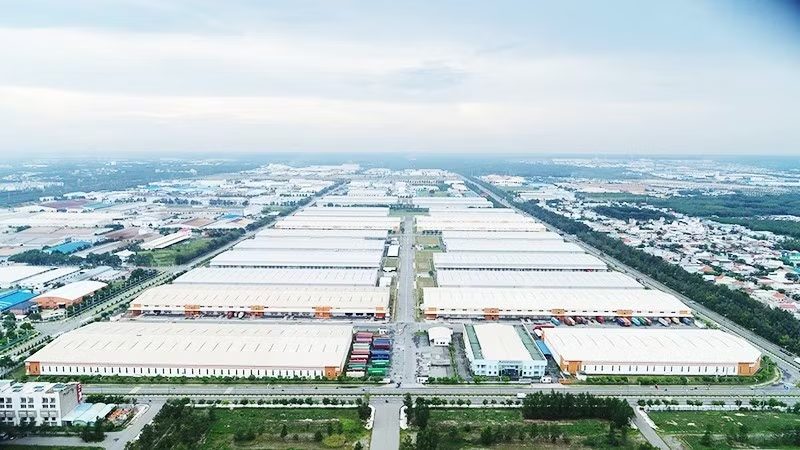
Under Ho Chi Minh City’s development master plan for export processing zones (EPZs) and industrial parks (IPs) to 2030, with a vision to 2050, the city will have 105 EPZs and IPs covering a total planned area of more than 50,288 hectares. Of these, three EPZs and 55 IPs are already operational, covering more than 22,410 hectares, with an average occupancy rate of approximately 80%. This provides a basis for Ho Chi Minh City to focus on transforming existing industrial parks and clusters rather than merely expanding into new areas.
Under the city’s development orientation, existing EPZs and IPs will be transformed towards ecological, green, smart and circular models. The Ho Chi Minh City People’s Committee is currently seeking feedback on a draft resolution specifying criteria for eco-industrial parks and clusters, as well as a roadmap, mechanisms and policies to support the transition of existing facilities to these models.
Explaining the criteria, Tran Thanh Tung, Head of the Environment Division under the Ho Chi Minh City Export Processing and Industrial Zones Authority (HEPZA), said that eco-industrial clusters must ensure that the combined area allocated to greenery, transport infrastructure and shared technical facilities meets the minimum proportion prescribed by national technical regulations on construction planning, with green spaces accounting for at least 10%.
For newly established industrial clusters developed along ecological lines, these areas must account for at least 23% of the total, including a minimum of 12% allocated to greenery. Each eco-industrial cluster must have at least one industrial symbiosis activity.
For eco-industrial parks, the proportion of enterprises adopting resource efficiency, cleaner production and circular economy solutions will be raised from 20% to 25%. Each industrial park must have at least one industrial symbiosis activity in each of three forms: exchanging inputs and outputs, sharing infrastructure and sharing services. Notably, at least 10% of the total annual electricity demand of businesses operating in each industrial park must be met by renewable energy sources.
Bui Minh Tri, Head of HEPZA, emphasised that adopting eco-industrial park and cluster models is key to helping countries maintain their competitive advantages and avoid exclusion from global value chains.
On the business side, Becamex Investment and Industrial Development Group Joint Stock Company (Becamex Group) is focusing on developing a new generation of smart eco-industrial parks. The group aims to attract high-tech manufacturing, supporting industries, automation and green production.
According to Becamex Group, major projects such as the 700-hectare Cay Truong Industrial Park and the 380-hectare second phase of the Bau Bang expansion are being developed according to new standards, incorporating digital infrastructure, renewable energy and efficient resource utilisation.
The group is also strengthening cooperation with the World Bank and international organisations to research and develop eco-industrial park models that meet international standards.
Support mechanisms needed
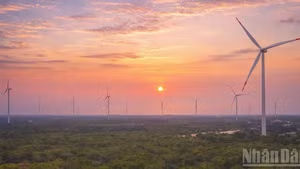
According to HEPZA, Ho Chi Minh City is pursuing three major transformation directions: developing eco-industrial park models; comprehensively transforming its EPZ and IP system in conjunction with restructuring key industries towards ecological, green and smart industrial parks; and promoting energy transition to develop green industrial parks.
The city aims to have at least six industrial parks and two industrial clusters meeting ecological certification criteria by 2030, increasing to at least 10 industrial parks and four industrial clusters by 2045.
To achieve these goals effectively, Pham Ngoc Thuan, Vice Chairman of Becamex Group’s Board of Directors, proposed that Ho Chi Minh City cooperate with international organisations such as the International Finance Corporation (IFC), part of the World Bank Group, to work towards international eco-industrial park standards.
According to Thuan, international recognition would enhance the reputation of industrial parks while facilitating access for goods to markets with stringent environmental and sustainable development requirements.
Regarding resources for the transition, Becamex proposed mobilising diverse funding sources, including the municipal budget, corporate capital, green credit, the city’s Environmental Protection Fund, domestic and foreign credit institutions and financial organisations, and climate funds.
Vo Van Than, Chairman of the Ho Chi Minh City Industrial Park Enterprises Association and Chairman of the Members’ Council of Vinh Loc Industrial Park One Member Limited Liability Company, recommended extending the operating periods of industrial parks that meet ecological criteria and obtain certification by an additional 20 years. He also proposed simplifying administrative procedures to accelerate the transition and allowing existing industrial parks to participate in subsidised loan programmes, with 100% interest support for seven years.
Meanwhile, Giang Ngoc Phuong, Deputy General Director of Hiep Phuoc Industrial Park Joint Stock Company in Ho Chi Minh City, said that many enterprises in industrial parks have gradually adopted circular economy practices and industrial symbiosis models as part of their transition towards eco-industrial parks and the goal of achieving net-zero emissions.
Environmental experts also noted that for industrial parks and clusters to become genuinely green and ecological, their fundamental foundation must be sustainable development, encompassing environmental protection, the business community and transparent governance in accordance with environmental, social and governance (ESG) principles, which are used to assess corporate sustainability.
Highlighting challenges in the transition process, Tran Thanh Tung, Head of HEPZA’s Environment Division, said green industry requires investment in new technologies, infrastructure and production processes, involving high initial costs. Reluctance to change from existing industrial parks to eco-industrial parks also remains widespread. In particular, regulations governing green and eco-industrial parks are still incomplete and inconsistent, providing insufficient incentives for enterprises to participate.
To accelerate eco-industrial park development in the coming years, Tran Xuan Tung proposed three main groups of recommendations. The Government should complete the development of the carbon market and introduce tax and credit incentives for investment in ecological infrastructure. Local authorities should incorporate eco-industrial parks into their planning and require developers to invest in green energy. Meanwhile, enterprises should proactively standardise their ESG reporting and invest in green technologies from now on.
Regarding eco-industrial park models in Ho Chi Minh City, HEPZA has coordinated with relevant organisations to pilot the approach at five industrial parks: VSIP, VSIP Expansion, Cay Truong, Hiep Phuoc and Phu My 3.
These parks have now largely met the criteria for eco-industrial parks. In particular, Phu My 3 Specialised Industrial Park, covering nearly 1,000 hectares, has satisfied the ecological criteria. Consultations with central ministries and agencies have been completed, and the necessary documentation is being finalised for submission to the Ho Chi Minh City People’s Committee for approval. According to HEPZA, this will become the country’s first eco-industrial park.
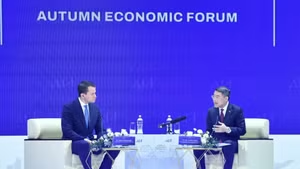
Nguyen Van Duoc, Chairman of the Ho Chi Minh City People’s Committee, said the city is pioneering the transition towards green growth and digital transformation. The new model of industrial parks and clusters, planned with a focus on high technology, ecological development and environmental friendliness, not only reflects a shift in industrial development thinking but also demonstrates the city’s strong commitment to environmental protection and the development of a green economy.