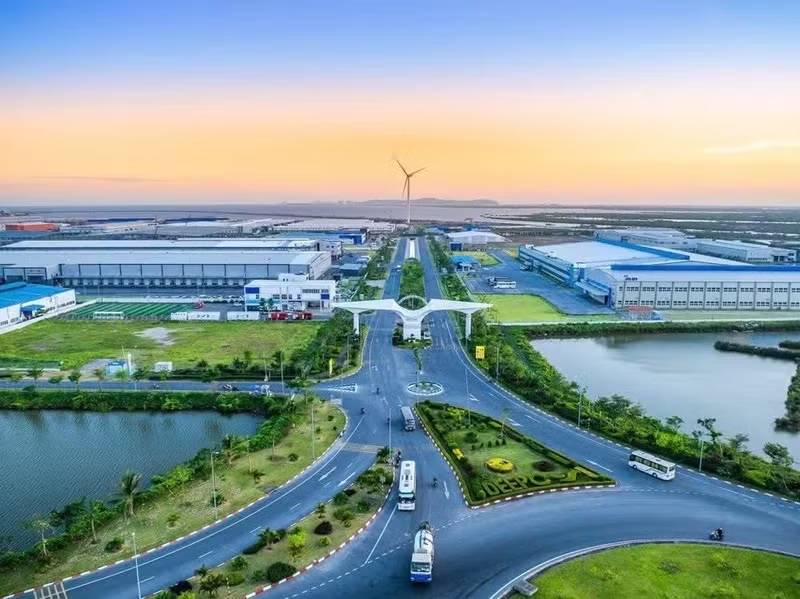
Viet Nam currently has 478 established industrial parks; of these, 324 are operating stably with an average occupancy rate of approximately 79%, having attracted a cumulative total of over 529 billion USD in foreign direct investment (FDI).
However, the traditional industrial park model has faced a mandatory transformation as the factors driving investment attraction have shifted markedly. While geographical location, land availability, and labour resources remain relevant, global investors today place greater emphasis on ESG standards, data management capabilities, emissions control, and smart operational proficiency.
Specifically, faced with increasingly strict technical barriers — such as the European Union’s Carbon Border Adjustment Mechanism (CBAM) and the commitment to achieve Net Zero emissions by 2050 — industrial parks must transform into platforms that enable manufacturing enterprises to operate in a greener, cleaner, and more efficient manner.
Viet Nam currently has 478 established industrial parks; of these, 324 are operating stably with an average occupancy rate of approximately 79%, having attracted a cumulative total of over 529 billion USD in foreign direct investment (FDI).
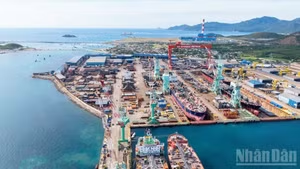
Development in Hai Phong serves as a clear illustration of the need to transform industrial park models for this new era. Having evolved from a manufacturing hub leveraging its strategic location and seaport, the city is proactively building an industrial ecosystem that harmoniously integrates manufacturing, logistics, urban services, and digital technology.
In the first six months of 2026 alone, the city has attracted approximately over 3 billion USD in foreign direct investment (FDI), bringing the total number of active FDI projects to 1,868 with a combined registered capital of around 54 billion USD.
According to Nguyen Thi Bich Dung, Deputy Head of the Hai Phong Economic Zone Management Board, industrial zone development in this new phase goes beyond merely expanding land banks; it requires the synchronisation of transport, energy, water supply and drainage, and logistics infrastructure, alongside digital platforms, right from the planning and investment preparation stages. This serves as a crucial foundation for transitioning from a fragmented management model to the governance of a unified industrial ecosystem.
Alongside upgrading physical infrastructure, Hai Phong has pioneered the digitalisation of industrial park management. Since 2021, the Hai Phong Economic Zone Authority has collaborated with VNPT Group to implement the eHEZA electronic management and operational system.
This system establishes a direct connection platform between regulatory bodies and enterprises; digitises all data regarding investment, construction, environmental factors, and labour; and provides intuitive operational tools via data dashboards and digital maps. Plans are also in place to integrate the system’s data with the city’s Intelligent Operations Centre (IOC), thereby effectively supporting monitoring and decision-making processes.
Han Anh Vu, Chief Technology Officer of VNIZ, asserts that data serves as the “soft foundation” of next-generation industrial parks. According to Vu, the core distinction of a smart industrial park lies not in the quantity of installed technological equipment but in the ability to transform data into operational tools, shifting management practices from an experience-based approach to one driven by real-time metrics.
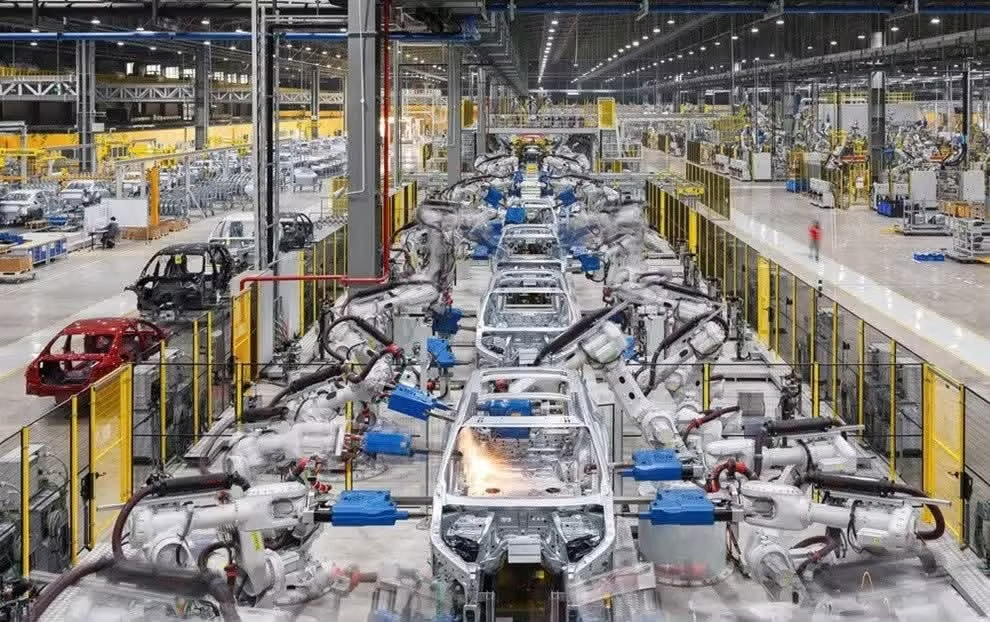
Establishing a shared data platform will foster close connectivity among regulatory agencies, enterprises, and stakeholders within the industrial ecosystem, effectively eliminating redundant reporting while enhancing monitoring and forecasting capabilities.
Nguyen Hoang Minh, CEO of IoTeamVN, noted that energy data enables businesses to monitor electricity consumption in real-time and promptly identify areas of waste. Practical implementation at several enterprises has resulted in electricity consumption reductions ranging from 3% to 40%, thereby reducing operating costs and significantly cutting carbon emissions.
Establishing a shared data platform will foster close connectivity among regulatory agencies, enterprises, and stakeholders within the industrial ecosystem, effectively eliminating redundant reporting while enhancing monitoring and forecasting capabilities.
However, the digitalisation of industrial zones also creates an urgent need for robust information security measures. As operational, supply chain, and production control data migrate to digital environments, a single cybersecurity incident could disrupt production, severely impacting both the enterprise and the entire supply chain.
Consequently, the development of smart industrial zones must go hand-in-hand with information security and cybersecurity infrastructure. Furthermore, refining the legal framework regarding the circular economy, clean energy, and resource reuse — alongside the implementation of a shared data platform — is key to driving the transition toward sustainability.
The transition to a new-generation industrial park model marks a pivotal shift in industrial development thinking; by leveraging data, technology, and smart management as a foundation, this model will serve as a strategic driver for Vietnamese industrial parks to enhance competitiveness, attract high-quality FDI, and integrate more deeply into global value chains.