As Viet Nam is strongly implementing its commitments to green growth and energy transition, with the goal of achieving net-zero emissions by 2050, the development of clean energy associated with industrial park systems has been identified as one of the key pillars. Industrial parks are not only drivers of economic growth but also crucial spaces in the promotion of efficient energy use, reducing emissions, and attracting high-quality investment capital.
However, in practice, the development of clean energy in industrial parks continues to face numerous challenges, including the alignment of energy planning with industrial park development planning, the completion of policy frameworks, and mechanisms for mobilising and allocating financial resources, particularly capital from the private sector.

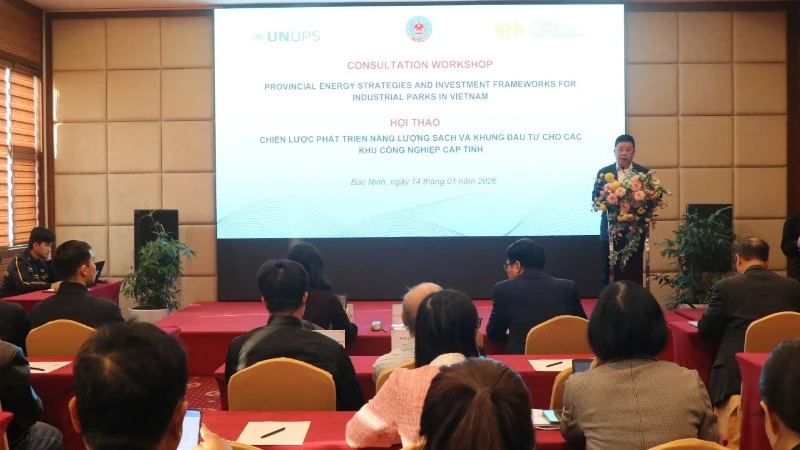
At the conference, participants shared the common view that clean energy development linked to industrial parks is not only an inevitable requirement of the energy transition and green growth process, but also a decisive factor in enhancing competitiveness, attracting investment, and promoting sustainable development at the local level.
Experts have emphasised that developing clean energy in conjunction with industrial parks requires strong coherence among energy planning, industrial park development planning, and policy instruments related to finance, investment, land, and the environment.
In addition, discussions highlighted the particularly important role of the private sector in investing in clean energy infrastructure for industrial parks. To unlock and effectively mobilise this resource, it is necessary to further refine the policy framework toward greater transparency, stability, and predictability, while also considering appropriate financial mechanisms to share risks, reduce capital costs, and enhance the feasibility of projects.
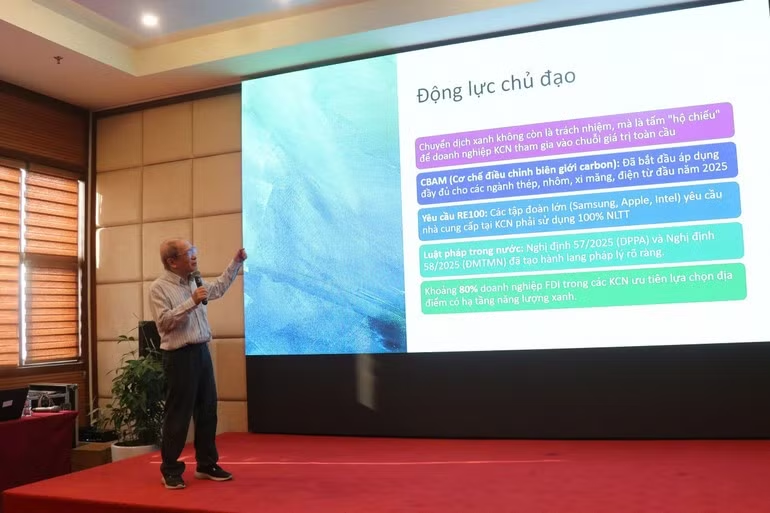
According to Le Tuan Anh, Deputy Director General of the Department of Sectoral Finance and Economics under the Ministry of Finance, the conference served as a forum for state management agencies, international organisations, experts, research institutes, and stakeholders to exchange views, share experiences, identify opportunities and challenges, and propose orientations and solutions towardsimproving policy frameworks and investment models for clean energy development in provincial industrial parks.
The opinions and recommendations discussed at the event will provide an important basis for the Ministry of Finance and relevant agencies to continue researching and refining financial policies, thereby creating a transparent, stable, and attractive investment environment for clean energy development in the coming period.